Filter By

Categories

Categories

Selections

Selections

Year of publication:

Year of publication:

Publication language:

Publication language:

Faculty:

Faculty:

UPJŠ Unit

UPJŠ Unit

Method of publication:

Method of publication:

Active filters

  • Publication language:: Slovak
  • Publication language:: slovenčina, angličtina
  • Faculty:: Prírodovedecká fakulta
  • Faculty:: Prírodovedecká fakulta
Výučba programovania internetu vecí s využitím matematického modelovania a analýzy dát
  • New

Výučba programovania internetu vecí s využitím...

E-book

E-book

Katarína Brinziková

This teaching guide for instructing students in Internet of Things programming using mathematical modeling and data analysis is intended for mathematics and computer science teachers in elementary and secondary schools, as well as for students training to teach these subjects. It responds to the requirements of the new curriculum reform in Slovakia, which emphasizes a cyclical learning process, the development of data, digital, and mathematical literacy, and the integration of teaching with real-world problems and technologies. The guide is designed in accordance with the methodological framework of design-based research. It contains technological and methodological foundations, as well as a set of proven teaching activities divided into three levels of difficulty. The teaching guide provides teachers with specific instructions, recommendations, and examples of best practices for the meaningful integration of IoT and mathematical modeling into teaching across different educational cycles, creating space for modern, interdisciplinary, and data-driven education.
Download the e-book for free (pdf)

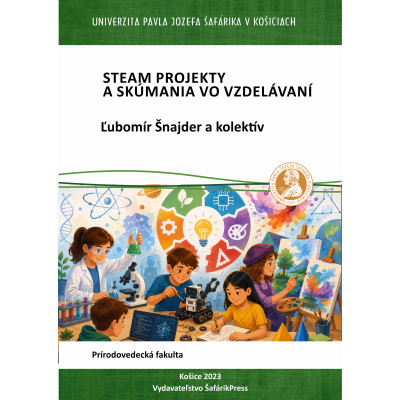
STEAM projekty a skúmania vo vzdelávaní
  • New

STEAM projekty a skúmania vo vzdelávaní

E-book

E-book

Ľubomír Šnajder a kol.

The publication is dedicated to teachers and future teachers of informatics, mathematics and science subjects. The publication presents activities that move students from the role of passive users of digital technologies to that of curious researchers, creative creators and critical thinkers. In the first chapter, we introduce educational strategies and practices to actively engage students in learning. In the second chapter, we briefly describe selected digital technologies that can be an aid to exploring the world around us and creating useful products. In the third chapter, we provide specific ideas for STEAM exploration and projects in which students search answers to real-world questions and solutions to real-world problems. Subject didacticians, experts from different fields and teachers worked closely together to develop ideas for the methodologies.

Download the e-book for free (pdf)

Attachment (zip)

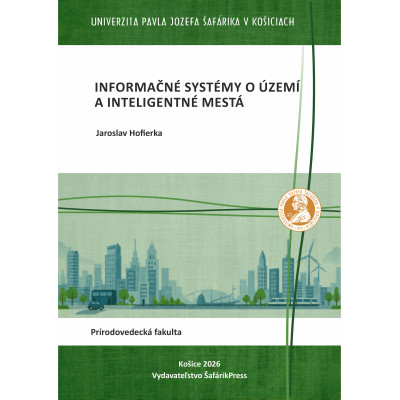
Informačné systémy o území a inteligentné mestá
  • New

Informačné systémy o území a inteligentné mestá

E-book

E-book

Jaroslav Hofierka

The lecture notes "Land Information Systems and Smart Cities" provides a comprehensive overview of geoinformation technologies within the context of public administration and modern land management. The publication systematically explains the principles of Land Information Systems (LIS), their architecture, components, and practical applications. Emphasis is placed on linking GIS technologies with real-world applications in local governments, infrastructure organizations, and the business sector. The text covers the hardware and software equipment of LIS, including modern trends such as cloud computing, open-source solutions, and the integration of artificial intelligence.

Special attention is given to data, which represent a key component of LIS, including an overview of the most important geospatial data products in Slovakia. The publication analyzes WebGIS technologies, map portals, and OGC standards (WMS, WFS, WCS) in detail, which enable the effective accessibility and sharing of geodata. A significant part is also dedicated to the National Infrastructure for Spatial Information (NIPI) and the INSPIRE Directive, ensuring data interoperability at both national and European levels.

Download the e-book for free (pdf)

Metódy určovania štruktúry, spektrálne metódy - Zbierka úloh z NMR, IČ a MS spektier

Metódy určovania štruktúry, spektrálne metódy -...

E-book

E-book

Zuzana Kudličková Monika Tvrdoňová Ján Elečko
This elektronic material provides practical guidance for determining the structure of organic compounds using nuclear magnetic resonance (NMR) spectroscopy, infrared (IR) spectroscopy, and mass spectrometry (MS). The publication is intended primarily for single-discipline undergraduate and interdisciplinary undergraduate students in chemistry as a supplementary material for the course Methods of Structure Determination – Spectroscopic Methods. The text is divided into four parts: NMR, IR, MS, and exercises on combined structural analysis. Each section includes a brief theoretical introduction, practical tips for spectrum interpretation, solved examples, and especially unsolved exercises that allow students to practice analyzing real spectra. The material supports the development of analytical thinking and the ability to unambiguously determine the structure of unknown compounds. The publication was created as a teaching aid for seminars. Its goal is to help students effectively understand the combination of spectroscopic methods and their application in the structural analysis of organic compounds.
Download the e-book for free

Biológia kryptogamov

Biológia kryptogamov

E-book

E-publication
Michal Goga-Marko S. Sabovljević-Martin Bačkor-Dajana Kecsey-Deepti Routray
A comprehensive guide that introduces you to the fascinating diversity and systematics of lower plants. These practical lessons are designed to provide hands-on training, allowing students to engage directly with the interesting study of Cryptogams by observation, analysis, and identification and experimentation. Beginning with the overall idea of cryptogam in a field trip near by the vicinity of Botanical garden then followed by the basics of microscopy in, will help to gain essential skills in understanding the components and proper usage of a microscope, a fundamental tool in botanical studies.
Download the e-book for free (pdf)

Digiform - podporná aplikácia k Digilib

Digiform - podporná aplikácia k Digilib

E-book

E-publication

Denisa Maceková-Monika Václavková-Marek Kvet-Ivana Sotáková

The publication Digiform: A Supporting Application to Digilib – User Guide, Part B presents the Digiform web application as a tool that extends the functionality of the Digilib digital library of formative assessment tools. The application enables the creation and editing of formative assessment tool templates, which can be adapted to the specificities of individual subjects and levels of education and subsequently imported into the Digilib environment for use in the teaching process. The guide provides a detailed description of how to work with the Digiform application, from creating new templates, editing and personalising them, through to their export and implementation in the main Digilib application. Attention is also given to the interconnection with the Digilib Images application, which enables the integration of visual elements into the assessment tools, thereby enhancing their didactic effectiveness and visual appeal. The guide is intended for teachers at all levels of education, student teachers, school administrators, and digital coordinators who are interested in the systematic use of the Digilib digital library to support the implementation of formative assessment, enhance the quality of the educational process, and foster the development of students’ self-assessment and reflective competences.

Download the e-book for free (pdf)

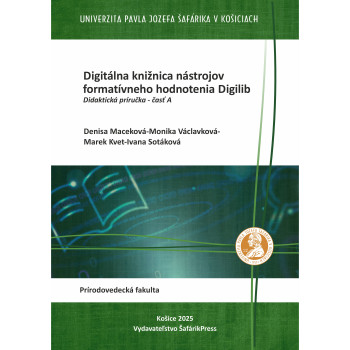
Digitálna knižnica nástrojov formatívneho hodnotenia Digilib

Digitálna knižnica nástrojov formatívneho...

E-book

E-publication

Denisa Maceková-Monika Václavková-Marek Kvet-Ivana Sotáková
The Digilib Digital Library of Formative Assessment Tools – User Guide, Part A introduces the Digilib application as the key component of the library, designed to support the implementation of formative assessment in teaching at all levels of education. It explains the structure of the system, its modules, the principles of user roles, and the possibilities for working with the digital formative assessment tools. Particular attention is paid to the possibilities for creating, editing, and assigning the tools to students, as well as to providing personalised real-time feedback. The User Guide also explains how the Digilib application is interconnected with the affiliated applications Digiform and Digilib Images, which expand the possibilities for creating and visualising assessment tools. The guide is intended for teachers at all levels of education, student teachers, school administrators, and digital coordinators who are interested in the systematic use of the Digilib digital library to support the implementation of formative assessment, enhance the quality of the educational process, and foster the development of students’ self-assessment and reflective competences.
Download the e-book for free(pdf)

FORMATÍVNE 2025. Spoločne pri implementácii formatívneho hodnotenia do škôl

FORMATÍVNE 2025. Spoločne pri implementácii...

E-book

E-publication

Mária Ganajová-Ivana Sotáková-Petra Letošníková

The conference proceedings FORMATIVE 2025 – Implementing Formative Assessment in Schools Together constitute the output of an online conference organised by the Institute of Chemical Sciences, Faculty of Science, Pavol Jozef Šafárik University in Košice, in cooperation with the National Institute of Education and Youth in Bratislava, within the framework of the KEGA project No. 001UPJŠ-4/2023. These proceedings present current knowledge, experience, and examples of good practice in implementing formative assessment in primary, secondary, and university teaching, with an emphasis on the use of digital tools. The papers address the foundations of formative assessment in the context of curricular changes and the ongoing educational reform, as well as specific didactic procedures for its implementation in the teaching of science and social science subjects, including mathematics, Slovak language, and foreign languages. Particular attention is paid to the development of professional teaching competences, formative assessment strategies, providing targeted feedback, and promoting students’ active participation in the assessment process. These proceedings also present the Digilib digital library, a tool developed to support the creation and management of formative assessment processes within the school environment. This publication is intended for experts in pedagogy and didactics, teachers at all levels of education, student teachers, digital coordinators, and all those interested in educational innovation and in improving the quality of teaching through formative assessment.

Download the e-book for free

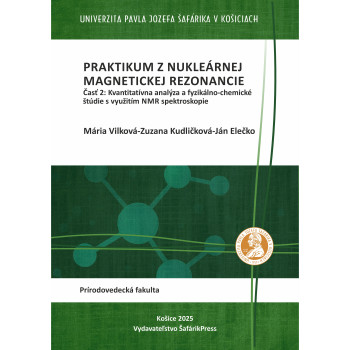
Praktikum z nukleárnej magnetickej rezonancie. Časť 2: Kvantitatívna analýza a fyzikálno-chemické štúdie

Praktikum z nukleárnej magnetickej rezonancie....

E-book

E-publication
Mária Vilková-Zuzana Kudličková-Ján Elečko
This study material is intended for students of chemistry and related disciplines interested in applied nuclear magnetic resonance (NMR) and physical chemistry. It offers practice-oriented tasks designed to develop skills in NMR spectroscopy, quantitative analysis, and data interpretation. Students learn modern approaches to determining physicochemical parameters (e.g., partition coefficients, pKa values, keto–enol equilibria, or enantiomeric excess) and gain experience with software tools for spectrum processing.
Download the e-book for free (pdf)

EFFUSE – edukačné materiály pre verejnosť

EFFUSE – edukačné materiály pre verejnosť

E-book

E-publication

Beáta Valkay ed.
Ivana Slepáková-Lenka Maliničová a kol.

The publication EFFUSE – Educational Materials for the Public was developed within the EFFUSE project and focuses on current environmental issues of river landscapes. It emphasizes the importance of water as an irreplaceable resource and the need to protect it. Special attention is given to bioindicators – organisms whose presence or absence reflects the state of the environment. Monitoring bioindicators makes it possible to detect ecosystem changes before serious damage occurs. The publication highlights that biodiversity is essential for ecosystem stability and health. As such, it serves as a valuable educational resource for the public, raising environmental awareness and encouraging active involvement in nature conservation.

Download the e-book for free (pdf)

EFFUSE príručka pre učiteľov

EFFUSE príručka pre učiteľov

E-book

E-publication

Beáta Valkayed.
Ivana Slepáková-Lenka Maliničová a kol.

The EFFUSE Teacher's Guide is a practical educational material for primary and secondary school teachers who want to develop environmental awareness with their pupils through field-based learning. It is based on the concept of the EFFUSE project (‘Environment for the future by science education’), which aims to link science, research and education with environmental protection. The manual provides teachers with methodological support for planning and implementing outdoor activities aimed at observing and documenting organisms around the Laborec River and the Uh River. It contains instructions for working with real samples, basic biomonitoring procedures and offers the opportunity to participate in the creation of a virtual laboratory that mirrors the state of the local aquatic ecosystem. Through these activities, pupils will learn to understand the links between human activity and the state of the environment, while learning the basics of how scientists work in the fields of biology and ecology. The guide also motivates teachers to become agents of positive change, inspire the younger generation to be active and engage the community in conservation. It is a challenge and an opportunity to create a space for meaningful learning in line with current trends in environmental and digital education.

Download the e-book for free (pdf)

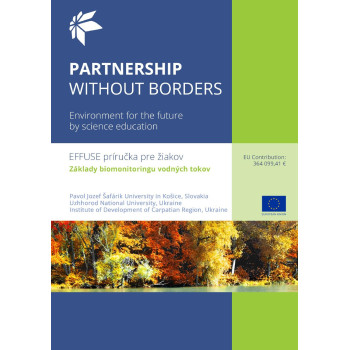
EFFUSE príručka pre žiakov: Základy biomonitoringu vodných tokov

EFFUSE príručka pre žiakov: Základy...

E-book

E-publication

Beáta Valkay ed.
Ivana Slepáková-Lenka Maliničová a kol.

EFFUSE - A Guide for Students is an interactive educational resource for primary and secondary school students to help them better understand how their daily activities affect the environment. The handbook was developed within the EFFUSE project (‘Environment for the future by science education’) and motivates young people to take a greater interest in the nature around them. It focuses on practical field activities during which they will explore the ecosystem of the Laborec and Uh rivers, observe and document organisms and work with real samples from nature. At the same time, they will learn about the work of scientists - botanists, zoologists and microbiologists - and learn basic biomonitoring methods. The manual will also guide them through the process of creating a virtual laboratory to display the results of their investigations of an aquatic ecosystem. It will help them understand the importance of sustainable development and encourage them to behave responsibly towards nature. It is their opportunity to learn about their surroundings in a new way, to learn to think scientifically and to become active creators of positive change for their community and future generations.

Download the e-book for free(pdf)

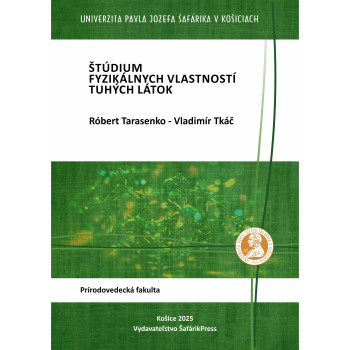
Štúdium fyzikálnych vlastností tuhých látok

Štúdium fyzikálnych vlastností tuhých látok

E-book

E-book

Róbert Tarasenko - Vladimír Tkáč

The presented university textbook is intended for all students engaged in the field of condensed matter physics who, while working on their final theses, come into contact with the experimental device known as the Physical Properties Measurement System (PPMS). The main purpose of this textbook is to facilitate, in a certain way, the students' work with the complex manuals provided with this experimental device. At the same time, through this textbook and its clear instructions, students acquire the necessary experimental skills essential in the field of condensed matter physics.

Download the e-book for free (pdf)

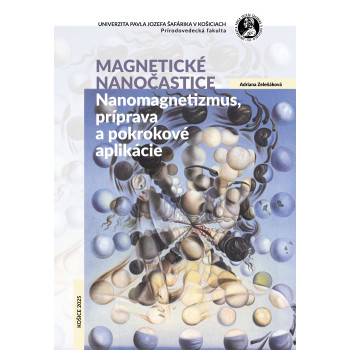
MAGNETICKÉ NANOČASTICE: NANOMAGNETIZMUS, PRÍPRAVA A POKROKOVÉ APLIKÁCIE

MAGNETICKÉ NANOČASTICE: NANOMAGNETIZMUS,...

E-book

Adriana Zeleňáková

Magnetic nanoparticles are extremely interesting magnetic objects that still hide much that is undiscovered, both because of their physical properties and because of their diverse applications. Iron nanoparticles, or iron oxides, are used in medical diagnostics for magnetic resonance imaging, in the treatment of hyperthermia, and an important application is the use of magnetic particles for targeted drug delivery.

The textbook "Magnetic Nanoparticles: Nanomagnetism, Preparation and Advanced Applications" is intended primarily for students of the Master's programme in Physics and students of related disciplines at universities and faculties with a physical, chemical, metallurgical and biophysical focus. The motivation for writing this textbook was to develop study material that would contribute to improving the quality of teaching in the profile subject Nanomaterials and Nanotechnology at the Institute of Physical, Faculty of Sciences, UPJŠ, in the Master's programme Condensed Matter Physics, as well as in the profile subject in the PhD programme Advanced Materials.

The university textbook is divided into eight chapters. The first and second chapters are devoted to basic information about magnetism, the origin of nanomagnetism in nanoparticles and surface phenomena. The third and fourth chapters are devoted to nanomagnetism in nanoparticle systems. The fifth chapter describes in detail individual protocols for investigating the phenomenon of superparamagnetism and the phenomenon of superspin glass using the SQUID device. The sixth chapter describes individual procedures for the preparation of magnetic nanoparticles and the seventh chapter describes individual experimental techniques for the study of magnetic nanoparticles. The final eighth chapter describes the applications of nanoparticles in biomedicine.

During the writing of this textbook, the chapters were prepared using the foreign-language specialist literature listed in the recommended reading list.

Download the e-book for free

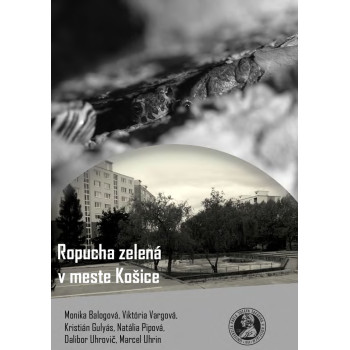
Veríme, že predložené informácie v tejto publikácii môžu prispieť k ochrane nielen populácií ropúch zelených v meste Košice, ale

Ropucha zelená v meste Košice

E-book

E-book

Monika Balogová - Viktória Vargová - Kristián Gulyás - Natália Pipová - Dalibor Uhrovič -Marcel Uhrin

A peer-reviewed publication dealing with the biology and ecology of the European green toad, bringing new findings through scientific research on the roosting ecology, spatial activity and dispersal of this protected species in urban environments. The subject matter of this publication is highly topical, as amphibians represent the most threatened vertebrate group in the world. This work is suitable not only for university students interested in batrachology, amphibian ecology, and vertebrate zoology, but also for conservation workers, municipalities, and specialists directly involved in the reconstruction of urban areas with green toads. Last but not least, this publication is suitable for enthusiasts with an interest in nature and its conservation.

Download the e-book for free (pdf)

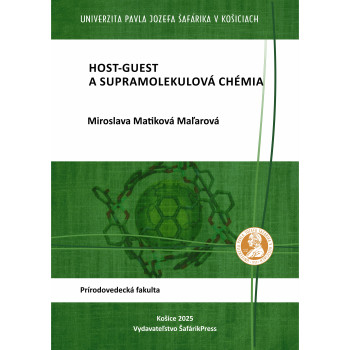
HOST-GUEST A SUPRAMOLEKULOVÁ CHÉMIA

HOST-GUEST A SUPRAMOLEKULOVÁ CHÉMIA

E-book

E-book

Miroslava Matiková Maľarová

The university textbook entitled: Host-guest and supramolecular chemistry provides basic information about this scientific field as well as the types of compounds that belong to it. It provides basic characteristics of non-bonded interactions as well as methods of characterization and classification for these compounds. It summarizes knowledge about various types of host-guest systems from the oldest such as Hofmann clathrates to inclusive compounds such as cyclodextrins and calixarenes. In addition to structural and synthetic information, which is supplemented with images, the textbook also addresses the possibilities of application or practical use of compounds. The conclusion of each chapter is supplemented with tasks for elaboration on a given topic.

Download the e-book for free (pdf)

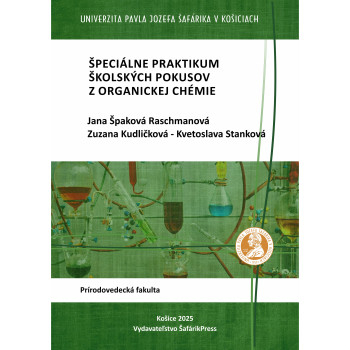
Špeciálne praktikum školských pokusov z organickej chémie

Špeciálne praktikum školských pokusov z...

E-book

E-book

Jana Špaková Raschmanová - Zuzana Kudličková - Kvetoslava Stanková

Organic chemistry plays a key role in our lives, from the pharmaceutical industry to the production of plastics and food additives. Additionally, it is essential in biochemistry, as it deals with the basic building blocks of living organisms, such as carbohydrates, lipids, proteins, and nucleic acids. One of the best ways to teach organic chemistry and increase students' interest in the subject is through conducting school experiments. This study material presents a collection of visually striking practical experiments in organic chemistry that will help students better understand the chemical processes and techniques used in the field. This electronic study material is supplemented with visual material, allowing students to verify the results of experiments and better understand the individual procedures. At the end of each section, there are questions to help assess the acquired knowledge and encourage deeper understanding of the experiments conducted.

Download the e-book for free (pdf)

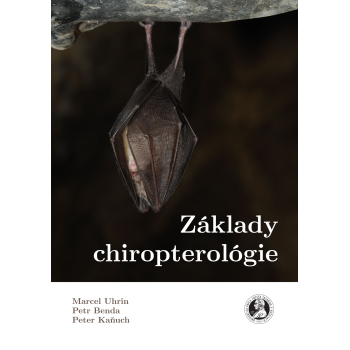
copy of Základy chiropterológie

copy of Základy chiropterológie

€10.00
Availability: 999 In Stock

E-book

Marcel Uhrin - Petr Benda -  Peter Kaňuch

Bats represent a unique group of mammals, characterised by different life strategies. They are the only mammals capable of active flight, which, combined with their almost exclusively nocturnal activity, has led to the evolution of specific adaptations. One of the most striking is echolocation, which enables them to orientate themselves perfectly in their surroundings in the dark. Bats are mainly native to the tropics, but have also colonised areas outside the tropics, which, has led to a complex phenological cycle with active phases and interruptions during hibernation, especially in temperate zones. In this diverse and species-rich group (almost 1,500 known species), there is a wide range of social organisation as well as feeding and roosting strategies. The textbook "Fundamentals of Chiropterology" brings the current state of knowledge about these extraordinary animals in eleven chapters and two appendices for the first time in the Slovak language.

Praktikum z nukleárnej magnetickej rezonancie. Časť 1: Kvantitatívna NMR

Praktikum z nukleárnej magnetickej rezonancie....

E-book

E-book

Mária Vilková - Zuzana Kudličková - Aneta Salayová - Tomáš Ján Liška

The Nuclear Magnetic Resonance Practicum – Part 1: Quantitative NMR is designed for students taking the NMR Practicals course, which focuses on the practical aspects of quantitative nuclear magnetic resonance (qNMR). This publication builds on previous NMR courses and assumes basic theoretical knowledge of the method, emphasizing experimental procedures, data processing, and result interpretation. qNMR is a precise analytical technique with broad applications in analytical chemistry, pharmaceutical research, biomedicine, and quality control. The script provides a detailed guide to conducting experiments, as well as procedures for analyzing and evaluating acquired data. This publication offers students methodological guidance and support in mastering qNMR analysis and serves as a valuable resource not only during their studies but also for further research in NMR spectroscopy.

Download the e-book for free (pdf)

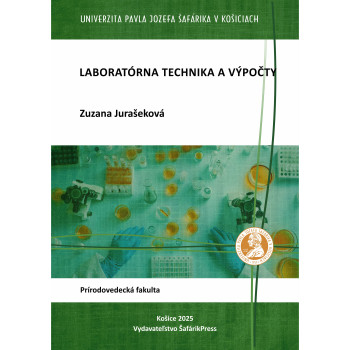
Laboratórna technika a výpočty

Laboratórna technika a výpočty

E-book

E-book

Zuzana Jurašeková

Úvod k praktikám k experimentálnym metódam biofyziky

The university textbook titled Laboratory Techniques and Calculations is designed for the first-year students of the bachelor's degree in Biophysics at the Institute of Physics, Faculty of Sciences, P. J. Šafárik University in Košice. The objective is to equip students with fundamental knowledge and practical skills for the work in a chemical laboratory. It is essential for addressing different biophysical issues and experiments that students will have to solve later. The textbook comprises three principal sections: a theoretical part focused on the calculations, a section dedicated to laboratory work, and the last part offers a brief introduction to spectroscopy. The theoretical part summarizes the basic definitions and equations related to the characterization and preparation of solutions and mixtures. The second, most comprehensive part provides guidance and suggestions for safe and efficient practices in a chemical laboratory. The primary focus is on the manipulation of chemical substances and the use of specific small laboratory instruments and equipment. The fundamental laboratory procedure guides for the selected laboratory works are also provided. As part of a short introduction to spectroscopy, students can become familiar with fundamental spectroscopic concepts and principles. UV-VIS absorption spectrophotometry receives special attention, along with a brief introduction to fluorescence. The textbook is supplemented by various practical and theoretical tasks, as well as numerous web links to further explanatory texts and videos.

Download the e-book for free (pdf)

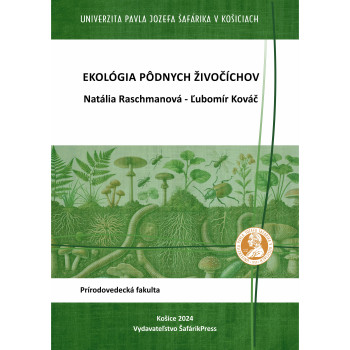
Ecology of Soil Animals

Ecology of Soil Animals

E-book

E-book

Natália Raschmanová - Ľubomír Kováč

The text summarizes the basic knowledge about the functioning of the soil ecosystem with a focus on soil protists and dominant groups of soil animals. Characteristics of each soil animal group include basic morphology, ecology, distribution, population dynamics and their importance in the soil ecosystem. The aim of the text is to gain a basic understanding of the diversity and interactions of soil fauna with the soil environment. It deals with the ecological classification of soil fauna on the basis of body size, presence in the soil during the life cycle, food preference and by locomotion. It highlights important morphological and ecophysiological adaptations of soil fauna to physical and chemical environmental factors. The text also gives an overview of the basic methods in the field collection of soil fauna and their extraction from soil samples under laboratory conditions. It further informs on the method of taxonomic identification and ecological evaluation of soil fauna communities. Discusses the soil fauna of different types of ecosystems. It highlights the differences in soil fauna communities that inhabit grassland and forest habitats, and agricultural soils. This teaching material is intended for students in biology degree programmes.

Download the e-book for free (pdf)

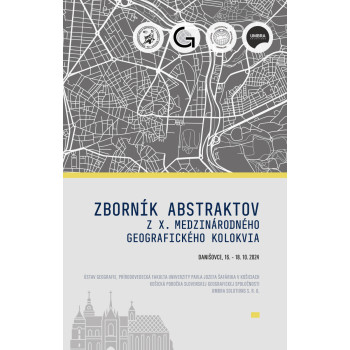
Zborník abstraktov z X. medzinárodného geografického kolokvia

Zborník abstraktov z X. medzinárodného...

E-book

E-book

Marián Kulla – Ladislav Novotný – Petra Dávidová – Anton Uhrin (eds.)

Danišovce 16. – 18. 10. 2024

Zborník abstraktov, ktorý máte pred sebou, obsahuje príspevky prezentované na X. Medzinárodnom geografickom kolokviu v Danišovciach. Ústav geografie na Prírodovedeckej fakulte UPJŠ v Košiciach toto podujatie organizuje už od svojho vzniku ako platformu na výmenu vedeckých poznatkov, primárne medzi geografmi zo Slovenska a Česka. Aktuálny jubilejný ročník spoluorganizovali Prírodovedecká fakulta UPJŠ v Košiciach, Slovenská geografická spoločnosť pri SAV v Bratislave v zastúpení jej Košickej pobočky a spoločnosť UMBRA Solutions Košice.

Download the e-book for free (pdf)

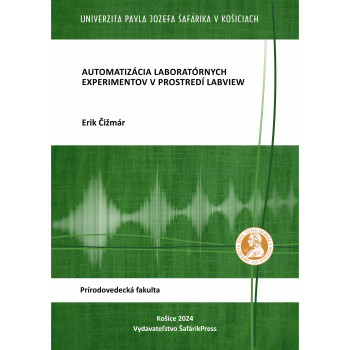
Automation of Laboratory Experiments in LabVIEW environment

Automation of Laboratory Experiments in LabVIEW...

E-book

E-book

Erik Čižmár

Textbook Automation of Laboratory Experiments in LabVIEW environment is devoted to the basics of graphical programming and shows the way how to communicate with measuring equipment and Arduino development boards in LabVIEW. The basic concepts of creating a virtual instrument and its interactive user environment are introduced. Three physical tasks are presented, the practical implementation of which takes place with the use appropriate instrumentation and LabVIEW. Practical tasks are dedicated to measuring the transmission characteristics of a low-pass RC filter, measuring the natural resonant frequency of a quartz tuning fork using the heterodyne pulse method, and mapping the magnetic field of a permanent magnet using Arduino.

Download the e-book for free (pdf)

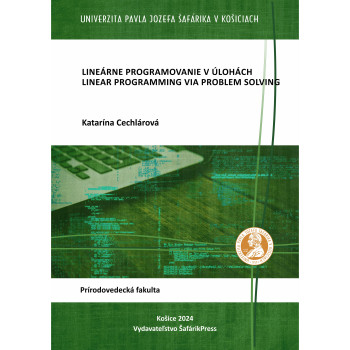
Linear programming via problem solving

Linear programming via problem solving

E-book

E-book

Katarína Cechlárová

Linear programming belongs to parts of mathematics with the greatest number of real applications. This Slovak-English problem collection provides an overview of basic knowledge in the area, application problems as well as problems to acquire routine in calculations. It is complemented by questions motivating the student to look for further theoretical principles, construct conterexamples  and formulate arguments to explain the studied phenomena.

Download the e-book for free (pdf)

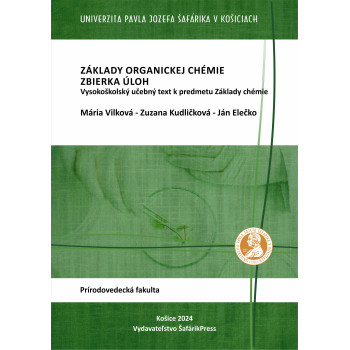
Základy organickej chémie.  Vysokoškolský učebný text k predmetu Základy chémie

Základy organickej chémie. Vysokoškolský...

E-book

E-book

Mária Vilková - Zuzana Kudličková - Ján Elečko

Organic chemistry is the chemistry of carbon. Organic compounds in the form of large molecules (macromolecules), such as nucleic acids, proteins, carbohydrates, and lipids are the basic elements of living organisms. This study material is created for non-chemistry students, especially students of biology. Most of these students have little or no knowledge of organic chemistry. Therefore, we proceed from the basic principles of organic chemistry to biochemistry.

The basic principles of organic chemistry and biochemistry are briefly summarized in individual chapters, but the main content consists of tasks for practising basic knowledge. To check the correctness of solving the tasks, the correct solutions are also given. The importance of this study material lies in the fact that students will get additional study material that they will use in studying the subject Basics of Chemistry.

Download the e-book for free (pdf)

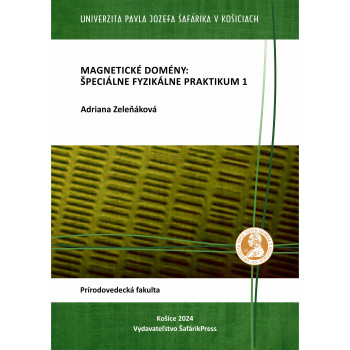
MAGNETIC DOMAINS: SPECIAL PHYSICAL PRACTICE 1

MAGNETIC DOMAINS: SPECIAL PHYSICAL PRACTICE 1

E-book

E-book

Adriana Zeleňáková

One of the fundamental characteristics of the magnetic state of ferromagnetic materials is the existence of a domain structure. The university textbook "MAGNETIC DOMAINS: SPECIAL PHYSICAL PRACTICE 1" is intended primarily for students of the Master's programme in Physics of Condensed Matter FKLm and for the PhD programme in Progressive Materials PMd within the profile subject Special Practice 1 at the Institute of Physical Sciences of the Faculty of Sciences of the Pavol Jozef Šafárik University in Košice.  The textbook is divided into seven chapters. The first chapter is devoted to the basics of domain theory, including the history of domain observation and the specification of different types of energies in ferromagnetic body. The second chapter presents the relationship between domain structure and magnetisation processes in ferromagnetic materials The third chapter describes the different types of domain-wall interactions with the defect. The fourth chapter illustrates examples of domain structure in selected ferromagnetic body such as grain oriented and non-grain oriented electrical steels, amorphous and nanocrystalline ribbons. The fifth chapter summarises an overview of the different experimental methods used to visualise the domain structure and their advantages or disadvantages with respect to the structure of ferromagnetic materials. The last two chapters, the sixth and the seventh, are devoted to specific experimental tasks for observing the domain structure of a selected polycrystalline sample using the optical microscope Bitter powder method and the MFM (magnetic force microscopy) method. During the preparation of this undergraduate text, its individual parts were developed using the foreign language literature listed in the recommended references.

Download the e-book for free (pdf)

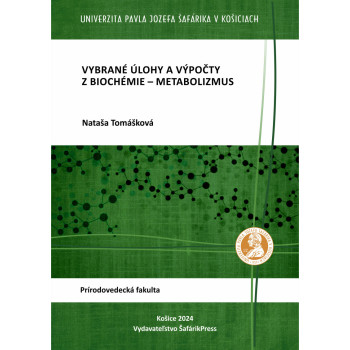
Vybrané úlohy a výpočty z biochémie – metabolizmus

Vybrané úlohy a výpočty z biochémie – metabolizmus

E-book

E-book

Nataša Tomášková

Selected tasks and problems from biochemistry – metabolism follow biochemistry lectures on metabolism and individual metabolic pathways for students of the second and third year of the bachelor’s degree in the fields of chemistry, biology and their combinations with other fields. Scripts provide an opportunity to better understand the lectured subject matter of metabolism through the solution of tasks and problems as serve as a basis for one-hour exercises. The scripts are divided thematically into eleven chapters, and each chapter contains 10 tasks and 7 problems. At the beginning of the chapters there is a short description and explanation of the given metabolic pathway. However, when solving the tasks, the student must focus mainly on the curriculum that was presented on the given topic in the lecture. Subsequently, at the end of chapter, answers to problems are also presented. These scripts are intentionally accessible only in electronic form. The reason is the effort to continuously update and modernize individual tasks.

Download e-book for free (pdf)

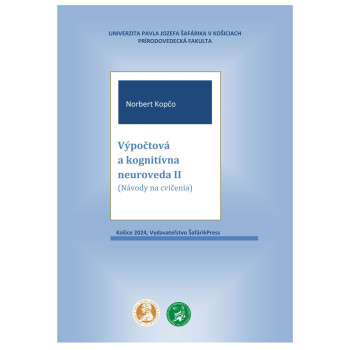
Výpočtová a kognitívna neuroveda II (Návody na cvičenia)

Výpočtová a kognitívna neuroveda II (Návody na...

E-book

E-book

Norbert Kopčo

Neuroscience is an interdisciplinary field of science at the interface of biological, psychological and computer sciences, which aims to describe the functioning of the brain and mind. Computational and cognitive neuroscience are subfields of neuroscience focused on the study of information processing in the human and animal nervous systems, and on the theoretical description of the brain and mind. This university textbook contains several assignments that provide an overview of the methods used in computational and cognitive neuroscience, with an emphasis on mathematical modeling and on the behavioral study of cognitive processes. The textbook builds on the author's previous works.

Download e-book for free (pdf)

Didaktika školských pokusov zo všeobecnej a anorganickej chémie

Didaktika školských pokusov zo všeobecnej a...

E-book

E-book

Ivana Sotáková-Martin Vavra-Mária Ganajová

This textbook has been designed for the master students of chemistry teaching (combined) at the Faculty of Science, Pavol Jozef Šafárik University in Košice as a source of model school experiments in general and inorganic chemistry. It will be used for teaching the Special Practice of School Experiments I compulsory course. It consists of instructions for experiments related to the selected topics in general and inorganic chemistry as well as the didactic and technical aspects of their performance. Each experiment includes an explanation of the principle, specification of the tools and chemicals needed, working procedure, and the respective apparatus assembly scheme. At the end of each experiment, the observation and explanation necessary for the correct interpretation of the results of the chemical experiment performed are provided. To follow the requirements for the digital transformation of education, selected computer-aided experiments and visualiser projections have been included as well. The next part is focused on the work with the monitoring suitcase, which can be used for making simple field experiments related to environmental topics. The final part is dedicated to attractive experiments that complement the topics in inorganic chemistry and can be used to motivate students. All experiment instructions are in line with the requirements specified by the state educational programmes for primary and grammar schools. This book allows teachers to select appropriate demonstrative experiments or experiments for laboratory classes performed by students themselves. The videos of selected experiments are also available as part of the interactive periodical table of elements operated by the Institute of Chemistry, Faculty of Science, Pavol Jozef Šafárik University in Košice.

Download e-book for free (pdf)

Sekundárny metabolizmus (Úvod do štúdia prírodných látok)

Sekundárny metabolizmus (Úvod do štúdia...

E-book

E-book

Miroslava Martinková

This electronic material focuses on the subject of secondary metabolism and its products - secondary metabolites. The material gives an overview of the basic building blocks and construction mechanisms through which molecules can be synthesized in living organisms (plants). The processes of formation of the mentioned metabolites are explained using the basic mechanisms of organic reactions. Several of the secondary metabolites presented have a remarkable biological profile and are used as therapeutics or serve as lead compounds for the development of novel pharmacological agents. This electronic document is primarily intended for students of the Master's degree programme in Organic Chemistry as supporting material for the profile subject Chemistry of Natural Products.

Download e-book for free (pdf)

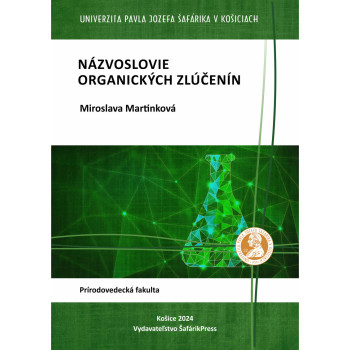
Názvoslovie organických zlúčenín

Názvoslovie organických zlúčenín

E-book

E-book

Miroslava Martinková

This electronic material provides the basic principles of creating a systematic nomenclature of organic compounds, from the simplest hydrocarbons to the more complicated nomenclature of carbohydrates. For some groups of derivatives, alternative ways of generating system names are also mentioned, as well as the most common trivial names that are still in use in the literature and in practice, in some cases being the characteristic (dominant) ones. In the introductory section, the basic rules to be respected when writing names of organic compounds are discussed. This document is intended primarily for interdisciplinary undergraduate and graduate students as support material for the courses Organic Chemistry and Selected Chapters in Organic Chemistry and Biochemistry. In the final section of this document, solved examples are given so that the student can check how the rules for forming the names of organic compounds have been understood.

Download e-book for free (pdf)

This website uses cookies to ensure you get the best experience on our website