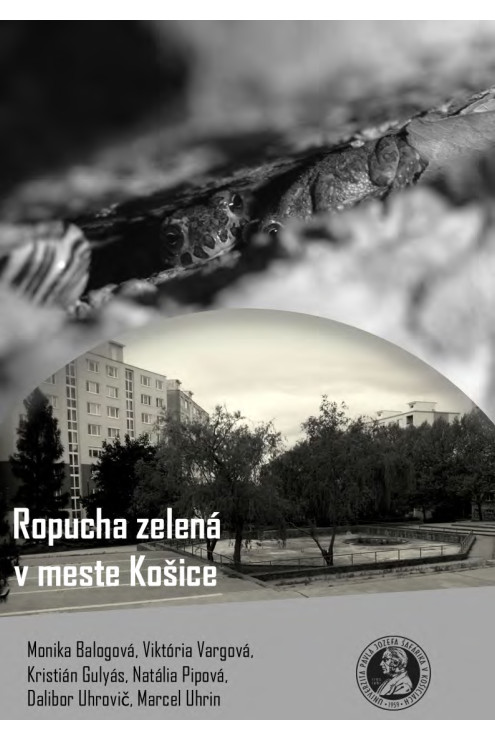
Ropucha zelená v meste Košice

E-book

Monika Balogová - Viktória Vargová - Kristián Gulyás - Natália Pipová - Dalibor Uhrovič -Marcel Uhrin

A peer-reviewed publication dealing with the biology and ecology of the European green toad, bringing new findings through scientific research on the roosting ecology, spatial activity and dispersal of this protected species in urban environments. The subject matter of this publication is highly topical, as amphibians represent the most threatened vertebrate group in the world. This work is suitable not only for university students interested in batrachology, amphibian ecology, and vertebrate zoology, but also for conservation workers, municipalities, and specialists directly involved in the reconstruction of urban areas with green toads. Last but not least, this publication is suitable for enthusiasts with an interest in nature and its conservation.

Download the e-book for free (pdf)

Quantity

978-80-574-0404-0

Data sheet

Method of publication:
E-book (pdf)
Authors:
Monika Balogová - Viktória Vargová - Kristián Gulyás - Natália Pipová - Dalibor Uhrovič - Marcel Uhrin
Document type:
Odborná publikácia
Number of pages:
73
Available from:
19.05.2025
Year of publication:
2025
Edition:
1st edition
Publication language:
Slovak
Faculty:
Prírodovedecká fakulta
Note:
Odborná publikácia Ropuchá zelená v meste Košice bola vydaná v rámci riešenia grantu VEGA č. 1/0671/25 Obojživelníky (Lissamphibia) v antropogénnej krajine
License:
CC BY NC ND (Uveďte autora - Nepoužívajte komerčne - Nespracovávajte)
DOI:
https://doi.org/10.33542/RZM-0404-0
- Free for download

16 other products in the same category:

Stresová fyziológia rastlín - Návody na cvičenia

Stresová fyziológia rastlín - Návody na cvičenia

E-book

E-book

Jozef Kováčik

These "Exercise Manuals" present a concise overview of commonly used methodologies as well as progressive techniques, such as the use of liquid chromatography and fluorescence microscopy. Individual tasks were selected based on the research focus of the Department of Botany at the Faculty of Science, Pavol Jozef Šafárik University in Košice, particularly in the context of "stress physiology."

Some tasks can also be utilized within the subject "Plant Ecology." Chamomile (Matricaria chamomilla) is typically used as a model plant for individual tasks due to its long-standing history of research at the Department of Botany and its ease of cultivation under laboratory conditions. The chapters also briefly discuss the significance of monitored parameters, principles of their determination, and metabolism (formation or degradation), aiming to indicate their mutual context.

This approach highlights that determining an individual parameter cannot provide a general explanation for the overall causes and impacts of observed changes; however, it can serve as a basis for testing hypotheses at the level of other parameters.

For deeper study of specific issues, there is an abundance of high-quality international monographs and review articles available.

Download the e-book for free (pdf)

EFFUSE príručka pre učiteľov

EFFUSE príručka pre učiteľov

E-book

E-publication

Beáta Valkayed.
Ivana Slepáková-Lenka Maliničová a kol.

The EFFUSE Teacher's Guide is a practical educational material for primary and secondary school teachers who want to develop environmental awareness with their pupils through field-based learning. It is based on the concept of the EFFUSE project (‘Environment for the future by science education’), which aims to link science, research and education with environmental protection. The manual provides teachers with methodological support for planning and implementing outdoor activities aimed at observing and documenting organisms around the Laborec River and the Uh River. It contains instructions for working with real samples, basic biomonitoring procedures and offers the opportunity to participate in the creation of a virtual laboratory that mirrors the state of the local aquatic ecosystem. Through these activities, pupils will learn to understand the links between human activity and the state of the environment, while learning the basics of how scientists work in the fields of biology and ecology. The guide also motivates teachers to become agents of positive change, inspire the younger generation to be active and engage the community in conservation. It is a challenge and an opportunity to create a space for meaningful learning in line with current trends in environmental and digital education.

Download the e-book for free (pdf)

Laboratórna technika a výpočty

Laboratórna technika a výpočty

E-book

E-book

Zuzana Jurašeková

Úvod k praktikám k experimentálnym metódam biofyziky

The university textbook titled Laboratory Techniques and Calculations is designed for the first-year students of the bachelor's degree in Biophysics at the Institute of Physics, Faculty of Sciences, P. J. Šafárik University in Košice. The objective is to equip students with fundamental knowledge and practical skills for the work in a chemical laboratory. It is essential for addressing different biophysical issues and experiments that students will have to solve later. The textbook comprises three principal sections: a theoretical part focused on the calculations, a section dedicated to laboratory work, and the last part offers a brief introduction to spectroscopy. The theoretical part summarizes the basic definitions and equations related to the characterization and preparation of solutions and mixtures. The second, most comprehensive part provides guidance and suggestions for safe and efficient practices in a chemical laboratory. The primary focus is on the manipulation of chemical substances and the use of specific small laboratory instruments and equipment. The fundamental laboratory procedure guides for the selected laboratory works are also provided. As part of a short introduction to spectroscopy, students can become familiar with fundamental spectroscopic concepts and principles. UV-VIS absorption spectrophotometry receives special attention, along with a brief introduction to fluorescence. The textbook is supplemented by various practical and theoretical tasks, as well as numerous web links to further explanatory texts and videos.

Download the e-book for free (pdf)

Bioanorganická chémia I.
  • On sale!
  • -€11.27

Bioanorganická chémia I.

€12.27 €1.00 -€11.27
Availability: 50 In Stock

Mária Reháková 

Vysokoškolský učebný text určený pre poslucháčov vyšších ročníkov z bioanorganickej chémie. Štúdium bioanorganickej chémie si vyžaduje vedomosti z predchádzajúcich chemický disciplín nižších ročníkov - všeobecnej, anorganickej, organickej, fyzikálnej chémie a biochémie.

Autorka

NANOVIR – Nanočastice pre riešenie diagnosticko-terapeutických problémov s COVID-19

NANOVIR – Nanočastice pre riešenie...

E-book

E-book

Adriana Zeleňáková - Jozef Bednarčík

Peer-reviewed Proceedings of the Scientific Conference NANOVIR

The main objective of the scientific conference NANOVIR was the presentation of scientific results obtained during the implementation of the NANOVIR project – Nanoparticles for solving diagnostic and therapeutic problems with COVID-19, co-financed by the European Regional Development Fund within the Operational Programme Integrated Infrastructure 2014 – 2020, ITMS: 313011AUW7.

The project was carried out from January 1, 2021, to June 30, 2023, and was supported with a sum of EUR 1,916,004.79. Three co-investigating organizations participated in the project: Pavol Jozef Šafárik University in Košice as the main investigator, the University of Veterinary Medicine and Pharmacy in Košice as partner no. 1, and the Institute of Experimental Physics of the Slovak Academy of Sciences as partner no. 2.

Download the e-book for free (pdf)

Určitý integrál

Určitý integrál

E-book

E-book

Ondrej Hutník

The concept of the integral is one of the most significant concepts in mathematics as a whole. In its most primitive form, it was already used by the ancient Greeks in the creation of Euclidean geometry. However, it was only after Descartes' work on analytical geometry in 1637 that mathematicians could begin to consider the integral as a subject of analysis. Descartes' work laid the groundwork for the discovery of infinitesimal calculus by Leibniz and Newton around 1665. At that time, a great dispute arose over the priority of this discovery, dividing scholars of Germany and England into two opposing camps, each favoring their own champion. Today, we know that Newton's work on fluxions and fluents was somewhat earlier, but Leibniz's notation and approach have gained more acceptance in the mathematical world, and the symbols ∫ ∫ and d d are still used today. A brief overview of the history of the integral will be presented in Chapter 1.

Today, there is a plethora of scripts, textbooks, and books dedicated to explaining the concept of the integral. Therefore, every potential author faces the initial question of whether to write another text on this topic. Our affirmative answer to this question was driven by the students' request to find the subject matter of a part of the winter semester of the second year presented in a coherent form. The second motivation is a slightly different approach to the topic. If we consider the methods typically used in solving problems and gaining routine with a certain integral, it mainly involves the Newton-Leibniz formula, and often there is little time left to compute the definite (Riemann) integral using its definition. Therefore, we included a discussion of the Newton integral in Chapter 2, which reflects this fact and is directly related to the indefinite integral, whose various calculation methods receive relatively much attention in the previous semester. Only after that, in Chapter 3, do we build the theory of the Riemann integral, present criteria for its existence, classes of integrable functions, basic properties, and finally its relationship with the Newton integral. Questions primarily concerning geometric applications are addressed in Chapter 4, and in the final chapter, we focus on extending the Riemann integral to unbounded functions and unbounded intervals.

Download the e-book for free (pdf)

Zbierka úloh z matematickej analýzy III.
  • On sale!
  • -€12.62

Zbierka úloh z matematickej analýzy III.

€13.62 €1.00 -€12.62
Availability: 9 In Stock

Ondrej Hutník a kol. 

Zbierka úloh z matematickej analýzy III. je pokračovaním predchádzajúcich dvoch vydaných zbierok autorov Kulcsár a Kulcsárová. Táto časť obsahuje príklady na zopakovanie a precvičenie učiva stredných škôl, ako aj časti prvého semestra kurzu matematická analýza určeného pre študentov matematiky, fyziky, informatiky a učiteľského štúdia v kombinácii s matematikou. Zbierka môže tiež pomôcť všetkým učiteľom, ktorí chcú použiť rôzne úlohy vo svojom vyučovaní. Zbierka zahŕňa oblasť postupností reálnych čísel: aritmetické a geometrické postupnosti, všeobecne a rekurentne zadané postupnosti, nachádzajú sa tu úlohy na vyšetrovanie vlastností postupností (monotónnosť, ohraničenosť, konvergencia) a výpočet rôznych typov limít. Všetky zadané úlohy sú vyriešené na konci každej kapitoly s podrobným komentárom.

Autori

Sekundárny metabolizmus (Úvod do štúdia prírodných látok)

Sekundárny metabolizmus (Úvod do štúdia...

E-book

E-book

Miroslava Martinková

This electronic material focuses on the subject of secondary metabolism and its products - secondary metabolites. The material gives an overview of the basic building blocks and construction mechanisms through which molecules can be synthesized in living organisms (plants). The processes of formation of the mentioned metabolites are explained using the basic mechanisms of organic reactions. Several of the secondary metabolites presented have a remarkable biological profile and are used as therapeutics or serve as lead compounds for the development of novel pharmacological agents. This electronic document is primarily intended for students of the Master's degree programme in Organic Chemistry as supporting material for the profile subject Chemistry of Natural Products.

Download e-book for free (pdf)

Praktikum z nukleárnej magnetickej rezonancie. Časť 1: Kvantitatívna NMR

Praktikum z nukleárnej magnetickej rezonancie....

E-book

E-book

Mária Vilková - Zuzana Kudličková - Aneta Salayová - Tomáš Ján Liška

The Nuclear Magnetic Resonance Practicum – Part 1: Quantitative NMR is designed for students taking the NMR Practicals course, which focuses on the practical aspects of quantitative nuclear magnetic resonance (qNMR). This publication builds on previous NMR courses and assumes basic theoretical knowledge of the method, emphasizing experimental procedures, data processing, and result interpretation. qNMR is a precise analytical technique with broad applications in analytical chemistry, pharmaceutical research, biomedicine, and quality control. The script provides a detailed guide to conducting experiments, as well as procedures for analyzing and evaluating acquired data. This publication offers students methodological guidance and support in mastering qNMR analysis and serves as a valuable resource not only during their studies but also for further research in NMR spectroscopy.

Download the e-book for free (pdf)

Ecology I (General Ecology)
  • On sale!
  • -€10.35

Ecology I (General Ecology)

€11.35 €1.00 -€10.35
Availability: 72 In Stock

Igor HudecĽubomír Kováč 

The study course provides the basic knowledge on the fundamental parameters, relationships and processes in ecological sciences. Brief content: ecological factors and relations to environment (air, water, soil); influence of ecological factors upon organisms (morphological adaptations, behavioural responses); populations and communities (external and internal parameters of populations, population dynamics); ecosystems (impact assessment) and biomes (basic features and human impact); cycles (hydrologic, gaseous, sedimentation) of basic elements on Earth.  

Authors

Vybrané úlohy a výpočty z biochémie – metabolizmus

Vybrané úlohy a výpočty z biochémie – metabolizmus

E-book

E-book

Nataša Tomášková

Selected tasks and problems from biochemistry – metabolism follow biochemistry lectures on metabolism and individual metabolic pathways for students of the second and third year of the bachelor’s degree in the fields of chemistry, biology and their combinations with other fields. Scripts provide an opportunity to better understand the lectured subject matter of metabolism through the solution of tasks and problems as serve as a basis for one-hour exercises. The scripts are divided thematically into eleven chapters, and each chapter contains 10 tasks and 7 problems. At the beginning of the chapters there is a short description and explanation of the given metabolic pathway. However, when solving the tasks, the student must focus mainly on the curriculum that was presented on the given topic in the lecture. Subsequently, at the end of chapter, answers to problems are also presented. These scripts are intentionally accessible only in electronic form. The reason is the effort to continuously update and modernize individual tasks.

Download e-book for free (pdf)

Praktické cvičenia z biochémie

Praktické cvičenia z biochémie

E-book

E-book

Erik Sedlák - Rastislav Varhač -  Patrik Danko - Helena Paulíková - Dušan Podhradský

The presented scripts were created in an effort to update and especially clarify the tasks that are solved in the basic practical exercises in biochemistry students of the 2nd and 3rd year of the bachelor's degree in chemistry, biology and their combinations with other disciplines. Most of the tasks come from the original scripts "Podhradský, Mihalovová: Praktické cvičenia z biochémie, Košice 1989".

Some of them have been modified to a greater or lesser extent and adapted to current conditions in the laboratory. New tasks were also added, such as those dedicated to nucleic acids. The scripts are thematically divided into six separate units, each of which consists of several tasks. The names of the units correspond to the nature of the biomacromolecules, which form their central theme. Theoretical introductions at the beginning of the unit are newly constructed and their main goal is to provide a brief overview of the basic biochemical methods used in the study of biomacromolecules.

These scripts are intentionally only available in electronic form. The reason is the effort to continuously update and modernize individual tasks according to the changing possibilities of our laboratory. We hope that the scripts will fulfill their role and that students will have sufficient theoretical knowledge and practical skills in the field of basic biochemical methods after completing these laboratory exercises.

Download e-book for free (pdf)

Anatomické termíny pre štúdium anatómie človeka a neuroanatómie (2. vydanie)

Anatomické termíny pre štúdium anatómie človeka...

E-book

E-book

Juraj Ševc - Anna Alexovič Matiašová

Among students of single-discipline and interdisciplinary biology studies at faculties with a natural science focus, there often arises a problem in defining the scope of the curriculum when studying the subject of Human Anatomy. The presented study material aims to help students of non-medical scientific fields navigate the extensive anatomical terminology and to limit the amount of required anatomical terms to an optimum, so that alongside mastering Latin nomenclature, students still have sufficient capacity to memorize additional knowledge in the areas of systemic, comparative, developmental, and functional anatomy.

Emphasis on organizing individual anatomical terms into logical units simultaneously supports a hierarchical view of the architecture of the human body. Despite its seemingly self-serving nature, anatomical terminology thus becomes the framework upon which students build knowledge from more or less related scientific disciplines studying the human body and the processes occurring within it throughout their further studies. At the same time, alongside this ambition that goes beyond the scope of the anatomy discipline, the Anatomical Terms follow a long tradition of anatomical handbooks while respecting the valid Latin and Slovak anatomical nomenclature.

This script represents a practical supplement to university textbooks of Anatomy or Neuroanatomy and especially to anatomical atlases, but it certainly does not aim to replace them. Here you will find all the necessary terms gathered in one place, which you can always have at hand on your phone, e-reader, or laptop. The emphasis on organizing individual anatomical terms into logical units supports a hierarchical view of the architecture of the human body, and the inclusion of a brief introduction to each system is intended to encourage you to seek further, more detailed information about the structure and function of the given organ system.

Download the e-book for free (pdf)

Základy geografie obyvateľstva a demografie I. časť

Základy geografie obyvateľstva a demografie I....

E-book

E-book

Janetta Nestorová Dická

The university handbook Elementals of Population Geography and Demography - Part I, as an introduction to population studies, is primary study material for students of the geography study program, as well as for students of the Information Systems in Public Administration study program at the Pavel Jozef Šafárik University in Košice, but also for the wider public interested in about population phenomena and their spatiality. Among other things, the handbook offers the latest population reports in the world and its regions.

The aim of the handbook is to introduce young geographers to the basics of population research, which includes the most frequently used tools and methods in geographic analysis. The first part of the handbook contains an introduction to the scientific disciplines of population geography and demography with an overview of basic sources of demographic data.

The next part discusses the issue of anthropogenesis, i.e. the development of humans from our ancestors and the spatial spread of humans across our Earth. Part of this part is the recent development of the world population and changes in the size and distribution of the global population over time. The last part analyses how the population is distributed in the world and in relation to the geographical components of the space.

Download the e-book for free  (pdf)

This website uses cookies to ensure you get the best experience on our website