Slovenčina


E-book
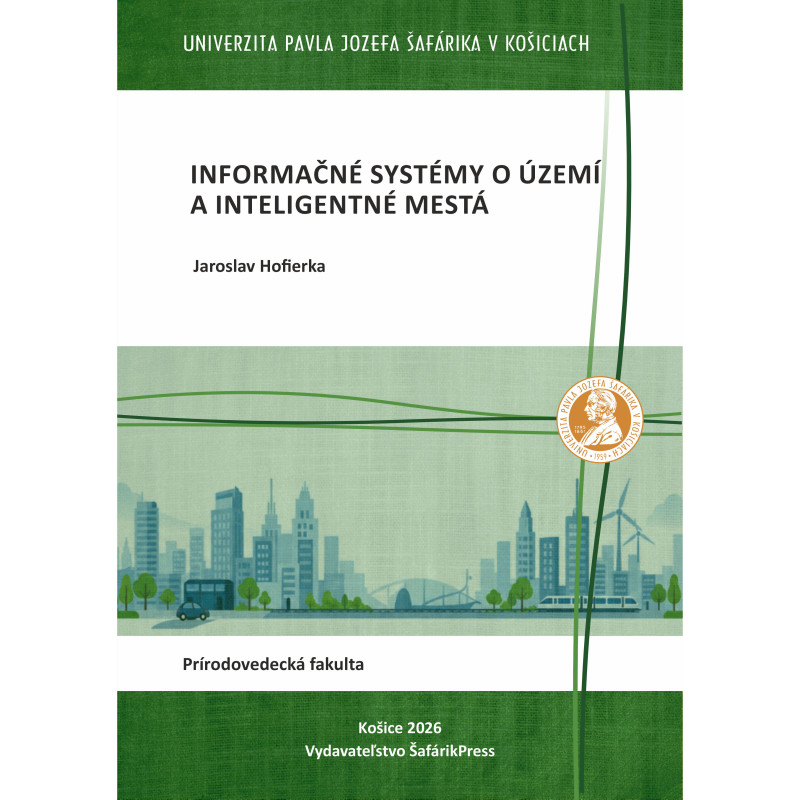
The lecture notes "Land Information Systems and Smart Cities" provides a comprehensive overview of geoinformation technologies within the context of public administration and modern land management. The publication systematically explains the principles of Land Information Systems (LIS), their architecture, components, and practical applications. Emphasis is placed on linking GIS technologies with real-world applications in local governments, infrastructure organizations, and the business sector. The text covers the hardware and software equipment of LIS, including modern trends such as cloud computing, open-source solutions, and the integration of artificial intelligence.
Special attention is given to data, which represent a key component of LIS, including an overview of the most important geospatial data products in Slovakia. The publication analyzes WebGIS technologies, map portals, and OGC standards (WMS, WFS, WCS) in detail, which enable the effective accessibility and sharing of geodata. A significant part is also dedicated to the National Infrastructure for Spatial Information (NIPI) and the INSPIRE Directive, ensuring data interoperability at both national and European levels.
The lecture notes "Land Information Systems and Smart Cities" provides a comprehensive overview of geoinformation technologies within the context of public administration and modern land management. The publication systematically explains the principles of Land Information Systems (LIS), their architecture, components, and practical applications. Emphasis is placed on linking GIS technologies with real-world applications in local governments, infrastructure organizations, and the business sector. The text covers the hardware and software equipment of LIS, including modern trends such as cloud computing, open-source solutions, and the integration of artificial intelligence.
Special attention is given to data, which represent a key component of LIS, including an overview of the most important geospatial data products in Slovakia. The publication analyzes WebGIS technologies, map portals, and OGC standards (WMS, WFS, WCS) in detail, which enable the effective accessibility and sharing of geodata. A significant part is also dedicated to the National Infrastructure for Spatial Information (NIPI) and the INSPIRE Directive, ensuring data interoperability at both national and European levels.
The final chapters focus on the role of LIS within the Smart Cities concept, including the use of IoT, real-time data, and digital twins of cities. The publication reflects the current state of geoinformatics development in Slovakia and worldwide (as of 2026). The lecture notes is primarily intended for students of geography and geoinformatics, but also for professionals in the field and public administration employees. Its goal is to provide a cohesive theoretical and practical foundation for understanding and implementing modern land information systems.

Data sheet
E-book
Peter Fedoročko (eds.)
From June 14 to June 17, 2022, the 8th annual Spring School for Doctoral Students at Pavol Jozef Šafárik University in Košice will take place in Liptovský Ján. The scientific program of the spring school will comprise 3 plenary lectures by leading scientific experts and 1 workshop. Doctoral students will present their research papers in two sections: 22 doctoral students of Faculty of Public Administration, Faculty of Law and Faculty of Arts, and 26 doctoral students of Faculty of Medicine and Faculty of Science. The scientific programme of the spring school will also include a panel discussion with the management of Pavol Jozef Šafárik University in Košice.
E-book
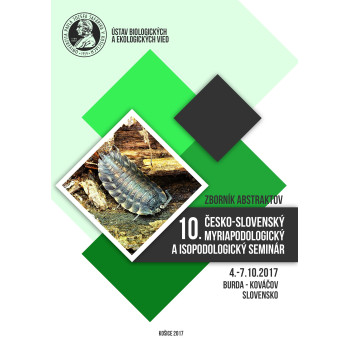
Burda - Kováčov, Slovensko, 4.-7.10.2017
Abstracts of lectures by Czech and Slovak zoologists, ecologists, and physiologists, who study soil arthropods in the taxa Myriapoda and Oniscidea as model groups, presented at the 10th seminar in Kováčová near Chľaba, Slovakia.
E-book
Stela Csachová - Ján Kaňuk - Alena Gessert - Ladislav Novotný - Štefan Gábor - Jozef Šupinský
This book addressed the inquiry-based learning and teaching with the support of geospatial technologies. Today, geospatial technologies are influencing geography teaching learning, particularly in secondary education. Theoretical framework gives the reader the insight to inquiry-based learning, with special focus on inquiry in geography. The one-by-one step of inquiry is analysed in detail. The major part of the book presents the eleven models of geography lessons, representing the subject content of physical, human and regional geographies, various levels of inquiry and use of different geospatial technologies. The readers are acquainted with the use of geographic information system (particularly Google Earth and ArcGIS online), web portals, webGIS, open data, mobile applications and new forms of 3D cartographic visualisation (virtual reality, 3D print, dynamic 3D map) in teaching geography. The lesson models were tested with the students to be geography teachers in school year 2021/2022. This books serves as resource mainly for undergraduate teacher students and in-service geography teachers.
Download e-book for free (pdf)
E-book
Jozef Bednarčík (ed.)
The European Magnetic Sensors and Actuators Conference (EMSA) is a consolidated European forum that serves to assess the status, recent progress, and development in the field of magnetic sensor technology and magnetic actuators. It was first held in 1996 in Iasi (Romania) and since then has continued every two-three years in different European cities. The aim of the conference is to generate an overview of research in magnetic sensors and actuators, to recognize their relevance in modern industry and to identify potential future collaborations. EMSA 2024 will provide an excellent opportunity to bring together scientists and engineers from universities, research institutes and industry to present and discuss their most recent results covering both fundamental and applied aspects of magnetic sensors and actuators.
Download e-book for free (pdf)