Slovenčina


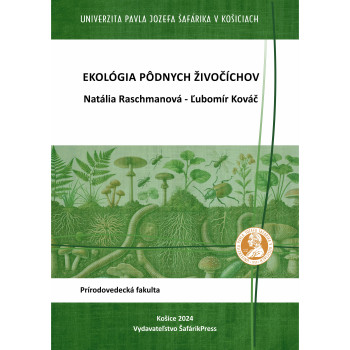
E-book
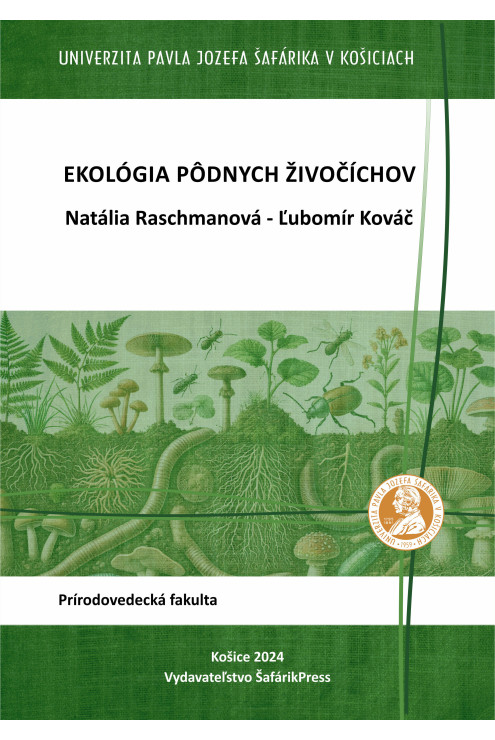
Natália Raschmanová - Ľubomír Kováč
The text summarizes the basic knowledge about the functioning of the soil ecosystem with a focus on soil protists and dominant groups of soil animals. Characteristics of each soil animal group include basic morphology, ecology, distribution, population dynamics and their importance in the soil ecosystem. The aim of the text is to gain a basic understanding of the diversity and interactions of soil fauna with the soil environment. It deals with the ecological classification of soil fauna on the basis of body size, presence in the soil during the life cycle, food preference and by locomotion. It highlights important morphological and ecophysiological adaptations of soil fauna to physical and chemical environmental factors. The text also gives an overview of the basic methods in the field collection of soil fauna and their extraction from soil samples under laboratory conditions. It further informs on the method of taxonomic identification and ecological evaluation of soil fauna communities. Discusses the soil fauna of different types of ecosystems. It highlights the differences in soil fauna communities that inhabit grassland and forest habitats, and agricultural soils. This teaching material is intended for students in biology degree programmes.

Data sheet
Norbert Kopčo - Frederick Gallun - Beáta Tomoriová - Ľuboš Hládek(eds.)
Cognitive neuroscience is a fast developing scientific field which aims at uncovering the neural basis of human perception and cognition. To achieve this goal, cognitive neuroscience uses a variety of tools and approaches ranging from non-invasive brain imaging to psychophysics and neural modeling. Mastering such tools requires skills and knowledge from multiple scientific domains, including neurophysiology, cognitive psychology, and several computational fields.
Access on request via email: kogneuro (@) gmail.com
E-book
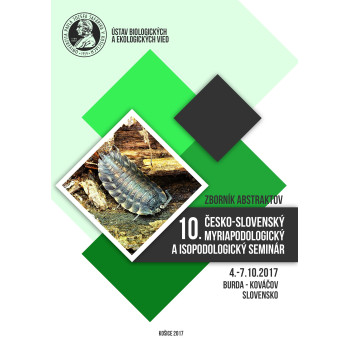
Burda - Kováčov, Slovensko, 4.-7.10.2017
Abstracts of lectures by Czech and Slovak zoologists, ecologists, and physiologists, who study soil arthropods in the taxa Myriapoda and Oniscidea as model groups, presented at the 10th seminar in Kováčová near Chľaba, Slovakia.
E-book
JOZEF BEDNARČÍK (ed.)
This Book of Abstracts presents the scientific contributions of participants of the School of XFEL, Synchrotron and Neutron Radiation Users 2026 (SFEL 2026), held in Stará Lesná, Slovakia, from 28 September to 2 October 2026. Organized by Pavol Jozef Šafárik University in Košice under the auspices of the Ministry of Education, Research, Development and Youth of the Slovak Republic, in cooperation with the European X-Ray Free-Electron Laser Facility (European XFEL) in Hamburg and the Institut Laue-Langevin (ILL) in Grenoble, SFEL 2026 continues a long-standing tradition of educational events dedicated to advanced photon and neutron research infrastructures. SFEL 2026 brings together 115 participants from 13 countries, with a particular focus on students, doctoral candidates, and early-career researchers. Through lectures delivered by leading international experts, oral and poster presentations, hands-on training activities, and a satellite meeting devoted to the European Solar Telescope project, the school promotes knowledge transfer, interdisciplinary collaboration, and the development of new scientific partnerships. As the ninth event of the SFEL series, SFEL 2026 further strengthens the links between Slovak researchers and major European facilities, including European XFEL, ILL, ESRF, DESY, and emerging ESFRI infrastructures.
E-book
The aim of writing the university textbook "Selected Heterocyclic Compounds" was to create a study aid for students of the Organic Chemistry program, which provides essential information in a clear format for the subject of Heterocyclic Compounds. In selecting the content of the textbook, the goal was to present basic information about the chemistry of the most significant heterocycles. Given that the summary of chemical knowledge about heterocycles is vast, it was not possible to include all heterocyclic compounds in the content.
The intention was for readers to orient themselves in the field of heterocyclic compounds. Separate chapters included in the content address the nomenclature of heterocycles, basic chemical properties of individual heterocycles, their synthesis and reactions, the occurrence of heterocycles in nature, and their practical applications (medications, dyes, pesticides, detergents, etc.).
Download e-book for free (pdf)