Filter By

Categories

Categories

Year of publication:

Year of publication:

Publication language:

Publication language:

Faculty:

Faculty:

UPJŠ Unit

UPJŠ Unit

Method of publication:

Method of publication:

Active filters

  • Categories: Science
  • Year of publication:: 2012
  • Year of publication:: 2015
  • Year of publication:: 2025
  • Year of publication:: 2025
  • Publication language:: Slovak
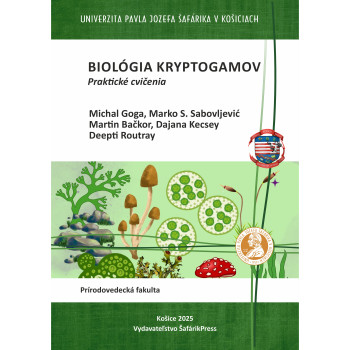
Biológia kryptogamov

Biológia kryptogamov

E-book

E-publication
Michal Goga-Marko S. Sabovljević-Martin Bačkor-Dajana Kecsey-Deepti Routray
A comprehensive guide that introduces you to the fascinating diversity and systematics of lower plants. These practical lessons are designed to provide hands-on training, allowing students to engage directly with the interesting study of Cryptogams by observation, analysis, and identification and experimentation. Beginning with the overall idea of cryptogam in a field trip near by the vicinity of Botanical garden then followed by the basics of microscopy in, will help to gain essential skills in understanding the components and proper usage of a microscope, a fundamental tool in botanical studies.
Download the e-book for free (pdf)

Digiform - podporná aplikácia k Digilib

Digiform - podporná aplikácia k Digilib

E-book

E-publication

Denisa Maceková-Monika Václavková-Marek Kvet-Ivana Sotáková

The publication Digiform: A Supporting Application to Digilib – User Guide, Part B presents the Digiform web application as a tool that extends the functionality of the Digilib digital library of formative assessment tools. The application enables the creation and editing of formative assessment tool templates, which can be adapted to the specificities of individual subjects and levels of education and subsequently imported into the Digilib environment for use in the teaching process. The guide provides a detailed description of how to work with the Digiform application, from creating new templates, editing and personalising them, through to their export and implementation in the main Digilib application. Attention is also given to the interconnection with the Digilib Images application, which enables the integration of visual elements into the assessment tools, thereby enhancing their didactic effectiveness and visual appeal. The guide is intended for teachers at all levels of education, student teachers, school administrators, and digital coordinators who are interested in the systematic use of the Digilib digital library to support the implementation of formative assessment, enhance the quality of the educational process, and foster the development of students’ self-assessment and reflective competences.

Download the e-book for free (pdf)

Digitálna knižnica nástrojov formatívneho hodnotenia Digilib

Digitálna knižnica nástrojov formatívneho...

E-book

E-publication

Denisa Maceková-Monika Václavková-Marek Kvet-Ivana Sotáková
The Digilib Digital Library of Formative Assessment Tools – User Guide, Part A introduces the Digilib application as the key component of the library, designed to support the implementation of formative assessment in teaching at all levels of education. It explains the structure of the system, its modules, the principles of user roles, and the possibilities for working with the digital formative assessment tools. Particular attention is paid to the possibilities for creating, editing, and assigning the tools to students, as well as to providing personalised real-time feedback. The User Guide also explains how the Digilib application is interconnected with the affiliated applications Digiform and Digilib Images, which expand the possibilities for creating and visualising assessment tools. The guide is intended for teachers at all levels of education, student teachers, school administrators, and digital coordinators who are interested in the systematic use of the Digilib digital library to support the implementation of formative assessment, enhance the quality of the educational process, and foster the development of students’ self-assessment and reflective competences.
Download the e-book for free(pdf)

FORMATÍVNE 2025. Spoločne pri implementácii formatívneho hodnotenia do škôl

FORMATÍVNE 2025. Spoločne pri implementácii...

E-book

E-publication

Mária Ganajová-Ivana Sotáková-Petra Letošníková

The conference proceedings FORMATIVE 2025 – Implementing Formative Assessment in Schools Together constitute the output of an online conference organised by the Institute of Chemical Sciences, Faculty of Science, Pavol Jozef Šafárik University in Košice, in cooperation with the National Institute of Education and Youth in Bratislava, within the framework of the KEGA project No. 001UPJŠ-4/2023. These proceedings present current knowledge, experience, and examples of good practice in implementing formative assessment in primary, secondary, and university teaching, with an emphasis on the use of digital tools. The papers address the foundations of formative assessment in the context of curricular changes and the ongoing educational reform, as well as specific didactic procedures for its implementation in the teaching of science and social science subjects, including mathematics, Slovak language, and foreign languages. Particular attention is paid to the development of professional teaching competences, formative assessment strategies, providing targeted feedback, and promoting students’ active participation in the assessment process. These proceedings also present the Digilib digital library, a tool developed to support the creation and management of formative assessment processes within the school environment. This publication is intended for experts in pedagogy and didactics, teachers at all levels of education, student teachers, digital coordinators, and all those interested in educational innovation and in improving the quality of teaching through formative assessment.

Download the e-book for free

Praktikum z nukleárnej magnetickej rezonancie. Časť 2: Kvantitatívna analýza a fyzikálno-chemické štúdie

Praktikum z nukleárnej magnetickej rezonancie....

E-book

E-publication
Mária Vilková-Zuzana Kudličková-Ján Elečko
This study material is intended for students of chemistry and related disciplines interested in applied nuclear magnetic resonance (NMR) and physical chemistry. It offers practice-oriented tasks designed to develop skills in NMR spectroscopy, quantitative analysis, and data interpretation. Students learn modern approaches to determining physicochemical parameters (e.g., partition coefficients, pKa values, keto–enol equilibria, or enantiomeric excess) and gain experience with software tools for spectrum processing.
Download the e-book for free (pdf)

EFFUSE – edukačné materiály pre verejnosť

EFFUSE – edukačné materiály pre verejnosť

E-book

E-publication

Beáta Valkay ed.
Ivana Slepáková-Lenka Maliničová a kol.

The publication EFFUSE – Educational Materials for the Public was developed within the EFFUSE project and focuses on current environmental issues of river landscapes. It emphasizes the importance of water as an irreplaceable resource and the need to protect it. Special attention is given to bioindicators – organisms whose presence or absence reflects the state of the environment. Monitoring bioindicators makes it possible to detect ecosystem changes before serious damage occurs. The publication highlights that biodiversity is essential for ecosystem stability and health. As such, it serves as a valuable educational resource for the public, raising environmental awareness and encouraging active involvement in nature conservation.

Download the e-book for free (pdf)

EFFUSE príručka pre učiteľov

EFFUSE príručka pre učiteľov

E-book

E-publication

Beáta Valkayed.
Ivana Slepáková-Lenka Maliničová a kol.

The EFFUSE Teacher's Guide is a practical educational material for primary and secondary school teachers who want to develop environmental awareness with their pupils through field-based learning. It is based on the concept of the EFFUSE project (‘Environment for the future by science education’), which aims to link science, research and education with environmental protection. The manual provides teachers with methodological support for planning and implementing outdoor activities aimed at observing and documenting organisms around the Laborec River and the Uh River. It contains instructions for working with real samples, basic biomonitoring procedures and offers the opportunity to participate in the creation of a virtual laboratory that mirrors the state of the local aquatic ecosystem. Through these activities, pupils will learn to understand the links between human activity and the state of the environment, while learning the basics of how scientists work in the fields of biology and ecology. The guide also motivates teachers to become agents of positive change, inspire the younger generation to be active and engage the community in conservation. It is a challenge and an opportunity to create a space for meaningful learning in line with current trends in environmental and digital education.

Download the e-book for free (pdf)

EFFUSE príručka pre žiakov: Základy biomonitoringu vodných tokov

EFFUSE príručka pre žiakov: Základy...

E-book

E-publication

Beáta Valkay ed.
Ivana Slepáková-Lenka Maliničová a kol.

EFFUSE - A Guide for Students is an interactive educational resource for primary and secondary school students to help them better understand how their daily activities affect the environment. The handbook was developed within the EFFUSE project (‘Environment for the future by science education’) and motivates young people to take a greater interest in the nature around them. It focuses on practical field activities during which they will explore the ecosystem of the Laborec and Uh rivers, observe and document organisms and work with real samples from nature. At the same time, they will learn about the work of scientists - botanists, zoologists and microbiologists - and learn basic biomonitoring methods. The manual will also guide them through the process of creating a virtual laboratory to display the results of their investigations of an aquatic ecosystem. It will help them understand the importance of sustainable development and encourage them to behave responsibly towards nature. It is their opportunity to learn about their surroundings in a new way, to learn to think scientifically and to become active creators of positive change for their community and future generations.

Download the e-book for free(pdf)

Skriptum z lekárskej biológie a genetiky pre bakalárske študijné programy

Skriptum z lekárskej biológie a genetiky pre...

E-book

E-publication

Terézia Hudáková-Ján Šalagovič-Jozef Židzik

The Textbook of Medical Biology and Genetics for Bachelor's Study Programs is a comprehensive academic resource tailored to the curriculum of undergraduate courses at the Faculty of Medicine, Pavol Jozef Šafárik University in Košice. Each of the 15 chapters begins with a concise theoretical overview, followed by a carefully selected set of practical exercises and model examples designed to promote active learning and critical thinking. This publication aims to serve as an essential companion for students, supporting their understanding of key concepts and enhancing their preparation for coursework and examinations in designated bachelor's programs.

Download the e-book for free (pdf)

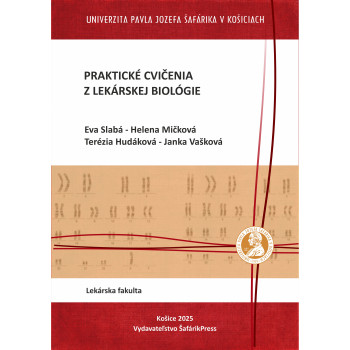
Praktické cvičenia z lekárskej biológie

Praktické cvičenia z lekárskej biológie

E-book

E-publication

Eva Slabá-Helena Mičková- Terézia Hudáková-Janka Vašková

Teaching texts „Praktické cvičenia z lekárskej biológie“ provide the theoretical foundations of microscopy, various microscopic techniques and preparation of microscopic slides in an understandable form. The chapters of the teaching texts contain model questions and tasks from cytology, molecular biology and genetics enabling students to acquire new knowledge from individual thematic areas and provide instructions for the implementation of tasks during laboratory lessons in medical biology. Teaching texts are primarily intended for the practical lessons in the subjects Biológia 1 and Biológia 2 for Slovak students of the first year of General Medicine and the subjects Lekárska biológia and Genetika a regeneratívna medicína for Slovak students of the first and second year of Dental Medicine at P. J. Šafárik University in Košice – Faculty of Medicine.

Download the e-book for free (pdf)

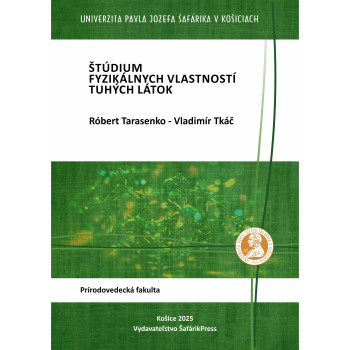
Štúdium fyzikálnych vlastností tuhých látok

Štúdium fyzikálnych vlastností tuhých látok

E-book

E-book

Róbert Tarasenko - Vladimír Tkáč

The presented university textbook is intended for all students engaged in the field of condensed matter physics who, while working on their final theses, come into contact with the experimental device known as the Physical Properties Measurement System (PPMS). The main purpose of this textbook is to facilitate, in a certain way, the students' work with the complex manuals provided with this experimental device. At the same time, through this textbook and its clear instructions, students acquire the necessary experimental skills essential in the field of condensed matter physics.

Download the e-book for free (pdf)

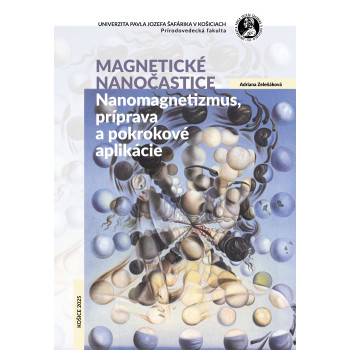
MAGNETICKÉ NANOČASTICE: NANOMAGNETIZMUS, PRÍPRAVA A POKROKOVÉ APLIKÁCIE

MAGNETICKÉ NANOČASTICE: NANOMAGNETIZMUS,...

E-book

Adriana Zeleňáková

Magnetic nanoparticles are extremely interesting magnetic objects that still hide much that is undiscovered, both because of their physical properties and because of their diverse applications. Iron nanoparticles, or iron oxides, are used in medical diagnostics for magnetic resonance imaging, in the treatment of hyperthermia, and an important application is the use of magnetic particles for targeted drug delivery.

The textbook "Magnetic Nanoparticles: Nanomagnetism, Preparation and Advanced Applications" is intended primarily for students of the Master's programme in Physics and students of related disciplines at universities and faculties with a physical, chemical, metallurgical and biophysical focus. The motivation for writing this textbook was to develop study material that would contribute to improving the quality of teaching in the profile subject Nanomaterials and Nanotechnology at the Institute of Physical, Faculty of Sciences, UPJŠ, in the Master's programme Condensed Matter Physics, as well as in the profile subject in the PhD programme Advanced Materials.

The university textbook is divided into eight chapters. The first and second chapters are devoted to basic information about magnetism, the origin of nanomagnetism in nanoparticles and surface phenomena. The third and fourth chapters are devoted to nanomagnetism in nanoparticle systems. The fifth chapter describes in detail individual protocols for investigating the phenomenon of superparamagnetism and the phenomenon of superspin glass using the SQUID device. The sixth chapter describes individual procedures for the preparation of magnetic nanoparticles and the seventh chapter describes individual experimental techniques for the study of magnetic nanoparticles. The final eighth chapter describes the applications of nanoparticles in biomedicine.

During the writing of this textbook, the chapters were prepared using the foreign-language specialist literature listed in the recommended reading list.

Download the e-book for free

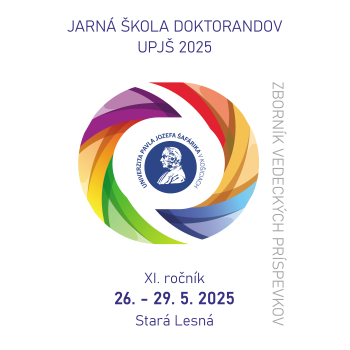
Jarná škola doktorandov 2025

Jarná škola doktorandov 2025

E-book

E-book

Monika Halánová (ed.)

V dňoch 26. – 29. mája 2025 sa bude v Starej Lesnej konať už 11. ročník celouniverzitného podujatia Jarná škola doktorandov UPJŠ. V rámci odborného programu odznie šesť plenárnych prednášok významných odborníkov z Univerzity Pavla Jozefa Šafárika a uskutočnia sa dva workshopy. Prezentovať výsledky svojej doterajšej vedeckovýskumnej práce bude spolu 52 doktorandov dennej formy štúdia, z toho 26 doktorandov v sekcii lekárskych a prírodných vied (Lekárska fakulta/Prírodovedecká fakulta) a 26 doktorandov v sekcii spoločenskovedných a humanitných vied (Právnická fakulta/Fakulta verejnej správy/Filozofická fakulta).

Download the e-book for free(pdf)

Veríme, že predložené informácie v tejto publikácii môžu prispieť k ochrane nielen populácií ropúch zelených v meste Košice, ale

Ropucha zelená v meste Košice

E-book

E-book

Monika Balogová - Viktória Vargová - Kristián Gulyás - Natália Pipová - Dalibor Uhrovič -Marcel Uhrin

A peer-reviewed publication dealing with the biology and ecology of the European green toad, bringing new findings through scientific research on the roosting ecology, spatial activity and dispersal of this protected species in urban environments. The subject matter of this publication is highly topical, as amphibians represent the most threatened vertebrate group in the world. This work is suitable not only for university students interested in batrachology, amphibian ecology, and vertebrate zoology, but also for conservation workers, municipalities, and specialists directly involved in the reconstruction of urban areas with green toads. Last but not least, this publication is suitable for enthusiasts with an interest in nature and its conservation.

Download the e-book for free (pdf)

Metódy v genetike človeka a molekulovej biológii

Metódy v genetike človeka a molekulovej biológii

E-book

E-book

Jozef Židzik - Terézia Hudáková - Martina Šemeláková - Ján Šalagovič

Methods in human genetics and molecular biology encompass various experimental, diagnostic and analytical techniques used to investigate the structure, function, expression, and regulation of genes, as well as general molecular processes in human cells. The university textbook Methods in Human Genetics and Molecular Biology provides a comprehensive overview of classical and modern experimental and analytical procedures. In fifteen chapters, it addresses methods such as PCR, RFLP, FISH, Western blot, DNA sequencing, DNA microarrays, molecular cloning, cytogenetic analysis, and forensic genetic analysis. The book is primarily intended as study material for the course of the same name taught in the 2nd year of study at the UPJŠ Faculty of Medicine, but it can also be used by all university students in the fields of biology, biotechnology, and related disciplines.

Download the e-book for free (pdf)

HOST-GUEST A SUPRAMOLEKULOVÁ CHÉMIA

HOST-GUEST A SUPRAMOLEKULOVÁ CHÉMIA

E-book

E-book

Miroslava Matiková Maľarová

The university textbook entitled: Host-guest and supramolecular chemistry provides basic information about this scientific field as well as the types of compounds that belong to it. It provides basic characteristics of non-bonded interactions as well as methods of characterization and classification for these compounds. It summarizes knowledge about various types of host-guest systems from the oldest such as Hofmann clathrates to inclusive compounds such as cyclodextrins and calixarenes. In addition to structural and synthetic information, which is supplemented with images, the textbook also addresses the possibilities of application or practical use of compounds. The conclusion of each chapter is supplemented with tasks for elaboration on a given topic.

Download the e-book for free (pdf)

Špeciálne praktikum školských pokusov z organickej chémie

Špeciálne praktikum školských pokusov z...

E-book

E-book

Jana Špaková Raschmanová - Zuzana Kudličková - Kvetoslava Stanková

Organic chemistry plays a key role in our lives, from the pharmaceutical industry to the production of plastics and food additives. Additionally, it is essential in biochemistry, as it deals with the basic building blocks of living organisms, such as carbohydrates, lipids, proteins, and nucleic acids. One of the best ways to teach organic chemistry and increase students' interest in the subject is through conducting school experiments. This study material presents a collection of visually striking practical experiments in organic chemistry that will help students better understand the chemical processes and techniques used in the field. This electronic study material is supplemented with visual material, allowing students to verify the results of experiments and better understand the individual procedures. At the end of each section, there are questions to help assess the acquired knowledge and encourage deeper understanding of the experiments conducted.

Download the e-book for free (pdf)

Praktikum z nukleárnej magnetickej rezonancie. Časť 1: Kvantitatívna NMR

Praktikum z nukleárnej magnetickej rezonancie....

E-book

E-book

Mária Vilková - Zuzana Kudličková - Aneta Salayová - Tomáš Ján Liška

The Nuclear Magnetic Resonance Practicum – Part 1: Quantitative NMR is designed for students taking the NMR Practicals course, which focuses on the practical aspects of quantitative nuclear magnetic resonance (qNMR). This publication builds on previous NMR courses and assumes basic theoretical knowledge of the method, emphasizing experimental procedures, data processing, and result interpretation. qNMR is a precise analytical technique with broad applications in analytical chemistry, pharmaceutical research, biomedicine, and quality control. The script provides a detailed guide to conducting experiments, as well as procedures for analyzing and evaluating acquired data. This publication offers students methodological guidance and support in mastering qNMR analysis and serves as a valuable resource not only during their studies but also for further research in NMR spectroscopy.

Download the e-book for free (pdf)

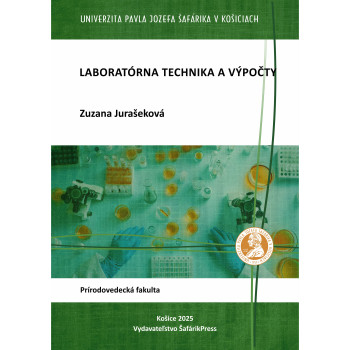
Laboratórna technika a výpočty

Laboratórna technika a výpočty

E-book

E-book

Zuzana Jurašeková

Úvod k praktikám k experimentálnym metódam biofyziky

The university textbook titled Laboratory Techniques and Calculations is designed for the first-year students of the bachelor's degree in Biophysics at the Institute of Physics, Faculty of Sciences, P. J. Šafárik University in Košice. The objective is to equip students with fundamental knowledge and practical skills for the work in a chemical laboratory. It is essential for addressing different biophysical issues and experiments that students will have to solve later. The textbook comprises three principal sections: a theoretical part focused on the calculations, a section dedicated to laboratory work, and the last part offers a brief introduction to spectroscopy. The theoretical part summarizes the basic definitions and equations related to the characterization and preparation of solutions and mixtures. The second, most comprehensive part provides guidance and suggestions for safe and efficient practices in a chemical laboratory. The primary focus is on the manipulation of chemical substances and the use of specific small laboratory instruments and equipment. The fundamental laboratory procedure guides for the selected laboratory works are also provided. As part of a short introduction to spectroscopy, students can become familiar with fundamental spectroscopic concepts and principles. UV-VIS absorption spectrophotometry receives special attention, along with a brief introduction to fluorescence. The textbook is supplemented by various practical and theoretical tasks, as well as numerous web links to further explanatory texts and videos.

Download the e-book for free (pdf)

Lekárska chémia -  Návody a protokoly na praktické cvičenia

Lekárska chémia - Návody a protokoly na...

E-book

E-book

Marek Stupák et al.

A well-known proverb says: "It is better to see once than to hear a hundred times." With this in mind, the electronic version of the teaching materials has been designed, as we are convinced that practical laboratory experience is irreplaceable and still holds its significance in university studies.

In the provided teaching texts, you will find a set of experiments that complement and help better understand the theoretical knowledge gained through self-study as well as lectures in an appropriate manner. Additionally, this e-version allows students, after printing and subsequently completing individual tables, observations, and conclusions, to submit them as a laboratory report that confirms they have successfully mastered the assigned tasks.

Download the e-book for free (pdf)

Návody na praktické cvičenia z biotechnológie

Návody na praktické cvičenia z biotechnológie

E-book

E-book

Danica Sabolová

This university textbook is intended for students of the Faculty of Science of the University of Applied Sciences in Košice who have enrolled in practical exercises in Biotechnology, but also for all other students who are interested in learning about the practical applications of biotechnology.

The aim of the practical course is to familiarize students with basic biotechnological methods and their applications. The students will verify in practice the theoretical knowledge acquired in the Biotechnology lectures such as the course of fermentation processes, wine production, preparation of fermented milk products and cheese, preparation of culture media, inoculation and cultivation of microorganisms, etc. The practical exercises also include the use of analytical and spectral methods, which are an integral part of biochemistry.

The scripts are published only in electronic form and are available on the University's website: http://kosice.upjs.sk/~kbch/sk, for the reason that it will always be possible to update and modernize the content of the laboratory exercises.

Download the e-book for free (pdf)

Vybrané experimentálne úlohy z koloidiky

Vybrané experimentálne úlohy z koloidiky

E-book

E-book

Daniela Kladeková

This university text is intended for students of chemical and ecological sciences at the Faculty of Natural Sciences of the P. J. Šafárik University in Košice and is intended to serve as a tool for experimental exercises in colloid chemistry. Colloid chemistry is an important part of the theoretical basis of the chemical sciences and belongs to the newer interdisciplinary fields of natural sciences.

It combines knowledge from physical chemistry, physics and biology, while also drawing on a solid knowledge of mathematics and other scientific disciplines. Experiments are often essential in understanding the problems of colloid chemistry, modelling ideas about the phenomena and laws involved in the discipline. This is why active participation in experimental exercises is so important and essential to mastering the material in colloid chemistry.

In selecting the tasks for these scripts, it was also necessary to respect the considerable limitations imposed by the possibilities of the laboratory instrumentation and material equipment of our department. Despite this limitation, however, they can illustrate to students the basic theoretical physicochemical principles of colloid dispersion systems and, importantly, their understanding can contribute to the understanding of some of the more important peculiarities of colloidal phenomena.

Download the e-book for free (pdf)

Základné fyzikálne praktikum III.

Základné fyzikálne praktikum III.

E-book

E-book

Janka Vrláková - Stanislav Vokál

Atomic and nuclear physics are relatively young scientific disciplines forming the final part of the general physics course at the Faculty of Physics of the Jagiellonian University. Their aim is to explain the nature of the basic physical properties of atoms, atomic nucleus and elementary particles.

This is also the content of the lectures and exercises ‘General Physics IV’ in the 2nd year of the Bachelor's degree in Physics at the Faculty of Natural Sciences (PF) of the P.J. Šafárik University (UPJŠ) in Košice. They are followed by optional lectures ‘Nuclear Radiation in the Environment’, ‘Introduction to the Physics of the Microworld’ in the 3rd year of the Bachelor's degree of single-discipline study of physics, or teacher study of physics in combination with another subject, and ‘Subnuclear Physics’ in the 1st year of the Master's degree of teacher study of physics in combination with another subject.

In the aforementioned lectures, the latest experimental findings on the structure and behaviour of the microworld are presented by means of physical theories and their subsequent experimental verification in experiments.

Download the e-book for free (pdf)

Matematická analýza 1

Matematická analýza 1

E-book

E-book

Božena Mihalíková - Ján Ohriska

This text is intended for first-year students in 76-12-8 ‘General Education Teaching’ in combinations with mathematics. It is based on the authors' lectures and their more than ten years of experience in teaching this subject at the Faculty of Education of the University of Applied Sciences. When writing it, the authors tried to take into account the specificity of mathematics teaching studies.

The present teaching text was not written due to the lack of textbooks on mathematical analysis. The reason for writing it was the authors' findings that the students do not have sufficient experience in working with specialized literature from secondary school, the difficulties for many of them (especially in the first semesters) are caused by even a slightly different interpretation, not rarely also by a change in labeling, which makes them miss the essence of the studied problem. The authors of the text did not set out to be original. Their aim was to make such a selection of topics as is necessary for a future teacher of mathematics and to choose such a method of interpretation which, in their opinion, is suitable for first-year students.

A good mastery of the curriculum (expansion of the mathematical apparatus and the related possibilities of applying other methods of proof as well as the acquisition of the necessary numerical skills) presupposes the use of other literary sources (textbooks, collections of problems) according to the teacher's recommendation.

Download the e-book for free (pdf)

Príjem a transport minerálnych látok v rastlinách

Príjem a transport minerálnych látok v rastlinách

E-book

E-book

Peter Paľove-Balang

The text ‘Uptake and transport of mineral substances in plants’ in Slovak language provides a general overview of the uptake and distribution of substances in an easy-to-understand form.

The individual chapters introduce students to the properties of the soil environment, which have a significant influence on the availability of substances, as well as the transport of substances across membranes and over medium and long distances. The text contains the latest findings from the English literature, supplemented by diagrams and graphs created by the author on the basis of his own research or by compiling several sources.

The text is intended primarily for students of a master's degree in biology or ecology and assumes at least a basic knowledge of plant physiology.

Download the e-book for free (pdf)

Stresová fyziológia rastlín - Návody na cvičenia

Stresová fyziológia rastlín - Návody na cvičenia

E-book

E-book

Jozef Kováčik

These "Exercise Manuals" present a concise overview of commonly used methodologies as well as progressive techniques, such as the use of liquid chromatography and fluorescence microscopy. Individual tasks were selected based on the research focus of the Department of Botany at the Faculty of Science, Pavol Jozef Šafárik University in Košice, particularly in the context of "stress physiology."

Some tasks can also be utilized within the subject "Plant Ecology." Chamomile (Matricaria chamomilla) is typically used as a model plant for individual tasks due to its long-standing history of research at the Department of Botany and its ease of cultivation under laboratory conditions. The chapters also briefly discuss the significance of monitored parameters, principles of their determination, and metabolism (formation or degradation), aiming to indicate their mutual context.

This approach highlights that determining an individual parameter cannot provide a general explanation for the overall causes and impacts of observed changes; however, it can serve as a basis for testing hypotheses at the level of other parameters.

For deeper study of specific issues, there is an abundance of high-quality international monographs and review articles available.

Download the e-book for free (pdf)

Určitý integrál

Určitý integrál

E-book

E-book

Ondrej Hutník

The concept of the integral is one of the most significant concepts in mathematics as a whole. In its most primitive form, it was already used by the ancient Greeks in the creation of Euclidean geometry. However, it was only after Descartes' work on analytical geometry in 1637 that mathematicians could begin to consider the integral as a subject of analysis. Descartes' work laid the groundwork for the discovery of infinitesimal calculus by Leibniz and Newton around 1665. At that time, a great dispute arose over the priority of this discovery, dividing scholars of Germany and England into two opposing camps, each favoring their own champion. Today, we know that Newton's work on fluxions and fluents was somewhat earlier, but Leibniz's notation and approach have gained more acceptance in the mathematical world, and the symbols ∫ ∫ and d d are still used today. A brief overview of the history of the integral will be presented in Chapter 1.

Today, there is a plethora of scripts, textbooks, and books dedicated to explaining the concept of the integral. Therefore, every potential author faces the initial question of whether to write another text on this topic. Our affirmative answer to this question was driven by the students' request to find the subject matter of a part of the winter semester of the second year presented in a coherent form. The second motivation is a slightly different approach to the topic. If we consider the methods typically used in solving problems and gaining routine with a certain integral, it mainly involves the Newton-Leibniz formula, and often there is little time left to compute the definite (Riemann) integral using its definition. Therefore, we included a discussion of the Newton integral in Chapter 2, which reflects this fact and is directly related to the indefinite integral, whose various calculation methods receive relatively much attention in the previous semester. Only after that, in Chapter 3, do we build the theory of the Riemann integral, present criteria for its existence, classes of integrable functions, basic properties, and finally its relationship with the Newton integral. Questions primarily concerning geometric applications are addressed in Chapter 4, and in the final chapter, we focus on extending the Riemann integral to unbounded functions and unbounded intervals.

Download the e-book for free (pdf)

Počítačová fyzika I

Počítačová fyzika I

E-book

E-book

Milan Žukovič

The textbook Computational Physics I covers the topics taught in the course of the same name at the bachelor's level of the Physics study program, as well as in the course Application of Numerical Methods at the bachelor's level of the Applied Informatics study program.

The text builds upon the basic course in numerical methods, focusing on explaining the fundamental principles of computer-based solutions to some typical physics problems. It includes both the area of deterministic methods for solving problems modeled by ordinary and partial differential equations, as well as the area of stochastic Monte Carlo simulations. The course Computational Physics I lays the foundation for further study of more advanced computational methods taught at the master's level in the subject Computational Physics II. Nowadays, the use of computers as a tool for solving real physics problems, and for students as a tool for preparing their final bachelor's or master's theses, is almost indispensable.

This has led to the creation of numerous user-oriented software packages in various environments for solving a wide range of problems. However, without a thorough understanding of how individual computational techniques work, these programs become black boxes with many pitfalls and risks in their use. Therefore, this text emphasizes understanding both the strengths and weaknesses of individual methods and the assumptions for their successful application.

Download the e-book for free (pdf)

Študentská vedecká konferencia PF UPJŠ 2015

Študentská vedecká konferencia PF UPJŠ 2015

E-book

E-book

Vladimír Zeleňák(ed.)

The proceedings contain abstracts of contributions from participants of the Student Scientific Conference of the Faculty of Science, Pavol Jozef Šafárik University in Košice, which took place on April 22, 2015.

The Student Scientific Conference (SSC) enjoys long-term popularity among the faculty's students and teachers, and we are pleased that this was no different this year, with 128 contributions submitted to the SSC.

The contributions were organized into 19 sections, additionally complemented by an open programming competition and the final of the IHRA contest. For many students, presenting at the SSC is one of the first opportunities to gain experience in presenting their results before a professional audience. Considering the number of submitted contributions, along with the members of the expert juries from the faculty's teaching staff and the audience who came to support their classmates' presentations, the SSC is an event where a large part of the student and academic community of the faculty meets at one place and time. Many abstracts presented in this proceedings were developed as part of students' work on partial tasks that are components of research projects at the departments of the Faculty of Science, Pavol Jozef Šafárik University.

The abstracts represent, in a way, an overview of research topics at the individual workplaces of the faculty. The SSC proceedings thus serve as a useful tool that students and faculty teachers can use to present the faculty externally to partners, employers, and potential collaborators. Partners from practice have shown interest in cooperating in organizing the SSC for a long time. Since 2005, the association of IT companies has awarded a Prize for the Most Original Work and a Prize for the Work with the Best Prospects for Practical Application.

Download the e-book for free (pdf)

Návody na cvičenia z fyziológie rastlín

Návody na cvičenia z fyziológie rastlín

E-book

E-book

Miroslav Repčák - Martin Bačkor - Peter Paľove-Balang - Silvia Gajdošová

The establishment of the Plant Physiology Laboratory at the Department of Botany, Faculty of Arts, Pavol Jozef Šafárik University in Košice in 1969 was associated with the name of Ing. Štefan Kocúrik, CSc. (1923–2006), who also prepared the first "Instructions for Exercises in Plant Physiology" (Košice 1972, 1976).

Since 1980, the manual by Associate Professor RNDr. Karol Erdelský, CSc., and Ing. Fridrich Frič, DrSc., titled "Practicum and Analytical Methods in Plant Physiology" (Bratislava 1980) has been used. With the increase in the number of students, it became relevant in 1991 to publish the "Instructions for Exercises in Plant Physiology" again to improve preparation and the efficient organization of practical work. Associate Professor RNDr. A. Košturiak, CSc., contributed significantly to the expansion of the introductory part of the instructions with his valuable advice, for which the authors are grateful. For the fourth edition, some tasks were updated and modernized, taking into account the possibilities of the renovated laboratory. The selection of tasks was adapted to the current scope of exercises for individual plant physiology subjects within the bachelor's and master's study programs in biology and ecology. These subjects include: Plant Physiology, Plant Metabolism, Mineral Nutrition of Plants, Plant Growth and Development, and Plant Ecology. Some tasks are also suitable for high school experiments.

The choice of topics was influenced by the research focus of our workplace on secondary metabolism, ecophysiology, and medicinal plants. The instructions generally adhere to the SI unit system, occasionally including other commonly used units.

Download the e-book for free (pdf)

Metodika tvorby učebných úloh a didaktických testov pre chémiu

Metodika tvorby učebných úloh a didaktických...

E-book

E-book

Mária Ganajová

The current teaching of chemistry has its specific problems. On one hand, due to the shift of the focus of chemistry curriculum towards theoretical content, the difficulty of chemistry material has increased, and in connection with this, students' interest in chemistry has decreased.

The lack of student interest in chemistry is mostly supported by the opinion that it is precisely chemistry that significantly contributes to the deterioration of environmental quality. On the other hand, we live in an era where we encounter chemical products practically everywhere. It is necessary to learn the basics of chemistry as well as possible, which makes the question of increasing interest in chemistry education and improving its effectiveness very relevant. State educational programs have been introduced into Slovak schools as a foundation for the creation of school educational programs. These emphasize not only acquiring a certain amount of knowledge but also the development and enhancement of key and specific competencies of students, preparing them for lifelong learning and their application in life.

Therefore, increasing attention is being paid to one of the fundamental didactic tools for raising student activity in teaching, and thus improving the effectiveness of chemistry education – learning tasks. From both theory and practice of chemistry teaching, we know that learning tasks, questions, examples, exercises, etc., are among the important components of every teaching lesson. Learning tasks are applied in all phases of teaching – in the motivational phase, the phase of acquiring knowledge, the phase of consolidating knowledge, and the phase of checking the acquired knowledge. It is therefore clear that every teacher will sooner or later find themselves in a situation where they will have to select learning tasks from textbooks, workbooks, collections of problems and examples, or create them themselves.

This scientific monograph is intended for educational specialists and chemistry teachers, aiming to familiarize them with examples of various types and forms of learning tasks and the basics of their creation in chemistry. It can also be helpful for them in preparing certification works focused on test creation and their statistical evaluation.

Download the e-book for free (pdf)

Nanotechnology

Nanotechnology

€17.68
Availability: 58 In Stock

 Andrej Oriňak - Renáta Oriňaková - Andrea Fedorková

Nanotechnology represent the fastest developing science in the present. They are based on the technologies that enable the matter manipulation at atomic level. Nanotechnology offer prepartion of the new materials with unknown and very specific properties and functions.Recent nanotechnology still stay in formative phase of their development. But more and more they are visible with nano-specific phenomenons in the fundamental control of the properties as well mater behaviour. This is quite possible that without nanotechnology will not work any science to the future, moreover that science will not exist anymore. Nanotechnolgy will give a chance and force to transform world to more environmental and comfortable. Expected is expansion of the nanotechnolgy to molecular nanosystems – heterogenous nets, in which molecules and supramolecules work as the nanodevices. The computers and robots will be reduced to the small and ultrasmall dimensions. In medicine will foremost the application of nanotechnology in genetic therapy and elimination of ageing. Nanosurgery will work at molecular level, cancer cells will be identified early and filtered , then substituted with healthy and unchanged. It is necessary to inform university or high school students  about principles of nanotechnolgy, preparation of the nanostructures, functionality of them and to offer full representation about molecular systems and nanodevices; the methods of nanostructures characterization and about application in miniaturized systems. 

Authors

This website uses cookies to ensure you get the best experience on our website