Filter By

Categories

Categories

Year of publication:

Year of publication:

Publication language:

Publication language:

Faculty:

Faculty:

Method of publication:

Method of publication:

Active filters

  • Year of publication:: 2010
  • Year of publication:: 2015
  • Year of publication:: 2024
  • Year of publication:: 2024
  • Year of publication:: 2024
  • Year of publication:: 2024
  • Year of publication:: 2024
  • Faculty:: Prírodovedecká fakulta
NOVEL TRENDS IN CHEMISTRY, RESEARCH AND EDUCATION at the Faculty of Science of Pavol Jozef Šafárik University in Košice 2024

NOVEL TRENDS IN CHEMISTRY, RESEARCH AND...

E-book

Jana Šandrejová - Andrea Gajdošová (eds.)

The scientific book of abstracts from the conference „Novel Trends in Chemistry, Research and Education 2024“ is a summary of the contributions of conference participants, which contain the original results of their scientific and research activities. The contributions published in this volume are divided according to content into the fields of analytical, inorganic, organic, physical chemistry, biochemistry and didactics of chemistry.

Download the e-book for free (pdf)

Ecology of Soil Animals

Ecology of Soil Animals

E-book

E-book

Natália Raschmanová - Ľubomír Kováč

The text summarizes the basic knowledge about the functioning of the soil ecosystem with a focus on soil protists and dominant groups of soil animals. Characteristics of each soil animal group include basic morphology, ecology, distribution, population dynamics and their importance in the soil ecosystem. The aim of the text is to gain a basic understanding of the diversity and interactions of soil fauna with the soil environment. It deals with the ecological classification of soil fauna on the basis of body size, presence in the soil during the life cycle, food preference and by locomotion. It highlights important morphological and ecophysiological adaptations of soil fauna to physical and chemical environmental factors. The text also gives an overview of the basic methods in the field collection of soil fauna and their extraction from soil samples under laboratory conditions. It further informs on the method of taxonomic identification and ecological evaluation of soil fauna communities. Discusses the soil fauna of different types of ecosystems. It highlights the differences in soil fauna communities that inhabit grassland and forest habitats, and agricultural soils. This teaching material is intended for students in biology degree programmes.

Download the e-book for free (pdf)

POROUS MATERIALS FOR ENVIRONMENTAL APPLICATIONS 2024

POROUS MATERIALS FOR ENVIRONMENTAL APPLICATIONS...

E-book

E-book

Miroslav Almáši (ed.)

The book of abstracts from the conference "Porous Materials for Environmental Applications 2024" is a collection of contributions of the conference participants, which contain original results of their scientific and research activities. The conference was aimed to share new findings dealing with the preparation, characterization and application of porous materials in environmental fields.

Download the e-book for free (pdf)

The 8th International Conference on Novel Materials Fundamentals and Applications

The 8th International Conference on Novel...

E-book

E-book

Jana Shepa  (ed.)

The book of abstracts from 8th International Conference on Novel Materials: Fundamentals and Applications, NFA 2023 is composed of contributions from the participants of this international conference. The conference consisted of 6 invited lecture and 38 abstracts of participants. The conference is focused on novel materials and its application in various research areas. All contributions are professionally processed and inspiring.

Download the e-book for free(pdf)

School of XFEL and Synchrotron Radiation Users – SFEL 2024

School of XFEL and Synchrotron Radiation Users...

E-book

E-book

Jozef Bednarčík (ed.)

Pavol Jozef Šafárik University in Košice under the auspices of Ministry of Education, Research, Development and Youth of the Slovak Republic, Ministry of Economy of the Slovak Republic and European X-Ray Free-Electron Laser Facility GmbH in Hamburg organizes School of XFEL and Synchrotron Radiation Users 2024 (SFEL 2024). The school is continuation of the Winter Schools of Synchrotron radiation held in 2011, 2013, 2014 and SFEL 2017, 2018, 2019 and 2022. The aim of the SFEL2024 school is to facilitate the growth of new Slovak research community of high expertise in high-efficiency RTG laser and synchrotron and neutron sources. The SFEL school is designed for efficient transfer of the rapidly developing know-how in these areas to young generation – researchers and university students. The next aim of the SFEL2024 is strengthening of personal connections between the local Slovak research community and forming scientific teams of XFEL users. Slovak research community thus can take advantage of the fact that Slovakia is a shareholder of European XFEL GmbH Company in Hamburg, but also makes more efficient use of other closely related scientific facilities, including ILL and ESRF in Grenoble and DESY in Hamburg.

Download the e-book for free (pdf)

Zborník abstraktov z X. medzinárodného geografického kolokvia

Zborník abstraktov z X. medzinárodného...

E-book

E-book

Marián Kulla – Ladislav Novotný – Petra Dávidová – Anton Uhrin (eds.)

Danišovce 16. – 18. 10. 2024

Zborník abstraktov, ktorý máte pred sebou, obsahuje príspevky prezentované na X. Medzinárodnom geografickom kolokviu v Danišovciach. Ústav geografie na Prírodovedeckej fakulte UPJŠ v Košiciach toto podujatie organizuje už od svojho vzniku ako platformu na výmenu vedeckých poznatkov, primárne medzi geografmi zo Slovenska a Česka. Aktuálny jubilejný ročník spoluorganizovali Prírodovedecká fakulta UPJŠ v Košiciach, Slovenská geografická spoločnosť pri SAV v Bratislave v zastúpení jej Košickej pobočky a spoločnosť UMBRA Solutions Košice.

Download the e-book for free (pdf)

Automation of Laboratory Experiments in LabVIEW environment

Automation of Laboratory Experiments in LabVIEW...

E-book

E-book

Erik Čižmár

Textbook Automation of Laboratory Experiments in LabVIEW environment is devoted to the basics of graphical programming and shows the way how to communicate with measuring equipment and Arduino development boards in LabVIEW. The basic concepts of creating a virtual instrument and its interactive user environment are introduced. Three physical tasks are presented, the practical implementation of which takes place with the use appropriate instrumentation and LabVIEW. Practical tasks are dedicated to measuring the transmission characteristics of a low-pass RC filter, measuring the natural resonant frequency of a quartz tuning fork using the heterodyne pulse method, and mapping the magnetic field of a permanent magnet using Arduino.

Download the e-book for free (pdf)

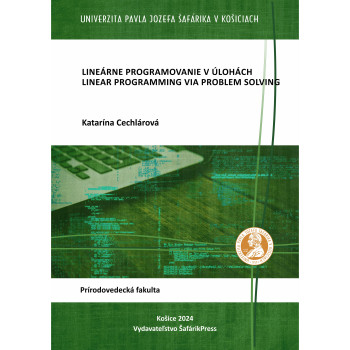
Linear programming via problem solving

Linear programming via problem solving

E-book

E-book

Katarína Cechlárová

Linear programming belongs to parts of mathematics with the greatest number of real applications. This Slovak-English problem collection provides an overview of basic knowledge in the area, application problems as well as problems to acquire routine in calculations. It is complemented by questions motivating the student to look for further theoretical principles, construct conterexamples  and formulate arguments to explain the studied phenomena.

Download the e-book for free (pdf)

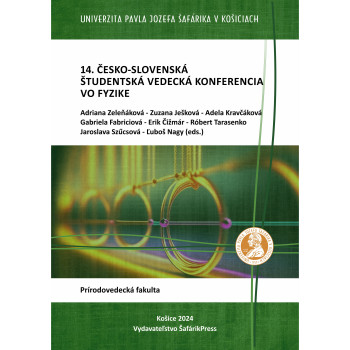
14.česko-slovenská študentská vedecká konferencia vo fyzike

14.česko-slovenská študentská vedecká...

E-book

E-book

Adriana Zeleňáková - Zuzana Ješková - Adela Kravčáková - Gabriela Fabriciová - Erik Čižmár - Róbert Tarasenko - Jaroslava Szűcsová - Ľuboš Nagy (eds.)

Zborník obsahuje abstrakty príspevkov účastníkov 14. česko - slovenskej študentskej vedeckej konferencie vo fyzike, ktorá sa konala 2.-3.mája 2024 na PF UPJŠ v Košiciach.

Download the e-book for free (pdf)

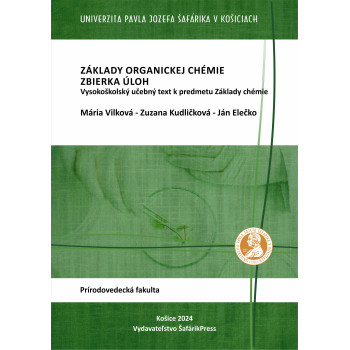
Základy organickej chémie.  Vysokoškolský učebný text k predmetu Základy chémie

Základy organickej chémie. Vysokoškolský...

E-book

E-book

Mária Vilková - Zuzana Kudličková - Ján Elečko

Organic chemistry is the chemistry of carbon. Organic compounds in the form of large molecules (macromolecules), such as nucleic acids, proteins, carbohydrates, and lipids are the basic elements of living organisms. This study material is created for non-chemistry students, especially students of biology. Most of these students have little or no knowledge of organic chemistry. Therefore, we proceed from the basic principles of organic chemistry to biochemistry.

The basic principles of organic chemistry and biochemistry are briefly summarized in individual chapters, but the main content consists of tasks for practising basic knowledge. To check the correctness of solving the tasks, the correct solutions are also given. The importance of this study material lies in the fact that students will get additional study material that they will use in studying the subject Basics of Chemistry.

Download the e-book for free (pdf)

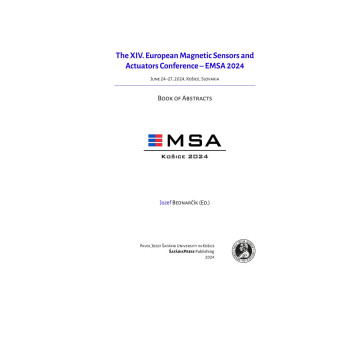
The XIV. European Magnetic Sensors and Actuators Conference – EMSA2024 - Book of Abstracts

The XIV. European Magnetic Sensors and...

E-book

E-book

Jozef Bednarčík (ed.)

The European Magnetic Sensors and Actuators Conference (EMSA) is a consolidated European forum that serves to assess the status, recent progress, and development in the field of magnetic sensor technology and magnetic actuators. It was first held in 1996 in Iasi (Romania) and since then has continued every two-three years in different European cities. The aim of the conference is to generate an overview of research in magnetic sensors and actuators, to recognize their relevance in modern industry and to identify potential future collaborations. EMSA 2024 will provide an excellent opportunity to bring together scientists and engineers from universities, research institutes and industry to present and discuss their most recent results covering both fundamental and applied aspects of magnetic sensors and actuators.

Download e-book for free (pdf)

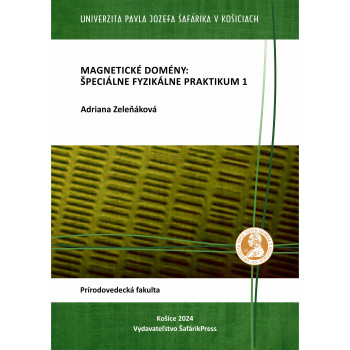
MAGNETIC DOMAINS: SPECIAL PHYSICAL PRACTICE 1

MAGNETIC DOMAINS: SPECIAL PHYSICAL PRACTICE 1

E-book

E-book

Adriana Zeleňáková

One of the fundamental characteristics of the magnetic state of ferromagnetic materials is the existence of a domain structure. The university textbook "MAGNETIC DOMAINS: SPECIAL PHYSICAL PRACTICE 1" is intended primarily for students of the Master's programme in Physics of Condensed Matter FKLm and for the PhD programme in Progressive Materials PMd within the profile subject Special Practice 1 at the Institute of Physical Sciences of the Faculty of Sciences of the Pavol Jozef Šafárik University in Košice.  The textbook is divided into seven chapters. The first chapter is devoted to the basics of domain theory, including the history of domain observation and the specification of different types of energies in ferromagnetic body. The second chapter presents the relationship between domain structure and magnetisation processes in ferromagnetic materials The third chapter describes the different types of domain-wall interactions with the defect. The fourth chapter illustrates examples of domain structure in selected ferromagnetic body such as grain oriented and non-grain oriented electrical steels, amorphous and nanocrystalline ribbons. The fifth chapter summarises an overview of the different experimental methods used to visualise the domain structure and their advantages or disadvantages with respect to the structure of ferromagnetic materials. The last two chapters, the sixth and the seventh, are devoted to specific experimental tasks for observing the domain structure of a selected polycrystalline sample using the optical microscope Bitter powder method and the MFM (magnetic force microscopy) method. During the preparation of this undergraduate text, its individual parts were developed using the foreign language literature listed in the recommended references.

Download the e-book for free (pdf)

Vybrané úlohy a výpočty z biochémie – metabolizmus

Vybrané úlohy a výpočty z biochémie – metabolizmus

E-book

E-book

Nataša Tomášková

Selected tasks and problems from biochemistry – metabolism follow biochemistry lectures on metabolism and individual metabolic pathways for students of the second and third year of the bachelor’s degree in the fields of chemistry, biology and their combinations with other fields. Scripts provide an opportunity to better understand the lectured subject matter of metabolism through the solution of tasks and problems as serve as a basis for one-hour exercises. The scripts are divided thematically into eleven chapters, and each chapter contains 10 tasks and 7 problems. At the beginning of the chapters there is a short description and explanation of the given metabolic pathway. However, when solving the tasks, the student must focus mainly on the curriculum that was presented on the given topic in the lecture. Subsequently, at the end of chapter, answers to problems are also presented. These scripts are intentionally accessible only in electronic form. The reason is the effort to continuously update and modernize individual tasks.

Download e-book for free (pdf)

Výpočtová a kognitívna neuroveda II (Návody na cvičenia)

Výpočtová a kognitívna neuroveda II (Návody na...

E-book

E-book

Norbert Kopčo

Neuroscience is an interdisciplinary field of science at the interface of biological, psychological and computer sciences, which aims to describe the functioning of the brain and mind. Computational and cognitive neuroscience are subfields of neuroscience focused on the study of information processing in the human and animal nervous systems, and on the theoretical description of the brain and mind. This university textbook contains several assignments that provide an overview of the methods used in computational and cognitive neuroscience, with an emphasis on mathematical modeling and on the behavioral study of cognitive processes. The textbook builds on the author's previous works.

Download e-book for free (pdf)

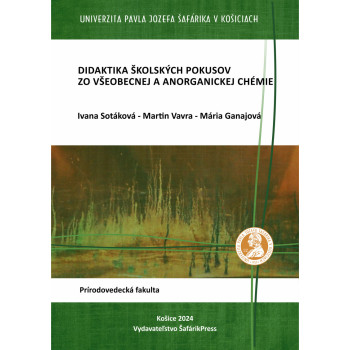
Didaktika školských pokusov zo všeobecnej a anorganickej chémie

Didaktika školských pokusov zo všeobecnej a...

E-book

E-book

Ivana Sotáková-Martin Vavra-Mária Ganajová

This textbook has been designed for the master students of chemistry teaching (combined) at the Faculty of Science, Pavol Jozef Šafárik University in Košice as a source of model school experiments in general and inorganic chemistry. It will be used for teaching the Special Practice of School Experiments I compulsory course. It consists of instructions for experiments related to the selected topics in general and inorganic chemistry as well as the didactic and technical aspects of their performance. Each experiment includes an explanation of the principle, specification of the tools and chemicals needed, working procedure, and the respective apparatus assembly scheme. At the end of each experiment, the observation and explanation necessary for the correct interpretation of the results of the chemical experiment performed are provided. To follow the requirements for the digital transformation of education, selected computer-aided experiments and visualiser projections have been included as well. The next part is focused on the work with the monitoring suitcase, which can be used for making simple field experiments related to environmental topics. The final part is dedicated to attractive experiments that complement the topics in inorganic chemistry and can be used to motivate students. All experiment instructions are in line with the requirements specified by the state educational programmes for primary and grammar schools. This book allows teachers to select appropriate demonstrative experiments or experiments for laboratory classes performed by students themselves. The videos of selected experiments are also available as part of the interactive periodical table of elements operated by the Institute of Chemistry, Faculty of Science, Pavol Jozef Šafárik University in Košice.

Download e-book for free (pdf)

Sekundárny metabolizmus (Úvod do štúdia prírodných látok)

Sekundárny metabolizmus (Úvod do štúdia...

E-book

E-book

Miroslava Martinková

This electronic material focuses on the subject of secondary metabolism and its products - secondary metabolites. The material gives an overview of the basic building blocks and construction mechanisms through which molecules can be synthesized in living organisms (plants). The processes of formation of the mentioned metabolites are explained using the basic mechanisms of organic reactions. Several of the secondary metabolites presented have a remarkable biological profile and are used as therapeutics or serve as lead compounds for the development of novel pharmacological agents. This electronic document is primarily intended for students of the Master's degree programme in Organic Chemistry as supporting material for the profile subject Chemistry of Natural Products.

Download e-book for free (pdf)

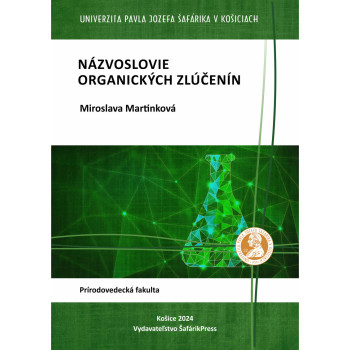
Názvoslovie organických zlúčenín

Názvoslovie organických zlúčenín

E-book

E-book

Miroslava Martinková

This electronic material provides the basic principles of creating a systematic nomenclature of organic compounds, from the simplest hydrocarbons to the more complicated nomenclature of carbohydrates. For some groups of derivatives, alternative ways of generating system names are also mentioned, as well as the most common trivial names that are still in use in the literature and in practice, in some cases being the characteristic (dominant) ones. In the introductory section, the basic rules to be respected when writing names of organic compounds are discussed. This document is intended primarily for interdisciplinary undergraduate and graduate students as support material for the courses Organic Chemistry and Selected Chapters in Organic Chemistry and Biochemistry. In the final section of this document, solved examples are given so that the student can check how the rules for forming the names of organic compounds have been understood.

Download e-book for free (pdf)

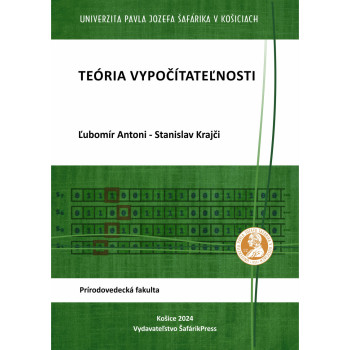
Teória vypočítateľnosti

Teória vypočítateľnosti

E-book

E-book

Ľubomír Antoni-Stanislav Krajči

An important part of theoretical computer science is the problem of Turing machines. This computational model has two basic properties: like any other computational program, the software of a Turing machine is composed of instructions, but in its case they are all of a single type. Every other (so far known) computer program can be transformed into a Turing machine program without loss of information. While the second feature reduces the question of what a calculator cannot do to the question of what a Turing machine cannot do, the first feature allows a much simpler investigation of such a question. Using this computational model, we can thus find concrete problems that no automaton can ever deal with (perhaps the most famous is the problem of the Turing machine stopping). Their existence demonstrates the fundamental limitations of (not only ideal) computational means, and thus encourages both criticality and humility in our thinking.

Download e-book for free (pdf)

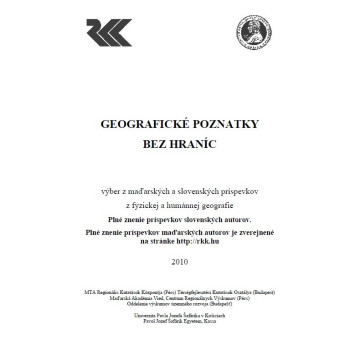
Geografické poznatky bez hraníc - výber z maďarských a slovenských príspevkov z fyzickej a humánnej geografie.

Geografické poznatky bez hraníc - výber z...

E-book

E-book

Dušan Barabas a kol.

The presented text is the final product of work within the project "Tanuljunk egymástól!/Let’s Learn from Each Other!" The project emerged from long-standing contacts between the staff of the Centre for Regional Studies of the Hungarian Academy of Sciences and the Institute of Geography at the Faculty of Science, Pavol Jozef Šafárik University in Košice, as a natural effort to expand mutual cooperation. The first step was collaboration within Interreg II projects, involving a broad range of institutions from both academic and non-academic environments. This initial attempt was unsuccessful due to administrative errors. Consequently, a project titled HUSK/0801/1.6.1/0003 "Tanuljunk egymástól!/Let’s Learn from Each Other!" was prepared and developed in agreement with the Hungarian side. It was approved and co-financed by the European Regional Development Fund under the Hungary-Slovakia Cross-Border Cooperation Program 2007–2013.

Download the e-book for free (pdf)

Exactly Solvable Models in Statistical Physics

Exactly Solvable Models in Statistical Physics

E-book

E-book

Jozef Strečka

The present textbook deals with exactly solved models and their diverse applications in several branches of physics such as mathematical physics, statistical physics, condensed matter physics and so on. Exactly soluble models are currently considered as an inspiring research field in its own right, which regrettably requires a considerable knowledge of sophisticated mathematics. Accordingly, my primary ambition was to provide an intro- ductory course for undergraduate students that would cover the simplest exactly solved models, whose rigorous solutions are available even after modest calculation. The present textbook should be therefore regarded as an auxiliary graduate-level textbook, which should serve as the student’s guide on this beautiful but surely intricate subject.

Download the e-book for free (pdf)

Pedagogická prax študentov učiteľstva akademických predmetov

Pedagogická prax študentov učiteľstva...

E-book

E-book

Silvia Kontírová a kol.

Pedagogical practice is an organizational form of higher education training for prospective teachers, implemented through mandatory pedagogical practice subjects.

These subjects have an integrative and practical-training character, building upon the theoretical and practical instruction provided to students at the faculty. They are conducted within the scope defined by curricula in the conditions of specialized workplaces (training schools) and under the supervision of qualified professionals (training teachers). Unlike other higher education subjects, pedagogical practice primarily provides students with opportunities for independent creative teaching in real school environments.

The practical activities of students in training schools are characterized as supervised, monitored, and evaluated by designated entities.

Download the e-book for free (pdf)

Počítačová fyzika I

Počítačová fyzika I

E-book

E-book

Milan Žukovič

The textbook Computational Physics I covers the topics taught in the course of the same name at the bachelor's level of the Physics study program, as well as in the course Application of Numerical Methods at the bachelor's level of the Applied Informatics study program.

The text builds upon the basic course in numerical methods, focusing on explaining the fundamental principles of computer-based solutions to some typical physics problems. It includes both the area of deterministic methods for solving problems modeled by ordinary and partial differential equations, as well as the area of stochastic Monte Carlo simulations. The course Computational Physics I lays the foundation for further study of more advanced computational methods taught at the master's level in the subject Computational Physics II. Nowadays, the use of computers as a tool for solving real physics problems, and for students as a tool for preparing their final bachelor's or master's theses, is almost indispensable.

This has led to the creation of numerous user-oriented software packages in various environments for solving a wide range of problems. However, without a thorough understanding of how individual computational techniques work, these programs become black boxes with many pitfalls and risks in their use. Therefore, this text emphasizes understanding both the strengths and weaknesses of individual methods and the assumptions for their successful application.

Download the e-book for free (pdf)

Študentská vedecká konferencia PF UPJŠ 2015

Študentská vedecká konferencia PF UPJŠ 2015

E-book

E-book

Vladimír Zeleňák(ed.)

The proceedings contain abstracts of contributions from participants of the Student Scientific Conference of the Faculty of Science, Pavol Jozef Šafárik University in Košice, which took place on April 22, 2015.

The Student Scientific Conference (SSC) enjoys long-term popularity among the faculty's students and teachers, and we are pleased that this was no different this year, with 128 contributions submitted to the SSC.

The contributions were organized into 19 sections, additionally complemented by an open programming competition and the final of the IHRA contest. For many students, presenting at the SSC is one of the first opportunities to gain experience in presenting their results before a professional audience. Considering the number of submitted contributions, along with the members of the expert juries from the faculty's teaching staff and the audience who came to support their classmates' presentations, the SSC is an event where a large part of the student and academic community of the faculty meets at one place and time. Many abstracts presented in this proceedings were developed as part of students' work on partial tasks that are components of research projects at the departments of the Faculty of Science, Pavol Jozef Šafárik University.

The abstracts represent, in a way, an overview of research topics at the individual workplaces of the faculty. The SSC proceedings thus serve as a useful tool that students and faculty teachers can use to present the faculty externally to partners, employers, and potential collaborators. Partners from practice have shown interest in cooperating in organizing the SSC for a long time. Since 2005, the association of IT companies has awarded a Prize for the Most Original Work and a Prize for the Work with the Best Prospects for Practical Application.

Download the e-book for free (pdf)

Návody na cvičenia z fyziológie rastlín

Návody na cvičenia z fyziológie rastlín

E-book

E-book

Miroslav Repčák - Martin Bačkor - Peter Paľove-Balang - Silvia Gajdošová

The establishment of the Plant Physiology Laboratory at the Department of Botany, Faculty of Arts, Pavol Jozef Šafárik University in Košice in 1969 was associated with the name of Ing. Štefan Kocúrik, CSc. (1923–2006), who also prepared the first "Instructions for Exercises in Plant Physiology" (Košice 1972, 1976).

Since 1980, the manual by Associate Professor RNDr. Karol Erdelský, CSc., and Ing. Fridrich Frič, DrSc., titled "Practicum and Analytical Methods in Plant Physiology" (Bratislava 1980) has been used. With the increase in the number of students, it became relevant in 1991 to publish the "Instructions for Exercises in Plant Physiology" again to improve preparation and the efficient organization of practical work. Associate Professor RNDr. A. Košturiak, CSc., contributed significantly to the expansion of the introductory part of the instructions with his valuable advice, for which the authors are grateful. For the fourth edition, some tasks were updated and modernized, taking into account the possibilities of the renovated laboratory. The selection of tasks was adapted to the current scope of exercises for individual plant physiology subjects within the bachelor's and master's study programs in biology and ecology. These subjects include: Plant Physiology, Plant Metabolism, Mineral Nutrition of Plants, Plant Growth and Development, and Plant Ecology. Some tasks are also suitable for high school experiments.

The choice of topics was influenced by the research focus of our workplace on secondary metabolism, ecophysiology, and medicinal plants. The instructions generally adhere to the SI unit system, occasionally including other commonly used units.

Download the e-book for free (pdf)

Metodika tvorby učebných úloh a didaktických testov pre chémiu

Metodika tvorby učebných úloh a didaktických...

E-book

E-book

Mária Ganajová

The current teaching of chemistry has its specific problems. On one hand, due to the shift of the focus of chemistry curriculum towards theoretical content, the difficulty of chemistry material has increased, and in connection with this, students' interest in chemistry has decreased.

The lack of student interest in chemistry is mostly supported by the opinion that it is precisely chemistry that significantly contributes to the deterioration of environmental quality. On the other hand, we live in an era where we encounter chemical products practically everywhere. It is necessary to learn the basics of chemistry as well as possible, which makes the question of increasing interest in chemistry education and improving its effectiveness very relevant. State educational programs have been introduced into Slovak schools as a foundation for the creation of school educational programs. These emphasize not only acquiring a certain amount of knowledge but also the development and enhancement of key and specific competencies of students, preparing them for lifelong learning and their application in life.

Therefore, increasing attention is being paid to one of the fundamental didactic tools for raising student activity in teaching, and thus improving the effectiveness of chemistry education – learning tasks. From both theory and practice of chemistry teaching, we know that learning tasks, questions, examples, exercises, etc., are among the important components of every teaching lesson. Learning tasks are applied in all phases of teaching – in the motivational phase, the phase of acquiring knowledge, the phase of consolidating knowledge, and the phase of checking the acquired knowledge. It is therefore clear that every teacher will sooner or later find themselves in a situation where they will have to select learning tasks from textbooks, workbooks, collections of problems and examples, or create them themselves.

This scientific monograph is intended for educational specialists and chemistry teachers, aiming to familiarize them with examples of various types and forms of learning tasks and the basics of their creation in chemistry. It can also be helpful for them in preparing certification works focused on test creation and their statistical evaluation.

Download the e-book for free (pdf)

Zoológia bezchordátov

Zoológia bezchordátov

€9.12
Availability: 120 In Stock

 Ľubomír Panigaj - Peter Ľuptáčik 

(Náčrt systému a fylogenézy)

Učebný text je primárne určený pre študentov jednoodborového štúdia biológie a všeobecnej ekológie, ako aj odborom učiteľského štúdia v rôznych kombináciách s biológiou. Venuje sa v nich opisu jednotlivých skupín živočíchov, ich morfológiu a anatómiu ilustruje na obrazových materiáloch. K jednotlivým morfologickým a anatomickým štruktúram sa v texte nevyjadrujeme podrobnejšie, nakoľko text nadväzuje na predmet Porovnávacia morfológia živočíchov, kde na úrovni organológie boli tieto najvýznamnejšie štruktúry v rámci prednášok a cvičení detailne vysvetlené a opísané. Rozsah učebného textu nie je veľký, podávame v ňom základné minimum poznatkov, čo je podmienené jednak rozsahom predmetu, ktorý je len jednosemestrový, jednak tým, že ďalšie, špecializované predmety rozširujú spektrum poznatkov napr. na úrovni entomológie, hydrobiológie alebo pôdnej biológie. V zavere niektorých kapitol formulujeme niekoľko cvičných otázok, ktoré si študenti môžu na základe predchádzajúceho textu zodpovedať, s podobnými otázkami sa totiž môžu stretnúť na skúške alebo na štátniciach.

Autori

This website uses cookies to ensure you get the best experience on our website