Filter By

Categories

Categories

Year of publication:

Year of publication:

Publication language:

Publication language:

Faculty:

Faculty:

UPJŠ Unit

UPJŠ Unit

Method of publication:

Method of publication:

Active filters

  • Categories: Science
  • Year of publication:: 2017
  • Year of publication:: 2017
  • Year of publication:: 2017
  • Year of publication:: 2021
  • Year of publication:: 2021
  • Year of publication:: 2021
  • Year of publication:: 2022
  • Year of publication:: 2022
  • Year of publication:: 2025
  • Year of publication:: 2025
  • Publication language:: Slovak
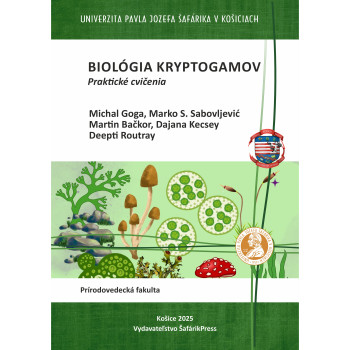
Biológia kryptogamov

Biológia kryptogamov

E-book

E-publication
Michal Goga-Marko S. Sabovljević-Martin Bačkor-Dajana Kecsey-Deepti Routray
A comprehensive guide that introduces you to the fascinating diversity and systematics of lower plants. These practical lessons are designed to provide hands-on training, allowing students to engage directly with the interesting study of Cryptogams by observation, analysis, and identification and experimentation. Beginning with the overall idea of cryptogam in a field trip near by the vicinity of Botanical garden then followed by the basics of microscopy in, will help to gain essential skills in understanding the components and proper usage of a microscope, a fundamental tool in botanical studies.
Download the e-book for free (pdf)

Digiform - podporná aplikácia k Digilib

Digiform - podporná aplikácia k Digilib

E-book

E-publication

Denisa Maceková-Monika Václavková-Marek Kvet-Ivana Sotáková

The publication Digiform: A Supporting Application to Digilib – User Guide, Part B presents the Digiform web application as a tool that extends the functionality of the Digilib digital library of formative assessment tools. The application enables the creation and editing of formative assessment tool templates, which can be adapted to the specificities of individual subjects and levels of education and subsequently imported into the Digilib environment for use in the teaching process. The guide provides a detailed description of how to work with the Digiform application, from creating new templates, editing and personalising them, through to their export and implementation in the main Digilib application. Attention is also given to the interconnection with the Digilib Images application, which enables the integration of visual elements into the assessment tools, thereby enhancing their didactic effectiveness and visual appeal. The guide is intended for teachers at all levels of education, student teachers, school administrators, and digital coordinators who are interested in the systematic use of the Digilib digital library to support the implementation of formative assessment, enhance the quality of the educational process, and foster the development of students’ self-assessment and reflective competences.

Download the e-book for free (pdf)

Digitálna knižnica nástrojov formatívneho hodnotenia Digilib

Digitálna knižnica nástrojov formatívneho...

E-book

E-publication

Denisa Maceková-Monika Václavková-Marek Kvet-Ivana Sotáková
The Digilib Digital Library of Formative Assessment Tools – User Guide, Part A introduces the Digilib application as the key component of the library, designed to support the implementation of formative assessment in teaching at all levels of education. It explains the structure of the system, its modules, the principles of user roles, and the possibilities for working with the digital formative assessment tools. Particular attention is paid to the possibilities for creating, editing, and assigning the tools to students, as well as to providing personalised real-time feedback. The User Guide also explains how the Digilib application is interconnected with the affiliated applications Digiform and Digilib Images, which expand the possibilities for creating and visualising assessment tools. The guide is intended for teachers at all levels of education, student teachers, school administrators, and digital coordinators who are interested in the systematic use of the Digilib digital library to support the implementation of formative assessment, enhance the quality of the educational process, and foster the development of students’ self-assessment and reflective competences.
Download the e-book for free(pdf)

FORMATÍVNE 2025. Spoločne pri implementácii formatívneho hodnotenia do škôl

FORMATÍVNE 2025. Spoločne pri implementácii...

E-book

E-publication

Mária Ganajová-Ivana Sotáková-Petra Letošníková

The conference proceedings FORMATIVE 2025 – Implementing Formative Assessment in Schools Together constitute the output of an online conference organised by the Institute of Chemical Sciences, Faculty of Science, Pavol Jozef Šafárik University in Košice, in cooperation with the National Institute of Education and Youth in Bratislava, within the framework of the KEGA project No. 001UPJŠ-4/2023. These proceedings present current knowledge, experience, and examples of good practice in implementing formative assessment in primary, secondary, and university teaching, with an emphasis on the use of digital tools. The papers address the foundations of formative assessment in the context of curricular changes and the ongoing educational reform, as well as specific didactic procedures for its implementation in the teaching of science and social science subjects, including mathematics, Slovak language, and foreign languages. Particular attention is paid to the development of professional teaching competences, formative assessment strategies, providing targeted feedback, and promoting students’ active participation in the assessment process. These proceedings also present the Digilib digital library, a tool developed to support the creation and management of formative assessment processes within the school environment. This publication is intended for experts in pedagogy and didactics, teachers at all levels of education, student teachers, digital coordinators, and all those interested in educational innovation and in improving the quality of teaching through formative assessment.

Download the e-book for free

Praktikum z nukleárnej magnetickej rezonancie. Časť 2: Kvantitatívna analýza a fyzikálno-chemické štúdie

Praktikum z nukleárnej magnetickej rezonancie....

E-book

E-publication
Mária Vilková-Zuzana Kudličková-Ján Elečko
This study material is intended for students of chemistry and related disciplines interested in applied nuclear magnetic resonance (NMR) and physical chemistry. It offers practice-oriented tasks designed to develop skills in NMR spectroscopy, quantitative analysis, and data interpretation. Students learn modern approaches to determining physicochemical parameters (e.g., partition coefficients, pKa values, keto–enol equilibria, or enantiomeric excess) and gain experience with software tools for spectrum processing.
Download the e-book for free (pdf)

EFFUSE – edukačné materiály pre verejnosť

EFFUSE – edukačné materiály pre verejnosť

E-book

E-publication

Beáta Valkay ed.
Ivana Slepáková-Lenka Maliničová a kol.

The publication EFFUSE – Educational Materials for the Public was developed within the EFFUSE project and focuses on current environmental issues of river landscapes. It emphasizes the importance of water as an irreplaceable resource and the need to protect it. Special attention is given to bioindicators – organisms whose presence or absence reflects the state of the environment. Monitoring bioindicators makes it possible to detect ecosystem changes before serious damage occurs. The publication highlights that biodiversity is essential for ecosystem stability and health. As such, it serves as a valuable educational resource for the public, raising environmental awareness and encouraging active involvement in nature conservation.

Download the e-book for free (pdf)

EFFUSE príručka pre učiteľov

EFFUSE príručka pre učiteľov

E-book

E-publication

Beáta Valkayed.
Ivana Slepáková-Lenka Maliničová a kol.

The EFFUSE Teacher's Guide is a practical educational material for primary and secondary school teachers who want to develop environmental awareness with their pupils through field-based learning. It is based on the concept of the EFFUSE project (‘Environment for the future by science education’), which aims to link science, research and education with environmental protection. The manual provides teachers with methodological support for planning and implementing outdoor activities aimed at observing and documenting organisms around the Laborec River and the Uh River. It contains instructions for working with real samples, basic biomonitoring procedures and offers the opportunity to participate in the creation of a virtual laboratory that mirrors the state of the local aquatic ecosystem. Through these activities, pupils will learn to understand the links between human activity and the state of the environment, while learning the basics of how scientists work in the fields of biology and ecology. The guide also motivates teachers to become agents of positive change, inspire the younger generation to be active and engage the community in conservation. It is a challenge and an opportunity to create a space for meaningful learning in line with current trends in environmental and digital education.

Download the e-book for free (pdf)

EFFUSE príručka pre žiakov: Základy biomonitoringu vodných tokov

EFFUSE príručka pre žiakov: Základy...

E-book

E-publication

Beáta Valkay ed.
Ivana Slepáková-Lenka Maliničová a kol.

EFFUSE - A Guide for Students is an interactive educational resource for primary and secondary school students to help them better understand how their daily activities affect the environment. The handbook was developed within the EFFUSE project (‘Environment for the future by science education’) and motivates young people to take a greater interest in the nature around them. It focuses on practical field activities during which they will explore the ecosystem of the Laborec and Uh rivers, observe and document organisms and work with real samples from nature. At the same time, they will learn about the work of scientists - botanists, zoologists and microbiologists - and learn basic biomonitoring methods. The manual will also guide them through the process of creating a virtual laboratory to display the results of their investigations of an aquatic ecosystem. It will help them understand the importance of sustainable development and encourage them to behave responsibly towards nature. It is their opportunity to learn about their surroundings in a new way, to learn to think scientifically and to become active creators of positive change for their community and future generations.

Download the e-book for free(pdf)

Skriptum z lekárskej biológie a genetiky pre bakalárske študijné programy

Skriptum z lekárskej biológie a genetiky pre...

E-book

E-publication

Terézia Hudáková-Ján Šalagovič-Jozef Židzik

The Textbook of Medical Biology and Genetics for Bachelor's Study Programs is a comprehensive academic resource tailored to the curriculum of undergraduate courses at the Faculty of Medicine, Pavol Jozef Šafárik University in Košice. Each of the 15 chapters begins with a concise theoretical overview, followed by a carefully selected set of practical exercises and model examples designed to promote active learning and critical thinking. This publication aims to serve as an essential companion for students, supporting their understanding of key concepts and enhancing their preparation for coursework and examinations in designated bachelor's programs.

Download the e-book for free (pdf)

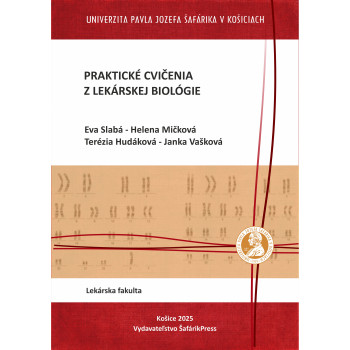
Praktické cvičenia z lekárskej biológie

Praktické cvičenia z lekárskej biológie

E-book

E-publication

Eva Slabá-Helena Mičková- Terézia Hudáková-Janka Vašková

Teaching texts „Praktické cvičenia z lekárskej biológie“ provide the theoretical foundations of microscopy, various microscopic techniques and preparation of microscopic slides in an understandable form. The chapters of the teaching texts contain model questions and tasks from cytology, molecular biology and genetics enabling students to acquire new knowledge from individual thematic areas and provide instructions for the implementation of tasks during laboratory lessons in medical biology. Teaching texts are primarily intended for the practical lessons in the subjects Biológia 1 and Biológia 2 for Slovak students of the first year of General Medicine and the subjects Lekárska biológia and Genetika a regeneratívna medicína for Slovak students of the first and second year of Dental Medicine at P. J. Šafárik University in Košice – Faculty of Medicine.

Download the e-book for free (pdf)

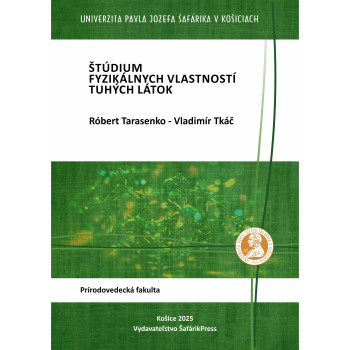
Štúdium fyzikálnych vlastností tuhých látok

Štúdium fyzikálnych vlastností tuhých látok

E-book

E-book

Róbert Tarasenko - Vladimír Tkáč

The presented university textbook is intended for all students engaged in the field of condensed matter physics who, while working on their final theses, come into contact with the experimental device known as the Physical Properties Measurement System (PPMS). The main purpose of this textbook is to facilitate, in a certain way, the students' work with the complex manuals provided with this experimental device. At the same time, through this textbook and its clear instructions, students acquire the necessary experimental skills essential in the field of condensed matter physics.

Download the e-book for free (pdf)

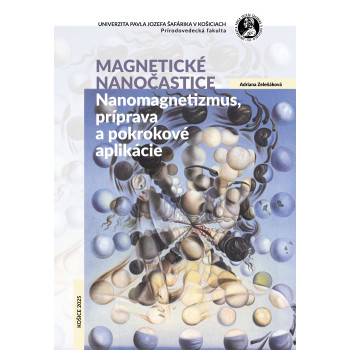
MAGNETICKÉ NANOČASTICE: NANOMAGNETIZMUS, PRÍPRAVA A POKROKOVÉ APLIKÁCIE

MAGNETICKÉ NANOČASTICE: NANOMAGNETIZMUS,...

E-book

Adriana Zeleňáková

Magnetic nanoparticles are extremely interesting magnetic objects that still hide much that is undiscovered, both because of their physical properties and because of their diverse applications. Iron nanoparticles, or iron oxides, are used in medical diagnostics for magnetic resonance imaging, in the treatment of hyperthermia, and an important application is the use of magnetic particles for targeted drug delivery.

The textbook "Magnetic Nanoparticles: Nanomagnetism, Preparation and Advanced Applications" is intended primarily for students of the Master's programme in Physics and students of related disciplines at universities and faculties with a physical, chemical, metallurgical and biophysical focus. The motivation for writing this textbook was to develop study material that would contribute to improving the quality of teaching in the profile subject Nanomaterials and Nanotechnology at the Institute of Physical, Faculty of Sciences, UPJŠ, in the Master's programme Condensed Matter Physics, as well as in the profile subject in the PhD programme Advanced Materials.

The university textbook is divided into eight chapters. The first and second chapters are devoted to basic information about magnetism, the origin of nanomagnetism in nanoparticles and surface phenomena. The third and fourth chapters are devoted to nanomagnetism in nanoparticle systems. The fifth chapter describes in detail individual protocols for investigating the phenomenon of superparamagnetism and the phenomenon of superspin glass using the SQUID device. The sixth chapter describes individual procedures for the preparation of magnetic nanoparticles and the seventh chapter describes individual experimental techniques for the study of magnetic nanoparticles. The final eighth chapter describes the applications of nanoparticles in biomedicine.

During the writing of this textbook, the chapters were prepared using the foreign-language specialist literature listed in the recommended reading list.

Download the e-book for free

Jarná škola doktorandov 2025

Jarná škola doktorandov 2025

E-book

E-book

Monika Halánová (ed.)

V dňoch 26. – 29. mája 2025 sa bude v Starej Lesnej konať už 11. ročník celouniverzitného podujatia Jarná škola doktorandov UPJŠ. V rámci odborného programu odznie šesť plenárnych prednášok významných odborníkov z Univerzity Pavla Jozefa Šafárika a uskutočnia sa dva workshopy. Prezentovať výsledky svojej doterajšej vedeckovýskumnej práce bude spolu 52 doktorandov dennej formy štúdia, z toho 26 doktorandov v sekcii lekárskych a prírodných vied (Lekárska fakulta/Prírodovedecká fakulta) a 26 doktorandov v sekcii spoločenskovedných a humanitných vied (Právnická fakulta/Fakulta verejnej správy/Filozofická fakulta).

Download the e-book for free(pdf)

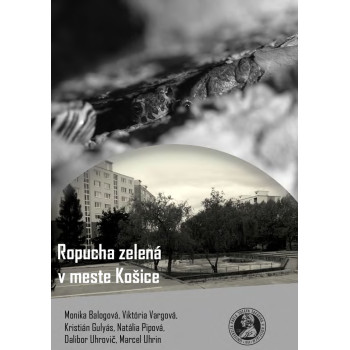
Veríme, že predložené informácie v tejto publikácii môžu prispieť k ochrane nielen populácií ropúch zelených v meste Košice, ale

Ropucha zelená v meste Košice

E-book

E-book

Monika Balogová - Viktória Vargová - Kristián Gulyás - Natália Pipová - Dalibor Uhrovič -Marcel Uhrin

A peer-reviewed publication dealing with the biology and ecology of the European green toad, bringing new findings through scientific research on the roosting ecology, spatial activity and dispersal of this protected species in urban environments. The subject matter of this publication is highly topical, as amphibians represent the most threatened vertebrate group in the world. This work is suitable not only for university students interested in batrachology, amphibian ecology, and vertebrate zoology, but also for conservation workers, municipalities, and specialists directly involved in the reconstruction of urban areas with green toads. Last but not least, this publication is suitable for enthusiasts with an interest in nature and its conservation.

Download the e-book for free (pdf)

Metódy v genetike človeka a molekulovej biológii

Metódy v genetike človeka a molekulovej biológii

E-book

E-book

Jozef Židzik - Terézia Hudáková - Martina Šemeláková - Ján Šalagovič

Methods in human genetics and molecular biology encompass various experimental, diagnostic and analytical techniques used to investigate the structure, function, expression, and regulation of genes, as well as general molecular processes in human cells. The university textbook Methods in Human Genetics and Molecular Biology provides a comprehensive overview of classical and modern experimental and analytical procedures. In fifteen chapters, it addresses methods such as PCR, RFLP, FISH, Western blot, DNA sequencing, DNA microarrays, molecular cloning, cytogenetic analysis, and forensic genetic analysis. The book is primarily intended as study material for the course of the same name taught in the 2nd year of study at the UPJŠ Faculty of Medicine, but it can also be used by all university students in the fields of biology, biotechnology, and related disciplines.

Download the e-book for free (pdf)

HOST-GUEST A SUPRAMOLEKULOVÁ CHÉMIA

HOST-GUEST A SUPRAMOLEKULOVÁ CHÉMIA

E-book

E-book

Miroslava Matiková Maľarová

The university textbook entitled: Host-guest and supramolecular chemistry provides basic information about this scientific field as well as the types of compounds that belong to it. It provides basic characteristics of non-bonded interactions as well as methods of characterization and classification for these compounds. It summarizes knowledge about various types of host-guest systems from the oldest such as Hofmann clathrates to inclusive compounds such as cyclodextrins and calixarenes. In addition to structural and synthetic information, which is supplemented with images, the textbook also addresses the possibilities of application or practical use of compounds. The conclusion of each chapter is supplemented with tasks for elaboration on a given topic.

Download the e-book for free (pdf)

Špeciálne praktikum školských pokusov z organickej chémie

Špeciálne praktikum školských pokusov z...

E-book

E-book

Jana Špaková Raschmanová - Zuzana Kudličková - Kvetoslava Stanková

Organic chemistry plays a key role in our lives, from the pharmaceutical industry to the production of plastics and food additives. Additionally, it is essential in biochemistry, as it deals with the basic building blocks of living organisms, such as carbohydrates, lipids, proteins, and nucleic acids. One of the best ways to teach organic chemistry and increase students' interest in the subject is through conducting school experiments. This study material presents a collection of visually striking practical experiments in organic chemistry that will help students better understand the chemical processes and techniques used in the field. This electronic study material is supplemented with visual material, allowing students to verify the results of experiments and better understand the individual procedures. At the end of each section, there are questions to help assess the acquired knowledge and encourage deeper understanding of the experiments conducted.

Download the e-book for free (pdf)

Praktikum z nukleárnej magnetickej rezonancie. Časť 1: Kvantitatívna NMR

Praktikum z nukleárnej magnetickej rezonancie....

E-book

E-book

Mária Vilková - Zuzana Kudličková - Aneta Salayová - Tomáš Ján Liška

The Nuclear Magnetic Resonance Practicum – Part 1: Quantitative NMR is designed for students taking the NMR Practicals course, which focuses on the practical aspects of quantitative nuclear magnetic resonance (qNMR). This publication builds on previous NMR courses and assumes basic theoretical knowledge of the method, emphasizing experimental procedures, data processing, and result interpretation. qNMR is a precise analytical technique with broad applications in analytical chemistry, pharmaceutical research, biomedicine, and quality control. The script provides a detailed guide to conducting experiments, as well as procedures for analyzing and evaluating acquired data. This publication offers students methodological guidance and support in mastering qNMR analysis and serves as a valuable resource not only during their studies but also for further research in NMR spectroscopy.

Download the e-book for free (pdf)

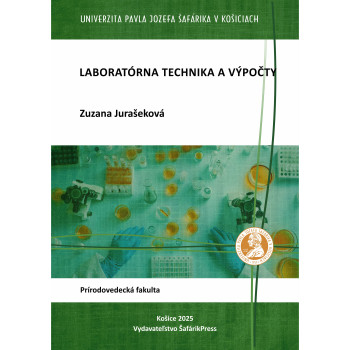
Laboratórna technika a výpočty

Laboratórna technika a výpočty

E-book

E-book

Zuzana Jurašeková

Úvod k praktikám k experimentálnym metódam biofyziky

The university textbook titled Laboratory Techniques and Calculations is designed for the first-year students of the bachelor's degree in Biophysics at the Institute of Physics, Faculty of Sciences, P. J. Šafárik University in Košice. The objective is to equip students with fundamental knowledge and practical skills for the work in a chemical laboratory. It is essential for addressing different biophysical issues and experiments that students will have to solve later. The textbook comprises three principal sections: a theoretical part focused on the calculations, a section dedicated to laboratory work, and the last part offers a brief introduction to spectroscopy. The theoretical part summarizes the basic definitions and equations related to the characterization and preparation of solutions and mixtures. The second, most comprehensive part provides guidance and suggestions for safe and efficient practices in a chemical laboratory. The primary focus is on the manipulation of chemical substances and the use of specific small laboratory instruments and equipment. The fundamental laboratory procedure guides for the selected laboratory works are also provided. As part of a short introduction to spectroscopy, students can become familiar with fundamental spectroscopic concepts and principles. UV-VIS absorption spectrophotometry receives special attention, along with a brief introduction to fluorescence. The textbook is supplemented by various practical and theoretical tasks, as well as numerous web links to further explanatory texts and videos.

Download the e-book for free (pdf)

Jarná škola doktorandov 2022

Jarná škola doktorandov 2022

E-book

E-book

Peter Fedoročko (eds.)

From June 14 to June 17, 2022, the 8th annual Spring School for Doctoral Students at Pavol Jozef Šafárik University in Košice will take place in Liptovský Ján. The scientific program of the spring school will comprise 3 plenary lectures by leading scientific experts and 1 workshop. Doctoral students will present their research papers in two sections: 22 doctoral students of Faculty of Public Administration, Faculty of Law and Faculty of Arts, and 26 doctoral students of Faculty of Medicine and Faculty of Science. The scientific programme of the spring school will also include a panel discussion with the management of Pavol Jozef Šafárik University in Košice.

Download the e-book for free (pdf)

Pokročilé elektrochemické metódy

Pokročilé elektrochemické metódy

E-book

E-book

Ivana Šišoláková - Radka Gorejová - Jana Shepa - Renáta Oriňaková

The university textbook "Advanced Electrochemical Methods" is a teaching aid intended for master's or doctoral students studying electrochemical subjects at the Department of Physical Chemistry, Faculty of Science, Pavol Jozef Šafárik University in Košice.

These textbooks follow and further develop textbooks focused on the basic electrochemical methods currently used in modern research. The presented teaching texts are processed in sixteen clear chapters, where they provide a theoretical principle and derivation of electrochemical processes and mechanisms in individual methods. Teaching texts also consist of practical laboratory exercises, in which students can try out the real application of the studied electrochemical methods.

The practical tasks are focused primarily on the demonstration of research that is carried out at our workplace. Students will be able to try, for example, electrochemical modification of the electrode surface, preparation of electrochemical sensors for the determination of analytes, preparation and characterization of a dye-sensitized solar cell or electrochemical evolution of hydrogen.

Download the e-book for free (pdf)

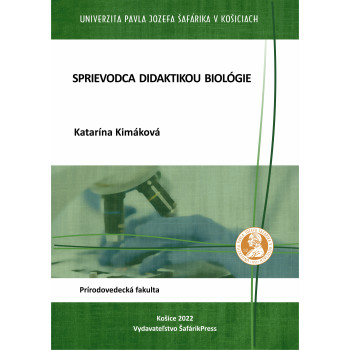
A guide to the didactics of biology

A guide to the didactics of biology

E-book

E-book

Katarína Kimáková

The textbook is intended for university students who are preparing for the profession of biology teacher. The structure of the book is similar to an encyclopedia, with one page devoted to each content item, but the topics of the chapters and subchapters follow each other.

The explanatory text on the page illustrates the diagram and there are notes and links to other sources of information. For better orientation, the content of the textbook is divided into 8 sections, which cover several chapters. It follows the general didactics, which it connects with the teaching of biological content. The book provides a basic orientation in the approaches to learning this subject, and also explains the relationship between biology as a science and the didactics of biology. It deals with teaching standards and curricula, advises on how to master biological concepts and understanding, how to communicate with students in biology classes, when and why are effective visual and practical methods. It acquaints the reader with the issue of setting goals for biological education in the cognitive, psychomotor and affective areas in relation to formative and summative assessment.

Hopeful as well as experienced teachers will find in this publication not only a look into the history of teaching biology, but also a look into the future. Current trends in biology teaching, the connection of teaching with digital technologies, the virtual learning environment and interactive simulations and models belong to science lessons today.

Download the e-book for free (pdf)

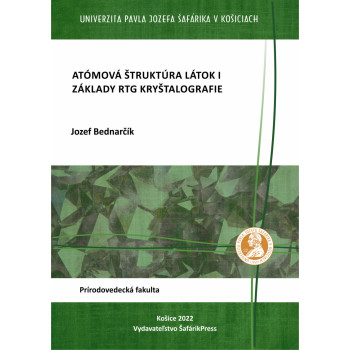
ATÓMOVÁ ŠTRUKTÚRA LÁTOK I - Základy RTG kryštalografie

ATÓMOVÁ ŠTRUKTÚRA LÁTOK I - Základy RTG...

E-book

E-book

Jozef Bednarčík

Crystallography deals with discerning the arrangement and bonding of atoms in crystalline solids. Almost immediately after their discovery, X-rays began to be used to study the internal structure of substances.

The first chapter of this textbook deals with the basic concepts of crystallography. At the beginning, crystalline solids are characterized. In the next section, the basic types of bonds and their characteristics are briefly presented. The main subject of this chapter is the interpretation of basic concepts such as symmetry operations, translational periodicity, grid, elementary cell. Spatial lattices and crystal systems are presented. At the end of this chapter, attention is paid to the description of individual types of defects in crystal structures. In the second chapter, the Bohr model of the hydrogen atom is presented. Individual quantum numbers and their meaning are given.

Next, energy levels and allowed transitions within an atom with multiple electrons are described. The second chapter concludes with the characterization of the basic absorption and emission processes. The third chapter is devoted to the production of X-ray radiation and its properties. Sources of X-ray radiation and a description of their operation are presented.

Interaction of X-ray radiation with matter, absorption and detection of X-ray radiation are the subject of the last part of this chapter.

Download the e-book for free (pdf)

Počítačová fyzika II

Počítačová fyzika II

E-book

E-book

Milan Žukovič

This textbook is intended for master's degree students and is a follow-up to the Computational Physics I course studied at the bachelor's level. The content of the textbook Computational Physics II focuses on stochastic methods of solving physical problems, mainly on Monte Carlo (MC) simulation of many-particle systems.

The focus on this computationally intensive approach is motivated by the gradual increase in the computing capacities of ordinary computers as well as the introduction of high-performance computing clusters. This has led to significant progress in the development of new simulation techniques, thanks to which MC simulations have found application in various areas of research and application practice. Considering the main research focus of the department, this text is particularly devoted to the presentation of basic and more advanced MC simulation techniques applied to a simple Ising spin model in order to investigate its magnetic, thermodynamic and critical properties.

The next part is devoted to MC simulations of random processes. It focuses on the simplest but also the most basic random walk process and demonstrates its applications in financial analysis and the solution of a quantum system described by the time-dependent Schrödinger equation. The last part is dedicated to the basics of molecular dynamics, applied to simulating the classical movement of atoms in a given force field. By mastering the problems addressed in this course, students will obtain a potential tool for working out of their diploma theses, or a methodology useful for their further scientific and research practice in the field of investigating of complex systems.

The lectured topic is subsequently exercised in the form of preparing projects implemented in the freely distributable software Octave, which is easy on the user's programming skills and which students have the opportunity to familiarize themselves with in the previous study.

Download e-book for free (pdf)

BIOLÓGIA LIŠAJNÍKOV. Časť C: Identifikácia metabolitov pomocou NMR spektroskopie

BIOLÓGIA LIŠAJNÍKOV. Časť C: Identifikácia...

E-book

E-book

Mária VilkováMonika GarberováMichal Goga

Nuclear Magnetic Resonance (NMR) is currently a widely used analytical tool that finds application in many fields of science and technology. The broadening of its practical use brings with it the necessity to create educational texts appropriate to the given scientific discipline.

This university textbook is intended for students of biology and serves as a supplement to the study materials for the advanced master's course "Biology of Lichens." At the same time, it represents a useful resource for master's and doctoral students involved in research, helping them interpret NMR spectra and present basic theoretical concepts.

The textbook briefly describes the important aspects of each NMR spectroscopic technique without delving excessively into the physical principles of individual methods or complex mathematical analyses. In this edition, the structures of lichen metabolites have been included, which students will isolate, purify, and identify using various analytical methods during practical exercises. An entire chapter is dedicated to a detailed description of solving the NMR spectra of isolated metabolites, with each step in elucidating the structures of both known and unknown metabolites explained in detail. The solved tasks are followed by numerous unsolved examples, including high-resolution 1D and 2D NMR spectra of metabolites, intended to further develop the acquired knowledge and skills of students and doctoral candidates in structure elucidation using NMR spectroscopy.

Download e-book for free (pdf)

Geopriestorové technológie v bádateľsky orientovanom vyučovaní geografie

Geopriestorové technológie v bádateľsky...

E-book

E-book

Stela Csachová - Ján Kaňuk - Alena GessertLadislav NovotnýŠtefan GáborJozef Šupinský

This book addressed the inquiry-based learning and teaching with the support of geospatial technologies. Today, geospatial technologies are influencing geography teaching learning, particularly in secondary education. Theoretical framework gives the reader the insight to inquiry-based learning, with special focus on inquiry in geography. The one-by-one step of inquiry is analysed in detail. The major part of the book presents the eleven models of geography lessons, representing the subject content of physical, human and regional geographies, various levels of inquiry and use of different geospatial technologies. The readers are acquainted with the use of geographic information system (particularly Google Earth and ArcGIS online), web portals, webGIS, open data, mobile applications and new forms of 3D cartographic visualisation (virtual reality, 3D print, dynamic 3D map) in teaching geography. The lesson models were tested with the students to be geography teachers in school year 2021/2022. This books serves as resource mainly for undergraduate teacher students and in-service geography teachers.

Download e-book for free (pdf)

Systematika cievnatých rastlín, 5. vydanie

Systematika cievnatých rastlín, 5. vydanie

E-book

E-book

Pavol Mártonfi

The university textbook deals with the latest knowledge from the systematics of vascular plants in a clear manner. Vascular plants arose in the Silurian period in the Paleozoic, when the first primitive plants moved from water to dry land, which required evolutionary progress in the morphological and anatomical structure of these plants. During about 420 million years of the existence of vascular plants, several of their main groups have evolved: the spore vascular plants, including the lycopods (branch Lycopodiophyta) and group of ferns and related plants (branch Monilophyta), and the seed plants, including gymnosperms (branch Gymnospermae) and angiosperms ( Angiospermae), which currently dominate among plants. The textbook provides a brief but comprehensive overview of the main groups, orders and families of plants with their description, distribution, main representatives, while also addressing the useful properties of selected species. The work is complemented by an overview of the system of plants by Cronquist, Tachtadžjan, APG and an overview of the families of the Slovak flora, as well as a taxonomic index.

Download e-book for free (pdf)

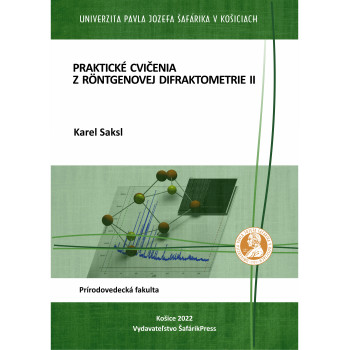
Praktické cvičenia z röntgenovej difraktometrie II

Praktické cvičenia z röntgenovej difraktometrie II

E-book

E-book

Karel Saksl

Solving crystal structures is the royal discipline of X-ray crystallography. Its primary task, with the exception of defects, is to describe the atomic structure of the motif that, by its repetition, fills the volume of the entire crystal or crystalline phase. This task is nowadays more or less routine for single-crystal X-ray diffraction, which can locate hundreds to thousands of non-hydrogen atoms in large unit cells. However, in real practice, we often have material available only in powder form instead of single crystals. Solving the atomic structure from its X-ray diffraction data is non-trivial, mainly because the three-dimensional diffraction space of a single crystal is reduced to one dimension by measuring a large number of randomly oriented microcrystals (crystallites). Therefore, the solution itself requires, in addition to proper measurement methodology, the selection of suitable tools, procedures, and strategies that, through optimization, will lead to the solution and refinement of the given crystalline phase. The current limit of this method is approximately 100 non-hydrogen atoms in the asymmetric part of the unit cell, which, however, is sufficient for most inorganic materials.

The goal of these educational texts is to provide students in the second and third levels of university studies with specific guidance on solving crystal structures from powder X-ray diffraction data. These scripts build upon my first monograph and require practical knowledge of its content. Similar to my previous monograph, I offer solved examples without a deep theoretical introduction, demonstrating procedures and strategies leading to the correct solution of crystalline phases using the freely available GSAS-II program. The examples are arranged from simpler to more complex, and the reader will find many useful pieces of information in the literature references as well as in the comments below the line. Part of these scripts are data intended for your individual practice of the described procedures. 

Karel Sakls

Download the e-book for free  (pdf)

Metódy prípravy nanoštruktúr I

Metódy prípravy nanoštruktúr I

E-book

E-book

Vladimír Komanický

The aim of this textbook is to acquaint students in physics, chemistry and material science on both undergraduate and graduate level, with the techniques used to prepare micro-electromechanical devices, nanoobjects and nanostructures using the so called top down methodologies. The is no requirement for this course to pass any prior courses. The introduction part of the text defines the forces that affect nanoobjects and the interactions between them. Reader can understand in detail why properties of nanomaterials and nanostructures are so different when comprared to their macroscopic counterparts. Text gives also an overview of thin film preparation technologies as precursors for the preparation of nanostructures. The main emphasis in Volume I is on conventional lithographic technologies for the preparation and shaping of nanostructures, methods for characterization of thin films, nanoparticles and nanomaterials. Unconventional lithographic methods will also be discussed in the prepared upcoming Volume II. Student will also get acquainted with the applications of nanostructures in research focused on nanophysics, nanocatalysis and nanoelectronics. The textbook is used as a study material for the course ÚFV / MPN / 14 - Methods of preparation and characterization of nanostructures. Part of the course is also a laboratory exercise in which the student gets acquainted with the techiques used for the preparation and characterization of thin films and top-down technologies used for the preparation of nanostructures.

Download the e-book for free (pdf)

Programovanie v Pythone 1

Programovanie v Pythone 1

E-book

E-book

Ján GunišĽubomír Šnajder

Prílohy

College scripts Programming in Python 1 are intended for future teachers of computer science. The content of the course is related to the teaching of programming in Scratch and is an introduction to text-based programming in Python.

Programming is introduced as a means of developing problem-solving skills. The first chapter is devoted to problem solving. The next 12 chapters sequentially introduce basic language constructions, data structures, and selected types of algorithms. Each of these chapters begins with an introduction to the problem. This section is primarily intended for self-study, to prepare students for the exercises. The following subchapter summarizes and completes the knowledge, and additional insights and approaches related to the chapter topic are presented. The chapters include a collection of exercises designed to practice and deepen knowledge and skills on the topic.

The final part of the chapter presents the solved problems. This section serves as a guide to solving the problems in the collection.

i

Download the e-book for free (pdf)

Matematická analýza 3. Nekonečné číselné a funkcionálne rady

Matematická analýza 3. Nekonečné číselné a...

E-book

E-book

Božena MihalíkováOndrej HutníkJozef Kiseľák

The textbook is devoted to the mathematical analysis of infinite series of numbers and functions. It is intended for students of mathematics, physics and computer science, as well as interdisciplinary study of combination with mathematics. It contains a theoretical background for investigating the convergence of infinite series, expanding functions into power and Taylor series, as well as the use of these results in various problems of mathematics, physics, and computer science. Using the historical background the textbook clarifies the motivations and the need to introduce some key concepts and their further development. Basic concepts and statements are demonstrated on a large number of solved exercises, but it contains a number of exercises for independent practice. Several results are supplemented by dynamic animations executable in the electronic version of the textbook.

Download the e-book for free (pdf)

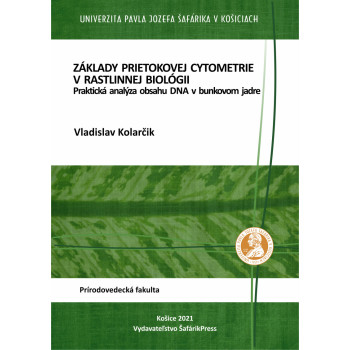
Základy prietokovej cytometrie v rastlinnej biológii. Praktická analýza obsahu DNA v bunkovom jadre.

Základy prietokovej cytometrie v rastlinnej...

E-book

E-book

Vladislav Kolarčik

Flow cytometry is a diagnostic and research technique that enables rapid analysis of cells, nuclei and organelles of plants and other organisms. In plant biology, it is most often used for DNA content analysis in a wide range of applications. It is the method of first choice and its importance is even increasing compared to competing technologies. It is unrivaled in speed, accuracy, repeatability and low cost. Flow cytometry has become a standard tool in laboratories focused on biological-ecological plant research.

This textbook provides information on the historical development of flow cytometry and its establishment in the analysis of the plant genome. It describes the procedure of sample analysis to determine the nuclear DNA content and presents the basic applications, such as determination of genome size, ploidy level and reproduction modes of plants and determination of endopolyploidy level in plant tissues. These college textbooks are intended for students, teachers and anyone interested in the use of flow cytometry in scientific work with plant cells.

Download e-book for free (pdf)

This website uses cookies to ensure you get the best experience on our website