Filter By

Categories

Categories

Selections

Selections

Year of publication:

Year of publication:

Publication language:

Publication language:

Faculty:

Faculty:

UPJŠ Unit

UPJŠ Unit

Method of publication:

Method of publication:

Active filters

  • Categories: Discounts
  • Categories: Foreign language publications
  • Categories: Science
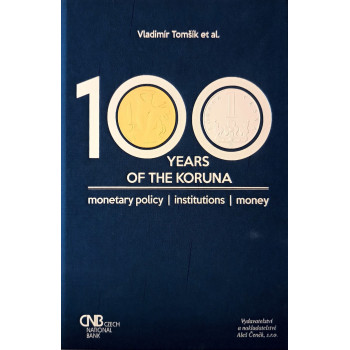
100 years of the koruna

100 years of the koruna

€30.69
Availability: 1 In Stock

Vladimír Tomšík et al.

The book was prepared to mark an important anniversary – one hundred years of our national currency. It was written by a team of Czech National Bank experts headed by CNB Vice-Governor, Professor Vladimír Tomšík. This publication charts the monetary policy history of our central bank (or, to use older terminology, the bank of issue) and describes its institutional development and the banknotes it has issued over time. It covers the period from the establishment of the independent Czechoslovak state in October 1918 and its currency in February 1919 to the present. We have therefore named the publication 100 years of the koruna. Given the twists and turns of history, however, part of the narrative relates to the joint Czechoslovak state, part to the occupied Protectorate and part to the independent Czech Republic. As a result, the original joint Czechoslovak currency was divided temporarily in 1939–1945 and then again – this time for good – in 1993. From that point on, the currencies of the two successor states went their own ways, the Czech koruna continuing to the present day and the Slovak koruna until it was replaced by the single European currency in 2009.
How to Use Slovak in a Medical  Environment  Basic Slovak for Medical Student

How to Use Slovak in a Medical Environment...

€17.00
Availability: 28 In Stock

Helena Petruňová

Učebnica je určená pre vyučovanie slovenského jazyka pre začiatočníkov (úroveň A1, A2 podľa SERR), zahraničných študentov lekárskej fakulty, odboru všeobecné lekárstvo a zubné lekárstvo. 

Učebnica AKO POUŽÍVAŤ SLOVENČINU V LEKÁRSKOM PROSTREDí  základy slovenčiny pre študentov medicíny obsahuje 13 lekcií, ktoré sú vhodné pre samoštúdium a pre prácu s učiteľom na jazykovom seminári. Tematicky zamerané lekcie ponúkajú základy slovenskej výslovnosti, slovnej zásoby, krátke dialógy a jednoduchý výklad užitočnej gramatiky. Všetky cvičenia a aktivity umožňujú študentom osvojovať si a precvičovať bohatú lekársku slovnú zásobu a vybranú gramatiku v kontexte. Obsahujú kľúčové slová, slovné spojenia, jednoduché frázy a základné otázky, ktoré sa používajú v komunikácii lekára s pacientom. Dôraz sa kladie na funkčnosť jazyka pre získavanie údajov o zdravotnom stave pacienta, o jeho živote, rodinnom prostredí, o chorobách predkov, súrodencov a pod. Na konci učebnice sú tematicky zoradené užitočné slová a slovné spojenia z prostredia nemocnice, zoznam základných slovies a kľúč k cvičeniam.   

Cytológia pracovný zošit na praktické cvičenia

Cytológia pracovný zošit na praktické cvičenia

€10.50
Availability: 34 In Stock

Ján Kleban a kolektív

Predkladaný pracovný zošit na praktické cvičenia z cytológie je určený poslucháčom 1. ročníka bakalárskeho štúdia biológie a 1. ročníka bakalárskeho medziodborového štúdia v kombinácii s biológiou na Prírodovedeckej fakulte Univerzity Pavla Jozefa Šafárika v Košiciach. Slúži ako návod, ktorý má študentom uľahčiť prácu a umožniť rýchlejšiu orientáciu v zadanej úlohe. Úprava pracovného zošita do formy protokolov umožňuje študentom zakresliť vlastné pozorovanie a tým stimuluje študentov k presnejšiemu a trvalejšiemu zapamätaniu si precvičovanej úlohy a zároveň umožňuje spätnú kontrolu pedagógom. Počas cvičení sa študenti postupne oboznámia so základnými pojmami optiky, s aplikáciami využívajúcimi mikroskopickú techniku, ale aj so základnými rozdielmi medzi štruktúrou rastlinnej a živočíšnej bunky a ich organelami.

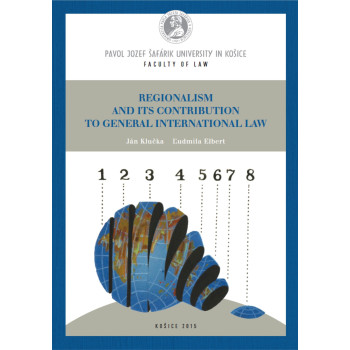
Regionalism and Its Contribution to General International Law

Regionalism and Its Contribution to General...

E-book

E-book

Ján KlučkaĽudmila Elbert

The present monograph "Regionalism and its Contribution to General International Law" was written at the Institute of European Law and Department of International Law, Faculty of Law, Pavol Jozef Safarik University in Kosice, as a part of the project (APVV-O823-11) carried out in 2011-2015, representing one of its final publication utputs. 

The main reason for choosing the topic was to evaluate regionalism in its various relationships and forms with respect to international law, and also to evaluate the place,importance and duties of international law in respect to the establishment and functioning of various forms of regionalgroups.

It is a fact that even though a lot of attention has been paid to regionalism, a more complex evaluation of the impact it has had on international law, and vice versa, is still lacking. The efforts of the present monograph are to partially eliminate this gap.

After giving a brief insight into how regionalism has developed, its content and terminology, the monograph studies in more details individual types of regionalism in the form of old and new regionalism, as well as treaty and institutional regionalism; its specifications and contributions to the international law.

Download the e-book for free (pdf)

Počítačová fyzika I

Počítačová fyzika I

E-book

E-book

Milan Žukovič

The textbook Computational Physics I covers the topics taught in the course of the same name at the bachelor's level of the Physics study program, as well as in the course Application of Numerical Methods at the bachelor's level of the Applied Informatics study program.

The text builds upon the basic course in numerical methods, focusing on explaining the fundamental principles of computer-based solutions to some typical physics problems. It includes both the area of deterministic methods for solving problems modeled by ordinary and partial differential equations, as well as the area of stochastic Monte Carlo simulations. The course Computational Physics I lays the foundation for further study of more advanced computational methods taught at the master's level in the subject Computational Physics II. Nowadays, the use of computers as a tool for solving real physics problems, and for students as a tool for preparing their final bachelor's or master's theses, is almost indispensable.

This has led to the creation of numerous user-oriented software packages in various environments for solving a wide range of problems. However, without a thorough understanding of how individual computational techniques work, these programs become black boxes with many pitfalls and risks in their use. Therefore, this text emphasizes understanding both the strengths and weaknesses of individual methods and the assumptions for their successful application.

Download the e-book for free (pdf)

Študentská vedecká konferencia PF UPJŠ 2015

Študentská vedecká konferencia PF UPJŠ 2015

E-book

E-book

Vladimír Zeleňák(ed.)

The proceedings contain abstracts of contributions from participants of the Student Scientific Conference of the Faculty of Science, Pavol Jozef Šafárik University in Košice, which took place on April 22, 2015.

The Student Scientific Conference (SSC) enjoys long-term popularity among the faculty's students and teachers, and we are pleased that this was no different this year, with 128 contributions submitted to the SSC.

The contributions were organized into 19 sections, additionally complemented by an open programming competition and the final of the IHRA contest. For many students, presenting at the SSC is one of the first opportunities to gain experience in presenting their results before a professional audience. Considering the number of submitted contributions, along with the members of the expert juries from the faculty's teaching staff and the audience who came to support their classmates' presentations, the SSC is an event where a large part of the student and academic community of the faculty meets at one place and time. Many abstracts presented in this proceedings were developed as part of students' work on partial tasks that are components of research projects at the departments of the Faculty of Science, Pavol Jozef Šafárik University.

The abstracts represent, in a way, an overview of research topics at the individual workplaces of the faculty. The SSC proceedings thus serve as a useful tool that students and faculty teachers can use to present the faculty externally to partners, employers, and potential collaborators. Partners from practice have shown interest in cooperating in organizing the SSC for a long time. Since 2005, the association of IT companies has awarded a Prize for the Most Original Work and a Prize for the Work with the Best Prospects for Practical Application.

Download the e-book for free (pdf)

Návody na cvičenia z fyziológie rastlín

Návody na cvičenia z fyziológie rastlín

E-book

E-book

Miroslav Repčák - Martin Bačkor - Peter Paľove-Balang - Silvia Gajdošová

The establishment of the Plant Physiology Laboratory at the Department of Botany, Faculty of Arts, Pavol Jozef Šafárik University in Košice in 1969 was associated with the name of Ing. Štefan Kocúrik, CSc. (1923–2006), who also prepared the first "Instructions for Exercises in Plant Physiology" (Košice 1972, 1976).

Since 1980, the manual by Associate Professor RNDr. Karol Erdelský, CSc., and Ing. Fridrich Frič, DrSc., titled "Practicum and Analytical Methods in Plant Physiology" (Bratislava 1980) has been used. With the increase in the number of students, it became relevant in 1991 to publish the "Instructions for Exercises in Plant Physiology" again to improve preparation and the efficient organization of practical work. Associate Professor RNDr. A. Košturiak, CSc., contributed significantly to the expansion of the introductory part of the instructions with his valuable advice, for which the authors are grateful. For the fourth edition, some tasks were updated and modernized, taking into account the possibilities of the renovated laboratory. The selection of tasks was adapted to the current scope of exercises for individual plant physiology subjects within the bachelor's and master's study programs in biology and ecology. These subjects include: Plant Physiology, Plant Metabolism, Mineral Nutrition of Plants, Plant Growth and Development, and Plant Ecology. Some tasks are also suitable for high school experiments.

The choice of topics was influenced by the research focus of our workplace on secondary metabolism, ecophysiology, and medicinal plants. The instructions generally adhere to the SI unit system, occasionally including other commonly used units.

Download the e-book for free (pdf)

Metodika tvorby učebných úloh a didaktických testov pre chémiu

Metodika tvorby učebných úloh a didaktických...

E-book

E-book

Mária Ganajová

The current teaching of chemistry has its specific problems. On one hand, due to the shift of the focus of chemistry curriculum towards theoretical content, the difficulty of chemistry material has increased, and in connection with this, students' interest in chemistry has decreased.

The lack of student interest in chemistry is mostly supported by the opinion that it is precisely chemistry that significantly contributes to the deterioration of environmental quality. On the other hand, we live in an era where we encounter chemical products practically everywhere. It is necessary to learn the basics of chemistry as well as possible, which makes the question of increasing interest in chemistry education and improving its effectiveness very relevant. State educational programs have been introduced into Slovak schools as a foundation for the creation of school educational programs. These emphasize not only acquiring a certain amount of knowledge but also the development and enhancement of key and specific competencies of students, preparing them for lifelong learning and their application in life.

Therefore, increasing attention is being paid to one of the fundamental didactic tools for raising student activity in teaching, and thus improving the effectiveness of chemistry education – learning tasks. From both theory and practice of chemistry teaching, we know that learning tasks, questions, examples, exercises, etc., are among the important components of every teaching lesson. Learning tasks are applied in all phases of teaching – in the motivational phase, the phase of acquiring knowledge, the phase of consolidating knowledge, and the phase of checking the acquired knowledge. It is therefore clear that every teacher will sooner or later find themselves in a situation where they will have to select learning tasks from textbooks, workbooks, collections of problems and examples, or create them themselves.

This scientific monograph is intended for educational specialists and chemistry teachers, aiming to familiarize them with examples of various types and forms of learning tasks and the basics of their creation in chemistry. It can also be helpful for them in preparing certification works focused on test creation and their statistical evaluation.

Download the e-book for free (pdf)

Realism, Modernism, Postmodernism: Five Modern Literary Texts in Context

Realism, Modernism, Postmodernism: Five Modern...

E-book

E-book

Soňa Šnircová

This textbook has been designed as supporting material for the postgraduate course on modern trends in European literature. It focuses on the presentation of five modern literary modes of writing: the realistic mode which was brought to its prominence by the nineteenth-century Realist movement; the stream-of-consciousness and ‘absurdist’ modes which were developed in the context of modernism; and the magical realist and metafictional modes which are associated mainly with postmodernist literary trends. Each mode is represented by a well-known text which demonstrates the formal aspects of each mode and deals with the thematic concerns typical of the literary movement that influenced its production.

The textbook adopts an interdisciplinary approach, placing the chosen literary texts into the historical, philosophical and cultural contexts that shaped their characters, and thereby providing the background knowledge necessary for a deeper understanding of their formal and thematic aspects.

Download the e-book for free(pdf)

Nursing care  - clinical procedure I

Nursing care - clinical procedure I

€14.60
Availability: 10 In Stock

Gabriela Štefková - Mária ZamboriováMária Sováriová SoósováRenáta Shafout

We would like to introduce the study material/textbook Nursing Care Clinical Procedures I, which was developed to cover the curriculum of Nursing Care 1 for medical students. Clinical procedures are an essential component of nursing practice. The textbook contains four main chapters. Each chapter begins with a general explanation of the topic, followed by detailed method description of procedures to help students deliver high - quality care to patients. Some chapters also include appendi xes in order to pick up some special examples from clinical practice. The textbook strongly describes bandages because a carelessly or improperly applied bandage can cause discomfort to the patient, in many cases it may expose the wound to the danger of infection. To the best of wound knowledge, these procedures reflect currently accepted clinical practice and up-to-date information. The textbook can be easily integrated into an educational programme and can be used in the laboratory as well as in clinical practice. During the preparation of this textbook the information, facts, notes, publications, books and literature presented in the references section were also used. The publication include DVD, which is concentrated on applying bandages from head to lower extremity. DVD was developed in cooperation during IRES project. The student can also find additional information to study by following references. The reading level of Nursing Care Clinical Procedures I is designed to be comprehensible to as many students as possible, including those for whom Engl ish is a second language. We hope that this textbook will be useful to all readers. The authors take no personal responsibility for applying this information to a particular clinical practice
situation.

Gender perspectives in slovak literature of the late 19th and early 20th centuries (Interpretation Studies)

Gender perspectives in slovak literature of the...

E-book

E-book

Ivica Hajdučeková

The development of this bilingual coursebook evolved as part of project KEGA Nr. 020UPJŠ-4/2013 headed by prof. PhDr. Ján Gbúr, CSc., and emerged from earlier research which had successfully analysed realist and modernist Slovak literature from a gender perspective. Based on initial interpretations which drew from philosophical, sociological and historiographical approaches, we were able to anticipate the issues which could be raised in other texts and thus establish a hypothesis for the subsequent literaryscientific research. Our research has also been influenced by the continually evolving nature of gender studies, and we have therefore decided to adopt a somewhat unusual approach in this coursebook and briefly examine some contemporary texts thereby creating an intentional shift in our timeline. The modern works of Z.Kepplová and U. Kovalyk have raised a number of interesting issues, and a study of the interwar work of M. Urban reveals further interpretations on the basis of gender. After this brief overview, we return to the main focus of the study: gender approaches to Slovak literature of the late 19th and early 20th centuries.

The study focuses on the complexity of male-female relationships in the work of both male and female authors of realist and modernist literature at the end of the 19th and the beginning of the 20th century. Works by the founding generation of realism and late realism were analysed, with particular attention being paid to the fiction of M. Kukučín, J. Čajak, J. G. Tajovský, J. Jesenský, E. M. Šoltésová, T. Vansová, Ľ. Podjavorinská and B. S. Timrava. The works of H. Gregorová and Ľ. Groeblová were also studied as prime examples of Slovak literary modernism. 

We hope that this bilingual coursebook will allow realist and modernist Slovak fiction, and the Slovak national literary tradition in general, to receive wider critical renown beyond the borders of Slovakia and also to demonstrate its place in contemporary literary theory.

Download the e-book for free (pdf)

Essentials of Language Typology

Essentials of Language Typology

E-book

E-book

Lívia Körtvélyessy

This university textbook explains to students enrolled in the course Linguistic Typology and Universals the basic terminology, theoretical approaches, and research methods. The textbook is divided into eleven chapters. Each chapter presents theoretical knowledge in an accessible manner, along with practical exercises aimed at developing students’ skills in the respective area.

The textbook covers the following topics: the subject and nature of linguistic typology, a brief history of this linguistic discipline, genealogical classification of languages, various approaches and main objectives of typology across different linguistic levels (phonology, morphology, syntax, and lexicon), as well as areal typology, complex issues of language universals, and the nature and essence of typologists’ work. Given the extensive research activities of linguists from the Department of British and American Studies at Pavol Jozef Šafárik University in Košice, the textbook also introduces students to the results achieved by these scholars in this rapidly developing field of linguistics.

Download the e-book for free (pdf)

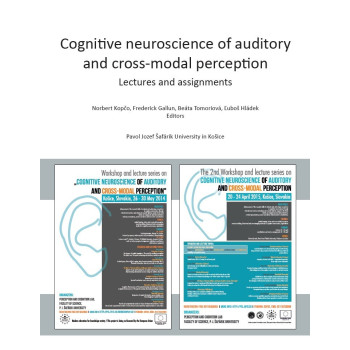
Cognitive neuroscience of auditory and cross-modal perception - Lectures and assignments

Cognitive neuroscience of auditory and...

E-book

Norbert Kopčo - Frederick Gallun - Beáta Tomoriová - Ľuboš Hládek(eds.)

Cognitive neuroscience is a fast developing scientific field which aims at uncovering the neural basis of human perception and cognition. To achieve this goal, cognitive neuroscience uses a variety of tools and approaches ranging from non-invasive brain imaging to psychophysics and neural modeling. Mastering such tools requires skills and knowledge from multiple scientific domains, including neurophysiology, cognitive psychology, and several computational fields.

Access on request via email: kogneuro (@) gmail.com

http://pcl.upjs.sk/workshopcd 

https://sites.google.com/site/kogneuro/

Bádateľsky orientované vyučovanie matematiky a informatiky na stredných školách

Bádateľsky orientované vyučovanie matematiky a...

E-book

E-book

Stanislav Lukáč - Ľubomír Šnajder - Ján Guniš - Zuzana Ješková

The publication is intended for researchers in didactics and teachers of mathematics and computer science. Our aim is to provide readers with a basic orientation in the issue of inquiry-based teaching, to explain and demonstrate several levels of student inquiry through examples, and to offer a classification of inquiry skills.

The core part of the publication consists of methodologies for inquiry-based teaching of specific topics from school mathematics and computer science. We present ideas for implementing inquiry activities, active work with information in solving various types of problems, and the application of modern digital technologies in exploring and discovering patterns.

The publication includes seven methodologies for teaching mathematics and eight methodologies for teaching computer science in the 1st and 2nd years of secondary school.

Download the e-book for free (pdf)

Prílohy

Špeciálne praktikum II - Štúdium magnetických vlastností tuhých látok

Špeciálne praktikum II - Štúdium magnetických...

E-book

E-book

Erik Čižmár

The textbook "Special Practicum II" is dedicated to describing experimental methods used for studying the magnetic properties of solid materials, especially low-dimensional and molecular magnets. It subsequently contains instructions for the practical exercise "Special Practicum II," during which master's and doctoral students use state-of-the-art commercial equipment-an electron paramagnetic resonance (EPR) spectrometer and a SQUID magnetometer.

The introductory chapter briefly describes the origin of magnetism in solids, the role of the crystal field, and magnetic interactions in explaining their magnetic properties. This is followed by an explanation of the principles of EPR, the operation of the EPR spectrometer, and the optimization of its parameters for the specific practical exercise.

The next part of the textbook is devoted to an overview of the behavior of magnetic quantities with changes in magnetic field or temperature in various types of magnets. The textbook concludes with a description of the operating principle of the SQUID magnetometer and an example of its use in a practical exercise measuring the magnetic moment.

Download the e-book for free (pdf)

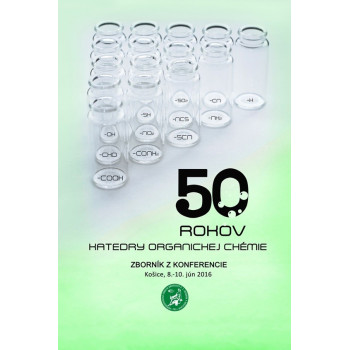
50 rokov katedry organickej chémie

50 rokov katedry organickej chémie

E-book

E-book

Zuzana Kudličková(ed.)

Proceedings of Abstracts from the Scientific Conference with International Participation Organized on the Occasion of the 50th Anniversary of the Establishment of the Department of Organic Chemistry, Faculty of Science, Pavol Jozef Šafárik University in Košice, held on June 8–10, 2016 in Košice.

The Department of Organic Chemistry was established on February 1, 1966. From its inception, the department’s development prospects have been linked to high-quality scientific research focused on the synthesis of isothiocyanates and the products of their nucleophilic additions. In addition, studies were conducted on the use of cycloaddition, cyclocondensation, and photocyclization reactions of heterocumulenes in the synthesis of heterocycles.

Currently, research at the Department of Organic Chemistry is concentrated on stereoselective syntheses of iminosugars and γ-lactam-β-lactone antibiotics, total synthesis of natural compounds and their analogues possessing a sphingoid structure, research into the synthesis of indole alkaloids from the phytoalexin group, and the synthesis of acetylcholinesterase inhibitors based on acridine and coumarin derivatives.

Download the e-book for free (pdf)

Zbierka príkladov z atómovej a jadrovej fyziky

Zbierka príkladov z atómovej a jadrovej fyziky

E-book

E-book

Janka Vrláková - Adela Kravčáková - Stanislav Vokál

The presented "Collection of Problems in Atomic and Nuclear Physics" is intended as a basic study material for lectures in General Physics IV in the second year of the bachelor's single-subject physics program and interdisciplinary studies combined with physics at the Faculty of Science of P. J. Šafárik University in Košice.

Its aim is to support independent student work and to deepen the acquired knowledge from the given physics course by solving selected problems. It is divided into three main parts: Atomic Physics, Nuclear Physics, and Experimental Methods of Nuclear Physics.

Each thematic chapter contains an overview of basic concepts, relations, and formulas necessary for better understanding of sample problems and for solving the attached set of unsolved problems.

Download the e-book for free (pdf)

Environment a jeho etické aspekty

Environment a jeho etické aspekty

E-book

E-book

Tatiana Kimáková a kol.

Ethics, as the science of the proper realization of human potential in various areas of life, also extends into the environment. For understanding the ethical aspects in this field, a thorough knowledge of the individual components of the environment, as well as their impact not only on humans but on all living nature, is very important. Therefore, questions concerning the influence of the environment are increasingly at the forefront of interest from an ethical perspective, also in connection with existing legal norms.

The modern process of civilization is characterized by rapid development of science and technology. However, this development, while raising the standard of living on one hand, also brings negative side effects on the other. The result is the disruption of ecological, biological, and natural life conditions, especially in the areas of industrial centers. The development of individual branches of industry leads to the production of liquid, gaseous, and solid wastes, the emergence of harmful risk factors threatening various components of living nature, including humans. There may be increased bioaccumulation of hazardous chemical elements in organisms, which, through their effects, represent a potential risk also in terms of carcinogenesis and mutagenesis.

For this reason, an important role of society is to create conditions to prevent the release of emissions and to reduce their concentration to the lowest possible, socially and biologically acceptable level. The assessment of the biological effects of harmful substances is based on experimental and epidemiological studies. Knowledge of concentration and duration of exposure is crucial for applying dose-effect relationships and for determining the highest permissible concentrations of pollutants. The health of the population, as a universal value and a primary human right, represents a fundamental economic resource not only for the individual, but also for society as a whole.

Download the e-book for free (pdf)

Histology (Practical lessons)

Histology (Practical lessons)

€9.26
Availability: 48 In Stock

Eva Mechírová - Iveta Domoráková

The content of this "Practical lessons" represents a record of the appearance, under the light microscope of the tissues, organs and systems of the human body. In addition, it provides visual guidelines during the practical phase of a histology course. It is hoped that this book will be especially useful to students to understand fully the microscopic structure of human tissues and organs.

Authors

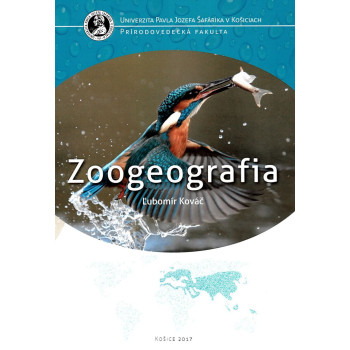
Zoogeografia

Zoogeografia

€12.50
Availability: 10 In Stock

Ľubomír Kováč

Učebný text „Zoogeografia“ objasňuje základné princípy a historický vývoj rozšírenia živočíchov na Zemi, a ďalej analyzuje faktory, ktoré ho ovplyvňujú. Vďaka moderným vedeckým metódam a technikám výskumu je zoogeografia veľmi dynamicky sa rozvíjajúcou disciplínou. Z geologických etáp je podrobnejšie spracovaná problematika paleoklimatických cyklov kvartéru, holocénu a vývoja postglaciálnej klímy, ktoré zohrali významnú úlohu pri dynamike vývoja živočíšnych areálov. Areálová analýza charakterizuje a triedi areály živočíchov a ich dynamiku v nadväznosti na speciáciu. Podrobne je spracovaná problematika zoogeografických oblastí s dôrazom na palearktickú oblasť. Časť zameraná na dynamickú zoogeografiu rieši najmä problematiku refúgií a reliktov v súvislosti s vývojom pleistocénnej paleoklímy. Text stručnou formou sumarizuje základné antropogénne faktory, ktoré v recentnej dobe drastickým spôsobom limitujú rozšírenie živočíchov v rýchlo ubúdajúcom prírodnom prostredí na Zemi. Text ďalej prehľadným spôsobom charakterizuje biogeografiu Karpát a faunu územia Slovenska. Záverečná časť prezentuje fylogeografiu ako modernú vednú disciplínu zameranú na rekonštrukciu migračných ciest v postglaciáli, ktorá je podložená analýzou molekulárnych markerov populácií živočíchov v širšom geografickom kontexte. 

Autor

Vybrané kapitoly z biogeografie pre geografov

Vybrané kapitoly z biogeografie pre geografov

E-book

E-book

Dušan BarabasAlena Labunová

These study materials aim to provide basic information about biogeographical issues from a geographical perspective, i.e., a perspective focused primarily on the aspect of spatial differentiation of the biosphere. The basis for the division of the biosphere is its historical development, during which individual taxa and communities were formed.

The historical development of the biosphere did not occur under stable, constant conditions, but rather in ever-changing conditions caused by the position of our planet within the solar system, the position of the Earth's axis relative to the ecliptic, and also the position of the solar system within the galaxy. All changes in the Earth's position, together with the movement of continents (drift) and climate changes, created the prerequisites for the spatial expansion of the biosphere. The historical development of the biosphere, various perspectives, the hierarchical level of differentiation, and the causes of differentiation are incorporated in this study material, whose aim is to outline the basic principles of this division.

The goal is also to highlight certain differences in the understanding of terminology, as well as to point out some fundamental relationships operating within the landscape system in the broadest sense of the word. The section devoted to the ecological principles of the functioning and formation of the landscape system, according to MIČIAN and ZATKALÍK (1984), outlines the issues of understanding the terms ecosystem and geosystem. For this reason, the presented text includes chapters that attempt to explain the understanding and approach to some basic concepts.

These study materials are intended for students of single-subject, interdisciplinary, and supplementary studies as basic teaching material. By expanding the knowledge from this study material with further information, which is elaborated in more detail in the literature listed in the bibliography of this text, graduates will gain a comprehensive view of biogeographical issues.

Authors

Download the e-book for free (pdf)

Roma Health Organizations Database

Roma Health Organizations Database

E-book

E-book

Kvetoslava Rimárová

This document is a part of the EU-funded project MEHO - Migrant and Ethnic Health Observatory and Slovak grant VEGA 1/4501/09.
This monograph includes a database of organizations dealing with Roma health and community issues and is part of the Interim Report 2007. The published monographs try to enclose all kinds of information about Roma health including organizations on national, international, governmental and non-governmental levels in Europe as well as international organizations such as WHO and UNDP. The views expressed in this monograph are those of the author and do not necessarily represent the views of the EU MEHO Project or Slovak grant VEGA 1/4501/09.
Kvetoslava Rimárová

English for Chemists

English for Chemists

E-book

E-book

Božena Velebná

The following material has been created during the two years of teaching English for Chemists at the Faculty of Science of the Pavol Jozef Šafárik University and is therefore designed to meet the needs of this course. The main motivation was the lack of appropriate materials, especially as the groups generally comprise students with a very diverse level of English. This diversity therefore became the main criterion determining both the form and the content of this text.

In the ten units that provide material for a one semester course, the emphasis is put on teaching the students vocabulary and terminology, which is introduced via authentic texts, depending on the topic of each unit. Students are encouraged to learn the meaning of new words in context. Grammar is included too, with the aim of demonstrating and explaining grammatical rules by means of examples taken directly from the texts. For the more advanced students, grammatical exercises in this material can serve for revision while the beginners might need more supplementary materials.

I hope that this material, the preparation of which has been a challenging as well as enjoyable experience will be useful for future teachers and the students of this course.

Download the e-book for free (pdf)

English for Students of Geography and Ecology

English for Students of Geography and Ecology

E-book

E-book

Zuzana Buráková

The English language study materials are intended for students of geography and general ecology at the Faculty of Science of Pavol Jozef Šafárik University. Their aim is to broaden communicative language competencies at an intermediate level of English proficiency, with an emphasis on the students’ field of study.

The individual chapters are based on the need for specialization within the various natural science disciplines and on preparing students to present their academic results not only at home, but also abroad. The study material contains a variety of texts, quizzes, exercises, maps, etc., which further illustrate the issues relevant to the field.

This material is intended to serve as a foundation for the future creation of even more precise materials needed for teaching specialized foreign language courses.

Download the e-book for free (pdf)

Ortuť v životnom prostredí ako rizikový faktor zdravia

Ortuť v životnom prostredí ako rizikový faktor...

€9.04
Availability: 10 In Stock

Tatiana Kimáková

Táto vedecká monografia je komplexnou vedeckou prácou zameranou na prítomnosť a pôsobenie ortuti v životnom prostredí, ale aj na rizikové faktory zdravia, ktoré sú s ňou spojené. Monografia predstavuje charakteristiku ortuti v multidisciplinárnom zábere, prezentuje využitie v priemysle a v zdravotníctve, popisuje negatívne vplyvy ortuti v životnom prostredí, na zdravotný stav obyvateľstva. Zároveň prináša návrhy a odporúčania pre rizikové skupiny ľudí. Súčasťou monografie je komplexný výskum koncentrácie ortuti vo vzorkách komodít domácej i zahraničnej produkcie a vo vzorkách rastlín pomocou atómového absorpčného spektrometra AMA 254. Vedecká monografia je vhodná pre vedeckú komunitu, študentov medicínskych, veterinárnych, prírodovedných a poľnohospodárskych odborov ako aj pre študentov verejného zdravotníctva všetkých troch stupňov vysokoškolského štúdia. Monografia je učená aj pre všetkých záujemcov z radov informovanej verejnosti.

Autorka

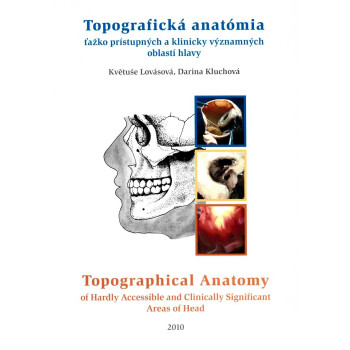
Topografická anatómia ťažko prístupných a klinicky významných oblastí hlavy

Topografická anatómia ťažko prístupných a...

€27.70
Availability: 6 In Stock

Květuše Lovásová - Darina Kluchová

The surgical practice starts with detailed knowledge of anatomy. Even if anatomy of human body has not changed over the time, perfection and precision of surgical practice require precise knowledge of anatomical structures, their location, and topographical relationships. Everyone should be aware of the occurrence of possible variations as well. 

A prospective medical doctor should not rely on knowledge gained by studying models, schemes, and pictures, but should combine two types of learning: visual and didactic. Wide array of the visual learning development, considering vision alone, and a detailed and realistic approach to difficult access to structures of the human body are important precursors that create sufficient and quality knowledge needed for clinical practice and appropriate professional development. 

This publication maps all of the clinically significant and difficult approached areas of the head that are not normally prepared for practical exercises in anatomy because of the time and difficulties with the preparation. The colorful, detailed photodocumentation enriched by schemes and followed by procedure guide provides a view of structures until now only poorly documented. We sincerely hope that this monograph will fill the gap in medical literature offered in the market at present time.

Medical Biophysics: Practical Exercises

Medical Biophysics: Practical Exercises

€11.23
Availability: 19 In Stock

Michal Legiňa kol.

Progress in biology and medicine has always been significantly related to advances in physics. Not only has physics supplied instruments and methods of measurement that have led to many discoveries in physiology and medicine, but methods of physical research have changed many of the older approaches to the biologic sciences. Such circumstances have even led to development of a new scientific field: biophysics, which uses to a great extent physical instrumentation procedures applied to an experimental system. Because any instrument is an additional factor in any experimental system, it may affect the data. To interpret physical data on biological material correctly then, it is necessary to consider the characteristics of instrument response.

A practical course enables a student to acquire some skills, experience and methodological knowledge for performance of experiments and evaluation of measured data. Due to the fast development of instrumentation technology, it is not possible to teach every operation and procedure upon instruments we may use in a future. Besides the basic physical principles, the aim of a practical course is to point out some general rules and skills for instrument operation and for the interpretation of the measured values derived from such operation.

There are two kinds of lessons in practical courses. The first one focuses on laboratory measurements of some important physical quantities and the evaluation of the measured data. These measured quantities are components of the subject “medical biophysics” or of the phenomena studied. Experience provided in managing various scales and tables, as well as in the construction of tables and graphs is substantial. Lessons also enable students to repeat and to strengthen their knowledge of secondary school physics, which is useful for understanding of many phenomena studied in medical biophysics. The second kind of lesson provides experience with some of the diagnostic and therapeutic medical instruments, which can be seen in practical medicine.

The understanding of basic physical principles of corresponding instruments is both recommended and demanded. Theoretical preparation is not only an appropriate condition for the practical managing of the whole lesson, but also helps to avoid injury. This textbook, therefore, intends to help students in preparing for both the practical lessons and the final exam.

Authors

Textbook of practical physiology: part I - cardiovascular physiology

Textbook of practical physiology: part I -...

€11.50
Availability: 10 In Stock

Mária Pallayová - Štefan Kujaník

The “Textbook of Practical Physiology, Part I - Cardiovascular Physiology” by Mária Pallayová and Štefan Kujaník is a practical textbook of Human Physiology intended for English speaking medical students from general medicine and dentistry curricula.

The textbook covers basic principles in cardiovascular physiology and methods of the cardiovascular examination. Adequate knowledge of the cardiovascular physiology is important for the understanding of cardiovascular system function, as well as for the diagnosis and proper treatment of cardiovascular and other diseases. The practical tasks are constructed to facilitate knowledge acquisition and encourage students to develop practical skills, for instance the ability to follow experimental protocols, to work as part of a team, and to interpret data.

The textbook is written in English and comprises 91 pages in B5 format, grouped into twelve chapters. Each chapter is divided into six sections (Introduction, Principle, Importance, Materials, Procedure, and Protocol) to facilitate students’ understanding of the topics and assist them with preparation of the laboratory reports. The text is accompanied by explanatory figures, graphs, and tables that contribute to the learning experience.

Authors

This website uses cookies to ensure you get the best experience on our website