Slovenčina



Květuše Lovásová - Darina Kluchová
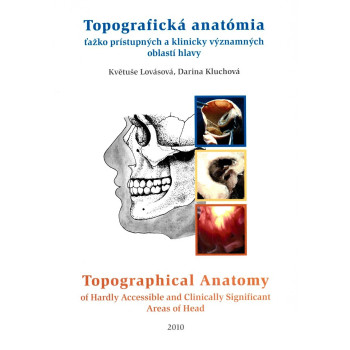
The surgical practice starts with detailed knowledge of anatomy. Even if anatomy of human body has not changed over the time, perfection and precision of surgical practice require precise knowledge of anatomical structures, their location, and topographical relationships. Everyone should be aware of the occurrence of possible variations as well.
A prospective medical doctor should not rely on knowledge gained by studying models, schemes, and pictures, but should combine two types of learning: visual and didactic. Wide array of the visual learning development, considering vision alone, and a detailed and realistic approach to difficult access to structures of the human body are important precursors that create sufficient and quality knowledge needed for clinical practice and appropriate professional development.
This publication maps all of the clinically significant and difficult approached areas of the head that are not normally prepared for practical exercises in anatomy because of the time and difficulties with the preparation. The colorful, detailed photodocumentation enriched by schemes and followed by procedure guide provides a view of structures until now only poorly documented. We sincerely hope that this monograph will fill the gap in medical literature offered in the market at present time.
Data sheet
Specific References
Feneisův obrazový slovník anatomie se za více než 30 let stal opravdovým pojmem. Současné 9., zcela přepracované vydání prof. Wolfgangem Dauberem navazuje úspěšně na tradici předchozích vydání. Všechny anatomické pojmy jsou slovem i obrazem vysvětleny krátce, pregnantně a precizně.V tomto vydání byly poprvé použity poslední platné termíny stanovené FCAT (Federative Committee on Anatomical Terminology) a tato nová Terminologia Anatomica se tak stala podkladem pro více než 1250 odborných výrazů.V knize je přes 8000 pojmů definováno přesně a krátce a nejméně jedenkrát je tento termín zakreslen na více než 800 anatomických vyobrazeních, přehlednost zvyšuje dvojbarevný tisk.Kniha je ideální příručkou pro přípravu na zkoušku či při potřebě rychle si některý anatomický pojem objasnit,Kniha je mimořádně přínosná a důležitá pro studenty medicíny a stomatologie, lékaře, vědecké pracovníky a také pro všechny, kteří ke své práci potřebují znalost správných anatomických odborných pojmů.Originál publikace vydalo nakladatelství Georg Thieme Verlag. Precizně přeložili a vzhledem k nové anatomické nomenklatuře upravili prof. MUDr. R. Čihák, DrSc., a prof. MUDr. M. Grim, DrSc.Ukazuje se, že v klinické praxi se znovu stává znalost anatomických pojmů nezbytnou a její bezchybné použití je dokladem dobré erudice lékaře. Publikace poslouží velmi dobře také jako kapesní atlas anatomie člověka. Přeloženo z německého originálu “Feneis´Bild-Lexikon der Anatomie“ (9. německé vydání), z něj pak vychází 5. anglická verze s názvem „Pocket Atlas of Human Anatomy: Founded by Heinz Feneis“.
Darina Kluchová a kol.
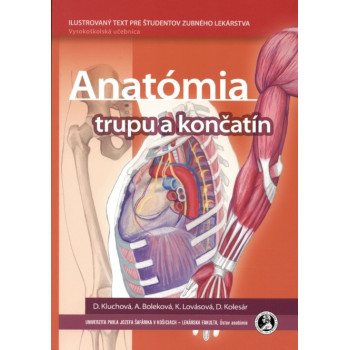
At present, there is a wide range of anatomy textbooks for medical students but at the same time there is an absence of anatomy books suitable for dental students. This book was designed as a base for study of trunk and limbs for dental students which should gain a sense of anatomy structures, but they do not need know details from these regions.
The amount of information in the book was extensively discussed with colleagues from clinical departments and with anatomy specialists from Slovakia and from abroad as well. Because of serious diversity of opinions we took into consideration also opinions of our specialists from dental medicine. Final material is considered to be a key information required for future dental doctors.
Authors
E-book
Terézia Kisková - Stanislav Matéffy - Františka Horváthová
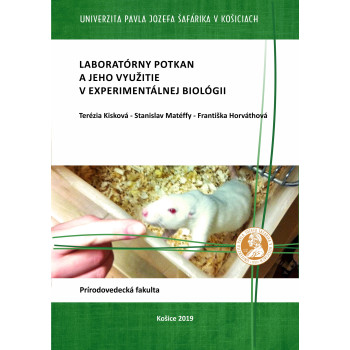
The laboratory rat (Rattus norvegicus) is one of the most commonly used experimental animals. It serves as a model organism for analyzing numerous biological processes and pathological mechanisms, such as cardiovascular diseases, metabolic disorders (e.g., lipid metabolism, diabetes mellitus), neurological and neuropsychiatric conditions (e.g., stroke, epilepsy, or Alzheimer's disease), neurobehavioral research, autoimmune diseases (e.g., arthritis), cancer, and renal diseases. It offers many unique advantages for modeling human diseases, testing drugs and natural substances, and studying responses to environmental factors. The size of the laboratory rat, compared to the mouse, creates ideal conditions for physiological manipulations. Additionally, rats are used in clinical toxicology to test chemical substances (Hedrich, 2000).
E-book
Juraj Ševc - Anna Alexovič Matiašová
Among students of single-discipline and interdisciplinary biology studies at faculties with a natural science focus, there often arises a problem in defining the scope of the curriculum when studying the subject of Human Anatomy. The presented study material aims to help students of non-medical scientific fields navigate the extensive anatomical terminology and to limit the amount of required anatomical terms to an optimum, so that alongside mastering Latin nomenclature, students still have sufficient capacity to memorize additional knowledge in the areas of systemic, comparative, developmental, and functional anatomy.
Emphasis on organizing individual anatomical terms into logical units simultaneously supports a hierarchical view of the architecture of the human body. Despite its seemingly self-serving nature, anatomical terminology thus becomes the framework upon which students build knowledge from more or less related scientific disciplines studying the human body and the processes occurring within it throughout their further studies. At the same time, alongside this ambition that goes beyond the scope of the anatomy discipline, the Anatomical Terms follow a long tradition of anatomical handbooks while respecting the valid Latin and Slovak anatomical nomenclature.
This script represents a practical supplement to university textbooks of Anatomy or Neuroanatomy and especially to anatomical atlases, but it certainly does not aim to replace them. Here you will find all the necessary terms gathered in one place, which you can always have at hand on your phone, e-reader, or laptop. The emphasis on organizing individual anatomical terms into logical units supports a hierarchical view of the architecture of the human body, and the inclusion of a brief introduction to each system is intended to encourage you to seek further, more detailed information about the structure and function of the given organ system.