Oslava právneho štátu (Právny štát z pohľadu teórie štátu a práva a medzinárodného práva)

Oslava právneho štátu (Právny štát z pohľadu...

E-book

E-book

Ľudmila Pošiváková Zuzana Antošová - Milan Kočan (eds.)

Proceedings from the Student Debate held on April 24, 2013, at the Faculty of Law of Pavol Jozef Šafárik University in Košice.

In the current period, the rule of law is widely debated both at the academic and political levels. This debate is not only related to the effort to establish the Rule of Law in states that have transitioned from socialist to democratic systems but also in states experiencing various unrests, whether political or religious.

However, it is not just a debate about certain characteristics of the Rule of Law that are missing in domestic law or at the level of international law, but also a debate about the very definition and meaning of the Rule of Law. The rule of law can be likened to an ideal that almost every state strives to achieve. Even in the case of the establishment of the independent Slovak Republic, the framers decided to include among the introductory provisions, which should form the core of the constitution, that the Slovak Republic is a state governed by the rule of law.

However, to achieve the ideal of the rule of law, it is necessary not only to declare it but also to adopt measures essential for an independent judiciary, democracy, the effective enforcement of human rights, the separation of powers, and many other elements that characterize a state governed by the rule of law.

Download the e-book for free (pdf)

Informačná spoločnosť a medzinárodné právo

Informačná spoločnosť a medzinárodné právo

E-book

E-book

Adam Giertl - Ľubica Gregová Širicová (eds.)

Proceedings from the 5th Student Symposium held on April 21-22, 2013

The French delegate to the Commission on Human Rights, while discussing the inclusion of the term "media" in the article on freedom of expression in the draft of the International Covenant on Civil and Political Rights, wisely urged other members of the commission to be forward-looking regarding the information media of the future.

The discussion took place in 1950, when delegates could not yet foresee the impact of the internet on social relations. Given that it is now clear that information technologies significantly influence law, including international law, the organizers of the student symposium decided to dedicate its sixth edition to the theme "Information Society and International Law."

Students of the Faculty of Law, after registering for the symposium, first focused on preparing their contributions, with each participant having access to a consultant if needed. This year, the list of consultants, in addition to members of the Institute of European Law and the Department of International Law, was expanded to include an expert in intellectual property law, Mgr. Martin Husovec, a graduate of our Faculty of Law and currently an IMPRS-CI doctoral student at the Max Planck Institute for Intellectual Property and Competition Law. We also take this opportunity to thank him for dedicating his time to the students and providing them with valuable advice in preparing their contributions. After the preparatory phase, the symposium itself took place, with the aim of presenting the prepared contributions and discussing them.

The presented contributions reflected a wide range of intersections between international law and the information society.

Download the e-book for free (pdf)

Regionalizmus: Stav, východiská, perspektívy

Regionalizmus: Stav, východiská, perspektívy

E-book

E-book

Adam Giertl (ed.)

Proceedings of Scientific Works

International law does not represent a monolithic entity of uniform legal norms. It is a legal system that is fundamentally created by the consensus of states. It reflects the collective will of multiple entities regarding what should be binding and enforceable as law among them.

From this understanding arises the fact that the needs for legal regulation will differ in various parts of the world. The consequence of this situation is the formation of regional groupings where, to some extent, specific legal rules apply. As Professor Klučka points out in his study published in this proceedings, regionalization can occur both on a contractual basis and on an institutional basis. Regionalism in law thus raises many interesting questions that legal science addresses.

This proceedings of scientific papers also aims to contribute to the knowledge in this field.

Download the e-book for free (pdf)

Tvorba a realizácia pracovného práva so zreteľom na regionálne aspekty trhu práce

Tvorba a realizácia pracovného práva so...

E-book

E-book

Milena Barinková (ed.)

The researchers of the grant task ‘Creation and implementation of labour law with regard to regional aspects of the labour market’ deal in their work with the analysis of employers' attempts for legislative changes in the level of social rights of employees justified by regional differences, the analysis of possible impacts in their implementation, as well as the assessment of their compliance with the protective function of Slovak labour law and the value character of fundamental human rights inherent in the European and legal culture.

Download the e-book for free (pdf)

Kúpna zmluva – história a súčasnosť II.

Kúpna zmluva – história a súčasnosť II.

E-book

E-book

Erik Štenpien (ed.)

Proceedings from the international scientific conference held on September 26-27, 2014 at the Faculty of Law, UPJŠ in Košice

Nowadays, in the modern 21st century, we have a much more complex society than the ancient one. It requires legal regulation of various types of purchase contracts, where although the basic feature remains, it needs to be specified further, and the simple sentence 'I sell, you buy' needs to be supplemented with conditions 'how, where, when, under what conditions?' This is the task of modern civil law. The current recodification of civil law has already taken place in some European countries, and it is currently underway in our country. Therefore, it is important to meet at conferences with colleagues from these countries and exchange knowledge, to discuss their experiences, avoid the bad, and accept or adjust the good according to our conditions.

This proceedings is the output publication from the conference held on September 26-27, 2014 in Košice. It was the second conference with the participation of the most prominent legal Romanists, legal historians, and civilists from home and abroad. The proceedings is the result of unique cooperation among experts from various fields of legal science. I believe that the published outputs will help to understand the institute of purchase contracts from all its aspects and will become an inspiration for both experts and laypeople.

Download the e-book for free (pdf)

Základné zásady v rozhodovacej činnosti súdnej moci

Základné zásady v rozhodovacej činnosti súdnej...

E-book

E-book

Alexander Bröstl - Marta Breichová Lapčáková - Martin Štrkolec (eds.)

Collection of scientific papers by doctoral students.

Thematically, the contributions are diverse: they feature fundamental principles in public law (basic principles of criminal proceedings, the principle of contradiction, basic principles of constitutional court proceedings, basic principles in private law and procedural law (superficies solo cedit), the principle of civil court proceedings in deciding labor disputes, equality of participants and the duty to instruct, objection of bias in light of the right to an impartial court, the principle of speed and the principle of economy in the decision-making activities of general courts, basic principles in legal theory and international law (general legal principles recognized by civilized nations), coexistence of the principle of equality and the principle of non-discrimination in the legal order of the European Union, argumentation through the principle of rule of law in the decision-making activities of courts, the impact of fundamental principles on the interpretation of legal norms.

It is important that the authors, i.e., doctoral students from law faculties in the Czech Republic and the Slovak Republic, almost unanimously examine these principles in the process of application (interpretation) of law, from the perspective of how legal (primarily judicial) practice deals with them. This should be fundamentally welcomed and appreciated.

Download the e-book for free (pdf)

Obchodná spoločnosť ako právnická osoba

Obchodná spoločnosť ako právnická osoba

E-book

E-book

Ján Husár - Kristián Csach (eds.)

The collection contains contributions presented at the international conference held on April 1st - 3rd 2014 in Smolenice, organized by Pavol Jozef Šafárik University in Košice in cooperation with the Institute of State and Law of the Slovak Academy of Sciences and the Institute of State and Law of the Czech Academy of Sciences. Authors are high-profile Slovak and Czech scholars in the field of private law and company law, as well as representatives of new generation of young researchers. Contributions focus on contemporary issues in the field of company law, in particular theoretical basis of corporations, groups of companies, doctrine of abuse of rights, reflective loss and new tendencies in corporate law in foreign legal orders. The first part of the contributions presented at the conference have been already published in the special issue of the theoretical magazine Právny Obzor n. 4/2014. 

Download the e-book for free (pdf)

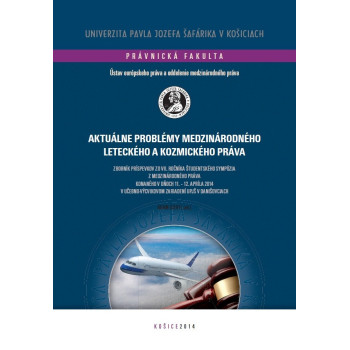
Aktuálne problémy medzinárodného leteckého a kozmického práva

Aktuálne problémy medzinárodného leteckého a...

E-book

E-book

Adam Giertl (ed.)

Proceedings from the VII. annual student symposium on international law held on April 11-12, 2014 at the UPJŠ training facility in Danišovce

Despite this, flying and space travel are now a common part of human civilization. What is the role of law in this process? This is the question posed by the organizers of the VII. annual student symposium on international law, aiming to evaluate the contribution of international law in the field of aviation and space flights, especially in light of current developments.

The individual topics were tackled by second, third, and higher-year students of the Faculty of Law at UPJŠ in Košice. The result of their work on the assigned topics, which the authors could consult with members of the Institute of European Law and the Department of International Law, is the presented work.

The proceedings are thematically divided into two parts. The first part acquaints the reader with selected topics related to aviation law, and the second part is dedicated to international space law.

With its focus, the proceedings also have a broader impact, as in some aspects it fits into the broader context of research conducted at the Institute of European Law and the Department of International Law, which focuses on examining the influence of regionalism on general international law and vice versa. This issue is also reflected in the topics of the individual contributions.

Download the e-book for free (pdf)

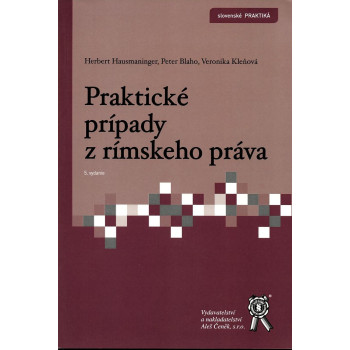
Praktické prípady z rímskeho práva

Praktické prípady z rímskeho práva

€20.35
Availability: 2 In Stock

Herbert Hausmaninger - Peter Blaho -  Veronika Kleňová

Kniha obsahuje konkrétne prípady z oblasti rímskeho civilného procesu, rodinného, vecného, záväzkového a dedičského práva, ktoré sa odohrali v antickom Ríme a jeho provinciách. Vybrané boli prípady s osobitným významom pre vývoj civilného práva kontinentálnej Európy. Prostredníctvom týchto prípadov zbierka umožňuje rekonštruovať skutkový stav a právnické odôvodnenia rozhodnutí rímskych právnikov. Vnútorná štruktúra každého prípadu je viac-menej konštantná. V záhlaví je uvedená inskripcia právneho prameňa; nasleduje úplný latinský text a jeho preklad. Každý prípad sa končí položenými otázkami, odkazmi na najdôležitejšie občianske zákonníky a na literatúru. Otázky sú zväčša formulované stručne, s cieľom povzbudiť čitateľa pri hľadaní vlastnej cesty k prameňom. Osobitný dôraz sa kladie na odôvodnenie príslušného rozhodnutia, pričom sa prihliada na spôsob argumentácie rímskych právnikov. Poznámka na občianske zákonníky má nielen ukázať na pretrvávanie rímskeho práva v moderných súkromnoprávnych poriadkoch, ale aj podporiť diskusiu k rímskemu riešeniu právnych problémov.

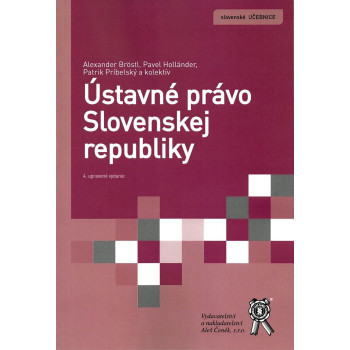
Ústavné právo Slovenskej republiky

Ústavné právo Slovenskej republiky

€27.59
Availability: 2 In Stock

Alexander Bröstl  - Pavel  - Holländer - Patrik Príbelský a kolektív

Publikácia nie je obmedzená výlučne na ústavné právo Slovenskej republiky má oveľa širší záber. Výklad zvolený v tejto príručke vychádza z pojmu a klasifikácie ústav a pokračuje stručným a orientačným prehľadom základných línií ústavného vývoja na území Slovenskej republiky za ostatných stopäťdesiat rokov. Rozsiahla časť je venovaná základným právam a slobodám v následnosti, ktorá sa riadi systematikou Ústavy Slovenskej republiky z roku 1992. Otázky týkajúce sa jednotlivých druhov moci v kontexte modelu deľby moci sú predmetom pozornosti záverečných kapitol: po tradičných mociach je do tejto časti zaradená aj kontrolná moc spolu s prokuratúrou a verejným ochrancom práv. Sprievodným znakom publikácie sú tiež odkazy na rozhodovaciu činnosť Ústavného súdu Slovenskej republiky, najmä v spojitosti s problematikou základných práv a slobôd. Kniha je určená predovšetkým študentom magisterského štúdia v odbore právo v rámci študijných programov tam, kde sa tieto programy týkajú ústavného práva Slovenskej republiky.

Trestné právo hmotné  Osobitná časť

Trestné právo hmotné Osobitná časť

€27.59
Availability: 5 In Stock

Jaroslav Klátik a kolektív

Vysokoškolská učebnica Trestné právo hmotné. Osobitná časť, 2. aktualizované vydanie bezprostredne nadväzuje na učebnicu Trestné právo hmotné. Všeobecná časť, 2. aktualizované vydanie. Autorský kolektív rozoberá skutkové podstaty trestných činov zahrnuté do dvanástich hláv. Autori si za cieľ stanovili poskytnúť čitateľom podrobný prehľad o jednotlivých trestných činoch a zároveň poskytnúť čo najpodrobnejší výklad jednotlivých skutkových podstát týchto trestných činov, ako aj výklad pojmov v nich sa nachádzajúcich. Obsah jednotlivých kapitol vychádza zo systematiky osobitnej časti Trestného zákona, čím sa študenti, ako aj ostatná právnická verejnosť môžu lepšie orientovať v základných trestno-hmotných inštitútoch. V jednotlivých kapitolách sú zrozumiteľne a jasne vymedzené jednotlivé obligatórne znaky skutkových podstát trestných činov a ich súvislosti. Tam, kde je to potrebné, autori uvádzajú na vysvetlenie svoje teoretické a praktické skúsenosti, v prípade bližšieho vysvetlenia aj aktuálnu súdnu prax. V rámci každej hlavy je uvedená všeobecná charakteristika príslušnej hlavy a dielu, do ktorého sa subsumuje konkrétny trestný čin. Učebnica je určená predovšetkým poslucháčom právnických fakúlt a Akadémie Policajného zboru. Učebnicu však môžu využívať aj sudcovia, prokurátori, policajti, advokáti, vyšší súdni úradníci, čakatelia prokuratúry, advokátski koncipienti pri rozbore a zdôvodnení mnohých ustanovení osobitnej časti Trestného zákona. Kniha je určená aj pre široký okruh záujemcov o trestné právo.

Právo informačných a komunikačných technológií

Právo informačných a komunikačných technológií

€19.50
Availability: 5 In Stock

Regina Hučková - Diana Treščáková - Laura Rózenfeldová

Vysokoškolská učebnica Právo informačných a komunikačných technológií je určená študentom vysokých škôl vo všeobecnosti, najmä však študentom Právnickej fakulty, ktorí majú záujem o štúdium práva v spojení s informačnými a komunikačnými technológiami. Učebnica predstavuje zdroj informácií potrebných nielen pre štúdium tejto problematiky, ale aj pre rozšírenie celkového obzoru v danej problematike.

Pracovnoprávne elementy výkonu (závislej) práce. Kritika a deformácia práva.

Pracovnoprávne elementy výkonu (závislej)...

E-book

E-book

Jana Žuľová (ed.)

Collection of Scientific Works

Article 35 of the Constitution of the Slovak Republic guarantees everyone the right to freely choose their profession and receive training for it, as well as the right to engage in entrepreneurial or other gainful activity. Everyone has the right to freely decide whether to secure their livelihood through self-employment—with all the associated consequences and risks—or through employment within labor-law relationships by performing dependent work.

The framework and rules for exercising these rights are primarily regulated by labor, commercial, and tax legislation, each with its own set of rights and obligations applicable specifically to entrepreneurs and employees. Constant competitive pressure, along with the effects of economic crises, pushes employers to seek ways to extract the most from workers while optimizing for the lowest possible insurance, administrative, and tax costs. As a result, employment contracts are being terminated, and under the pressure of losing their income, individuals are "voluntarily" shifting to commercial-law relationships.

This situation, along with other distortions in the labor market, confronts those entitled to work with unfair practices by employers, thereby undermining their ability to freely exercise this fundamental right.

Download the e-book for free (pdf)

Orgány obchodných spoločností

Orgány obchodných spoločností

E-book

E-book

Kristián Csach - Dušan Rostáš (eds.)

Proceedings of the 2nd Student Symposium on Company Law In November 2014

The second annual Student Symposium on Commercial Law—more specifically, on Company Law—was held at the university’s facility in Danišovce. As in the previous year, the aim of the symposium was to provide students with a greater opportunity to articulate their own perspectives on current legal issues and to present the results of their individual work.

The theme of the second symposium focused on the governing bodies of commercial companies, aligning it thematically with the APVV research project being carried out by members of the Department of Commercial and Economic Law at our Faculty of Law. This overarching topic made it possible to assign a range of current legal issues, allowing students to explore problems they are likely to encounter in their future professional practice. The selected topics are not among those unanimously settled by legal doctrine or established case law.

On the contrary, they were deliberately chosen for their complexity and the lack of sufficient domestic literature. As a result, students had to go beyond standard textbook or commentary-based knowledge to thoroughly address their assigned topics.

Download the e-book for free (pdf)

Teória ústavy a ústavné systémy demokratických štátov

Teória ústavy a ústavné systémy demokratických...

€21.00
Availability: 1 In Stock

Ladislav Orosz

Vysokoškolská učebnica pripravená pre štúdium verejnoprávnych disciplín na Fakulte verejnej správy UPJŠ v Košiciach, ktorá je využiteľná ako študijná literatúra aj pre študentov právnických fakúlt a politológie. V prvej časti učebnice je predmetom výkladu a analýzy teória ústavy. Autor kladie v tejto časti osobitný zreteľ  na dynamicky sa rozvíjajúce časti ústavnej teórie, ku ktorým patrí najmä problematika materiálneho jadra ústavy a súdna kontrola ústavnosti. Druhá časť učebnice má komparatívny charakter. Autor v nej analyzuje genézu a rozbor súčasného stavu ústavných modelov tradičných demokracií (USA,  Spojené kráľovstvo Veľkej Británie a Severného Írska, Francúzska a SRN), ako štátov zoskupenia V4 (Poľská republika, Maďarsko, Česká republika, Slovenská republika).

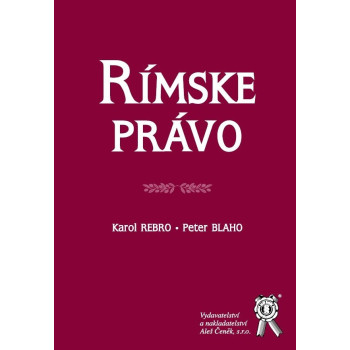
Rímske právo

Rímske právo

€31.24
Availability: 1 In Stock

Karol Rebro - Peter Blaho

Štvrté, doplnené a rozšírené vydanie koncepčne nadväzuje na doterajšie vydania a najmä sa nedotýka častí autorsky spracovaných Karolom Rebrom. Rozšírená je piata časť učebnice zameraná obsahovo na inštitúty vecného práva. Podstatným spôsobom je doplnený výklad o vecnom práve v celej jeho šírke vložením drobných úvah týkajúcich sa základných otázok rímskeho súkromného práva v oblasti vecnoprávnych vzťahov (ius in re). Miestami ide o nové spracovanie, miestami o rozšírenie poznatkov z danej matérie. V konkrétnostiach sa zväčšil rozsah v náuke o veciach (druhové a individuálne veci, prípadne zastupiteľné a nezastupiteľné veci), v náuke o držbe je novonačrtnutý problém držby ako faktu a držby ako práva, otázka „dobromyseľnej“ držby a rozšírenie výkladu o ochrane držby (interdiktná ochrana, posesórny a petitórny spor). V časti o vlastníckom práve došlo k precizovaniu druhov vlastníckeho práva, rozšírený je výklad o pôvodných spôsoboch nadobudnutia vlastníckeho práva, čím sa stal prehľadnejším. V náuke o vydržaní je upresnený problém dobromyseľnosti. Osobitnú pozornosť si zaslúžil výklad o tradícii doplnený o nové dôležité skutočnosti. Prepracovaný je ďalej výklad o reivindicatio a o postavení procesných strán v tomto súdnom spore, takisto aj actio negatoria a actio Publiciana. Úplne novým je zapracovanie pojmu vecné práva k cudzej veci (iura in re aliena) najmä v porovnaní s vlastníckym právom (iura in repropria). V náuke o záložnom práve sa zmeny týkajú podstaty a účelu rímskeho záložného práva, rozšírený je výklad o fidúcii a právnom postavení záložného veriteľa a záložného dlžníka k založenej veci. Napokon pribudol register latinských právnych pravidiel uvedených v texte učebnice.

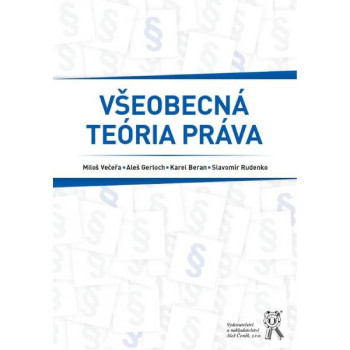
Všeobecná teória práva

Všeobecná teória práva

€18.15
Availability: 3 In Stock

Miloš Večeřa a kolektív

Všeobecná teória práva poukazuje v teórií práva ako sa robí tvorba práva, v aplikácií právnych vzťahoch, taktiež právo europeizácie a globalizácie, obsahuje príklady aplikácie pre podmienky SR legislatívy. Publikácia sa snaží poskytnúť teóriu práva vo všeobecnej rovine ako sa interpretuje v praxi v právnej vede.

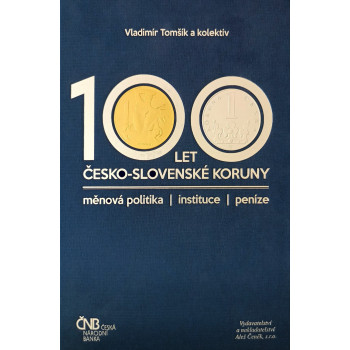
100 let česko- slovenskej koruny

100 let česko- slovenskej koruny

€25.97
Availability: 1 In Stock

Vladimír Tomšík a kolektív

Kniha vznikla u příležitosti významného jubilea, stého výročí existence naší národní měny. Byla sepsána kolektivem expertů České národní banky pod vedením viceguvernéra profesora Vladimíra Tomšíka. Publikace se zabývá historií měnové politiky naší centrální či dle staršího pojmosloví cedulové banky, popisuje její institucionální vývoj i bankovky, které v průběhu času emitovala. Pokrývá přitom období od vzniku samostatného československého státu v říjnu 1918 a návazně jeho měny v únoru 1919 až do současnosti. Vzhledem k historickým peripetiím se část popisovaného vývoje týká společného československého státu, část okupovaného protektorátního území a část samostatné České republiky, a právě proto byl pro publikaci zvolen název 100 let česko-slovenské koruny. Ten má odrazit skutečnost, že původně společná československá měna byla dočasně rozdělena v letech 19391945, a poté znovu již natrvalo od roku 1993. Od té doby se pak měny obou nástupnických států ubíraly vlastními cestami, česká koruna až do současnosti, slovenská pouze do svého nahrazení jednotnou evropskou měnou v roce 2009.

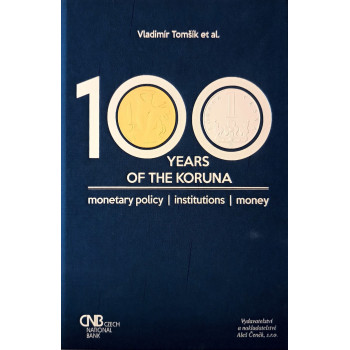
100 years of the koruna

100 years of the koruna

€30.69
Availability: 1 In Stock

Vladimír Tomšík et al.

The book was prepared to mark an important anniversary – one hundred years of our national currency. It was written by a team of Czech National Bank experts headed by CNB Vice-Governor, Professor Vladimír Tomšík. This publication charts the monetary policy history of our central bank (or, to use older terminology, the bank of issue) and describes its institutional development and the banknotes it has issued over time. It covers the period from the establishment of the independent Czechoslovak state in October 1918 and its currency in February 1919 to the present. We have therefore named the publication 100 years of the koruna. Given the twists and turns of history, however, part of the narrative relates to the joint Czechoslovak state, part to the occupied Protectorate and part to the independent Czech Republic. As a result, the original joint Czechoslovak currency was divided temporarily in 1939–1945 and then again – this time for good – in 1993. From that point on, the currencies of the two successor states went their own ways, the Czech koruna continuing to the present day and the Slovak koruna until it was replaced by the single European currency in 2009.

Regionalizmus a jeho prínos pre všeobecné medzinárodné právo

Regionalizmus a jeho prínos pre všeobecné...

E-book

E-book

Ján Klučka a kol.

The presented monograph, “Regionalism and Its Contribution to General International Law,” was prepared at the Institute of European Law and the Department of International Law of the Faculty of Law at Pavol Jozef Šafárik University in Košice as part of a project of the same name (APVV-0823-11) carried out in the years 2011–2015, and represents one of its final publication outputs.

The main reason for choosing this topic was the effort to evaluate regionalism in its various forms in relation to international law, and, conversely, to assess the place, significance, and role of international law in the creation and functioning of different forms of regional groupings. In fact, although regionalism is receiving increasing attention in doctrine, a more comprehensive assessment of its impact on international law and vice versa has so far been lacking.

This monograph attempts to partially fill this gap. Against the background of a brief historical development of regionalism, as well as its substantive and terminological components, the monograph examines in greater detail the individual types of regionalism—such as old and new regionalism, as well as contractual and institutional regionalism—their specific features, and their contribution to general international law.

Attention is also devoted to a specific phenomenon of contemporary regionalism, namely the influence of the European Union on its stabilization and development, both through practical measures and through a set of measures regulated by international treaties.

Download the e-book for free (pdf)

Regionalism and Its Contribution to General International Law

Regionalism and Its Contribution to General...

E-book

E-book

Ján KlučkaĽudmila Elbert

The present monograph "Regionalism and its Contribution to General International Law" was written at the Institute of European Law and Department of International Law, Faculty of Law, Pavol Jozef Safarik University in Kosice, as a part of the project (APVV-O823-11) carried out in 2011-2015, representing one of its final publication utputs. 

The main reason for choosing the topic was to evaluate regionalism in its various relationships and forms with respect to international law, and also to evaluate the place,importance and duties of international law in respect to the establishment and functioning of various forms of regionalgroups.

It is a fact that even though a lot of attention has been paid to regionalism, a more complex evaluation of the impact it has had on international law, and vice versa, is still lacking. The efforts of the present monograph are to partially eliminate this gap.

After giving a brief insight into how regionalism has developed, its content and terminology, the monograph studies in more details individual types of regionalism in the form of old and new regionalism, as well as treaty and institutional regionalism; its specifications and contributions to the international law.

Download the e-book for free (pdf)

10 rokov v EÚ: Vzťahy, otázky, problémy

10 rokov v EÚ: Vzťahy, otázky, problémy

E-book

E-book

Ján Klučka(ed.)

Collection of Papers from the International Scientific Conference Held on May 29–30, 2014 at the Faculty of Law, Pavol Jozef Šafárik University in Košice.

In the first half of this year, a scientific conference entitled “10 Years in the EU: Relations, Questions, Issues” was held in Košice, and the contributions from this event constitute the content of the present collection bearing the same name.

The aim of the organizers—namely, the Slovak Association of European Law, the Representation of the European Commission in the Slovak Republic, and the Institute of European Law together with the Department of International Law of the Faculty of Law at Pavol Jozef Šafárik University—was not only (even if loosely) to follow up on the previous 2009 conference “Community Law in Slovakia – Five Years ‘After’”, but, after another five years, to continue its main objective: to provide participants from both the academic and non-academic community with a space for further analysis and exchange of views on legal issues related to the membership of the Slovak Republic in the European Union and various current issues of the Union’s legal order.

From this perspective, a shift in the overall focus of the conference contributions in 2009 and 2014 can be observed. While the contributions from the first conference focused primarily on various aspects of the application of Union law in the Slovak legal system and related application problems, especially before courts and other authorities, the basic orientation of the contributions from the second conference is already different. The present collection also confirms that the contributions focus primarily on current issues of the European legal order and on certain aspects of the Union’s external policy, while the relationship of Union law to the Slovak legal system is no longer given primary attention.

Several contributions focus on areas characterized by a certain overlap or “cohabitation” of Union law with public international law, private international law, or, more broadly, international relations.

Download the e-book for free (pdf)

Ochrana kultúrnych hodnôt prostriedkami medzinárodného a regionálneho práva

Ochrana kultúrnych hodnôt prostriedkami...

E-book

E-book

Adam GiertlĽudmila Elbert

Collection of Papers from the 8th Student Symposium held on April 20–21, 2015 in Danišovce

The capture of the historic Syrian city of Palmyra by fighters of the radical Islamic State caused shock among the global public. The main reason is the barbarism with which this organization proceeds, not only in relation to the treasures of the world’s cultural heritage. The situation in the Middle East, where cultural treasures of inestimable value are under direct threat, demonstrates how fragile the world’s cultural heritage is. The reaction of the international public and world leaders shows how sensitively the destruction of cultural heritage is perceived.

The quoted statement chosen by the editors relates to the threat posed by the Islamic State—however, the spirit of this statement can be applied to any cultural wealth that forms part of the world’s cultural heritage. The destruction or damage of these values primarily represents a loss for humanity as such. Each destroyed artifact of world cultural heritage signifies the disappearance of a unique legacy left by previous generations for the future. At the same time, cultural heritage must be understood as a broad spectrum of assets—both tangible and intangible. Their legal protection was the topic of this year’s symposium. As with any social interest, the protection of cultural heritage can be ensured through various mechanisms and under different forms of social organization.

These diverse approaches are unified by law as a normative system. The question for the 8th year of the symposium on international law was what role international law plays in the protection of cultural heritage. In the context of the European region, the role of the European Union as a regional organization was examined.

Download the e-book for free (pdf)

Rule of Law a medzinárodné právo

Rule of Law a medzinárodné právo

E-book

E-book

Ľudmila Elbert

The presented scientific monograph addresses the issue of the Rule of Law and its place, roles, and particularities at the level of international law. The Rule of Law is understood as a value that should govern communities, both domestic and international. It is thus compared to Kelsen’s basic norm, which should stand at the top of the legal order as the norm justifying the validity and existence of the norms of the legal order, both domestic and international.

Although the Rule of Law is studied at the international law level, it cannot be considered without understanding the Rule of Law in domestic law. Just as its development differs depending on whether it evolved within Anglo-American or continental law, its application and development also differ between domestic law and international law.

These differences are mainly caused by the roles and objectives that international Rule of Law is meant to secure, as well as by the distinct characteristics of domestic and international law.

Download the e-book for free (pdf)

Slovenské a české obchodné právo v roku 2015: Vybrané problémy

Slovenské a české obchodné právo v roku 2015:...

E-book

E-book

Jozef Čorba(ed.)

Collection of Contributions from the Conference

On June 11–12, 2015, the Department of Commercial Law and Economic Law at the Faculty of Law, P. J. Šafárik University in Košice, organized the 13th meeting of the departments of commercial law from the law faculties of Czech and Slovak universities. This event further demonstrates that the idea of an annual gathering of representatives from these departments, initiated by Professor Bejček of the Faculty of Law at Masaryk University in Brno, has taken root and is likely to continue. Not only to preserve the tradition but primarily for the benefit of such meetings and the interest of participants to meet regularly.

A traditional part of these meetings, besides the exchange of knowledge and information about the teaching process and experience sharing, is a scientific conference focused on current issues in commercial law. This year’s conference was held under the title Slovak and Czech Commercial Law in 2015 – Selected Problems. A total of 17 contributions from various departments were included in the conference proceedings, divided into three thematic areas. The first group of contributions addresses selected issues related to the legal regulation of commercial companies and its practical implementation. The second group focuses on arbitration and insolvency law.

The third group includes contributions on the interpretation of the amended regulation of interest on late payments in commercial obligations, problems related to the application of this regulation, and issues concerning the interpretation of legal acts contained in the new Czech Civil Code. An additional part features an informational contribution on the development of Slovenian commercial law and its current form.

Ján Husár, Kristián Csach

Download the e-book for free(pdf)

Územná samospráva a tvorba práva

Územná samospráva a tvorba práva

E-book

E-book

Michal Jesenko - Martina Kantorová(eds.)

Peer-reviewed proceedings of the scientific conference, which took place on 27.11.2015 at the Faculty of Public Administration, UPJŠ v Košice, Popradská 66, 041 32 Košice

Territorial self-government forms an integral part of a modern democratic and legal state. It is an expression of efforts to implement tasks to ensure the needs of the territorial community of citizens at the level that is closest to them.

One of the most important tools at the disposal of local self-government units in the performance of the tasks entrusted to them is the power to issue general binding regulations in matters of local self-government and to ensure the tasks arising for local self-government from the law. Law-making at the level of towns and municipalities or higher territorial units is thus an integral part of the exercise of territorial self-government and ultimately expresses its specific character as an essential part of public administration.

The aim of the scientific conference organized by the Department of Public Law Disciplines, Faculty of Public Administration, UPJŠ in Košice on 27 November 2015 was an effort to present the achieved results of scientific research activities in the field of law-making at the level of cities and municipalities, or higher territorial units. The conference provided a wide space for discussion on current issues of municipal standard-setting with the participation of representatives of the professional public, as well as representatives of local government and local self-government.

The scientific conference and the peer-reviewed proceedings of the conference were realized as a part of the solution of the VEGA grant project No. 1/0683/13 under the title "Normative Formation of Municipalities in the Matters of Local Self-Government. The present collection of papers from the scientific conference is an expression of the long-term efforts of the Department of Public Administration, Faculty of Public Administration, UPJŠ in Košice to address current issues of public administration with a special focus on the issue of local government.

Download the e-book for free (pdf)

Aktuálne otázky migrácie z pohľadu medzinárodného práva s osobitným zreteľom na Chartu práv Európskej únie

Aktuálne otázky migrácie z pohľadu...

E-book

E-book

Adam Giertl (ed.)

Collection of Papers from the 9th Annual Student Symposium on International and European Law held on April 22, 2016 at the Faculty of Law, Pavol Jozef Šafárik University in Košice

As indicated by the very title of the 9th Annual Student Symposium on International and European Law, “Current Issues of Migration from the Perspective of International Law with Special Regard to the Charter of Fundamental Rights of the European Union,” the participants focused on the highly topical subject of European migration, which they examined from various aspects of both international and Union law (a total of 9 contributions).

In assessing the role of individual actors primarily involved in addressing the problems arising from migration to Europe, particular emphasis was placed on the role of international specialized organizations, which often provide direct assistance to migrants “in the field” through humanitarian or medical aid. However, this is not the only response of the international community, as it is complemented by the activities of the concerned states as well as various non-governmental organizations and volunteers. Regarding the evaluation of the European Union’s activities, the symposium participants agreed that the mass migration wave caught the EU relatively unprepared—institutionally, legislatively, and technically—accompanied by a lack of clarity in adopting a fundamental approach to this reality.

It was also emphasized that these shortcomings occurred despite the fact that developments in the preceding period clearly signaled the possibility of gradual migration to the European Union escalating into a mass phenomenon. According to the participants, additional ex post and sometimes delayed measures adopted in response to the ongoing migration process contributed to an overall increase in political tension within the EU and divided its member states into opposing camps.

Download the e-book for free (pdf)

Európska únia a jej vplyv na organizáciu a fungovanie verejnej správy v Slovenskej republike

Európska únia a jej vplyv na organizáciu a...

E-book

E-book

Alena Krunková (ed.)

Proceedings of the Scientific Conference Held on June 28, 2016 at the Faculty of Law of Pavol Jozef Šafárik University in Košice in connection with the implementation of the project “The European Union and Its Impact on the Organization and Functioning of Public Administration in the Slovak Republic” – approved under number MVZP – SK PRES/2016/134

The Slovak Republic, as a member state of the European Union, is undertaking a historic role associated with the Presidency of the Council of the European Union within the presidency trio. At the beginning of 2016, the Ministry of Foreign and European Affairs of the Slovak Republic announced a call for applications for grants for 2016 in the field of international relations and foreign policy, specifically focused on the Slovak Republic’s Presidency of the Council of the European Union. The Faculty of Law of Pavol Jozef Šafárik University in Košice responded to this call and obtained a project aimed at carrying out research activities through a series of events focused on regional self-government in the Slovak Republic in the context of its role within the European Union. The Faculty has long been engaged with issues of European Union law both in its teaching and in the scientific research activities of its individual faculty members. The project aims to enrich this portfolio with special activities targeting not only professionals, but also students and the general public.

The first activity of the project was a conference entitled “The European Union and Its Impact on the Organization and Functioning of Public Administration in the Slovak Republic – Development So Far, Current State, and Perspectives.” The conference was attended by invited public officials, representatives of academia, and representatives of local government, as one of the main goals of the project is to connect the academic community with the practical sphere and thus involve practitioners in the planned activities within the project.

Download the e-book for free (pdf)

Zákon o policajnom zbore

Zákon o policajnom zbore

€27.86
Availability: 1 In Stock

Marián PeťovskýMiriam Odlerová - Tomáš Škrinár

Publikácia je komplexným zhrnutím doterajších teoretických poznatkov a praktických skúseností z oblasti činností Policajného zboru. Súčasná policajná prax pociťuje absenciu publikácie, ktorá by vo svojom obsahu vysvetlila postupy pri výkone policajných činností v rozsahu súčasného znenia zákona o Policajnom zbore. Publikácia sa preto sústreďuje najmä na praktickú činnosť policajta pri výkone služby, vykonávanie služobných zákrokov, používanie donucovacích prostriedkov, ale aj povinnosti a oprávnenia príslušníkov Policajného zboru. Okrem toho rozoberá úlohy, organizáciu a riadenie Policajného zboru, informačno-technické prostriedky a operatívno-pátraciu činnosť, spracúvanie informácií Policajným zborom, spôsoby a formy kooperácie Policajného zboru s inými subjektmi a náhradu škody. Publikácia má byť praktickou pomôckou policajta vo vzťahu ku kvalitnému a efektívnemu plneniu jeho úloh, povinností a oprávnení v priamom výkone služby. Autori chcú predmetnou publikáciou osloviť čitateľov z odbornej verejnosti, najmä príslušníkov Policajného zboru, zložiek Ministerstva vnútra Slovenskej republiky, bezpečnostných mimorezortných služieb, ale tiež aj laickej verejnosti, ktorá mnohokrát dochádza do bezprostredného kontaktu so zásahmi polície do ich práv a slobôd.

Ochrana súkromia zamestnanca

Ochrana súkromia zamestnanca

E-book

E-book

Jana Žuľová(ed.)

Proceedings from the 1st Annual Student Symposium on Labor Law held on April 8–9, 2016 in Danišovce

Discussions on the topic of privacy are currently very topical and interesting. The advancement and progress of technology have added a new dimension to individual privacy. With the use of modern electronic devices, terms such as precious commodity, chimera, or illusion are increasingly associated with privacy. Workplaces have not remained immune to modernization either. Machines are replacing human labor, programming and planning the production process, but also controlling, monitoring, and recording the fulfillment of assigned work tasks.

The availability of technology and its implementation in employers’ operations intrude upon the personal and private sphere of employees, which is an inherent part of every person’s life and does not remain left behind the doors of the workplace. Proper and correct use of monitoring mechanisms by employers means not only mastering their technical installation at the workplace and covering the associated financial costs, but also respecting the privacy of employees.

It cannot be overlooked that the right to privacy is among the fundamental human rights and freedoms, enjoying the corresponding characteristics (inalienability, non-transferability, irrevocability, etc.) and appropriate legal protection. And even though it is not absolute and may be suspended in favor of another right (especially the employer’s right to protect their property), every intervention—such as comprehensive camera surveillance, monitoring of phone calls, email correspondence, blocking certain websites, etc.—always has adverse consequences for the privacy of the employee.

Download the e-book for free (pdf)

This website uses cookies to ensure you get the best experience on our website