Slovenčina


E-book
The monograph focuses on the issue of loneliness among substance-addicted people in the context of abstinence prospects and re/lapse prevention. In the monograph these phenomena, several theories were integrated and applied in the context of the ecosystem meta-framework of social work and practical contexts. The ecosystem meta-theory serves as a meta-construct with the ability to encompass the complexity of social phenomena as well as that of human beings within the structure of their living and social environment, formal and informal networks, and close intimate relationships.
In this monograph are presented research sample consisted of 235 respondents – hospitalised addicts undergoing urgent treatment, abstaining A-club members as well as members of psychotherapy and self-help groups. The research showed that abstainers were statistically less lonely than the hospitalised respondents. Quantitative data of research are complemented by qualitative data collected in four case studies; two of them focused on two long-term abstainers from alcohol and drugs, while the other two case studies dealt with two respondents in post-hoc treatment undergoing the resocialization process. The research also showed that respondents who broke abstinence felt lonelier than their successfully abstaining counterparts.
The results were supported also by the fact that a statistically significant inversely proportional relationship was identified between the duration of abstinence and loneliness rate. Gender differences were found between the hospitalised addicts in all loneliness dimensions. Naturally, the combined research was limited in certain aspects, mainly in terms of the size and proportional distribution of the research sample and its subgroups, test battery extent, and general nature of the population studied. Triangulation among quantitative and qualitative with the theoretical starting points confirmed the existence of a relationship among loneliness, addiction, and prospect of abstinence.

Data sheet
E-book
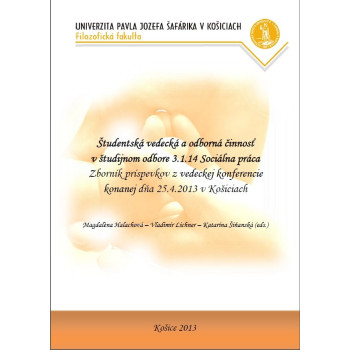
Magdaléna Halachová - Vladimír Lichner - Katarína Šiňanská (eds.)
Proceedings of Contributions from the Scientific Conference Held on April 25, 2013, in Košice
The proceedings of contributions from the scientific conference were created as part of the national round of the Student Scientific and Professional Activities event in the field of study 3.1.14 Social Work, which took place on April 25, 2013, in Košice.
The central theme of the proceedings focuses on addressing various problem areas within social work as both an academic discipline and a practical activity. These contributions were prepared by students and young researchers under the guidance of experienced professionals. The topics covered in the proceedings include issues such as social services, field social work, school social work, and similar areas. Additionally, they highlight the dangers of socio-pathological phenomena such as truancy, drug addiction, poverty, bullying, and more.
The presented results clearly demonstrate the importance of social work and other helping professions in working with specific client groups.
E-book
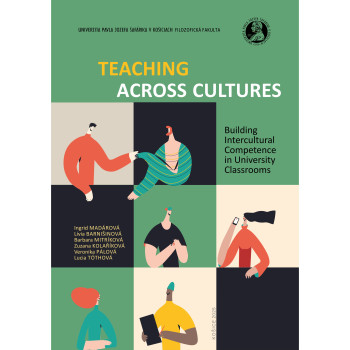
Ingrid Madárová - Lívia Barnišinová - Barbara Mitríková - Zuzana Kolaříková - Veronika Pálová - Lucia Tóthová
This handbook is primarily intended for university teachers who regularly come into contact with international students. It focuses on supporting effective intercultural communication in the academic environment. Through examples of specific situations from everyday academic life, it offers recommendations on how to prevent potential misunderstandings arising from intercultural differences. It also includes practical advice aimed at building open, culturally sensitive, and respectful communication that enhances mutual understanding and fosters an inclusive educational environment.
E-book
The monograph offers an insight into radicalization pull and push factors, influencing which is the competence of helping professionals.Radicalization is conditioned by the current social, economic, cultural and political context, i.e. the time-space in which radicalization occurs.It is this fact that directs the content of the monograph to factors that can be considered triggering and influencing factors of radicalization processes as well as radicalization itself.
The monograph systematizes knowledge about radicalization from the point of view of pull and push factors, which have been identified as factors of radicalization in professional literature, research reports and other verified sources, including Internet resources focused on radicalization and processes of radicalization, as well as available interventions to influence or prevent radicalization.The monograph mainly focuses on the analysis of pull and push factors that are related to radicalization and radicalization processes.
The monograph offers the results of research carried out through qualitative methodology.The research focused on issues related to radicalization in the research sample consisting of radicalized and non-radicalized respondents.The research focused on the investigation of pull and push factors related to radicalization, which can occur in the family, school or work environment, among peers, in the wider social environment related to the social and political climate in society and the influence of mass media.
E-book
The submitted monograph, "Colloquial Lexemes in Journalistic Texts," presents an original perspective on the analysis and description of lexical and grammatical expressive means in the examined communication field.
The main research problem is the colloquialization of expressive means as a marked feature in publicly published journalistic texts. The starting point of the research itself was the search for lexical units with the stylistic qualifier of colloquiality in the "Short Dictionary of the Slovak Language." Their presence and frequency, as well as any potential shifts in meaning, were verified in publicly accessible media communications.
Since this is research into "living language," the source material consists of journalistic texts in the Slovak National Corpus database.