Slovenčina


E-book
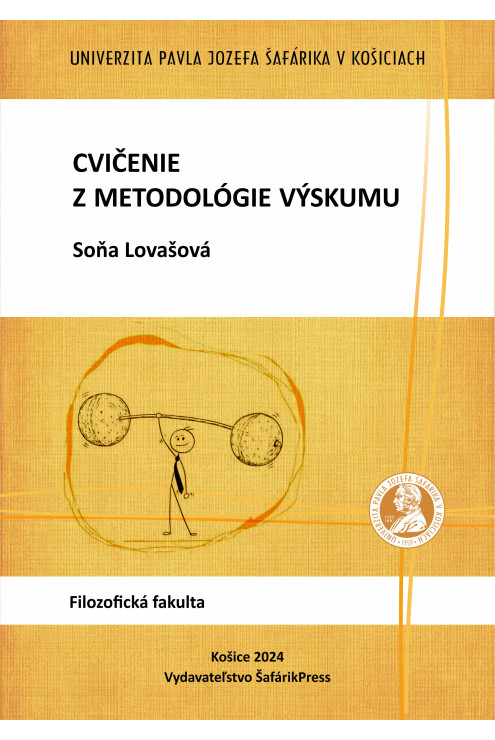
If we were to conduct a study on the popularity of subjects among social work students, the subjects of Research Methodology and Statistics would likely rank low on the list. It is precisely the lack of popularity of research methodology among students that led to the preparation of this textbook. The stylistic approach of this text was chosen with the intention of introducing the fundamentals of methodology to students encountering it for the first time, without alienating methodologists. The text primarily serves as a teaching aid for the course "Exercise in Research Methodology" and the seminars "Bachelor Thesis Seminar" and "Master's Thesis Seminar." Throughout the entire textbook, examples and case studies are interwoven and visually highlighted. The text endeavors to address the fundamental question that is key to motivating and understanding the essence of research methodology: why is research necessary for social workers? The aim of the textbook is to facilitate students' preparation for the Research Methodology course and to enhance their understanding of the basics of research methodology.

Data sheet
E-journal
Renáta Orosová (výkonný redaktor)
Vedecko-odborný časopis Edukácia je zameraný na problematiku vzdelávania a výchovy v oblasti základného, stredného a vysokého školstva. Zreteľ kladie na súčasný stav a perspektívy edukačnej praxe, aktuálne aspekty pregraduálnej prípravy učiteľov, sociálnej pedagogiky, špeciálnej pedagogiky, ako aj pedagogické a psychologické aspekty výchovy v základných výchovných inštitúciách z pohľadu širokej pedagogickej verejnosti. Je určený vedeckým pracovníkom, mladým vysokoškolským učiteľom, doktorandom, ako aj odborným a pedagogickým pracovníkom, s cieľom prezentovať trendy v edukácii a vyvolať diskusiu k aktuálnym otázkam prezentovaných oblastí výchovy a vzdelávania.
E-book
On June 8 and 9, 2023, the 22nd edition of the Psychology of Work and Organization conference took place at the Faculty of Arts of the University of Pavel Jozef Šafárik in Košice. The conference program was divided into six blocks and one poster section and supplemented by three invited lectures.
This collection contains selected contributions from this conference, with contributions in English first, then in Slovak. The variety of contributions reflects the variety of topics in the field of work and organizational psychology, with the most represented topics being the quality of life and work load, aspects of the work of a school psychologist, factors affecting the achievement of work goals in emerging adulthood, and the presentation of new measures with possible application in the work environment.
Download e-book for free (pdf)
E-book
Alexander Onufrák, Peter Dubóczi, Lukáš Jakabovič
The submitted publication entitled Voľby 2023/2024: výsledky – hodnotenia – dôsledky reflects a wide range of topics related to the electoral processes that took place in 2023 and 2024 in Slovakia and abroad. The publication deals with both the evaluation of the currently valid electoral legislation, including proposals for its further improvement, and the broader socio-political consequences of the elections in connection with democratization and integration processes. The submitted publication is published as an output of the VEGA project No. 1/0474/24 Audit of Slovak electoral and referendum legislation, the project leader of which is prof. JUDr. Ladislav Orosz, CSc. from the Faculty of Law of the Pavol Jozef Šafárik University in Košice and in which the Department of Political Science of the Faculty of Arts of the Pavol Jozef Šafárik University in Košice also participates. The authors of the individual contributions analyze all types of elections, from municipal and regional, through parliamentary and presidential, to elections to the European Parliament. While some authors focused primarily on the local or regional level, others chose an approach focused on the national or supranational level, and the geographical scope of the cases examined was extremely diverse.
Download the e-book for free (pdf.)
E-book
Soňa Lovašová (ed.)
Proceedings of the Scientific Conference with International Participation held on November 28, 2014, in Košice
Social work is among the helping professions that can be considered highly risky from various perspectives. The clientele utilizing social services is very diverse, often consisting of individuals in extreme life situations. It is typical for help to be sought only when the client is at rock bottom. Along with other factors, this can lead to the emergence of various risky situations. The proceedings were created within the framework of the VEGA task No. 1/0332/12 titled Analysis of Selected Risk Factors of Client Violence in Social Work with an Emphasis on Prevention of Client Violence and Preparation of Social Workers - National Mapping of the Occurrence of Client Violence Against Social Workers in Slovakia. The thematic focus of the proceedings is broader, as client violence is only one of many risks in social work. In the proceedings, the reader will find 52 articles that address the riskiness of social work from many perspectives. They offer an interesting overview of theoretical foundations as well as research findings. The numerous thematic contributions indicate that the issue of risk in social work is highly relevant and that attention is paid to it in both theory and practice.