Active filters

  • Year of publication:: 2014
  • Year of publication:: 2015
  • Year of publication:: 2016
  • Year of publication:: 2024
  • Year of publication:: 2024
  • Year of publication:: 2024
  • Year of publication:: 2024
  • Year of publication:: 2024
Edukácia, roč. 8, č. 1/2025

Edukácia, roč. 8, č. 1/2025

E-book

Renáta Orosová (výkonný redaktor)

Stránka časopisu >>>

Vedecký recenzovaný časopis Edukácia je zameraný na problematiku vzdelávania a výchovy v oblasti základného, stredného a vysokého školstva. Zreteľ kladie na súčasný stav a perspektívy edukačnej praxe, aktuálne aspekty pregraduálnej prípravy učiteľov, sociálnej pedagogiky, špeciálnej pedagogiky, ako aj pedagogické a psychologické aspekty výchovy v základných výchovných inštitúciách z pohľadu širokej pedagogickej verejnosti. Je určený vedeckým pracovníkom, mladým vysokoškolským učiteľom, doktorandom, ako aj odborným a pedagogickým pracovníkom s cieľom prezentovať trendy v edukácii a vyvolať diskusiu k aktuálnym otázkam prezentovaných oblastí výchovy a vzdelávania.

Ciele vedeckého časopisu Edukácia:

  • prezentovať súčasné postavenie a funkciu pedagóga v edukačnej praxi a jeho perspektívy,
  • prezentovať aktuálne otázky vzdelávania a výchovy z pohľadu učiteľov, sociálnych pedagógov, špeciálnych pedagógov a psychológov,
  • prezentovať inovácie v edukačnej praxi; analyzovať stav a problémy prepájania teórie a praxe výchovy a vzdelávania vo vzťahu k moderným
    vyučovacím koncepciám,
  • prezentovať aktuálne trendy v pregraduálnej príprave pedagógov,
  • prezentovať výsledky empirických výskumov z oblasti pedagogiky, sociálnej pedagogiky, špeciálnej pedagogiky a psychológie v prostredí
       rodiny, školy a mimoškolských výchovných inštitúcií.
Download the e-book for free (pdf)

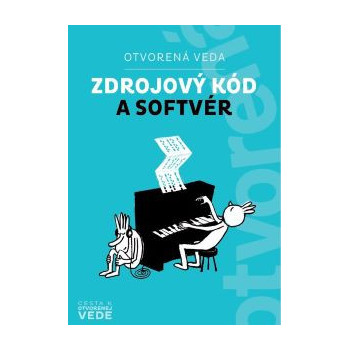
Otvorená veda – Zdrojový kód a softvér

Otvorená veda – Zdrojový kód a softvér

E-book

E-book

Pellegrini François et al.

The guide forms part of the Pathway to Open Science collection by the French Ministry of Higher Education and Research. It addresses the specific challenges related to opening source code and software created and used in scientific research. It provides answers and tools that can be immediately implemented in practice.

You will find here the key to understanding the role of software in the open science ecosystem.

We hope this will encourage you to contribute your work to this effort and the long-term benefit of the academic community.

Download the e-book for free

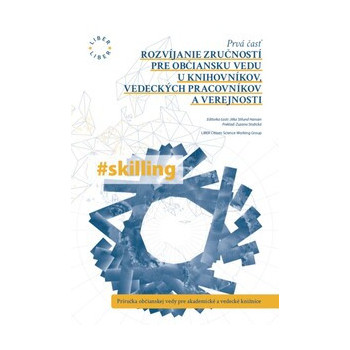
Rozvíjanie zručností pre občiansku vedu u knihovníkov, vedeckých pracovníkov a verejnosti

Rozvíjanie zručností pre občiansku vedu u...

E-book

E-book

Jitka Stilund Hansen (ed.)

A practical guide designed to assist those organizing and participating in citizen science projects to get the most out of the experience. You will gain skills to ensure your project is well set up from the start, communicates effectively with stakeholders and citizens, manages its data and outputs, and overall ensures research benefits.

This guide was compiled by the LIBER Citizen Science Working Group and draws on generous contributions from the open science community. The Slovak Centre of Scientific and Technical Information (CVTI SR) provides this Slovak translation to promote awareness and development of citizen science within Slovakia’s academic and library communities, as well as civil society.

Download the e-book for free

Edukácia, roč. 7, č. 2/2024

Edukácia, roč. 7, č. 2/2024

E-book

E-journal

Renáta Orosová (výkonný redaktor)

Stránka časopisu >>>

Vedecký recenzovaný časopis Edukácia je zameraný na problematiku vzdelávania a výchovy v oblasti základného, stredného a vysokého školstva. Zreteľ kladie na súčasný stav a perspektívy edukačnej praxe, aktuálne aspekty pregraduálnej prípravy učiteľov, sociálnej pedagogiky, špeciálnej pedagogiky, ako aj pedagogické a psychologické aspekty výchovy v základných výchovných inštitúciách z pohľadu širokej pedagogickej verejnosti. Je určený vedeckým pracovníkom, mladým vysokoškolským učiteľom, doktorandom, ako aj odborným a pedagogickým pracovníkom s cieľom prezentovať trendy v edukácii a vyvolať diskusiu k aktuálnym otázkam prezentovaných oblastí výchovy a vzdelávania.

Ciele vedeckého časopisu Edukácia:

  • prezentovať súčasné postavenie a funkciu pedagóga v edukačnej praxi a jeho perspektívy,
  • prezentovať aktuálne otázky vzdelávania a výchovy z pohľadu učiteľov, sociálnych pedagógov, špeciálnych pedagógov a psychológov,
  • prezentovať inovácie v edukačnej praxi; analyzovať stav a problémy prepájania teórie a praxe výchovy a vzdelávania vo vzťahu k moderným vyučovacím koncepciám,
  • prezentovať aktuálne trendy v pregraduálnej príprave pedagógov,
  • prezentovať výsledky empirických výskumov z oblasti pedagogiky, sociálnej pedagogiky, špeciálnej pedagogiky a psychológie v prostredí rodiny, školy a mimoškolských výchovných inštitúcií.
Download the e-journal for free(pdf)

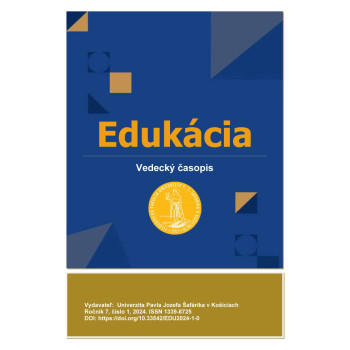
Edukácia, roč. 7, č. 1/2024

Edukácia, roč. 7, č. 1/2024

E-book

Renáta Orosová (výkonný redaktor)

Stránka časopisu >>>

Vedecký recenzovaný časopis Edukácia je zameraný na problematiku vzdelávania a výchovy v oblasti základného, stredného a vysokého školstva. Zreteľ kladie na súčasný stav a perspektívy edukačnej praxe, aktuálne aspekty pregraduálnej prípravy učiteľov, sociálnej pedagogiky, špeciálnej pedagogiky, ako aj pedagogické a psychologické aspekty výchovy v základných výchovných inštitúciách z pohľadu širokej pedagogickej verejnosti. Je určený vedeckým pracovníkom, mladým vysokoškolským učiteľom, doktorandom, ako aj odborným a pedagogickým pracovníkom s cieľom prezentovať trendy v edukácii a vyvolať diskusiu k aktuálnym otázkam prezentovaných oblastí výchovy a vzdelávania.

Ciele vedeckého časopisu Edukácia:

  • • prezentovať súčasné postavenie a funkciu pedagóga v edukačnej praxi a jeho perspektívy,
  • • prezentovať aktuálne otázky vzdelávania a výchovy z pohľadu učiteľov, sociálnych pedagógov, špeciálnych pedagógov a psychológov,
  • • prezentovať inovácie v edukačnej praxi; analyzovať stav a problémy prepájania teórie a praxe výchovy a vzdelávania vo vzťahu k moderným
       vyučovacím koncepciám,
  • • prezentovať aktuálne trendy v pregraduálnej príprave pedagógov,
  • • prezentovať výsledky empirických výskumov z oblasti pedagogiky, sociálnej pedagogiky, špeciálnej pedagogiky a psychológie v prostredí
       rodiny, školy a mimoškolských výchovných inštitúcií.
Download the e-book for free (pdf)

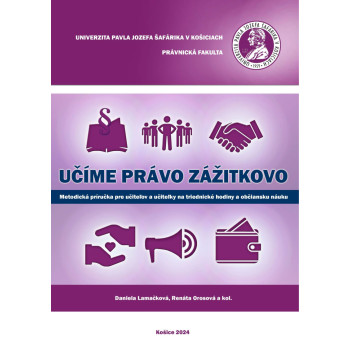
Učíme právo zážitkovo

Učíme právo zážitkovo

E-book

E-book

Daniela Lamačková-Renáta Orosová- Beáta Sakalová- Diana Repiščáková

Methodological guide for teachers for classroom lessons and civics Teaching law experientially? Is it even possible? The answers to these questions are provided by a methodological guide that uniquely links experiential learning methods with legal content. This methodological guide is a set of techniques based on the use of interactive and participatory learning methods, focusing on selected human rights and value-oriented topics, which also have the potential to develop other key competences of students, such as their communication skills, their ability to learn and educate independently, their ability to think critically, their ability to work with and analyse texts, their ability to discuss and express their opinions, and their ability to listen to each other. The methodological guide consists of a set of training activities - techniques, while each technique contains a precise description of the procedure for conducting a specific activity, the expected duration of the activity, aids, discussion topics and also a short pedagogical and legal commentary, precisely "tailored" to the specific legal topic. The legal topics are chosen to be generally applicable to both classroom and civics lessons, to raise questions about the functioning of rules and the need to respect them, mutual respect and tolerance, and to encourage reflection on the limits of individual rights and on responsibility in exercising one's rights. The techniques use training methods such as group work, brainstorming, role-playing, dealing with model situations, as well as a simulated court process. The methodological guide is intended for classroom teachers in the implementation of classroom lessons, and also for the purposes of the subject of civics, as well as for students of pedagogy at the Pavol Jozef Šafárik University in Košice.

Download e-book for free (pdf)

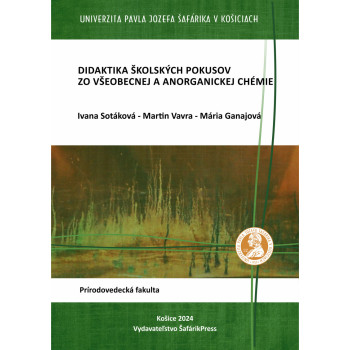
Didaktika školských pokusov zo všeobecnej a anorganickej chémie

Didaktika školských pokusov zo všeobecnej a...

E-book

E-book

Ivana Sotáková-Martin Vavra-Mária Ganajová

This textbook has been designed for the master students of chemistry teaching (combined) at the Faculty of Science, Pavol Jozef Šafárik University in Košice as a source of model school experiments in general and inorganic chemistry. It will be used for teaching the Special Practice of School Experiments I compulsory course. It consists of instructions for experiments related to the selected topics in general and inorganic chemistry as well as the didactic and technical aspects of their performance. Each experiment includes an explanation of the principle, specification of the tools and chemicals needed, working procedure, and the respective apparatus assembly scheme. At the end of each experiment, the observation and explanation necessary for the correct interpretation of the results of the chemical experiment performed are provided. To follow the requirements for the digital transformation of education, selected computer-aided experiments and visualiser projections have been included as well. The next part is focused on the work with the monitoring suitcase, which can be used for making simple field experiments related to environmental topics. The final part is dedicated to attractive experiments that complement the topics in inorganic chemistry and can be used to motivate students. All experiment instructions are in line with the requirements specified by the state educational programmes for primary and grammar schools. This book allows teachers to select appropriate demonstrative experiments or experiments for laboratory classes performed by students themselves. The videos of selected experiments are also available as part of the interactive periodical table of elements operated by the Institute of Chemistry, Faculty of Science, Pavol Jozef Šafárik University in Košice.

Download e-book for free (pdf)

Ako nájsť zmysel života v sociálnej práci s rizikovými skupinami (2. ročník Košických dní sociálnej práce)

Ako nájsť zmysel života v sociálnej práci s...

E-book

E-book

Eva Žiaková (ed.)

Proceedings of the Scientific Conference with International Participation within the VEGA Project No. 1/0282/12 Interdisciplinary Analysis of the Meaning of Life and Its Components in Socially Significant Groups of Adolescents in Terms of Its Formation and Possible Intervention.

The introductory word is a very good opportunity for us to jointly evaluate what we have managed to achieve in addressing our common scientific research task focused on the study of the meaning of life in socially at-risk groups of adolescents. First and foremost, we asked ourselves what we have discovered about the meaning of life so far, that is, what we know about it.

The second question we asked was: what surprised us about the results we have obtained so far. The third question was about what we want to do to resolve the discrepancy between what we have discovered and what we want to achieve.

The final question in evaluating the solution of the scientific research task was: what do we (not) know about the meaning of life of adolescents and want to know in the future, or what should we focus on to develop the most effective logotherapeutic and sociotherapeutic methods for social workers working with socially at-risk groups of adolescents.

Download the e-book for free (pdf)

Výchova a vzdelávanie 2014: Kontexty vzdelávania a výchovy v súčasnej perspektíve

Výchova a vzdelávanie 2014: Kontexty...

E-book

E-book

Ján Juščák - Renáta OrosováZuzana Nováková


Proceedings of the International Scientific Conference February 5 -február 2014 6, 2014

Conference proceedings of abstracts is one of the outputs of the international scientific conference entitled Education 2014: Contexts of education in the current perspective held 5 to 6 Feb 2014 at University of Pavol Jozef Šafárika in Kosice. This conference focused on the issues of education and emphasizes the current state and prospects of educational practice, topical aspects of undergraduate teacher training, health psychology in educational practice, as well as pedagogical and psychological aspects of education in primary educational institutions in view of the broad educational community. It was aimed for scientists, young university teachers, PhD students as well as experts and teachers, to present trends in education and to stimulate discussion on topical issues presented in the field of education.


Download the e-book for free (pdf)

Metodika tvorby učebných úloh a didaktických testov pre chémiu

Metodika tvorby učebných úloh a didaktických...

E-book

E-book

Mária Ganajová

The current teaching of chemistry has its specific problems. On one hand, due to the shift of the focus of chemistry curriculum towards theoretical content, the difficulty of chemistry material has increased, and in connection with this, students' interest in chemistry has decreased.

The lack of student interest in chemistry is mostly supported by the opinion that it is precisely chemistry that significantly contributes to the deterioration of environmental quality. On the other hand, we live in an era where we encounter chemical products practically everywhere. It is necessary to learn the basics of chemistry as well as possible, which makes the question of increasing interest in chemistry education and improving its effectiveness very relevant. State educational programs have been introduced into Slovak schools as a foundation for the creation of school educational programs. These emphasize not only acquiring a certain amount of knowledge but also the development and enhancement of key and specific competencies of students, preparing them for lifelong learning and their application in life.

Therefore, increasing attention is being paid to one of the fundamental didactic tools for raising student activity in teaching, and thus improving the effectiveness of chemistry education – learning tasks. From both theory and practice of chemistry teaching, we know that learning tasks, questions, examples, exercises, etc., are among the important components of every teaching lesson. Learning tasks are applied in all phases of teaching – in the motivational phase, the phase of acquiring knowledge, the phase of consolidating knowledge, and the phase of checking the acquired knowledge. It is therefore clear that every teacher will sooner or later find themselves in a situation where they will have to select learning tasks from textbooks, workbooks, collections of problems and examples, or create them themselves.

This scientific monograph is intended for educational specialists and chemistry teachers, aiming to familiarize them with examples of various types and forms of learning tasks and the basics of their creation in chemistry. It can also be helpful for them in preparing certification works focused on test creation and their statistical evaluation.

Download the e-book for free (pdf)

Reflexia pedagogických možností vých. systémov vybraných detských a mládež. organizácií  v edukačnom priestore SR

Reflexia pedagogických možností vých. systémov...

E-book

E-book

Ján Juščák - Milan Darák

The aim of the monograph was to analyze the pedagogical possibilities of educational systems within children's and youth organizations, with an emphasis on those targeting the age group of children up to 15 years.

The starting point was an analysis of the current state of theory and practice in children's and youth organizations, with the intention of describing prevailing trends in their development and activities. This publication closely follows the previous monograph (Juščák, J. – Darák, M.: 2015), in which we processed, according to a unified methodology and using generally accepted pedagogical terminology, the collected available materials on the educational systems of selected (most representative) children's and youth organizations in Slovakia. Through a subsequent comparison of the obtained empirical data on educational systems, we aimed to identify their similar (identical) as well as specific (distinct) elements as a basis for establishing categorization criteria for their classification.

The culmination of our efforts was an attempt to characterize a children's organization as an educational institution, describing its characteristic features, functions, aims, content, principles, and educational methodology.

Download the e-book for free (pdf)

Reflexia pedagogických možností vých. systémov vybraných detských a mládež. organizácií  v edukačnom priestore SR

Reflexia pedagogických možností vých. systémov...

E-book

E-book

Ján Juščák - Milan Darák

 The aim of the monograph was to analyze and address the issue of educational systems within children's and youth organizations, with an emphasis on those focused on the age category of children up to 15 years.

The starting point was an analysis of the current state of the educational environment in terms of the systemic nature of education and the basic categories of the educational system. The collected available materials on the educational systems of selected (most representative) children's and youth organizations in the Slovak Republic were subsequently processed according to a unified methodology and using generally accepted pedagogical terminology.

Download the e-book for free (pdf)

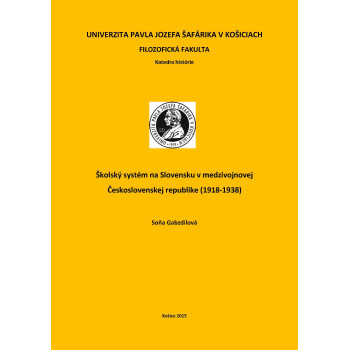
Školský systém na Slovensku v medzivojnovej Československej republike (1918 - 1938)

Školský systém na Slovensku v medzivojnovej...

E-book

E-book

Soňa Gabzdilová

The educational system (schooling) is one of the most effective tools for shaping the young generation in any advanced society. Schools not only create the knowledge base necessary for fulfilling the demands of the economy and the social sphere, but they also shape the national and ideological identity of each member of society. The school plays a decisive role in forming positive values, but it can also become a breeding ground for xenophobia and racist attitudes. The school has an irreplaceable role in creating national consciousness, identification with one's own nation, its history, the heroic deeds of ancestors, and the meaning of its existence.

After the dissolution of Austria-Hungary, there were fundamental geopolitical changes in Central Europe. One of these was the creation of Czechoslovakia, a state founded on radically different principles than pre-war Hungary. The founders of the Czechoslovak Republic (CSR), the personalities who decisively determined the character of the political system in the newly established republic, did not belong to the privileged classes of the previous regime. Unlike Hungary, where political power was controlled almost without exception by the nobility, the elite in Czechoslovakia consisted of men who were radical critics of Austria-Hungary.

A fitting example was the most influential figure of interwar Czechoslovakia, President Tomáš Garrigue Masaryk. Despite his origins, Masaryk was perceived by both Czechs and Slovaks as the founder of the state, a legendary figure whose political and social influence far exceeded the powers of the presidential office.

Download the e-book for free (pdf)

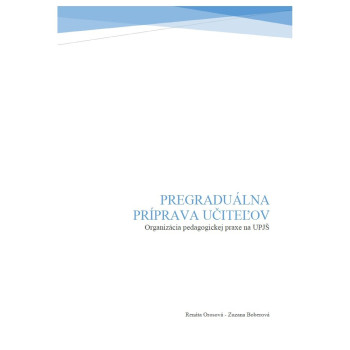
Pregraduálna príprava učiteľov (Organizácia pedagogickej praxe na UPJŠ)

Pregraduálna príprava učiteľov (Organizácia...

E-book

E-book

Renáta Orosová - Zuzana Boberová

The university textbook "Pregraduate Teacher Preparation – Organization of Pedagogical Practice at UPJŠ" reflects the changes that have occurred in the pregraduate preparation of students of academic subject teaching in connection with the comprehensive accreditation in 2015. It is intended for students of the second level of university studies in the study programs of Academic Subject Teaching at the Faculty of Arts and the Faculty of Science at UPJŠ in Košice. The aim of the university textbook is to provide theoretical foundations and methodological guidelines for the organization of all types of pedagogical practice carried out under the conditions of UPJŠ.

Preparation for the teaching profession has both theoretical and practical components. While theoretical academic preparation focuses on acquiring and developing knowledge, skills, and competencies in pedagogy, psychology, and the scientific disciplines of the teaching subjects, practical professional preparation is oriented towards preparing for the actual performance of the profession, i.e., the didactic aspect of the teaching process. A significant part of the practical preparation for the teaching profession is realized within the subject of pedagogical practice, which at UPJŠ takes four forms/levels – Observational pedagogical-psychological practice, Ongoing teaching practice, Continuous teaching practice I, and Continuous teaching practice II.

Download the e-book for free (pdf)

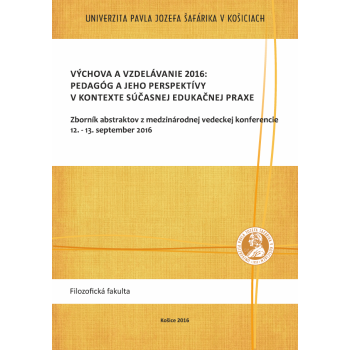
Výchova a vzdelávanie 2016: Pedagóg a jeho perspektívy v kontexte súčasnej edukačnej praxe

Výchova a vzdelávanie 2016: Pedagóg a jeho...

E-book

E-book

Renáta Orosová - Zuzana Boberová - Emília Marcinová (eds.)

Proceedings of Abstracts from the International Scientific Conference, 12–13 September 2016

The international scientific conference is focused on issues of education and upbringing within primary, secondary, and higher education, as well as school institutions, from the perspective of the educator. Emphasis is placed on the current state and prospects of educators in educational practice, pedagogical and sociological aspects of upbringing in fundamental educational and upbringing institutions, as well as current aspects of pre-service teacher training.

The conference is intended for researchers, young university teachers, doctoral students, as well as professional and pedagogical staff, with the aim of presenting the educator-teacher, social pedagogue, and special pedagogue-from a contemporary perspective, highlighting their essential cooperation in relation to education, and stimulating discussion on current issues in the presented areas of upbringing and education within the context of the present situation in the school system.

Download the e-book for free (pdf)

This website uses cookies to ensure you get the best experience on our website