Slovenčina



E-book
Jitka Stilund Hansen (ed.)
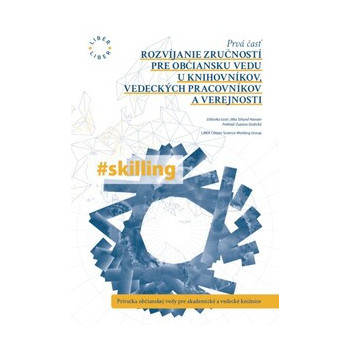
A practical guide designed to assist those organizing and participating in citizen science projects to get the most out of the experience. You will gain skills to ensure your project is well set up from the start, communicates effectively with stakeholders and citizens, manages its data and outputs, and overall ensures research benefits.
This guide was compiled by the LIBER Citizen Science Working Group and draws on generous contributions from the open science community. The Slovak Centre of Scientific and Technical Information (CVTI SR) provides this Slovak translation to promote awareness and development of citizen science within Slovakia’s academic and library communities, as well as civil society.
Data sheet
E-book
Zuzana Mačeková - Zuzana Katreniaková a kol.
Demencia je jednou z naliehavých a mimoriadne zložitých globálnych výziev pre zdravotnícke a sociálne systémy 21. storočia. Na Slovensku sa počet osôb s demenciou odhaduje na 62 495 (2018), pričom sa predpokladá, že v roku 2040 tento počet vzrastie na 180 000. Demencie zatiaľ patria k nevyliečiteľným chronickým stavom, ktorým nie je možné úplne predchádzať. V roku 2024 (Livingston a kol.) bol publikovaný aktualizovaný model tzv. potenciálne ovplyvniteľných faktorov, ktoré môžu prispieť k zvýšenému riziku demencie. Patria k nim: nízka úroveň vzdelania, strata sluchu, vysoký LDL cholesterol, depresia, úrazové poranenie mozgu, fyzická nečinnosť, diabetes mellitus, fajčenie, vysoký krvný tlak, obezita, nadmerná konzumácia alkoholu, sociálna izolácia, znečistené ovzdušie (vrátane pasívneho fajčenia) a strata zraku. Týchto 14 rizikových faktorov predstavuje približne 45 % celosvetových demencií, ktorým by sa teoreticky dalo predísť. Napriek narastajúcej dostupnosti informácií, úroveň povedomia verejnosti o preventívnych prístupoch v správaní sa k sebe samým, ktoré môžu nástup demencie významne oddialiť, zostáva nízka. Farmaceuti na Slovensku majú v súčasnosti adekvátne kompetencie, aby vedeli pomôcť aj v oblasti prevencie demencií. Niekedy stačí poradenstvo priamo v lekárni, vo vážnejších prípadoch odporúčanie navštíviť lekára pre ďalšie posúdenie zdravotného stavu. Každopádne, človek takto nezostáva so svojim problémom sám a dostane včasnú a potrebnú zdravotnú starostlivosť.
To get the e-book, please contact us by email.
E-journal
Juraj Schenk et al.
The scientific journal Sociálne a politické analýzy (Social and Political Analyses) serves as an interactive electronic platform for communication and the presentation (publication) of experts and their work in the fields of basic and applied research and analyses within sociological, psychological, political, and methodological contexts. It is a medium focused on intensively supporting research activities and analyses within an interdisciplinary framework, facilitating the exchange of experiences, fostering collaboration, and revitalizing the production of scientific work in this area.
The publication section of the journal offers space for works such as:
- Original sociological, psychological, and political studies and analyses in any areas of social life
- Methodological studies
- Research reports
- Studies from qualification theses Research and analysis projects
- Reviews
E-book
The structure of the animal body is extremely varied. Each species has its distinctive morphological features, which bears as a testimony to long-term development and belonging to the developmental lineage. At the same time, the body has been tested for a long time by natural conditions, resulting in unique adaptations to the environment and life strategy. Despite this admirable variety - which includes both recent and fossil animals and which we have far from mapped – a comparison of body parts brings knowledge we can generalize: the main building principles, and boundaries within which phenotypic diversity is realized.
Comparative animal morphology today uses the latest methodological material and knowledge from other disciplines, from genetics, molecular biology and experimental embryology, through progressive imaging methods (e.g. electron microscopy, computer micro-tomography) and the possibilities of subsequent software processing of image material (measurement, staining, etc.) to the view of physics, chemistry, statics and geometry on the structures (to nanostructures) of the living body. Detailed knowledge of historical and contemporary conditions on Earth is an important interpretative context in the study of animal morphology. Surprisingly, the knowledge accumulated after centuries of research is now rapidly supplemented by new knowledge, and often the traditional knowledge is subsequently reinterpreted. Finally, and no less important, in studying animal (and human) morphology, we learn surprising knowledge about ourselves.
The author of the presented textbook had the ambition in a simplified form to introduce the reader, especially the student of biological studies, into a dynamic and fascinating scientific discipline, as the current comparative animal morphology is.
E-book
Iveta Cimbolákováa kol.
The premise “today’s research shapes the healthcare of tomorrow” expresses the importance of medical research and the reason for its pursuit. Scientific research and advances in biomedical sciences, as well as their application in medical practice and in the process of delivering healthcare, nevertheless bring new problems in the area of ethics.
Biomedical research itself requires the precise definition of hypotheses, which are tested both under laboratory conditions and on experimental animals. Although clinical studies on human subjects are expected to benefit individual participants and to advance fundamental biomedical knowledge, they also entail certain risks depending on the nature of the research. These risks must be minimized, and the experiment should be conducted freely while also taking place within specific measures to protect all involved-not only the test subjects, but also the researchers themselves.
The presented publication provides an overview of the general conditions and ethical principles of research involving laboratory animals and human subjects, the issue of professional and ethical assessment of projects, as well as fraud and the publication of results. At present, we are witnessing tremendous progress in molecular biological sciences, which brings ethical dilemmas also in the field of genetics. For this reason, one of the chapters is devoted to the latest findings in this area.