10 rokov v EÚ: Vzťahy, otázky, problémy

10 rokov v EÚ: Vzťahy, otázky, problémy

E-book

E-book

Ján Klučka(ed.)

Collection of Papers from the International Scientific Conference Held on May 29–30, 2014 at the Faculty of Law, Pavol Jozef Šafárik University in Košice.

In the first half of this year, a scientific conference entitled “10 Years in the EU: Relations, Questions, Issues” was held in Košice, and the contributions from this event constitute the content of the present collection bearing the same name.

The aim of the organizers—namely, the Slovak Association of European Law, the Representation of the European Commission in the Slovak Republic, and the Institute of European Law together with the Department of International Law of the Faculty of Law at Pavol Jozef Šafárik University—was not only (even if loosely) to follow up on the previous 2009 conference “Community Law in Slovakia – Five Years ‘After’”, but, after another five years, to continue its main objective: to provide participants from both the academic and non-academic community with a space for further analysis and exchange of views on legal issues related to the membership of the Slovak Republic in the European Union and various current issues of the Union’s legal order.

From this perspective, a shift in the overall focus of the conference contributions in 2009 and 2014 can be observed. While the contributions from the first conference focused primarily on various aspects of the application of Union law in the Slovak legal system and related application problems, especially before courts and other authorities, the basic orientation of the contributions from the second conference is already different. The present collection also confirms that the contributions focus primarily on current issues of the European legal order and on certain aspects of the Union’s external policy, while the relationship of Union law to the Slovak legal system is no longer given primary attention.

Several contributions focus on areas characterized by a certain overlap or “cohabitation” of Union law with public international law, private international law, or, more broadly, international relations.

Download the e-book for free (pdf)

Ochrana kultúrnych hodnôt prostriedkami medzinárodného a regionálneho práva

Ochrana kultúrnych hodnôt prostriedkami...

E-book

E-book

Adam GiertlĽudmila Elbert

Collection of Papers from the 8th Student Symposium held on April 20–21, 2015 in Danišovce

The capture of the historic Syrian city of Palmyra by fighters of the radical Islamic State caused shock among the global public. The main reason is the barbarism with which this organization proceeds, not only in relation to the treasures of the world’s cultural heritage. The situation in the Middle East, where cultural treasures of inestimable value are under direct threat, demonstrates how fragile the world’s cultural heritage is. The reaction of the international public and world leaders shows how sensitively the destruction of cultural heritage is perceived.

The quoted statement chosen by the editors relates to the threat posed by the Islamic State—however, the spirit of this statement can be applied to any cultural wealth that forms part of the world’s cultural heritage. The destruction or damage of these values primarily represents a loss for humanity as such. Each destroyed artifact of world cultural heritage signifies the disappearance of a unique legacy left by previous generations for the future. At the same time, cultural heritage must be understood as a broad spectrum of assets—both tangible and intangible. Their legal protection was the topic of this year’s symposium. As with any social interest, the protection of cultural heritage can be ensured through various mechanisms and under different forms of social organization.

These diverse approaches are unified by law as a normative system. The question for the 8th year of the symposium on international law was what role international law plays in the protection of cultural heritage. In the context of the European region, the role of the European Union as a regional organization was examined.

Download the e-book for free (pdf)

Rule of Law a medzinárodné právo

Rule of Law a medzinárodné právo

E-book

E-book

Ľudmila Elbert

The presented scientific monograph addresses the issue of the Rule of Law and its place, roles, and particularities at the level of international law. The Rule of Law is understood as a value that should govern communities, both domestic and international. It is thus compared to Kelsen’s basic norm, which should stand at the top of the legal order as the norm justifying the validity and existence of the norms of the legal order, both domestic and international.

Although the Rule of Law is studied at the international law level, it cannot be considered without understanding the Rule of Law in domestic law. Just as its development differs depending on whether it evolved within Anglo-American or continental law, its application and development also differ between domestic law and international law.

These differences are mainly caused by the roles and objectives that international Rule of Law is meant to secure, as well as by the distinct characteristics of domestic and international law.

Download the e-book for free (pdf)

Slovenské a české obchodné právo v roku 2015: Vybrané problémy

Slovenské a české obchodné právo v roku 2015:...

E-book

E-book

Jozef Čorba(ed.)

Collection of Contributions from the Conference

On June 11–12, 2015, the Department of Commercial Law and Economic Law at the Faculty of Law, P. J. Šafárik University in Košice, organized the 13th meeting of the departments of commercial law from the law faculties of Czech and Slovak universities. This event further demonstrates that the idea of an annual gathering of representatives from these departments, initiated by Professor Bejček of the Faculty of Law at Masaryk University in Brno, has taken root and is likely to continue. Not only to preserve the tradition but primarily for the benefit of such meetings and the interest of participants to meet regularly.

A traditional part of these meetings, besides the exchange of knowledge and information about the teaching process and experience sharing, is a scientific conference focused on current issues in commercial law. This year’s conference was held under the title Slovak and Czech Commercial Law in 2015 – Selected Problems. A total of 17 contributions from various departments were included in the conference proceedings, divided into three thematic areas. The first group of contributions addresses selected issues related to the legal regulation of commercial companies and its practical implementation. The second group focuses on arbitration and insolvency law.

The third group includes contributions on the interpretation of the amended regulation of interest on late payments in commercial obligations, problems related to the application of this regulation, and issues concerning the interpretation of legal acts contained in the new Czech Civil Code. An additional part features an informational contribution on the development of Slovenian commercial law and its current form.

Ján Husár, Kristián Csach

Download the e-book for free(pdf)

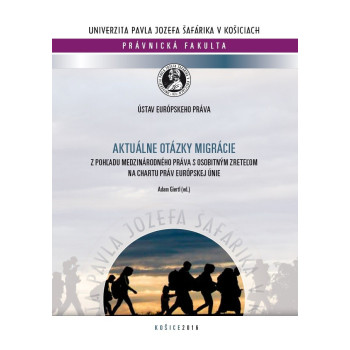
Aktuálne otázky migrácie z pohľadu medzinárodného práva s osobitným zreteľom na Chartu práv Európskej únie

Aktuálne otázky migrácie z pohľadu...

E-book

E-book

Adam Giertl (ed.)

Collection of Papers from the 9th Annual Student Symposium on International and European Law held on April 22, 2016 at the Faculty of Law, Pavol Jozef Šafárik University in Košice

As indicated by the very title of the 9th Annual Student Symposium on International and European Law, “Current Issues of Migration from the Perspective of International Law with Special Regard to the Charter of Fundamental Rights of the European Union,” the participants focused on the highly topical subject of European migration, which they examined from various aspects of both international and Union law (a total of 9 contributions).

In assessing the role of individual actors primarily involved in addressing the problems arising from migration to Europe, particular emphasis was placed on the role of international specialized organizations, which often provide direct assistance to migrants “in the field” through humanitarian or medical aid. However, this is not the only response of the international community, as it is complemented by the activities of the concerned states as well as various non-governmental organizations and volunteers. Regarding the evaluation of the European Union’s activities, the symposium participants agreed that the mass migration wave caught the EU relatively unprepared—institutionally, legislatively, and technically—accompanied by a lack of clarity in adopting a fundamental approach to this reality.

It was also emphasized that these shortcomings occurred despite the fact that developments in the preceding period clearly signaled the possibility of gradual migration to the European Union escalating into a mass phenomenon. According to the participants, additional ex post and sometimes delayed measures adopted in response to the ongoing migration process contributed to an overall increase in political tension within the EU and divided its member states into opposing camps.

Download the e-book for free (pdf)

Európska únia a jej vplyv na organizáciu a fungovanie verejnej správy v Slovenskej republike

Európska únia a jej vplyv na organizáciu a...

E-book

E-book

Alena Krunková (ed.)

Proceedings of the Scientific Conference Held on June 28, 2016 at the Faculty of Law of Pavol Jozef Šafárik University in Košice in connection with the implementation of the project “The European Union and Its Impact on the Organization and Functioning of Public Administration in the Slovak Republic” – approved under number MVZP – SK PRES/2016/134

The Slovak Republic, as a member state of the European Union, is undertaking a historic role associated with the Presidency of the Council of the European Union within the presidency trio. At the beginning of 2016, the Ministry of Foreign and European Affairs of the Slovak Republic announced a call for applications for grants for 2016 in the field of international relations and foreign policy, specifically focused on the Slovak Republic’s Presidency of the Council of the European Union. The Faculty of Law of Pavol Jozef Šafárik University in Košice responded to this call and obtained a project aimed at carrying out research activities through a series of events focused on regional self-government in the Slovak Republic in the context of its role within the European Union. The Faculty has long been engaged with issues of European Union law both in its teaching and in the scientific research activities of its individual faculty members. The project aims to enrich this portfolio with special activities targeting not only professionals, but also students and the general public.

The first activity of the project was a conference entitled “The European Union and Its Impact on the Organization and Functioning of Public Administration in the Slovak Republic – Development So Far, Current State, and Perspectives.” The conference was attended by invited public officials, representatives of academia, and representatives of local government, as one of the main goals of the project is to connect the academic community with the practical sphere and thus involve practitioners in the planned activities within the project.

Download the e-book for free (pdf)

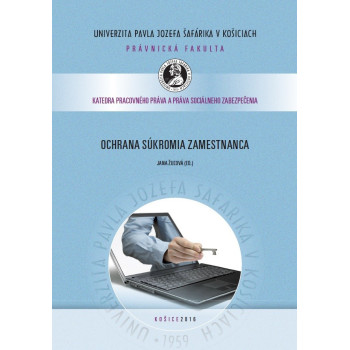
Ochrana súkromia zamestnanca

Ochrana súkromia zamestnanca

E-book

E-book

Jana Žuľová(ed.)

Proceedings from the 1st Annual Student Symposium on Labor Law held on April 8–9, 2016 in Danišovce

Discussions on the topic of privacy are currently very topical and interesting. The advancement and progress of technology have added a new dimension to individual privacy. With the use of modern electronic devices, terms such as precious commodity, chimera, or illusion are increasingly associated with privacy. Workplaces have not remained immune to modernization either. Machines are replacing human labor, programming and planning the production process, but also controlling, monitoring, and recording the fulfillment of assigned work tasks.

The availability of technology and its implementation in employers’ operations intrude upon the personal and private sphere of employees, which is an inherent part of every person’s life and does not remain left behind the doors of the workplace. Proper and correct use of monitoring mechanisms by employers means not only mastering their technical installation at the workplace and covering the associated financial costs, but also respecting the privacy of employees.

It cannot be overlooked that the right to privacy is among the fundamental human rights and freedoms, enjoying the corresponding characteristics (inalienability, non-transferability, irrevocability, etc.) and appropriate legal protection. And even though it is not absolute and may be suspended in favor of another right (especially the employer’s right to protect their property), every intervention—such as comprehensive camera surveillance, monitoring of phone calls, email correspondence, blocking certain websites, etc.—always has adverse consequences for the privacy of the employee.

Download the e-book for free (pdf)

Právo - obchod - ekonomika V.

Právo - obchod - ekonomika V.

E-book

E-book

Jozef Suchoža - Ján Husár - Regina Hučková (eds.)

Collection of Scientific Works

The scientific papers presented in this Collection are primarily the result of academic research conducted by experts working within the academic environment—particularly at Faculties of Law in the Slovak Republic and the Czech Republic, as well as by foreign experts, including those from Poland, the Russian Federation, Serbia, and others. In addition to academic contributions, this Collection also includes scientific and professional articles authored by legal practitioners, especially lawyers, notaries, and judges—not only from our own jurisdiction, but also judges from the General Court of the European Union. Contributions from professionals in the field of banking have also enriched this Collection. Moreover, the Collection provides space for aspiring scholars in the field of legal science, thereby combining timelessness with dynamism.

Given the diversity of the published contributions, it can be said that this Collection represents a connection between theory and practice, private and public law, as well as various branches of law. Nevertheless, the content of this Collection aligns with and reflects the central theme of the international symposium, namely: "CORPORATIONS – CONTRACTS – CODIFICATIONS – CONTEXTS." The individual sections of the Collection are interconnected and create a coherent whole, subsumed under a publication characterized by unity.

Download the e-book for free (pdf)

Obchodné záväzky: Všeobecná časť

Obchodné záväzky: Všeobecná časť

E-book

E-book

Dominika Zavadová(ed.)

Proceedings from the 3rd Student Symposium on Commercial Law

In November 2015, the third annual Student Symposium on Commercial Law took place at the university facility in Danišovce.

After two years of symposia focused on company law, the main topic of the third edition was the general part of commercial obligations law. This year as well, the goal of the student symposium remained to provide more space for students to formulate their own perspectives on current legal issues and to present the results of their own work.

The overarching topic made it possible to assign several current issues, allowing students to tackle problems they are likely to encounter in their future practice. The selected topics are not among those unanimously accepted by legal doctrine or established case law. On the contrary, the topics were deliberately chosen for the lack of sufficient domestic literary sources. As a result, processing the individual topics required more than just standard textbook or commentary knowledge.

The participating members of the department, both teachers and doctoral candidates, acted this year primarily as contact persons, rather than as consultants or supervisors of the students’ work. The primary purpose of the symposium at the faculty is to enable students interested in commercial law to develop their analytical and argumentative skills, as well as to express their personalities. We aim for students to develop not only professional knowledge but also personal skills-so-called soft skills-the art of presenting their own opinions and arguing persuasively.

Download the e-book for free (pdf)

Medzinárodné daňové úniky a metódy ich predchádzania

Medzinárodné daňové úniky a metódy ich...

E-book

E-book

Peter Huba - Jozef Sábo - Martin Štrkolec

The presented monograph aims to provide an in-depth overview of the issue of international tax evasion, both in terms of its conceptual foundations and with regard to specific methods and schemes used to carry out tax evasion.

The members of the authorial team have also addressed questions of tax evasion in their previous works: "International Tax Evasion and Tax Havens" (JUDr. Jozef Sábo) and "Legal Aspects of the Elimination of Double Taxation and Prevention of Tax Evasion" (JUDr. Peter Huba).

This monograph represents a synthesis of the relevant research activities of the authorial team, enriched by the interdisciplinary dimension of the tax evasion problem. At the same time, it highlights those shortcomings that appear to be the most serious from the perspective of the risk of international tax evasion and base erosion in Slovakia. In this respect, a comparative perspective on the issue is presented, drawing extensively from American sources, mainly due to the high quality and long-standing research on international tax evasion in the United States.

The authorial team believes that this monograph will help to bring the issue of corporate income tax evasion closer to the professional public, and that it will receive attention equal to that given to VAT fraud and other pressing issues of current tax legislation.

Download the e-book for free (pdf)

Vybrané otázky sociálneho práva Európskej únie
  • -50%

Vybrané otázky sociálneho práva Európskej únie

€21.80 €10.90 -50%
Availability: 38 In Stock

 Marcel Dolobáč a kol. 

Učebnica s názvom Vybrané otázky sociálneho práva Európskej únie prierezovo spracúva najzásadnejšie otázky pracovného práva a práva sociálneho zabezpečenia v Európskej únii. V úvodných statiach učebnice sa autori zamerali na objasnenie základnej terminológie a stručne poukazujú na vývoj sociálneho práva v Únii. Ďalšie kapitoly práce postupne vysvetľujú vybranú problematiku ktorá celkovo dotvára sociálne právo Európskej únie, konkrétne – voľný pohyb zamestnancov, zákaz diskriminácie, flexibilitu pracovných vzťahov prostredníctvom atypických pracovných pomerov, dočasné pridelenie zamestnancov, ochranu osobitných kategórií zamestnancov, ochranu osobných údajov, oblasť bezpečnosti a ochrany zdravia pri práci, ochranu práv zamestnancov pri prevode, prechode zamestnávateľa a jeho platobnej neschopnosti, kolektívnu ochranu práv zamestnancov a napokon uplatňovanie systémov sociálneho zabezpečenia. Učebnica analyzuje predovšetkým úniovú úpravu s akcentom na rozhodnú judikatúru Súdneho dvora Európskej únie, vnútroštátny právny poriadok objasňuje iba vo vybraných problematických oblastiach. 

Autori

Trestné právo procesné

Trestné právo procesné

€9.85
Availability: 75 In Stock

 Jozef Olej a kol. 

Preložená vysokoškolská učebnica je venovaná problematike trestného práva procesného, ktorú autori v rovnakom zložení spracovali v roku 2006, bezprostredne po účinnosti nového rekodifikovaného Tr. por. – zák. č. 301/2005 Z.z. Obdobie, ktoré uplynulo od účinnosti tejto právnej normy nepochybne prispelo k potvrdeniu či ustáleniu názorov na niektoré nové inštitúty a súčasne si vyžiadalo potrebu reagovať na početné novelizácie tohto zákona.

Štruktúra predloženej publikácie, členenie do jednotlivých kapitol, v podstate korešponduje s úpravou jednotlivých inštitútov obsiahnutých v Tr. poriadku, a to od úpravy základných pojmov, prameňov, zásad trestného konania, cez postavenie jednotlivých subjektov trestného konania, procesné úkony, inštitúty zaisťovacej povahy a dôkaznej povahy, jednotlivé štádia trestného konania až po úpravu právneho styku s cudzinou, resp. trov trestného konania. Ako už bolo uvedené, autori reagujú na pomerne časté a v mnohých prípadoch aj výrazné zmeny úpravy rekodofikovaného Tr. poriadku, vrátane súvisiacich právnych predpisov, prezentujú svoje názory i názory mnohých iných odborníkov na spracovanú problematiku a tieto konfrontujú s poznatkami z praxe, vrátane uvádzania aktuálnej iudikatúry.

Ambíciou autorov tak bolo a naďalej zostáva, ponúknuť predovšetkým študentom právnických fakúlt základnú učebnú pomôcku pre štúdium trestného práva procesného.

Autori

This website uses cookies to ensure you get the best experience on our website