Filter By

Categories

Categories

Year of publication:

Year of publication:

Publication language:

Publication language:

Faculty:

Faculty:

Method of publication:

Method of publication:

Active filters

  • Categories: Law
  • Year of publication:: 2009
  • Year of publication:: 2019
  • Year of publication:: 2019
  • Year of publication:: 2019
  • Year of publication:: 2019
  • Year of publication:: 2019
  • Year of publication:: 2019
  • Year of publication:: 2024
  • Year of publication:: 2024
  • Year of publication:: 2024
  • Year of publication:: 2024
  • Year of publication:: 2024
  • Year of publication:: 2024
  • Publication language:: Slovak
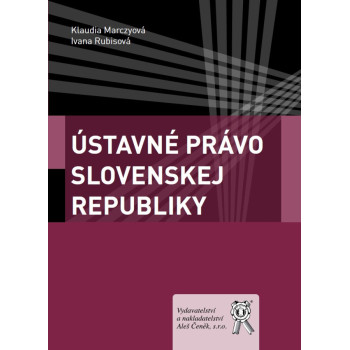
Ústavné právo Slovenskej republiky

Ústavné právo Slovenskej republiky

€19.00
Availability: 1 In Stock

Klaudia Marczyová - Ivana Rubisová

Publikácia Ústavné právo Slovenskej republiky predstavuje ďalšiu vysokoškolskú učebnicu z danej oblasti. Vychádza z teoretického priblíženia kľúčových pojmov, poukazuje na základné etapy ústavného vývoja od roku 1918 a následne sústredí pozornosť na vznik Ústavy Slovenskej republiky, charakteristiku, princípy a jej jednotlivé inštitúty. Obsahom sú otázky základných práv a slobôd, systém ich ochrany, postavenie štátnych orgánov, ako aj územnej samosprávy, s dôrazom na možnosti jednotlivca participovať na moci. V snahe poskytnúť široký rozsah poznatkov sú v texte odkazy na viaceré relevantné zdroje, či odborné diela. Učebnica Ústavné právo Slovenskej republiky reflektuje požiadavky predovšetkým absolventa Akadémie Policajného zboru v Bratislave, absolventa policajnej univerzity, čo autorky zohľadnili a premietli do samotného obsahu publikácie. Vypúšťajú sa tak niektoré otázky štátovedy, ktoré sú prenechané predmetu Teória štátu a práva, zato osobitne a špecificky na niektorých miestach je venovaná pozornosť postaveniu Policajného zboru, úlohám polície a bezpečnosti. Na druhej strane však vychádzajúc z Ústavy Slovenskej republiky, z koncepcie ústavného systému je obsiahnutá každá oblasť, a tak má publikácia predpoklady vhodnej vzdelávacej pomôcky aj pre študentov ďalších vysokých škôl právneho, či neprávneho zamerania s výučbou právnych predmetov.
Procesné právo. Civilné mimosporové konanie a správne súdne konanie

Procesné právo. Civilné mimosporové konanie a...

€30.00
Availability: 2 In Stock

Jaroslav Čollák a kolektív

Učebnica širokého a vedecky kvalitného kolektívu autorov (sudcovia všeobecných súdov a ústavného súdu, advokáti, vysokoškolskí pedagógovia, notári, či ďalší odborníci z praxe) komplexne spracúva problematiku civilného mimosporového konania a správneho súdneho konania. Zámerom kolektívu bolo vytvoriť komplexný, moderný a svieži učebný text s cieľom pomôcť pochopiť podstatu mimosporového a správneho súdneho konania ako celku, nie len jeho jednotlivých procesnoprávnych súčastí. Osobitný výklad o charakteristikách mimosporového konania a jeho odlišnostiach od konania sporového je vhodným úvodom k podrobnému výkladu jednotlivých mimosporových konaní, ktoré sú spracované optikou ich procesného priebehu na akejsi pomyselnej „časovej osi“ súdneho konania. Spracovanie správneho súdneho konania ponúka komplexný výklad o procesnoprávnych inštitútoch správneho súdneho konania, princípoch tohto typu súdneho konania a o jeho odlišnostiach od typologicky odlišných procesných štruktúr (sporové konanie, mimosporové konanie). Publikácia prezentuje výklad o všeobecných procesných – správnych inštitútoch, všeobecnej správnej žalobe, osobitných typoch správnych žalôb a o všetkých osobitných typoch správnych súdnych konaní, ktoré účinná právna úprava upravuje. Predkladaná publikácia s charakterom komplexného a uceleného moderného učebného textu je prioritne určená študentom právnických fakúlt, absolventom pripravujúcim sa na odborné profesijne skúšky (advokátske, justičné, notárske či iné) ako aj študentom akýchkoľvek iných vedných odborov, v ktorých sa ich rozsah dotýka problematiky súdneho konania Absolútne jedinečnou súčasťou obsahu publikácie je „kompas študenta“, ktorý takmer po každej kapitole prezentovanej matérie predkladá čitateľovi základný rámec orientácie v súvisiacej judikatúre súdov a významných odborných publikáciách, ktorý môže pomôcť pri orientácii v problematike či tvorbe záverečných prác.

Právo na spravodlivý proces podľa Dohovoru a judikatúry ESĽP v Slovenskej republike

Právo na spravodlivý proces podľa Dohovoru a...

E-book

E-book

Lukáš Jančát

The Convention on the Protection of Human Rights and Fundamental Freedoms and the case-law of the ECtHR represent a decisive legal instrument for the evolution of the right to a fair trial in the member states of the Council of Europe and the European Union, including the Slovak Republic, which affects the minimum level of procedural guarantees for individuals in judicial and administrative proceedings.

The primary purpose of the textbook is to fill the gap consisting in the absence of a comprehensive study text for undergraduate students at Pavol Jozef Šafarik University in Košice, Faculty of Law for the planned subject Right to a fair trial in administrative issues, and doctoral students at this faculty for the subject Protection of fundamental rights and freedoms in criminal matters according to the case-law of the ECtHR.

However, this textbook is also intended as a supplementary study aid for bachelor students in order to deepen their knowledge of the subject Administrative Law II, the result of which is to acquire knowledge about procedural administrative law in the Slovak Republic, as well as the subject of European Administrative Law, the result of which is the acquisition of knowledge about the influence of Council of Europe law on the national administrative law of the Slovak Republic.

Download the e-book for free(pdf)

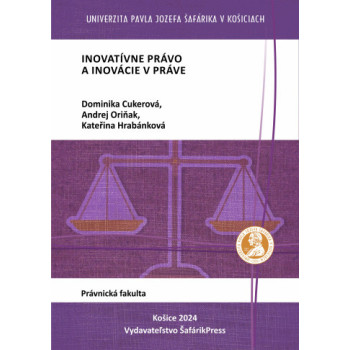
INNOVATIVE LAW & INNOVATIONS IN LAW

INNOVATIVE LAW & INNOVATIONS IN LAW

E-book

E-book

Dominika Cukerová - Andrej Oriňak - Kateřina Hrabánková (eds.)

The proceedings offers contributions from the international scientific conference of doctoral students and young researchers held on 25 April 2024 at the Faculty of Law, UPJŠ in Košice, which was thematically oriented on Innovative Law and Innovations in Law. The authors of the papers confirmed that innovation in law can take many forms. The first part of the papers, which pays attention to how law can respond to innovations, is a manifestation of this. These are the papers by Jana Cihanová, Andrej Oriňák, Denisa Rudžiková and Matej Biroš, who presented the use of deepfake technology, artificial intelligence and software tools in legal practice in the context of their legal regulation. Looking at familiar things differently can also be a source of innovation. In this vein, Dominik Mizerski, Juraj Valentovič, Lucián Török and Kateřina Hrabánková presented interpretive and application innovations in the field of private law. The third part of the papers by Michaela Szittyaiová, Natália Priateľová, Filip Baláži, Elena Lazoríková and Laura Gazdagová offers a preview of the innovations that the public law section is facing today. Finally, the fourth and last group of papers specifically explains innovations against the background of criminal law regulation. These are contributions by Michal Novák, Miroslav Srholec, Vladimír Petrila and Martina Makaturová. The variety of topics covered in this proceedings shows that each area of legal regulation can be characterised by specific innovations and, in this context, by the dynamics with which they permeate legal regulation.

Download the e-book for free (pdf)

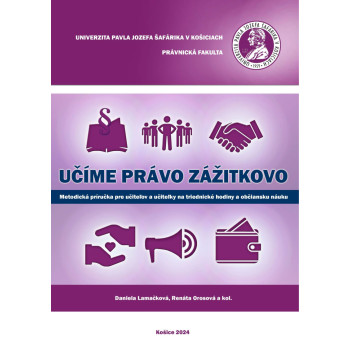
Učíme právo zážitkovo

Učíme právo zážitkovo

E-book

E-book

Daniela Lamačková-Renáta Orosová- Beáta Sakalová- Diana Repiščáková

Methodological guide for teachers for classroom lessons and civics Teaching law experientially? Is it even possible? The answers to these questions are provided by a methodological guide that uniquely links experiential learning methods with legal content. This methodological guide is a set of techniques based on the use of interactive and participatory learning methods, focusing on selected human rights and value-oriented topics, which also have the potential to develop other key competences of students, such as their communication skills, their ability to learn and educate independently, their ability to think critically, their ability to work with and analyse texts, their ability to discuss and express their opinions, and their ability to listen to each other. The methodological guide consists of a set of training activities - techniques, while each technique contains a precise description of the procedure for conducting a specific activity, the expected duration of the activity, aids, discussion topics and also a short pedagogical and legal commentary, precisely "tailored" to the specific legal topic. The legal topics are chosen to be generally applicable to both classroom and civics lessons, to raise questions about the functioning of rules and the need to respect them, mutual respect and tolerance, and to encourage reflection on the limits of individual rights and on responsibility in exercising one's rights. The techniques use training methods such as group work, brainstorming, role-playing, dealing with model situations, as well as a simulated court process. The methodological guide is intended for classroom teachers in the implementation of classroom lessons, and also for the purposes of the subject of civics, as well as for students of pedagogy at the Pavol Jozef Šafárik University in Košice.

Download e-book for free (pdf)

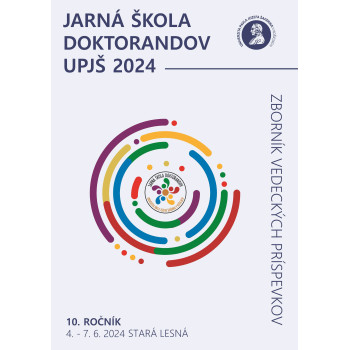
JARNÁ ŠKOLA DOKTORANDOV 2024

JARNÁ ŠKOLA DOKTORANDOV 2024

E-book

E-book

Monika Halánová (ed.)

On June 4-6, 2024, Stará Lesná will host the 10th year of the university-wide event ‘Spring School of Doctoral Students of Pavol Jozef Šafárik University in Košice’. As part of the professional program, there will be five plenary lectures by prominent experts from Pavol Jozef Šafárik University in Košice and Comenius University, and one workshop will be held. A total of 47 full-time doctoral students will present the results of their scientific research work, of which 23 doctoral students in the section of medical and natural sciences (Faculty of Medicine/Faculty of Science) and 24 doctoral students in the section of social sciences and humanities (Faculty of Law/Faculty of Public Administration/Faculty of Arts). Part of the professional program of the event will be a panel discussion with the Management of Pavol Jozef Šafárik University in Košice.

Download the e-book for free (pdf)

Hranice Československej republiky optikou Versaillského mierového systému

Hranice Československej republiky optikou...

E-book

E-book

Dominika Kováčová- Lucia Pištejová- Ivan Vaňa

The present monograph deals with the post-war settlement of relations and peace negotiations related to the settlement of the borders of the newly established Czechoslovak Republic. The work discusses in detail the negotiation processes related to the preparation and signing of the Versailles and Saint-Germain Peace Treaties. Similarly, it then discusses in detail the peripeties related to the drafting of the Treaty of Trianon dealing with the border with Hungary and its subsequent delineation in the field. Last but not least, the thesis captures the settling of Czechoslovakia's international relations with Poland and their common border, with a particular focus on the arbitration settlement on the territory of Orava and Spiš.

Download e-book for free (pdf)

Antické paradigmy a Trianonská zmluva

Antické paradigmy a Trianonská zmluva

E-book

E-book

Ľuboš Dobrovič - Vladimír Vrana

The world of diplomacy, whether ancient or modern, is naturally prone to problems associated with cultural clashes and often serves as an “unarmed battlefield” of cultural concepts. International diplomacy, however, stands on the assumption of war, as misunderstandings and cultural discrepancies lead to confusion. Cultural encounters also provide many opportunities for the choice of misunderstanding: the choice to perceive an act as an insult, even if unintended, or the choice to ignore the most blatant intentional insult, all according to momentary expediency.

The Roman historian Livy recounts an anecdote about the gates of the Temple of Janus, which, when open, signified that Rome was at war. However, the doors of the ancient Temple of Janus were closed only twice from the beginning of the 7th century BC to the end of the 1st century BC. One might ask, how many times and for how long after the signing of the Treaty of Trianon were the metaphorical gates of the European (or global) Temple of Janus closed?

The publication that the reader holds in their hands does not attempt to exhaustively answer all questions of ancient and modern international diplomacy. That is neither possible nor the goal of this scientific monograph. Authors seeking intersections between diplomacy of antiquity, the Middle Ages, and the early 20th century encountered some thought-provoking ideas and controversial debates. Indeed, what other conclusions can the topic of the Treaty of Trianon and the perpetual clash of cultures in the Mediterranean antiquity and medieval Europe bring?

We believe that the topic of ancient and modern diplomacy will inspire the reader and stimulate the professional public to new ideas, reflections, and scholarly activity.

The scientific monograph was prepared as an output of the project of the Agency for the Support of Research and Development No. APVV-19-0419: "100 years of the Treaty of Trianon."

Download the e-book for free (pdf)

Municipálne zákonodarstvo Uhorska ako predobraz potrianonských zmien verejnej správy na Above a v Turni

Municipálne zákonodarstvo Uhorska ako predobraz...

E-book

E-book

Erik Štenpien

The presented monograph is dedicated to the reforms of local administration in the middle of the 19th century, which led to the introduction of municipalism - the nationalization of local administration. The work is primarily devoted to the analysis of the differences between legal articles 42/1870 and 21/1884, the second of which has so far been considered by Slovak legal historians as an amendment. I will explain the differences in the text of both standards, as well as by pointing out the practice of applying both standards in local practice in Abov and Turňa, the legal article 21/1884 is applicable, it is recoded and after the thresholds of the Czechoslovakia it was received as an obligation of the local sparva in Slovakia and is valid even in the time of Conclusion The Trianon peace treaty.

Download the e-book for free (pdf)

Obchodné a pracovné právo: Na spoločnej vlne

Obchodné a pracovné právo: Na spoločnej vlne

E-book

E-book

Natália Kalinák-Andrej Oriňak

The Department of Commercial Law and Economic Law together with the Department of Labour Law and Social Security Law of the Faculty of Law of UPJŠ in Košice organized the 8th annual student symposium, this time on commercial, labour and private international law, which took place at the Faculty of Law of UPJŠ in Košice on 1 December 2023. The student symposium under the title Commercial and Labour Law on a Common Wave was carried out as part of the research projects VEGA 1/0259/22 and VEGA č. 1/0291/23. The aim of the annual symposia is to create a discussion platform for students under the supervision of mentors from among the members of the department, namely teachers, researchers and PhD students. The theme of this year's symposium brought about discussion of interesting theoretical and practical legal issues thematically focused on the synergy of business law and labour law. The students addressed topical issues related to the status of entrepreneurs, the conduct of companies in labour law relations as well as the duties and responsibilities of employees. The topics of the sharing economy, gender quotas in corporate bodies and unfair bribery were not forgotten. While working on individual topics, students had the opportunity to improve their analytical thinking and argumentation skills, while they could practice writing a legal professional text, which in practice often increases the success of every lawyer. Students had the opportunity to develop their critical thinking and learn how to clearly formulate their own opinions on current legal issues. After the presentation of the papers, not only the team of lecturers and researchers, but also the students themselves engaged in a fruitful discussion, asking a number of original questions. Each student participant was awarded a certificate for their active participation in the symposium. The present proceedings are the outcome of the students' work from this event.

Download e-book for free (pdf)

Členovia orgánov obchodnej spoločnosti. Obchodné, pracovné a socio-psychologické aspekty

Členovia orgánov obchodnej spoločnosti....

E-book

E-book

Jaroslav DolnýMonika Seilerová (eds.)

The collection of contributions from the VII. Student Symposium on Commercial Law and Labor Law held on December 5, 2019, at the Faculty of Law of Pavol Jozef Šafárik University in Košice

The theme of this year's symposium provided students with the opportunity to choose between addressing issues related to commercial law or focusing on labor law aspects concerning the position of members of the governing bodies of commercial companies, based on an analysis of legal regulations and case law.

The creative exploration of commercial law questions particularly related to areas such as the manner of acting on behalf of a commercial company, the liability of the de facto statutory body of a commercial company, information obligations of the statutory body towards its shareholders, and the remuneration for serving as a member of the board of directors of a joint-stock company. It also addressed the liability of the statutory body for the insolvency of the company and the enforcement of non-competition clauses concerning managing directors of limited liability companies.

The connection between commercial law and labor law was directed towards a legal analysis of personal data protection related to health and its misuse by members of the governing bodies of commercial companies, as well as the legitimacy of concurrently holding a position (as a member) in a statutory body with an employment relationship, and the legal status of senior employees, particularly concerning their duties and responsibilities for ensuring employee health through creating healthy working conditions.

Download the e-book for free (pdf)

Sankcie v pracovnom práve

Sankcie v pracovnom práve

E-book

E-book

Marcel DolobáčĽuboš DobrovičIvan Kundrát

Hypothesis, disposition, sanction. The standard tripartite structure of a legal norm, which is taught to first-year law students. Three concepts that students undoubtedly master from their perspective, yet they simultaneously challenge legal science, which repeatedly revisits them. The publication does not aim to theoretically address all aspects of the legal norm; it focuses solely on one of them, and as the title suggests, that is the sanction.

The monograph has been developed by three authors, whose contributions are equal; they engaged in debates and often could not reach a consensus. We hope that the reader will also join this debate and that the presented monograph will inspire further reflection and scientific activity.

Download the e-book for free (pdf)

Implementácia iniciatív EÚ v oblasti spotrebných daní a ich rozpočtovo-právne dopady

Implementácia iniciatív EÚ v oblasti...

E-book

E-book

Karin Cakoci et al.

The authors in the monograph focused on describing the genesis and current state of the legal regulation of consumption taxes in the Slovak Republic in interaction with the harmonization process, as well as identifying the mutual dependence of the legal regulation and revenues from consumption taxation on the effect on the state budget of the Slovak Republic.

Given the importance and justification of the researched issue, particularly in relation to the future functioning of the European Union, as well as the impact on the performance of the economies of individual member states, with an emphasis on the development and quality functioning of the single internal market, the authors, through the publication of the monograph, attempt to provoke a broader professional discussion about their own summarized presented results, which were obtained during the entire period of solving the scientific project, concerning current trends as well as perspectives in the field of EU tax policy and its influence on domestic tax legislation in the Slovak Republic in the area of consumption taxes in interaction with budgetary impacts.

The overall goal of the monograph is to present existing and own acquired knowledge related to the issue of consumption taxes in Slovakia, with an emphasis on the development of EU initiatives in this area, as well as a critical evaluation of their impact on the state budget of the Slovak Republic, and presenting possible future developments.

Download the e-book for free  (pdf)

Niekoľko poznámok k porozumeniu Zákonníka práce

Niekoľko poznámok k porozumeniu Zákonníka práce

E-book

E-book

Jana ŽuľováMilena Barinková 

Legal norms regulate everyday life. We learn about the rights and obligations that arise for us from these norms through language. It is therefore very important that they are created in such a way that all levels of society understand them, not only recipients with legal education.

The Labour Code is a norm of everyday use, and so far there is no publication that approximates or clarifies the understanding of the provisions of this law through the prism of its language. The main goal of the publication is to apply the acquired linguistic knowledge about the pitfalls of the comprehensibility of legal language for the general public to the Labour Code and thus enable its more adequate understanding. Our ambition is not a comprehensive interpretation of the provisions of the Labour Code, which give the impression of incomprehensibility for the average addressee.

We focused on selected problematic phenomena observed and identified during the solution of the VEGA grant project no. 1/0526/17 Linguistic and Sanctioning Mechanisms in the Creation and Operation of Labor Law Norms and strived for a conceptual approach to their examination enriched by empirical research.

Download the e-book for free  (pdf)

Medzinárodné a európske právo v kinematografii

Medzinárodné a európske právo v kinematografii

E-book

E-book

Lucia Bakošová (ed.)

Proceedings from the XII Student Symposium on International and European Law held on March 29, 2019, in Košice

The primary goal of films or TV series is typically not to educate their audience. However, contemporary cinematography includes a significant number of works that present issues related to international and European law to both professional and general audiences.

For this reason, the Institute of International and European Law at the Faculty of Law of Pavol Jozef Šafárik University in Košice organized the XII Student Symposium on International and European Law titled "International and European Law in Cinematography," under the auspices of Professor JUDr. Ján Klučka, CSc.

The main objective of the symposium was to popularize international and European law among students through films or series. The films analyzed during the symposium could be divided into two categories: those dramatizing real events and those creating fictional scenarios incorporating aspects of international or European law. Most contributions focused on films depicting real events, such as the genocide in Rwanda in the 1990s, the Nuremberg Trials, the occupation of the U.S. Embassy in Tehran, or the legal dispute between the heir of the painting Woman in Gold and Austria. On the other hand, works like the series MASH* were also discussed; while not based on real events, it uses its narrative to portray the lives of medical personnel in a military field hospital during the Korean War.

Download the e-book for free (pdf)

Slovensko - Európa - Svet

Slovensko - Európa - Svet

E-book

E-book

Tomáš DvorskýLucia LaczkóKatarína Lörincová (eds.)

The collection of articles from the VIII. International Scientific Conference for Students and Young Scientists, organized by the Department of Political Science of the Faculty of Arts of the Pavol Jozef Šafárik University in Košice, in cooperation with the Res Publica Civic Association the Faculty of Social Sciences of the University of Saints Cyril and Methodius in Trnava, held on 16 May 2019 in Košice.

The aim of this publication, entitled Slovakia-Europe-World, is to point out a complex of diverse topics that are actual in the world, in Europe and in the Slovak republic.

The publication consists of 15 articles, which are primarily written in Slovak. The individual contributions deal with selected topics and aspects of national and foreign policy.

The topics of the articles are human rights, freedom of expression, the rise of religiously motivated nationalism, the issue of unemployment, parliamentary elections and election research. The publication also contains contributions focused on topics in the field of environmental policy, cultural policy or migration policy.

Download the e-book for free  (pdf)

Ochrana zamestnanca perspektívou priemyselnej revolúcie 4.0

Ochrana zamestnanca perspektívou priemyselnej...

E-book

E-book

Milena Barinková (ed.)

Proceedings from the IV Annual Student Symposium on Labor Law held on April 5–6, 2019, in Danišovce

The term "Industrial Revolution 4.0" is currently widely used, yet remains mysterious and its content unfamiliar to many. While we do not claim omniscience, through the educational process at the Faculty of Law of Pavol Jozef Šafárik University in Košice and the scientific research of the Department of Labor Law and Social Security Law, we have delved into examining the accompanying features and anticipated phenomena of this modern industrial revolution.

It can be stated with great certainty that this revolution already affects—and will continue to affect—production processes, including radical changes in their structure, the emergence of groundbreaking technological and communication tools, and, undoubtedly, labor relations. The rise of new forms and methods of work based on automation and digitalization, applied within new models of labor relations, is beginning to threaten jobs in certain sectors of the economy. There is an increasing demand for specialized qualifications and skills, particularly in information technology, with an emphasis on process digitalization, data processing, and the creation of communication networks connecting objects and people. This intelligent industry inevitably disqualifies many existing jobs from their current structures, leading to job losses for numerous employees. Analysts openly predict that by 2030, robots will replace up to 20 million industrial jobs worldwide.

The vision of which occupations or working conditions will be impacted is becoming increasingly concrete. Radical changes will require radical solutions as well as previously unknown movements and new elements or measures in the labor market.

Download the e-book for free  (pdf)

Prípady z medzinárodného práva verejného

Prípady z medzinárodného práva verejného

E-book

E-book

Ľudmila ElbertĽubica Gregová Širicová (eds.)

In addition to acquiring theoretical knowledge, it is necessary to study and analyze the decisions of international judicial and arbitration bodies in order to fully understand the subject of the Public International Law or disciplines closely related to it.

Since the Slovak literature in the field of Public International Law does not contain any electronic textbook of selected decisions of international judicial and arbitration bodies, the authors of the submitted publication aim to eliminate this gap by elaborating the “Public International Law Casebook”, which will primarily be intended for undergraduate students of the law faculties in the Slovak republic and the Czech republic.

The proposed publication seeks to make the study of international law more attractive through a publication that will make students familiar with the decisions translated into the Slovak language in a popular electronic form.

Download the e-book for free (pdf)

Ochrana proti obmedzovaniu hospodárskej súťaže

Ochrana proti obmedzovaniu hospodárskej súťaže

E-book

E-book

Žofia Mrázová(ed.)

Proceedings from the VI. Student Symposium on Commercial Law Held on November 28, 2018, at the Faculty of Law, Pavol Jozef Šafárik University in Košice

The Department of Commercial and Economic Law at the Faculty of Law, Pavol Jozef Šafárik University in Košice, organized the sixth annual Student Symposium on Commercial Law on November 28, 2018. The event was part of the research project VEGA 1/0917/16 titled "Atypical and De Facto Relationships in Commercial Law." The symposium aims to provide a platform for discussion among students with the guidance of mentors from the department, including professors, researchers, and doctoral candidates.

This year’s symposium focused on protection against anti-competitive practices. Unchecked anti-competitive behavior could grant economic advantages to violators at the expense of other competitors and threaten the free-market system. Students explored various challenges related to competition law, analyzing Slovak and European legal frameworks as well as court rulings and decisions by other authorities. Through their research, students honed their analytical thinking, argumentation skills, and critical reasoning. The discussions generated new perspectives and encouraged active engagement among participants.

This proceedings volume presents the outcomes of students' work from this event.

Download the e-book for free(pdf)

Zákon o národnostiach a Rada vlády Slovenskej socialistickej republiky pre národnosti (predstavy a realita)

Zákon o národnostiach a Rada vlády Slovenskej...

E-book

E-book

Jana Šutajová

From January 1, 1969, the Constitutional Act on the Status of Nationalities in the Czechoslovak Socialist Republic (ČSSR) and the Constitutional Act on the Federation came into effect. The Constitutional Act on the Status of Nationalities represented at least a formal significant step forward in the legal regulation of minority rights. However, this law was intended to serve as a foundation for further legal adjustments. It was declared that additional steps and negotiations for the adoption of implementing regulations would follow and that further laws would be enacted at both the federal and national levels. Nevertheless, no additional law or government regulation related to the constitutional act on the status of nationalities in the ČSSR was ever issued.

During the normalization period, issues concerning further legislation related to national minorities were not addressed. However, in the brief period following the adoption of the constitutional act in 1968 until the end of 1969, some institutions attempted to prepare and promote such legal norms. One of these institutions was the Government Council of the Slovak Socialist Republic (SSR) for Nationalities (hereafter referred to as the Council or the Government Council for Nationalities). The monograph provides an insight into the development of additional legal norms arising from the constitutional act on the status of nationalities in the Slovak Socialist Republic, prepared by the Government Council of SSR for Nationalities. This council was one of the institutions established in Slovakia after the formation of the Czechoslovak federation and dealt with nationality issues.

In addressing further legal norms stemming from the constitutional act on nationalities in ČSSR, it was necessary to consider prior developments. Therefore, the first part of the monograph examines the status of minorities in Czechoslovakia before adopting the constitutional act, activities of nationalities preceding its adoption, and its enactment itself. Subsequent sections focus on institutional changes in SSR following federalization, the establishment of the Government Council of SSR for Nationalities, and specific actions taken by this Council and its expert bodies in drafting proposals for laws concerning nationalities in the Slovak Socialist Republic.

The motivation for writing this monograph stemmed from the fact that this topic has so far received attention only in a few studies in Slovakia, which primarily focused on the Hungarian minority during either the Prague Spring or normalization periods.

Download the e-book for free (pdf)

Právny jazyk v aplikačnej praxi

Právny jazyk v aplikačnej praxi

E-book

E-book

Marcel Dolobáč - Ľuboš Dobrovič (eds.)

Reviewed Proceedings of Contributions from a Scientific Conference

This reviewed collection of contributions from the scientific e-conference Legal Language in Application Practice, held from December 3 to 21, 2018, presents various academic contributions.

Legal language, as expressed in legal norms, is specific and should ideally be unambiguous, concise, and resistant to multiple interpretations. Is this an ideal world that does not exist but is worth striving for? Interpretative challenges and ambiguities in legal language and terminology (especially in the Labour Code) led the Department of Labour Law and Social Security Law at UPJŠ in Košice to undertake the VEGA grant project No. 1/0526/17 titled Linguistic and Sanction Mechanisms in the Creation and Operation of Labour Law Norms.

As part of this grant project, the department organized an e-conference open not only to labor law specialists but also to experts from other legal fields. Unsurprisingly, interpretative issues extend beyond labor law. The contributions in this collection are thus somewhat interdisciplinary, though with a focus on labor law. We hope this collection serves as an introduction to broader research and deeper study of legal language by experts beyond legal theory. Additionally, we trust these contributions will inspire you, the readers.

Authors

Download the e-book for free  (pdf)

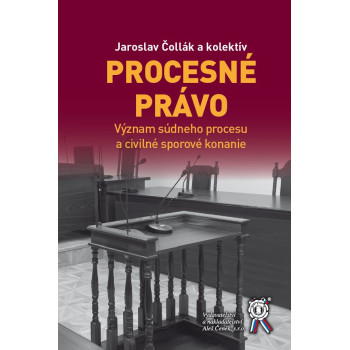
Procesné právo - Význam súdneho procesu a civilné sporové konanie

Procesné právo - Význam súdneho procesu a...

€30.00
Availability: 1 In Stock

Jaroslav Čollák a kolektív

Autorský kolektiv: Čollák Jaroslav, Bajánková Jana, Baňacká Lucia, Bröstl Alexander, Cehlár Vladimír, Dolobáč Marcel, Filičko Vladimír, Hučková Regina, Kovaľová Anna, Kunay Ľuboš, Ľalík Tomáš, Pacák Tobiáš, Romža Sergej, Straka Peter, Svák Ján, Turošík Michal, Vojčík Peter.

Publikácia širokého a vedecky kvalitného kolektívu autorov (sudcovia všeobecných súdov a ústavného súdu, vysokoškolskí pedagógovia, advokáti, notári, či ďalší odborníci z praxe) spracúva problematiku civilného sporového konania na pozadí jeho nielen vnútroštátneho a medzinárodného rozmeru, ale všíma si aj úlohy súdneho konania všeobecne sledujúc aj jeho sociologické, individuálne či spoločenské úlohy ako súčasti občianskej spoločnosti. Zámerom autorov bolo vytvoriť súvislý, moderný a svieži učebný text s množstvom praktických príkladov zo života – to s cieľom pomôcť pochopiť podstatu klasických procesnoprávnych inštitútov, ich pozíciu v zákonnej úprave a civilného sporového konania ako celku. Obsah publikácie prináša aj spracovanie a výklad atypických súčastí sporového konania, ktoré v podobnom rozsahu neboli doposiaľ v slovenskej procesualistike vedecky spracované. Predkladaná publikácia s charakterom komplexného a uceleného moderného učebného textu je prioritne určená študentom právnických fakúlt, absolventom pripravujúcim sa na odborné profesijne skúšky (advokátske, justičné, notárske či iné) ako aj študentom akýchkoľvek iných vedných odborov, v ktorých sa ich rozsah dotýka problematiky súdneho konania. Absolútne jedinečnou súčasťou obsahu publikácie je „kompas študenta“, ktorý takmer po každej kapitole prezentovanej matérie predkladá čitateľovi základný rámec orientácie v súvisiacej judikatúre súdov a významných odborných publikáciách, ktorý môže pomôcť pri orientácii v problematike či tvorbe záverečných prác.

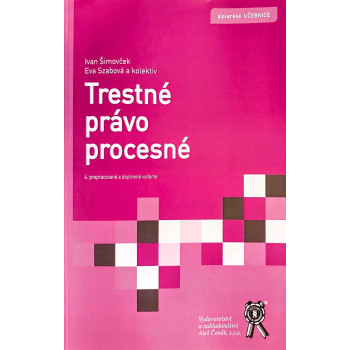
Trestné právo procesné

Trestné právo procesné

€23.00
Availability: 1 In Stock

Ivan Šimovček - Eva Szabová a kolektív

Učebnicu Trestné právo procesné, 4. prepracované a doplnené vydanie, napísal autorský kolektív zložený z pracovníkov Katedry trestného práva a kriminológie Právnickej fakulty Trnavskej univerzity v Trnave a Katedry trestného práva Univerzity Komenského v Bratislave. Učebnica je určená predovšetkým študentom právnických fakúlt ako základný študijný materiál ku skúškam a neskôr k výkonu právnických povolaní. Obsah učebnice si nenárokuje prezentáciu úplne všetkých poznatkov trestného práva procesného, je skôr účelovo usporiadaný tak, aby zodpovedal požiadavkám vysokoškolskej prípravy právnikov a aby zabezpečil osvojenie si komplexných poznatkov o jednotlivých inštitútoch a štádiách trestného konania. Autori v učebnici zároveň reagujú aj na nedávne početné legislatívne zmeny v predmetnej oblasti. Jej využitie je preto možné aj v justičnej praxi a môže byť kvalitným zdrojom informácií aj pre sudcov, prokurátorov, policajtov, advokátov a všetkých tých, ktorí sa tou či onou mierou podieľajú na trestnom konaní u nás. Text učebnice je totiž vedený úprimnou snahou autorov poskytnúť všetkým záujemcom kvalitné a aktuálne informácie, ktoré by im mohli pomôcť zvládnuť náročné štúdium a orientáciu v oblasti trestného práva procesného.

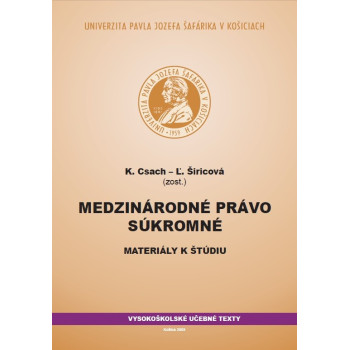
Medzinárodné právo súkromné

Medzinárodné právo súkromné

E-book

E-book

Kristián Csach - Ľubica Širicová

Private international law has undergone dramatic changes in recent periods. The fully operational process of communitarization of this legal field has not yet – and perhaps could not have been – effectively reflected by domestic legislators. Under the current legal status, it is not uncommon for legal issues to intertwine regulations of community origin and domestic legislation (embodied primarily by Act No. 97/1963 Coll. on Private International Law and Procedure).

Questions about the obsolescence of some provisions of this, until recently, universal codified regulation of private international law arise mainly (but not exclusively) from the conflict rules contained in the so-called "Rome I" Regulation on the law applicable to contractual obligations, the "Rome II" Regulation on the law applicable to non-contractual obligations, and most recently in Council Regulation (EC) No. 4/2009 of 18 December 2008 on jurisdiction, applicable law, recognition, and enforcement of decisions and cooperation in matters relating to maintenance obligations.

Respecting the principle of the primacy of generally binding acts of the Community over domestic law, the correct application of normative texts cannot be achieved without the ability to quickly navigate through the norms and subsequently compare them.

Students and anyone else are therefore confronted with a multitude of legal regulations of substantial scope and detailed regulation. Currently, apart from systematically arranged references on the websites of the Ministry of Justice, we do not find a comprehensive material that would offer an overview of legal regulations in the field of private international law and procedure.

Download the e-book for free (pdf)

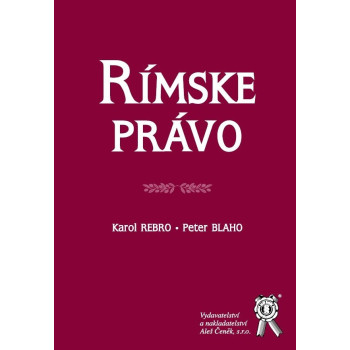
Rímske právo

Rímske právo

€31.24
Availability: 1 In Stock

Karol Rebro - Peter Blaho

Štvrté, doplnené a rozšírené vydanie koncepčne nadväzuje na doterajšie vydania a najmä sa nedotýka častí autorsky spracovaných Karolom Rebrom. Rozšírená je piata časť učebnice zameraná obsahovo na inštitúty vecného práva. Podstatným spôsobom je doplnený výklad o vecnom práve v celej jeho šírke vložením drobných úvah týkajúcich sa základných otázok rímskeho súkromného práva v oblasti vecnoprávnych vzťahov (ius in re). Miestami ide o nové spracovanie, miestami o rozšírenie poznatkov z danej matérie. V konkrétnostiach sa zväčšil rozsah v náuke o veciach (druhové a individuálne veci, prípadne zastupiteľné a nezastupiteľné veci), v náuke o držbe je novonačrtnutý problém držby ako faktu a držby ako práva, otázka „dobromyseľnej“ držby a rozšírenie výkladu o ochrane držby (interdiktná ochrana, posesórny a petitórny spor). V časti o vlastníckom práve došlo k precizovaniu druhov vlastníckeho práva, rozšírený je výklad o pôvodných spôsoboch nadobudnutia vlastníckeho práva, čím sa stal prehľadnejším. V náuke o vydržaní je upresnený problém dobromyseľnosti. Osobitnú pozornosť si zaslúžil výklad o tradícii doplnený o nové dôležité skutočnosti. Prepracovaný je ďalej výklad o reivindicatio a o postavení procesných strán v tomto súdnom spore, takisto aj actio negatoria a actio Publiciana. Úplne novým je zapracovanie pojmu vecné práva k cudzej veci (iura in re aliena) najmä v porovnaní s vlastníckym právom (iura in repropria). V náuke o záložnom práve sa zmeny týkajú podstaty a účelu rímskeho záložného práva, rozšírený je výklad o fidúcii a právnom postavení záložného veriteľa a záložného dlžníka k založenej veci. Napokon pribudol register latinských právnych pravidiel uvedených v texte učebnice.

This website uses cookies to ensure you get the best experience on our website