Slovenčina


Jaroslav Čollák a kolektív
Autorský kolektiv: Čollák Jaroslav, Bajánková Jana, Baňacká Lucia, Bröstl Alexander, Cehlár Vladimír, Dolobáč Marcel, Filičko Vladimír, Hučková Regina, Kovaľová Anna, Kunay Ľuboš, Ľalík Tomáš, Pacák Tobiáš, Romža Sergej, Straka Peter, Svák Ján, Turošík Michal, Vojčík Peter.
Publikácia širokého a vedecky kvalitného kolektívu autorov (sudcovia všeobecných súdov a ústavného súdu, vysokoškolskí pedagógovia, advokáti, notári, či ďalší odborníci z praxe) spracúva problematiku civilného sporového konania na pozadí jeho nielen vnútroštátneho a medzinárodného rozmeru, ale všíma si aj úlohy súdneho konania všeobecne sledujúc aj jeho sociologické, individuálne či spoločenské úlohy ako súčasti občianskej spoločnosti. Zámerom autorov bolo vytvoriť súvislý, moderný a svieži učebný text s množstvom praktických príkladov zo života – to s cieľom pomôcť pochopiť podstatu klasických procesnoprávnych inštitútov, ich pozíciu v zákonnej úprave a civilného sporového konania ako celku. Obsah publikácie prináša aj spracovanie a výklad atypických súčastí sporového konania, ktoré v podobnom rozsahu neboli doposiaľ v slovenskej procesualistike vedecky spracované. Predkladaná publikácia s charakterom komplexného a uceleného moderného učebného textu je prioritne určená študentom právnických fakúlt, absolventom pripravujúcim sa na odborné profesijne skúšky (advokátske, justičné, notárske či iné) ako aj študentom akýchkoľvek iných vedných odborov, v ktorých sa ich rozsah dotýka problematiky súdneho konania. Absolútne jedinečnou súčasťou obsahu publikácie je „kompas študenta“, ktorý takmer po každej kapitole prezentovanej matérie predkladá čitateľovi základný rámec orientácie v súvisiacej judikatúre súdov a významných odborných publikáciách, ktorý môže pomôcť pri orientácii v problematike či tvorbe záverečných prác.

Data sheet
Specific References
E-book
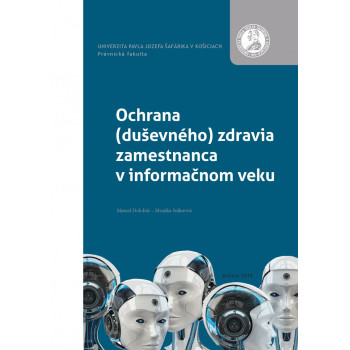
Marcel Dolobáč - Monika Seilerová
The Industrial Revolution cannot be avoided or hidden from, but it is equally wrong to see it only in gray tones. Let us be optimistic. The Information Age can also mean a reduction in working hours, perhaps more time for family and interpersonal relationships, or an overall increase in individual economic luxury. The Information Age will take away many job opportunities but will put many others on the table, though mostly for the educated. Science and research will become even more important for overall economic development than they are today. Let us be prepared.
The ambition of this monograph is not, and cannot be, to provide an exhaustive answer to the above-outlined debates. Its goal is to stimulate broader scientific discussion, particularly on the issue of mental health protection in correlation with the advent of the Information Age. The subject of study is the protection of the individual—the employee—who must adapt to a new technological environment and its associated demands.
The monograph represents a comprehensive output by authors who, over the past two years, have published on similar topics within the APVV-16-0002 grant "Mental Health in the Workplace and Assessment of Employee Health Capability." The authors believe that thanks to this APVV grant, they will continue to build on this topic in the coming years. Most importantly, they hope that its content will engage you, the readers.
Marcel Dolobáč
E-book
Milan Sudzina, Renata Świrgoń-Skok, Wojciech J. Kosior
Given the importance of the ownership right, the aim of this monograph is to provide an analysis, a clear systematic interpretation and an evaluation of the above issue, not only from the theoretical point of view, but also from the point of view of legal practice. The protection of ownership relations is ensured in various ways. It is judicial protection, protection provided by local self-government authorities, self-help, public registration of real property and other instruments of administrative and criminal law. In connection with the transformation of legislation in Slovakia and Poland after the fall of the socialist regime, there have been many changes in the legislation of both countries concerning the protection of ownership rights. A number of private law institutions related to the ownership of real property, the use of which was impossible or limited during the socialist period, have been restored. Legislation has also been adopted to alleviate the consequences of certain property and other injustices caused by the deprivation of ownership of real property during the socialist period. The adoption of restitution legislation was the basis for restoring the ownership rights of the original owners, who were allowed to get back their real property that had been used by socialist organisations. After the end of the socialist regime, the various forms of ownership, which until then had favoured the state ownership, were abolished. Changes were made to ensure that the ownership rights of all owners had the same content and enjoyed the same legal protection. The monograph is structured in such a way as to enable a comparison of individual institutions of rights in rem under Polish and Slovak law. The monograph also analyses the relevant decision-making practice of the supreme judicial authorities. The scientific methods applied enabled the authors not only to analyse and evaluate the historical context and the current legal regulation of ownership rights in Poland and Slovakia, but also to point out possible gaps and shortcomings and to elaborate de lege ferenda proposals that can be used in future legislative activity.
Download e-book for free (pdf)
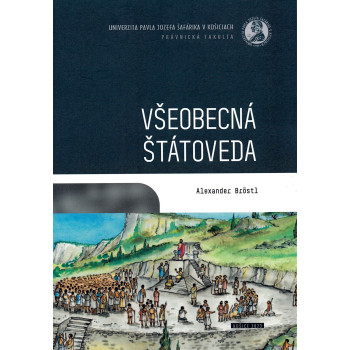
Učebnica Všeobecnej štátovedy predstavuje tradičný obsah predmetu, ako sa rozvinul v európskej kontinentálnej podobe (altematívou štátovedy je dnes na viacerých univerzitách, aj mimo právnických fakúlt, politická veda). Medzi dvanástimi kapitolami sa okrem viac-menej stabilne prítomných (1. Jednotlivca spoločnosť; 2. Teórie o príčinách vzniku štátu a o účele štátu; 3. Znaky (prvky)štátu; 8. Politické strany a štát) nachádzajú aj kapitoly, ktoré spravidla nie sú, alebo doteraz neboli predmetom štandardného záujmu (5. Politický spor, zmena ústavy, revolúcia, právo na odpor; 6. Rozpadnuté a stroskotané štáty; 7. Štát a cirkev).Niektoré kapitoly predstavujú návrat k pôvodným štátovedným klasifikáciám (9. Funkcie štátu). V rámci prezentácie historických a aktuálnych otázok týkajúcich sa Formy štátu (najrozsiahlejšia 1O. kapitola)ide o pokus objasnit' nové aspekty problematiky(napríklad, podkapitoly ako Parlamentná opozícia, Ústavné súdnictvo). Záverečná časť učebnice sa venuje Modernému ústavnému štátu: právnemu štátu(12.kapitola)a možno ju považovat' za príspevok k analýze princípov právneho štátu a jeho viacerých teórií. Úmyslom autora bolo tiež prispieť k autentickému výkladu názorov niektorých myslitel'ov predošlých období, návratom k pôvodným textom ich diel. Všeobecná štátoveda, adresovaná predovšetkým študentom, má za ciel' tvoriť úvod do právnického štúdia ako jeho osvedčená základňa, zdroj i východisko.
E-book
Milena Barinková (ed.)
The complex of legal norms protecting work, ensuring safety and health protection at work, is very broad in scope, extending beyond the Labour Code to include other specific legal regulations, collective agreements, executive legal regulations, and internal corporate normative acts.
Health protection of employees from hazardous workplace influences is a central requirement stemming from fundamental human rights guaranteed by the Constitution of the Slovak Republic. To ensure its universal enforcement across all employers in both private and public sectors, strict regulation through cogent norms is fully justified. The European Commission’s Communication to the European Parliament, Council, European Economic and Social Committee, and Committee of the Regions on the EU Strategic Framework on Health and Safety at Work 2014–2020 (COM(2014) 332 final) addresses the need to account for labor market changes arising from demographic shifts, aging populations, and technological advancements.
Work pace demands are intensifying, and all age categories of employees must adapt to new technologies, organizational changes, and evolving job structures. This increases requirements for maintaining health fitness throughout entire professional careers. Mental health fitness, which receives insufficient specific attention, is an inherent part of health fitness requirements. Prevention plays a critical role in mental health protection.