Slovenčina


E-book
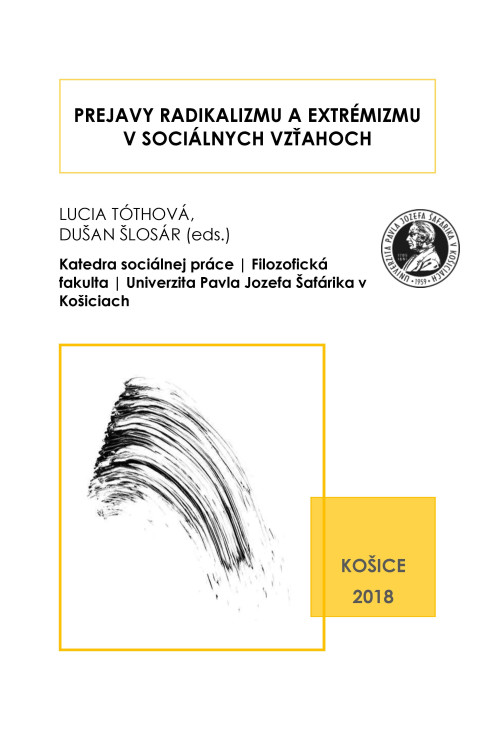
The publication "Manifestations of Radicalism and Extremism in Social Relations" is an input analysis of the individual areas that the authors want to focus on in their research activities in the study of radicalism and extremism. The context of the study is in the possibility of social work in influencing radical and extremist tendencies in those areas that we can designate as working fields of social work.
The authors of the individual papers focus on the theoretical definition of extremism and radicalism, types and forms of extremism, factors affecting the formation of the radical and extremist thoughts, focusing on specific target groups (especially youth) and the role of social work in the issue of radicalism and extremism, and they also represent the results of research in the field.

Data sheet
E-journal
Juraj Schenk et al.
The scientific journal Sociálne a politické analýzy (Social and Political Analyses) serves as an interactive electronic platform for communication and the presentation (publication) of experts and their work in the fields of basic and applied research and analyses within sociological, psychological, political, and methodological contexts. It is a medium focused on intensively supporting research activities and analyses within an interdisciplinary framework, facilitating the exchange of experiences, fostering collaboration, and revitalizing the production of scientific work in this area.
The publication section of the journal offers space for works such as:
- Original sociological, psychological, and political studies and analyses in any areas of social life
- Methodological studies
- Research reports
- Studies from qualification theses Research and analysis projects
- Reviews
E-book
Vladimír Leško, Róbert Stojka a kol.
Kolektívna monografia Leško, V. – Róbert Stojka a kol.: Heidegger, metafyzika a Gréci (Košice: UPJŠ 2016, 695 s.) je prvým historicko-filozofickým pokusom na Slovensku, ale aj v širších zahraničných kontextoch, vysporiadať sa s takto zvolenou ústrednou témou Heideggerovho diela. Práca je členená do troch základných časti. V prvej, ktorá je nazvaná od Augustína k Aristotelovi, autori jednotlivých kapitol skúmajú genézu Heideggerovho vzťahu ku gréckej filozofii a skúmanie hlavnej Heideggerovej otázky – otázky bytia - od jeho prvých prednáškových kurzov k Aristotelovej filozofii z rokov 1921/1922 až do roku 1929, keď mu vychádza práca k Aristotelovej Metafyzike. Naše skúmanie jednoznačne potvrdzuje skutočnosť, že v týchto Heideggerových raných textov (prednáškových cyklov) sa postupne rodia všetky dôležité filozofické pozície, ktoré mali svoje zavŕšenie v práci Bytie a čas.
E-book
Proceedings from the Scientific Conference with International Participation held on November 27, 2015 in Košice
Stress is becoming a part of everyday life in developed societies, which negatively affects both the physical and mental state of individuals. The proceedings from the scientific conference with international participation, titled "Forms of Internal and External Factors in Coping with Stress from the Perspective of Theory and Practice in Social Work," are therefore dedicated to the issue of coping with stress from an interdisciplinary perspective.
It addresses the full spectrum of coping issues, ranging from the most internal, specifically defined factors of the C-system of coping in oncology patients, coping with burnout in helping professions, sociological contexts of oncological diseases, through the level of social support that provides individuals with space for managing stress, to the possibilities of coping with stressful situations in various areas of life.
E-book
Marián Gladiš - Lucia Jasinská (eds.)
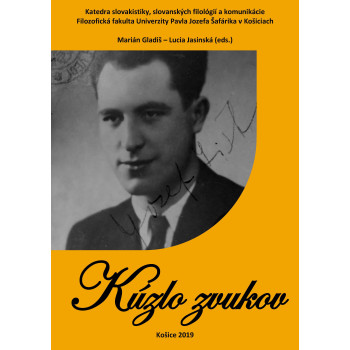
This peer-reviewed collection of papers is a publication output of the scientific colloquium named The Magic of Sounds, which was organized by the Department of Slovak Studies, Slavonic Philologies and Communication at the Faculty of Arts of the Pavol Jozef Šafárik University in Košice, and by the Košice Branch of the Slovak Linguistic Society at the Ľudovít Štúr Linguistic Institute of the Slovak Academy of Sciences in Bratislava, on the occasion of the 100th anniversary of birth of Associate Professor PhDr. Jozef Liška, PhD., the founder of the Slovak logopaedics.
Participants focused their papers on the analysis of the linguistic and speech therapy work of J. Liška, his contribution to Slovak dialectology and orthoepy, presented him as an Anglicist, and they also dealt with the audio aspect of children's speech, exact methods of disturbances and low voice quality measuring, or machine speech processing.
An interpretative paper of the documentary They Will Speak Well, a socially important piece of film work, which was made in 1958 under the supervision of J. Liška, is also included in the proceedings.