Slovenčina


E-kniha
Mikuláš Jančura - Maroš Melichárek (eds.)
Predkladaný zborník je publikovaným výstupom zo Študentskej vedeckej konferencie, ktorá sa na pôde Katedry histórie FF UPJŠ uskutočnila dňa 02.12.2024. Bolo to už po trinásty krát. Zborník z tohto ročníka (už tretí v poradí) sa tak zaradil do tejto úspešnej série. Obsiahnuté príspevky, podobne ako aj v starších zborníkoch z tejto konferencie, približujú stav bádania korelujúci so záverečnými prácami študentov na bakalárskom a magisterskom stupni štúdia.

Data sheet
E-book
The aim of this university textbook is primarily to provide a comprehensive and systematic overview of the basic legislative documents related to pedagogical activities and the educational work of teachers in school practice. The textbook is primarily intended for students of academic teacher training programs, as well as recent graduates of teacher education who are beginning their teaching careers.
This publication is unique in that it does not focus on specific legislative documents and their descriptions, but rather presents the meaning and wording of various legislative documents in the context of key concepts of educational activities and typical school situations. The publication does not include the full text of cited paragraphs from laws, decrees, and ministerial guidelines, but only excerpts that are relevant to the focus and needs of the textbook.
In this way, we aim to help teacher training students and beginning teachers orient themselves regarding their rights and responsibilities as defined and delineated by school legislation, and especially to help them understand the basic legislative requirements placed on every teacher in school practice. This includes participation in the preparation of the school educational program, understanding the professional development of teachers, student assessment, approaches to students with special needs, as well as handling common school situations such as disciplinary measures, school accidents, ski training, or school events.
Given the scope of these areas, we have divided the topics into two publications according to their thematic focus.
E-book
The aim of the monograph was to analyze and address the issue of educational systems within children's and youth organizations, with an emphasis on those focused on the age category of children up to 15 years.
The starting point was an analysis of the current state of the educational environment in terms of the systemic nature of education and the basic categories of the educational system. The collected available materials on the educational systems of selected (most representative) children's and youth organizations in the Slovak Republic were subsequently processed according to a unified methodology and using generally accepted pedagogical terminology.
E-book
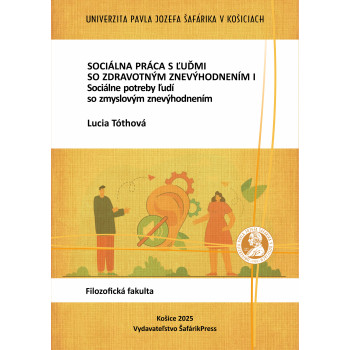
Počet ľudí so zdravotným znevýhodnením neustále rastie, čo predstavuje výzvu aj pre oblasť sociálnej práce. Tá zohráva kľúčovú úlohu v podpore týchto osôb a hľadaní efektívnych spôsobov napĺňania ich potrieb.
Vysokoškolská učebnica vznikla v rámci riešenia projektu KEGA č. 018UPJŠ-4/2024 s názvom „PhotoVoice ako inovatívna metóda advokácie sociálnych potrieb ľudí so sluchovým postihnutím“. Je prvou časťou viacdielneho cyklu, ktorý sa venuje rôznym aspektom tejto problematiky. Učebnica analyzuje historické a teoretické východiská, terminológiu a modely zdravotného znevýhodnenia. Venuje sa špecifikám vybraných druhov zmyslového znevýhodnenia. Osobitná pozornosť sa upriamuje na sociálne potreby týchto osôb a advokácii v sociálnej práci, pričom zdôraznený je význam aktívneho zapojenia ľudí so zdravotným znevýhodnením do riešenia vlastných životných situácií.
Okrem poskytovania odborných poznatkov môže učebnica slúžiť aj ako podnet na hlbšiu reflexiu vlastného prístupu k ľuďom so zdravotným znevýhodnením a na rozvoj citlivého prístupu k ľuďom so zdravotným znevýhodnením. Navyše, učebnica obsahuje vybrané prvky tzv. jasnej tlače, čím podporuje jej prístupnosť.
E-journal
Juraj Schenk a kol.
The scientific journal Sociálne a politické analýzy (Social and Political Analyses) serves as an interactive electronic platform for communication and the presentation (publication) of experts and their work in the fields of basic and applied research and analyses within sociological, psychological, political, and methodological contexts. It is a medium focused on intensively supporting research activities and analyses within an interdisciplinary framework, facilitating the exchange of experiences, fostering collaboration, and revitalizing the production of scientific work in this area.
The publication section of the journal offers space for works such as:
- Original sociological, psychological, and political studies and analyses in any areas of social life
- Methodological studies
- Research reports
- Studies from qualification theses Research and analysis projects
- Reviews