Slovenčina


E-book
Ľubica Jamborová et al.
Textbook from Module 2 "Open Access Infrastructure." This module deals with open access resources across all types, their characteristics, nature, features, planning, execution, selection of appropriate technical standards, establishment of basic procedures, and sustainability practices.
All stakeholders are addressed, including institutions, sponsors, users, and future content creators. Emphasis is placed on e-journals and e-repositories, as well as new trends in open access.

Data sheet
E-book
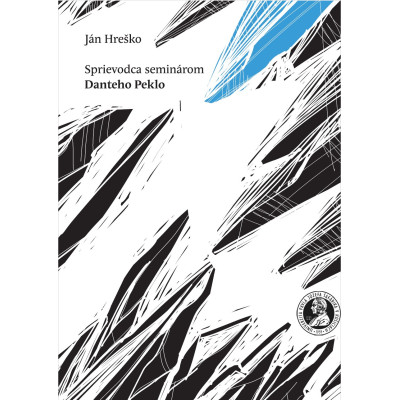
This teaching guide is intended for teachers and instructors who are introducing new readers to Dante’s Divine Comedy, in particular the first cantica, Inferno, offering support and a grounding in the cultural background of one of the most important works of European medieval literature. Rather than forming yet another academic contribution to the study of Dante and his work, the guide focuses on using a guided seminar reading method within study groups and fostering meaningful discussions about the central themes and issues of the Inferno. Under the guidance of a teacher, students are encouraged to engage actively with the motifs and moral universe of this classic literary work – a primary source that cannot be replaced by any retelling. The proposed interpretations draw on established scholarly commentaries to deepen the readers’ understanding of the text, and each lesson is accompanied by a selected bibliography. The guide includes thematic introductions presenting Dante Alighieri as both author and protagonist within the Divine Comedy. It also offers carefully selected questions designed to foster textual comprehension and stimulate discussion during seminar readings of selected cantos of the Inferno. In addition, the publication includes special lessons on associated literary and artistic works. The guide features a wealth of original illustrations and an extensive range of visual materials. The course thus builds upon the traditional practice of seminar-based readings of works by the great authors, an approach which continues to form part of the curriculum at many liberal arts colleges, by integrating innovative techniques into this established educational method.
E-kniha
Renáta Orosová Michal Novocký Zuzana Vagaská
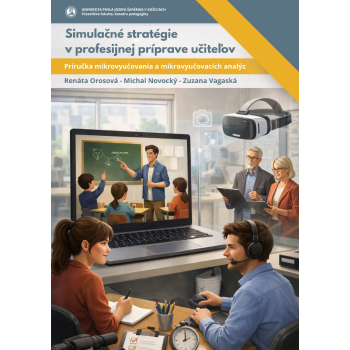
This publication provides a summary of knowledge about microteaching as a simulation strategy in the context of university teacher education. Readers will find theoretical foundations of simulation techniques, definitions and objectives of microteaching, the role of analysis as a tool for reflection, possibilities for implementation in both face-to-face and distance learning formats, and numerous examples of best practices. We believe that this text contributes to a deeper understanding of the importance of microteaching, a simulation strategy that systematically develops pedagogical skills and helps shape the professional competencies of future teachers.
E-book
The university textbook offers a view of the family in social contexts. It deals with the basic characteristics of the family, the life cycle of the family from the choice of partner, through the arrival of children in the family to the end of the family. During its duration, the family performs various functions. A functional family is ideal for a harmonious relationship between partners and a suitable environment for raising children.
However, a number of factors enter the life of the family, which directly or indirectly affect the performance of these functions and can cause various disorders. It is here that the task of social work is to offer help to families to cope with their big and small problems. A specific feature of social work is the focus on the whole and a comprehensive assessment of the family, where it is necessary to take into account both the client's point of view and the aspect of the environment in which he lives and which constantly affects him. Therefore, the university textbook offers procedures for social work with the family, from the assessment of the life situation, through the plan of work with the family to social intervention.
The university textbook is intended for students of social work, who have the opportunity to practice complex issues within the assessment of the case through the enclosed case studies.
Download e-book for free (pdf)
E-book
Mária Rašiová
The textbook entitled Selected Vascular Diseases is intended for medical students and physicians who specialize in internal medicine and angiology. Its goal is to present some lesser-known vascular diseases, or clinical conditions requiring rapid diagnosis. The text analyzes diseases occurring less frequently in clinical practice, such as aortitis, vascular malformations, peripheral arteriovenous malformations, pelvic venous diseases, and Klippel-Trénaunay syndrome. The textbook also addresses conditions that require rapid diagnosis, such as acute mesenteric ischemia and infectious aortitis. Within the scope of vasoneuroses, it describes Raynaud's phenomenon and childhood vascular diseases, such as hemangiomas. The text also touches on late complications associated with arteriovenous shunts in patients treated with hemodialysis.
Download the e-book for free