Filter By

Categories

Categories

Year of publication:

Year of publication:

Publication language:

Publication language:

Faculty:

Faculty:

Method of publication:

Method of publication:

Active filters

  • Year of publication:: 2015
  • Year of publication:: 2022
  • Year of publication:: 2022
  • Year of publication:: 2022
  • Year of publication:: 2022
  • Year of publication:: 2022
  • Faculty:: Prírodovedecká fakulta
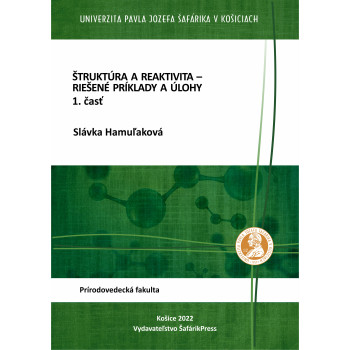
Štruktúra a reaktivita – riešené príklady a úlohy. 1. časť

Štruktúra a reaktivita – riešené príklady a...

E-book

E-book

Slávka Hamuľaková

The textbook "Structure and reactivity - solved examples and tasks, part 1" is the basis for teaching the subject "Structure and reactivity" for students of the 1st year of master's studies at the Faculty of Science, UPJŠ, department of Organic Chemistry. The textbook is divided into individual chapters, each chapter offering students examples of chemical reactions, where their course is explained on the basis of appropriate reaction mechanisms. A substantial part of the textbook consists of unresolved tasks, the main goal of which is the development of students' knowledge and skills. Due to the fact that the textbook is focused on only one semester of study, it cannot cover all reactions, rather it is only representative examples of different types of reactions, such as: addition reactions, elimination reactions, aromatic substitution, addition-elimination reactions, radical reactions and pericyclic reactions.

Download the e-book for free (pdf)

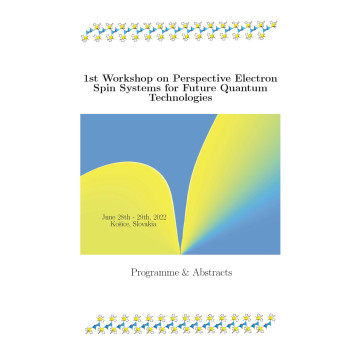
1st Workshop on Perspective Electron Spin Systems for Future Quantum Technologies

1st Workshop on Perspective Electron Spin...

E-book

E-book

Jozef Strečka- Katarína Karl’ová (eds.)

Zborník obsahuje program a abstrakty workshopu s názvom: 1st Workshop on Perspective Electron Spin Systems for Future Quantum Technologies, ktorý sa bude konať 28.-29. júna 2022 v Košiciach. Workshop je organizovaný Prírodovedeckou fakultou Pavla Jozefa Šafárika v Košiciach a Ústavom experimentálnej fyziky Slovenskej akadémie vied v Košiciach s finančnou podporou Agentúry na podporu výskumu a vývoja. Ústrednými témami konferencie budú súčasné problémy kvantovej fyziky - kvantovej teórie magnetizmu spinových a elektrónových štruktúr, exotických kvantových spinových stavov, kvantového previazania, kvantových fázových prechodov, topologického kvantového počítania a kvantového spracovania informácie. Účastníci workshopu budú prezentovať originálne pôvodné výsledky svojho výskumu, ktoré môžu zásadným spôsobom ovplyvniť vývoj budúcich kvantových technológií.   

Download the e-book for free (pdf)

Pokročilé elektrochemické metódy

Pokročilé elektrochemické metódy

E-book

E-book

Ivana Šišoláková - Radka Gorejová - Jana Shepa - Renáta Oriňaková

The university textbook "Advanced Electrochemical Methods" is a teaching aid intended for master's or doctoral students studying electrochemical subjects at the Department of Physical Chemistry, Faculty of Science, Pavol Jozef Šafárik University in Košice.

These textbooks follow and further develop textbooks focused on the basic electrochemical methods currently used in modern research. The presented teaching texts are processed in sixteen clear chapters, where they provide a theoretical principle and derivation of electrochemical processes and mechanisms in individual methods. Teaching texts also consist of practical laboratory exercises, in which students can try out the real application of the studied electrochemical methods.

The practical tasks are focused primarily on the demonstration of research that is carried out at our workplace. Students will be able to try, for example, electrochemical modification of the electrode surface, preparation of electrochemical sensors for the determination of analytes, preparation and characterization of a dye-sensitized solar cell or electrochemical evolution of hydrogen.

Download the e-book for free (pdf)

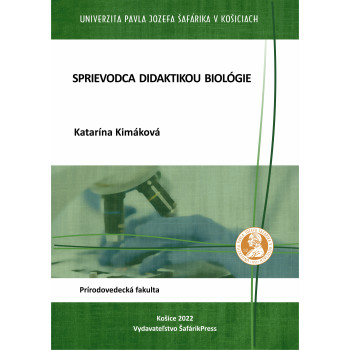
A guide to the didactics of biology

A guide to the didactics of biology

E-book

E-book

Katarína Kimáková

The textbook is intended for university students who are preparing for the profession of biology teacher. The structure of the book is similar to an encyclopedia, with one page devoted to each content item, but the topics of the chapters and subchapters follow each other.

The explanatory text on the page illustrates the diagram and there are notes and links to other sources of information. For better orientation, the content of the textbook is divided into 8 sections, which cover several chapters. It follows the general didactics, which it connects with the teaching of biological content. The book provides a basic orientation in the approaches to learning this subject, and also explains the relationship between biology as a science and the didactics of biology. It deals with teaching standards and curricula, advises on how to master biological concepts and understanding, how to communicate with students in biology classes, when and why are effective visual and practical methods. It acquaints the reader with the issue of setting goals for biological education in the cognitive, psychomotor and affective areas in relation to formative and summative assessment.

Hopeful as well as experienced teachers will find in this publication not only a look into the history of teaching biology, but also a look into the future. Current trends in biology teaching, the connection of teaching with digital technologies, the virtual learning environment and interactive simulations and models belong to science lessons today.

Download the e-book for free (pdf)

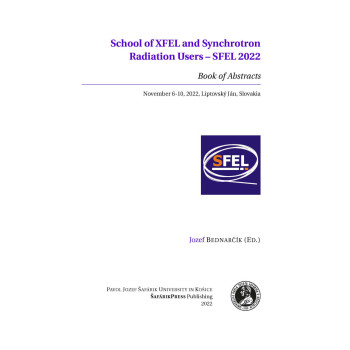
School of XFEL and Synchrotron Radiation Users – SFEL 2022

School of XFEL and Synchrotron Radiation Users...

E-book

E-book

Jozef Bednarčík (ed.)

The SFEL school is continuation of the Winter Schools of Synchrotron radiation held in 2011, 2013, 2014 and SFEL 2017, 2018 and 2019. All schools of the series were held here, in Liptovský Ján, where our conference venue offers conditions for friendly and creative atmosphere.

The aim of the SFEL 2022 school is to facilitate the growth of a new Slovak research community with high expertise in the area of high-efficiency RTG laser, synchrotron and neutron sources. The SFEL school is designed for efficient transfer of the rapidly developing know-howin these areas to young generation – researchers and university students. The next aim of the SFEL2022 is strengthening of personal connections between the local Slovak research community and actually forming scientific teams of XFEL users, scientific teams of synchrotron or neutron sources users, respectively.

Slovak research community thus can take advantage of the fact that Slovakia is a shareholder of the European XFEL GmbH company in Hamburg, but also makes more efficient use of other closely related scientific facilities, including ILL and ESRF in Grenoble and DESY in Hamburg.

Download the e-book for free (pdf)

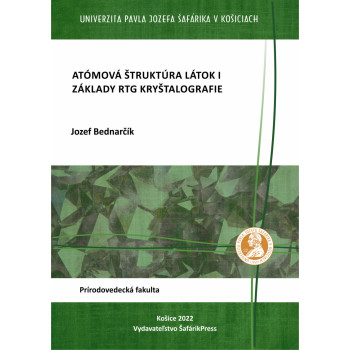
ATÓMOVÁ ŠTRUKTÚRA LÁTOK I - Základy RTG kryštalografie

ATÓMOVÁ ŠTRUKTÚRA LÁTOK I - Základy RTG...

E-book

E-book

Jozef Bednarčík

Crystallography deals with discerning the arrangement and bonding of atoms in crystalline solids. Almost immediately after their discovery, X-rays began to be used to study the internal structure of substances.

The first chapter of this textbook deals with the basic concepts of crystallography. At the beginning, crystalline solids are characterized. In the next section, the basic types of bonds and their characteristics are briefly presented. The main subject of this chapter is the interpretation of basic concepts such as symmetry operations, translational periodicity, grid, elementary cell. Spatial lattices and crystal systems are presented. At the end of this chapter, attention is paid to the description of individual types of defects in crystal structures. In the second chapter, the Bohr model of the hydrogen atom is presented. Individual quantum numbers and their meaning are given.

Next, energy levels and allowed transitions within an atom with multiple electrons are described. The second chapter concludes with the characterization of the basic absorption and emission processes. The third chapter is devoted to the production of X-ray radiation and its properties. Sources of X-ray radiation and a description of their operation are presented.

Interaction of X-ray radiation with matter, absorption and detection of X-ray radiation are the subject of the last part of this chapter.

Download the e-book for free (pdf)

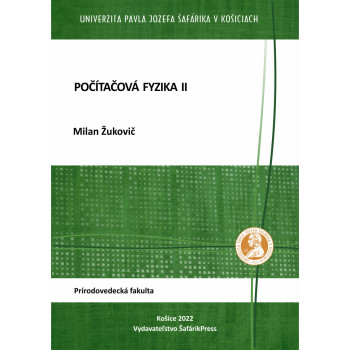
Počítačová fyzika II

Počítačová fyzika II

E-book

E-book

Milan Žukovič

This textbook is intended for master's degree students and is a follow-up to the Computational Physics I course studied at the bachelor's level. The content of the textbook Computational Physics II focuses on stochastic methods of solving physical problems, mainly on Monte Carlo (MC) simulation of many-particle systems.

The focus on this computationally intensive approach is motivated by the gradual increase in the computing capacities of ordinary computers as well as the introduction of high-performance computing clusters. This has led to significant progress in the development of new simulation techniques, thanks to which MC simulations have found application in various areas of research and application practice. Considering the main research focus of the department, this text is particularly devoted to the presentation of basic and more advanced MC simulation techniques applied to a simple Ising spin model in order to investigate its magnetic, thermodynamic and critical properties.

The next part is devoted to MC simulations of random processes. It focuses on the simplest but also the most basic random walk process and demonstrates its applications in financial analysis and the solution of a quantum system described by the time-dependent Schrödinger equation. The last part is dedicated to the basics of molecular dynamics, applied to simulating the classical movement of atoms in a given force field. By mastering the problems addressed in this course, students will obtain a potential tool for working out of their diploma theses, or a methodology useful for their further scientific and research practice in the field of investigating of complex systems.

The lectured topic is subsequently exercised in the form of preparing projects implemented in the freely distributable software Octave, which is easy on the user's programming skills and which students have the opportunity to familiarize themselves with in the previous study.

Download e-book for free (pdf)

The 6th International Conference on Nanomaterials: Fundamentals and Applications

The 6th International Conference on...

E-book

E-book

Jana Shepa (ed.)

The book of abstracts from 6th International Conference on Nanomaterials: Fundamentals and Applications, NFA 2022 is composed of contributions from the participants of this international conference. The conference consisted of 4 invited lecture and 52 abstracts of participants. The conference is focused on nanotechnology and its application in various research areas. All contributions are professionally processed and inspiring.

Download the e-book for free (pdf)

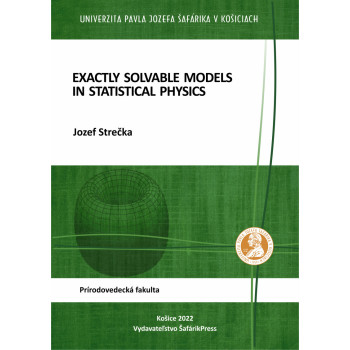
Exactly Solvable Models in Statistical Physics

Exactly Solvable Models in Statistical Physics

E-book

E-book

Jozef Strečka

Over the past fifteen years, the course on ’Exactly Solvable Models in Statistical Physics’ has become an indispensable ground of the study programme ’Theoretical Physics’ at Faculty of Science of Pavol Jozef Šafarik University in Košice. At first, the course based on the first edition of this textbook was intended for undergraduate students only, however, I have later prepared follow-up course taught at a postgraduate level on demand of several ambitious students who wished to continue in studying this exciting research field.

It is already more than decade when our students enrolled in the study programme ’Theoretical Physics’ graduate from ’Introduction to Exactly Solvable Models in Statistical Physics’ at a master level and ’Exactly Solvable Models in Statistical Physics’ at a postgraduate level. Of course, it was necessary somehow to rearrange topics for the courses of undergraduate and postgraduate students.

More specifically, a few more challenging topics concerned with exact solutions of 2D Ising model (chapter 3) were moved to a more advanced course intended for the postgraduate students, while an introductory course intended for the undergraduate students was contrarily supplemented with a few new topics requiring the second edition of this textbook.

The second edition of this textbook thus contains a completely new chapter 4 devoted to the exact solution of the Ising model on the Bethe lattice using the method of exact recursion relations, while the chapter 5 was supplemented by exact results for ground state of a few frustrated Heisenberg spin models using the variational method. It is my hope that the next edition of this textbook will come soon and it will involve all topics specifically taught within the postgraduate course as well. 

Download the e-book for free  (pdf)

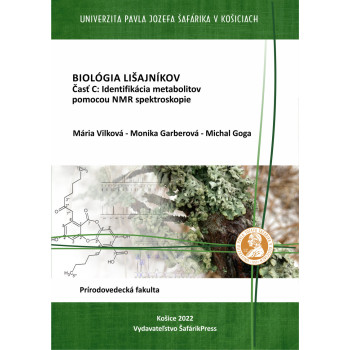
BIOLÓGIA LIŠAJNÍKOV. Časť C: Identifikácia metabolitov pomocou NMR spektroskopie

BIOLÓGIA LIŠAJNÍKOV. Časť C: Identifikácia...

E-book

E-book

Mária VilkováMonika GarberováMichal Goga

Nuclear Magnetic Resonance (NMR) is currently a widely used analytical tool that finds application in many fields of science and technology. The broadening of its practical use brings with it the necessity to create educational texts appropriate to the given scientific discipline.

This university textbook is intended for students of biology and serves as a supplement to the study materials for the advanced master's course "Biology of Lichens." At the same time, it represents a useful resource for master's and doctoral students involved in research, helping them interpret NMR spectra and present basic theoretical concepts.

The textbook briefly describes the important aspects of each NMR spectroscopic technique without delving excessively into the physical principles of individual methods or complex mathematical analyses. In this edition, the structures of lichen metabolites have been included, which students will isolate, purify, and identify using various analytical methods during practical exercises. An entire chapter is dedicated to a detailed description of solving the NMR spectra of isolated metabolites, with each step in elucidating the structures of both known and unknown metabolites explained in detail. The solved tasks are followed by numerous unsolved examples, including high-resolution 1D and 2D NMR spectra of metabolites, intended to further develop the acquired knowledge and skills of students and doctoral candidates in structure elucidation using NMR spectroscopy.

Download e-book for free (pdf)

Geopriestorové technológie v bádateľsky orientovanom vyučovaní geografie

Geopriestorové technológie v bádateľsky...

E-book

E-book

Stela Csachová - Ján Kaňuk - Alena GessertLadislav NovotnýŠtefan GáborJozef Šupinský

This book addressed the inquiry-based learning and teaching with the support of geospatial technologies. Today, geospatial technologies are influencing geography teaching learning, particularly in secondary education. Theoretical framework gives the reader the insight to inquiry-based learning, with special focus on inquiry in geography. The one-by-one step of inquiry is analysed in detail. The major part of the book presents the eleven models of geography lessons, representing the subject content of physical, human and regional geographies, various levels of inquiry and use of different geospatial technologies. The readers are acquainted with the use of geographic information system (particularly Google Earth and ArcGIS online), web portals, webGIS, open data, mobile applications and new forms of 3D cartographic visualisation (virtual reality, 3D print, dynamic 3D map) in teaching geography. The lesson models were tested with the students to be geography teachers in school year 2021/2022. This books serves as resource mainly for undergraduate teacher students and in-service geography teachers.

Download e-book for free (pdf)

NOVEL TRENDS IN CHEMISTRY, RESEARCH AND EDUCATION at the Faculty of Science of Pavol Jozef Šafárik University in Košice 2022

NOVEL TRENDS IN CHEMISTRY, RESEARCH AND...

E-book

E-book

Monika TvrdoňováMiroslava Martinková

The scientific book of abstracts from conference „Novel Trends in Chemistry, Research and Education 2022“ is a summary of the contributions of conference participants, which contain the original results of their scientific and research activities. The contributions published in this volume can be divided according to content into the field of analytical, inorganic, organic, physical chemistry, biochemistry, didactics of chemistry and NMR spectroscopy.

Download e-book for free (pdf)

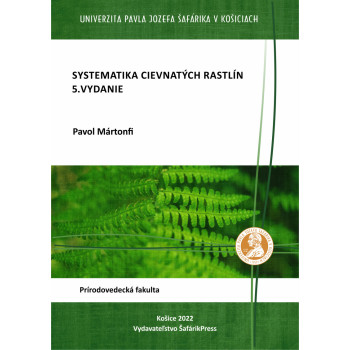
Systematika cievnatých rastlín, 5. vydanie

Systematika cievnatých rastlín, 5. vydanie

E-book

E-book

Pavol Mártonfi

The university textbook deals with the latest knowledge from the systematics of vascular plants in a clear manner. Vascular plants arose in the Silurian period in the Paleozoic, when the first primitive plants moved from water to dry land, which required evolutionary progress in the morphological and anatomical structure of these plants. During about 420 million years of the existence of vascular plants, several of their main groups have evolved: the spore vascular plants, including the lycopods (branch Lycopodiophyta) and group of ferns and related plants (branch Monilophyta), and the seed plants, including gymnosperms (branch Gymnospermae) and angiosperms ( Angiospermae), which currently dominate among plants. The textbook provides a brief but comprehensive overview of the main groups, orders and families of plants with their description, distribution, main representatives, while also addressing the useful properties of selected species. The work is complemented by an overview of the system of plants by Cronquist, Tachtadžjan, APG and an overview of the families of the Slovak flora, as well as a taxonomic index.

Download e-book for free (pdf)

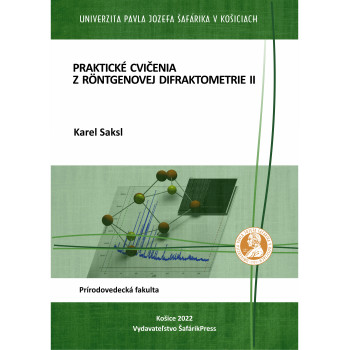
Praktické cvičenia z röntgenovej difraktometrie II

Praktické cvičenia z röntgenovej difraktometrie II

E-book

E-book

Karel Saksl

Solving crystal structures is the royal discipline of X-ray crystallography. Its primary task, with the exception of defects, is to describe the atomic structure of the motif that, by its repetition, fills the volume of the entire crystal or crystalline phase. This task is nowadays more or less routine for single-crystal X-ray diffraction, which can locate hundreds to thousands of non-hydrogen atoms in large unit cells. However, in real practice, we often have material available only in powder form instead of single crystals. Solving the atomic structure from its X-ray diffraction data is non-trivial, mainly because the three-dimensional diffraction space of a single crystal is reduced to one dimension by measuring a large number of randomly oriented microcrystals (crystallites). Therefore, the solution itself requires, in addition to proper measurement methodology, the selection of suitable tools, procedures, and strategies that, through optimization, will lead to the solution and refinement of the given crystalline phase. The current limit of this method is approximately 100 non-hydrogen atoms in the asymmetric part of the unit cell, which, however, is sufficient for most inorganic materials.

The goal of these educational texts is to provide students in the second and third levels of university studies with specific guidance on solving crystal structures from powder X-ray diffraction data. These scripts build upon my first monograph and require practical knowledge of its content. Similar to my previous monograph, I offer solved examples without a deep theoretical introduction, demonstrating procedures and strategies leading to the correct solution of crystalline phases using the freely available GSAS-II program. The examples are arranged from simpler to more complex, and the reader will find many useful pieces of information in the literature references as well as in the comments below the line. Part of these scripts are data intended for your individual practice of the described procedures. 

Karel Sakls

Download the e-book for free  (pdf)

Metódy prípravy nanoštruktúr I

Metódy prípravy nanoštruktúr I

E-book

E-book

Vladimír Komanický

The aim of this textbook is to acquaint students in physics, chemistry and material science on both undergraduate and graduate level, with the techniques used to prepare micro-electromechanical devices, nanoobjects and nanostructures using the so called top down methodologies. The is no requirement for this course to pass any prior courses. The introduction part of the text defines the forces that affect nanoobjects and the interactions between them. Reader can understand in detail why properties of nanomaterials and nanostructures are so different when comprared to their macroscopic counterparts. Text gives also an overview of thin film preparation technologies as precursors for the preparation of nanostructures. The main emphasis in Volume I is on conventional lithographic technologies for the preparation and shaping of nanostructures, methods for characterization of thin films, nanoparticles and nanomaterials. Unconventional lithographic methods will also be discussed in the prepared upcoming Volume II. Student will also get acquainted with the applications of nanostructures in research focused on nanophysics, nanocatalysis and nanoelectronics. The textbook is used as a study material for the course ÚFV / MPN / 14 - Methods of preparation and characterization of nanostructures. Part of the course is also a laboratory exercise in which the student gets acquainted with the techiques used for the preparation and characterization of thin films and top-down technologies used for the preparation of nanostructures.

Download the e-book for free (pdf)

Počítačová fyzika I

Počítačová fyzika I

E-book

E-book

Milan Žukovič

The textbook Computational Physics I covers the topics taught in the course of the same name at the bachelor's level of the Physics study program, as well as in the course Application of Numerical Methods at the bachelor's level of the Applied Informatics study program.

The text builds upon the basic course in numerical methods, focusing on explaining the fundamental principles of computer-based solutions to some typical physics problems. It includes both the area of deterministic methods for solving problems modeled by ordinary and partial differential equations, as well as the area of stochastic Monte Carlo simulations. The course Computational Physics I lays the foundation for further study of more advanced computational methods taught at the master's level in the subject Computational Physics II. Nowadays, the use of computers as a tool for solving real physics problems, and for students as a tool for preparing their final bachelor's or master's theses, is almost indispensable.

This has led to the creation of numerous user-oriented software packages in various environments for solving a wide range of problems. However, without a thorough understanding of how individual computational techniques work, these programs become black boxes with many pitfalls and risks in their use. Therefore, this text emphasizes understanding both the strengths and weaknesses of individual methods and the assumptions for their successful application.

Download the e-book for free (pdf)

Študentská vedecká konferencia PF UPJŠ 2015

Študentská vedecká konferencia PF UPJŠ 2015

E-book

E-book

Vladimír Zeleňák(ed.)

The proceedings contain abstracts of contributions from participants of the Student Scientific Conference of the Faculty of Science, Pavol Jozef Šafárik University in Košice, which took place on April 22, 2015.

The Student Scientific Conference (SSC) enjoys long-term popularity among the faculty's students and teachers, and we are pleased that this was no different this year, with 128 contributions submitted to the SSC.

The contributions were organized into 19 sections, additionally complemented by an open programming competition and the final of the IHRA contest. For many students, presenting at the SSC is one of the first opportunities to gain experience in presenting their results before a professional audience. Considering the number of submitted contributions, along with the members of the expert juries from the faculty's teaching staff and the audience who came to support their classmates' presentations, the SSC is an event where a large part of the student and academic community of the faculty meets at one place and time. Many abstracts presented in this proceedings were developed as part of students' work on partial tasks that are components of research projects at the departments of the Faculty of Science, Pavol Jozef Šafárik University.

The abstracts represent, in a way, an overview of research topics at the individual workplaces of the faculty. The SSC proceedings thus serve as a useful tool that students and faculty teachers can use to present the faculty externally to partners, employers, and potential collaborators. Partners from practice have shown interest in cooperating in organizing the SSC for a long time. Since 2005, the association of IT companies has awarded a Prize for the Most Original Work and a Prize for the Work with the Best Prospects for Practical Application.

Download the e-book for free (pdf)

Návody na cvičenia z fyziológie rastlín

Návody na cvičenia z fyziológie rastlín

E-book

E-book

Miroslav Repčák - Martin Bačkor - Peter Paľove-Balang - Silvia Gajdošová

The establishment of the Plant Physiology Laboratory at the Department of Botany, Faculty of Arts, Pavol Jozef Šafárik University in Košice in 1969 was associated with the name of Ing. Štefan Kocúrik, CSc. (1923–2006), who also prepared the first "Instructions for Exercises in Plant Physiology" (Košice 1972, 1976).

Since 1980, the manual by Associate Professor RNDr. Karol Erdelský, CSc., and Ing. Fridrich Frič, DrSc., titled "Practicum and Analytical Methods in Plant Physiology" (Bratislava 1980) has been used. With the increase in the number of students, it became relevant in 1991 to publish the "Instructions for Exercises in Plant Physiology" again to improve preparation and the efficient organization of practical work. Associate Professor RNDr. A. Košturiak, CSc., contributed significantly to the expansion of the introductory part of the instructions with his valuable advice, for which the authors are grateful. For the fourth edition, some tasks were updated and modernized, taking into account the possibilities of the renovated laboratory. The selection of tasks was adapted to the current scope of exercises for individual plant physiology subjects within the bachelor's and master's study programs in biology and ecology. These subjects include: Plant Physiology, Plant Metabolism, Mineral Nutrition of Plants, Plant Growth and Development, and Plant Ecology. Some tasks are also suitable for high school experiments.

The choice of topics was influenced by the research focus of our workplace on secondary metabolism, ecophysiology, and medicinal plants. The instructions generally adhere to the SI unit system, occasionally including other commonly used units.

Download the e-book for free (pdf)

Metodika tvorby učebných úloh a didaktických testov pre chémiu

Metodika tvorby učebných úloh a didaktických...

E-book

E-book

Mária Ganajová

The current teaching of chemistry has its specific problems. On one hand, due to the shift of the focus of chemistry curriculum towards theoretical content, the difficulty of chemistry material has increased, and in connection with this, students' interest in chemistry has decreased.

The lack of student interest in chemistry is mostly supported by the opinion that it is precisely chemistry that significantly contributes to the deterioration of environmental quality. On the other hand, we live in an era where we encounter chemical products practically everywhere. It is necessary to learn the basics of chemistry as well as possible, which makes the question of increasing interest in chemistry education and improving its effectiveness very relevant. State educational programs have been introduced into Slovak schools as a foundation for the creation of school educational programs. These emphasize not only acquiring a certain amount of knowledge but also the development and enhancement of key and specific competencies of students, preparing them for lifelong learning and their application in life.

Therefore, increasing attention is being paid to one of the fundamental didactic tools for raising student activity in teaching, and thus improving the effectiveness of chemistry education – learning tasks. From both theory and practice of chemistry teaching, we know that learning tasks, questions, examples, exercises, etc., are among the important components of every teaching lesson. Learning tasks are applied in all phases of teaching – in the motivational phase, the phase of acquiring knowledge, the phase of consolidating knowledge, and the phase of checking the acquired knowledge. It is therefore clear that every teacher will sooner or later find themselves in a situation where they will have to select learning tasks from textbooks, workbooks, collections of problems and examples, or create them themselves.

This scientific monograph is intended for educational specialists and chemistry teachers, aiming to familiarize them with examples of various types and forms of learning tasks and the basics of their creation in chemistry. It can also be helpful for them in preparing certification works focused on test creation and their statistical evaluation.

Download the e-book for free (pdf)

Zoológia bezchordátov

Zoológia bezchordátov

€9.12
Availability: 120 In Stock

 Ľubomír Panigaj - Peter Ľuptáčik 

(Náčrt systému a fylogenézy)

Učebný text je primárne určený pre študentov jednoodborového štúdia biológie a všeobecnej ekológie, ako aj odborom učiteľského štúdia v rôznych kombináciách s biológiou. Venuje sa v nich opisu jednotlivých skupín živočíchov, ich morfológiu a anatómiu ilustruje na obrazových materiáloch. K jednotlivým morfologickým a anatomickým štruktúram sa v texte nevyjadrujeme podrobnejšie, nakoľko text nadväzuje na predmet Porovnávacia morfológia živočíchov, kde na úrovni organológie boli tieto najvýznamnejšie štruktúry v rámci prednášok a cvičení detailne vysvetlené a opísané. Rozsah učebného textu nie je veľký, podávame v ňom základné minimum poznatkov, čo je podmienené jednak rozsahom predmetu, ktorý je len jednosemestrový, jednak tým, že ďalšie, špecializované predmety rozširujú spektrum poznatkov napr. na úrovni entomológie, hydrobiológie alebo pôdnej biológie. V zavere niektorých kapitol formulujeme niekoľko cvičných otázok, ktoré si študenti môžu na základe predchádzajúceho textu zodpovedať, s podobnými otázkami sa totiž môžu stretnúť na skúške alebo na štátniciach.

Autori

This website uses cookies to ensure you get the best experience on our website