Slovenčina


E-book
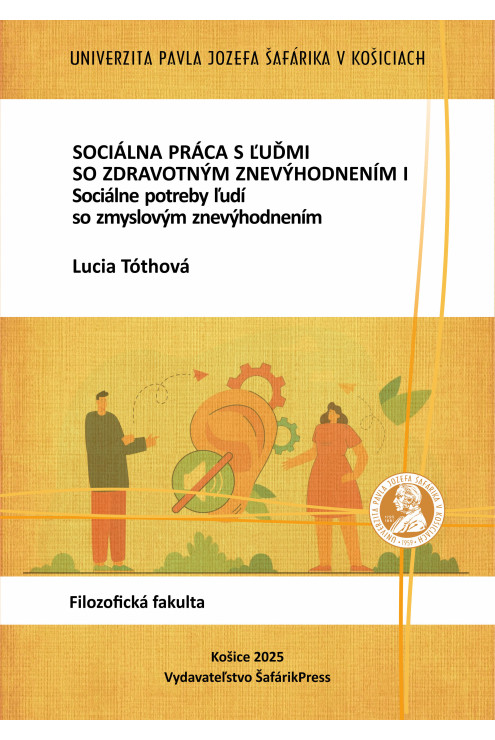
Počet ľudí so zdravotným znevýhodnením neustále rastie, čo predstavuje výzvu aj pre oblasť sociálnej práce. Tá zohráva kľúčovú úlohu v podpore týchto osôb a hľadaní efektívnych spôsobov napĺňania ich potrieb.
Vysokoškolská učebnica vznikla v rámci riešenia projektu KEGA č. 018UPJŠ-4/2024 s názvom „PhotoVoice ako inovatívna metóda advokácie sociálnych potrieb ľudí so sluchovým postihnutím“. Je prvou časťou viacdielneho cyklu, ktorý sa venuje rôznym aspektom tejto problematiky. Učebnica analyzuje historické a teoretické východiská, terminológiu a modely zdravotného znevýhodnenia. Venuje sa špecifikám vybraných druhov zmyslového znevýhodnenia. Osobitná pozornosť sa upriamuje na sociálne potreby týchto osôb a advokácii v sociálnej práci, pričom zdôraznený je význam aktívneho zapojenia ľudí so zdravotným znevýhodnením do riešenia vlastných životných situácií.
Okrem poskytovania odborných poznatkov môže učebnica slúžiť aj ako podnet na hlbšiu reflexiu vlastného prístupu k ľuďom so zdravotným znevýhodnením a na rozvoj citlivého prístupu k ľuďom so zdravotným znevýhodnením. Navyše, učebnica obsahuje vybrané prvky tzv. jasnej tlače, čím podporuje jej prístupnosť.

Data sheet
E-book
The monograph provides a brief insight into the theory of news structures in the press and, consequently, the theoretical framework of critical discourse analysis is applied in an examination of the structures of news. Critical discourse analysis following the theory and methodology of Teun van Dijk is used to analyse the representation of an industrial dispute, the Miners’ Strike of 1984-1985 in the UK, in the Czechoslovak newspaper Pravda.
The aim of the monograph is to examine the ways in which a single news item dealing with an international event was presented in a national newspaper based on its ideological perspective. The presented analysis does not cover all possible aspects of van Dijk’s approach of critical discourse analysis. A variety of issues remains to be explored in order to develop a richer, more complex analysis of the text structures. The monograph also intends to demonstrate that critical discourse analysis can complement more qualitatively the traditional method of quantitative content analysis.
E-book
The current time is fast, hasty, with strongly asserted women's emancipation, absorbed by information and communication technologies that overcome distances but create them at the same time. The lifestyle of humans is changing, many diseases are on the rise, and cancer is becoming a "trend of the present". Claims on man, and especially on women, are now too great. Women perform multiple roles and perform many tasks. They become caregiving mothers, understanding and surrendered wives, workers with professionalism and flexibility, and idols the myth of beauty too. Due to the overlapping of the traditional gender division of labor, the life of women takes place on several levels. Their work day does not end when they leave the job, but they continue to care for their household and their own family. Besides all, they strive to fulfill not only personal expectations, but also the expectations of the family, social environment and society, reject failure and strive for perfectionism.
In our lives, situations that affect and burden us more or less appear. Even though we can not in control everything and everyone, we are able to control situations that are of direct concern to us. In life, we encounter problems in employment, financial problems, illness or death of near. As well as negative, also positive situations affect us. Each responds to each situation different ways.
Monograph is one of the ways in which we aim to draw attention to the so "C-coping style" as a maladaptive way of managing the burden that is typical of oncological ill patients. It is one of the possible concepts that affect the manifestation of breast cancer. Based on this, we have focused on the used coping strategies and we consider the life events to be a significant burden in the lives of cancer patients. The research is aimed at synthesizing the life events and the coping strategies used to coping them, conceived as a risk behavior of patients with breast cancer. As the coping of the burden can be different between men and women, the monograph is intended predominantly for women, to which we have also focused in realized research. They can be patients with oncological diagnosis, but also women who want to prevent this disease by use effective coping life events. We also believe that the monograph will enrich everyone who is interested in the same target group.
E-book
Vladimír Lichner - Dušan Šlosár
The scientific monograph focuses on the issue of adolescent risk behaviors on the internet in the form of its problematic use in the context of valid theories and practices of a social work. Text of the monograph is divided into four parts.
The first part focuses on the multidisciplinary definition of a risk behavior on the internet. It offers an up-to-date literary overview of the issue through the latest, especially foreign, theoretical knowledge.
The second part focuses on the problematic use of the internet in contexts of valid origins of the social work. The third part focuses on the presentation of the most important psychosocial factors correlating with the problematic internet use in the adolescent´s group. The theoretical knowledge is supplemented by the authors research into the present factors.
The final part is application-oriented and focuses on the possibilities that the social work offers at the praxis level to prevent and solve the presented problems.
E-book
Metodická príručka vznikla ako praktický výstup projektu APVV-19-0284 „Faktory výberu a dosahovania dlhodobých cieľov u mladých ľudí v období prechodu do dospelosti“ Katedry psychológie Filozofickej fakulty Univerzity Pavla Jozefa Šafárika v Košiciach. Obdobie prechodu do dospelosti je charakteristické mnohými zmenami, nestabilitou a neistotou, ktoré sú úzko spojené aj so snahou o dosiahnutie cieľov z rôznych oblastí života – či už ide o vzdelávanie, rodinu/vzťahy, kariéru alebo osobný rast. V rámci projektu bola preto pozornosť venovaná bližšiemu preskúmaniu procesu dosahovania týchto cieľov u ľudí v období nastupujúcej dospelosti. Výskumné zistenia pomohli doplniť doposiaľ chýbajúce informácie o špecifikách tejto problematiky, ako aj poskytnúť účelný základ pre potenciálnu aplikáciu intervenčných aktivít.
Download e-book for free (pdf)