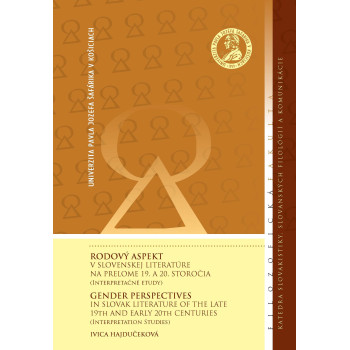
Gender perspectives in slovak literature of the late 19th and early 20th centuries (Interpretation Studies)

Gender perspectives in slovak literature of the...

E-book

E-book

Ivica Hajdučeková

The development of this bilingual coursebook evolved as part of project KEGA Nr. 020UPJŠ-4/2013 headed by prof. PhDr. Ján Gbúr, CSc., and emerged from earlier research which had successfully analysed realist and modernist Slovak literature from a gender perspective. Based on initial interpretations which drew from philosophical, sociological and historiographical approaches, we were able to anticipate the issues which could be raised in other texts and thus establish a hypothesis for the subsequent literaryscientific research. Our research has also been influenced by the continually evolving nature of gender studies, and we have therefore decided to adopt a somewhat unusual approach in this coursebook and briefly examine some contemporary texts thereby creating an intentional shift in our timeline. The modern works of Z.Kepplová and U. Kovalyk have raised a number of interesting issues, and a study of the interwar work of M. Urban reveals further interpretations on the basis of gender. After this brief overview, we return to the main focus of the study: gender approaches to Slovak literature of the late 19th and early 20th centuries.

The study focuses on the complexity of male-female relationships in the work of both male and female authors of realist and modernist literature at the end of the 19th and the beginning of the 20th century. Works by the founding generation of realism and late realism were analysed, with particular attention being paid to the fiction of M. Kukučín, J. Čajak, J. G. Tajovský, J. Jesenský, E. M. Šoltésová, T. Vansová, Ľ. Podjavorinská and B. S. Timrava. The works of H. Gregorová and Ľ. Groeblová were also studied as prime examples of Slovak literary modernism. 

We hope that this bilingual coursebook will allow realist and modernist Slovak fiction, and the Slovak national literary tradition in general, to receive wider critical renown beyond the borders of Slovakia and also to demonstrate its place in contemporary literary theory.

Download the e-book for free (pdf)

Essentials of Language Typology

Essentials of Language Typology

E-book

E-book

Lívia Körtvélyessy

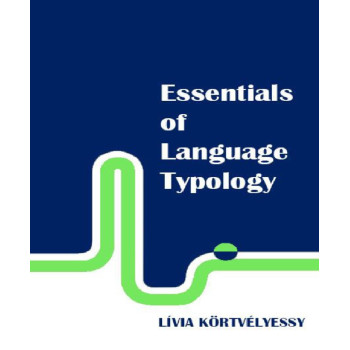
This university textbook explains to students enrolled in the course Linguistic Typology and Universals the basic terminology, theoretical approaches, and research methods. The textbook is divided into eleven chapters. Each chapter presents theoretical knowledge in an accessible manner, along with practical exercises aimed at developing students’ skills in the respective area.

The textbook covers the following topics: the subject and nature of linguistic typology, a brief history of this linguistic discipline, genealogical classification of languages, various approaches and main objectives of typology across different linguistic levels (phonology, morphology, syntax, and lexicon), as well as areal typology, complex issues of language universals, and the nature and essence of typologists’ work. Given the extensive research activities of linguists from the Department of British and American Studies at Pavol Jozef Šafárik University in Košice, the textbook also introduces students to the results achieved by these scholars in this rapidly developing field of linguistics.

Download the e-book for free (pdf)

Cognitive neuroscience of auditory and cross-modal perception - Lectures and assignments

Cognitive neuroscience of auditory and...

E-book

Norbert Kopčo - Frederick Gallun - Beáta Tomoriová - Ľuboš Hládek(eds.)

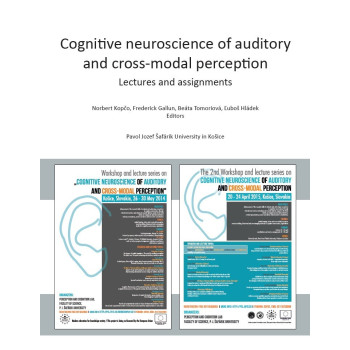
Cognitive neuroscience is a fast developing scientific field which aims at uncovering the neural basis of human perception and cognition. To achieve this goal, cognitive neuroscience uses a variety of tools and approaches ranging from non-invasive brain imaging to psychophysics and neural modeling. Mastering such tools requires skills and knowledge from multiple scientific domains, including neurophysiology, cognitive psychology, and several computational fields.

Access on request via email: kogneuro (@) gmail.com

http://pcl.upjs.sk/workshopcd 

https://sites.google.com/site/kogneuro/

Histology (Practical lessons)

Histology (Practical lessons)

€9.26
Availability: 48 In Stock

Eva Mechírová - Iveta Domoráková

The content of this "Practical lessons" represents a record of the appearance, under the light microscope of the tissues, organs and systems of the human body. In addition, it provides visual guidelines during the practical phase of a histology course. It is hoped that this book will be especially useful to students to understand fully the microscopic structure of human tissues and organs.

Authors

Roma Health Organizations Database

Roma Health Organizations Database

E-book

E-book

Kvetoslava Rimárová

This document is a part of the EU-funded project MEHO - Migrant and Ethnic Health Observatory and Slovak grant VEGA 1/4501/09.
This monograph includes a database of organizations dealing with Roma health and community issues and is part of the Interim Report 2007. The published monographs try to enclose all kinds of information about Roma health including organizations on national, international, governmental and non-governmental levels in Europe as well as international organizations such as WHO and UNDP. The views expressed in this monograph are those of the author and do not necessarily represent the views of the EU MEHO Project or Slovak grant VEGA 1/4501/09.
Kvetoslava Rimárová

English for Chemists

English for Chemists

E-book

E-book

Božena Velebná

The following material has been created during the two years of teaching English for Chemists at the Faculty of Science of the Pavol Jozef Šafárik University and is therefore designed to meet the needs of this course. The main motivation was the lack of appropriate materials, especially as the groups generally comprise students with a very diverse level of English. This diversity therefore became the main criterion determining both the form and the content of this text.

In the ten units that provide material for a one semester course, the emphasis is put on teaching the students vocabulary and terminology, which is introduced via authentic texts, depending on the topic of each unit. Students are encouraged to learn the meaning of new words in context. Grammar is included too, with the aim of demonstrating and explaining grammatical rules by means of examples taken directly from the texts. For the more advanced students, grammatical exercises in this material can serve for revision while the beginners might need more supplementary materials.

I hope that this material, the preparation of which has been a challenging as well as enjoyable experience will be useful for future teachers and the students of this course.

Download the e-book for free (pdf)

English for Students of Geography and Ecology

English for Students of Geography and Ecology

E-book

E-book

Zuzana Buráková

The English language study materials are intended for students of geography and general ecology at the Faculty of Science of Pavol Jozef Šafárik University. Their aim is to broaden communicative language competencies at an intermediate level of English proficiency, with an emphasis on the students’ field of study.

The individual chapters are based on the need for specialization within the various natural science disciplines and on preparing students to present their academic results not only at home, but also abroad. The study material contains a variety of texts, quizzes, exercises, maps, etc., which further illustrate the issues relevant to the field.

This material is intended to serve as a foundation for the future creation of even more precise materials needed for teaching specialized foreign language courses.

Download the e-book for free (pdf)

Topografická anatómia ťažko prístupných a klinicky významných oblastí hlavy

Topografická anatómia ťažko prístupných a...

€27.70
Availability: 6 In Stock

Květuše Lovásová - Darina Kluchová

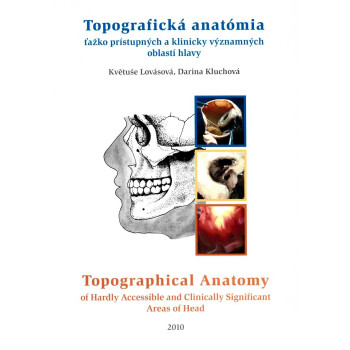
The surgical practice starts with detailed knowledge of anatomy. Even if anatomy of human body has not changed over the time, perfection and precision of surgical practice require precise knowledge of anatomical structures, their location, and topographical relationships. Everyone should be aware of the occurrence of possible variations as well. 

A prospective medical doctor should not rely on knowledge gained by studying models, schemes, and pictures, but should combine two types of learning: visual and didactic. Wide array of the visual learning development, considering vision alone, and a detailed and realistic approach to difficult access to structures of the human body are important precursors that create sufficient and quality knowledge needed for clinical practice and appropriate professional development. 

This publication maps all of the clinically significant and difficult approached areas of the head that are not normally prepared for practical exercises in anatomy because of the time and difficulties with the preparation. The colorful, detailed photodocumentation enriched by schemes and followed by procedure guide provides a view of structures until now only poorly documented. We sincerely hope that this monograph will fill the gap in medical literature offered in the market at present time.

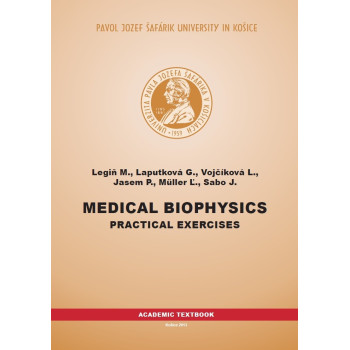
Medical Biophysics: Practical Exercises

Medical Biophysics: Practical Exercises

€11.23
Availability: 19 In Stock

Michal Legiňa kol.

Progress in biology and medicine has always been significantly related to advances in physics. Not only has physics supplied instruments and methods of measurement that have led to many discoveries in physiology and medicine, but methods of physical research have changed many of the older approaches to the biologic sciences. Such circumstances have even led to development of a new scientific field: biophysics, which uses to a great extent physical instrumentation procedures applied to an experimental system. Because any instrument is an additional factor in any experimental system, it may affect the data. To interpret physical data on biological material correctly then, it is necessary to consider the characteristics of instrument response.

A practical course enables a student to acquire some skills, experience and methodological knowledge for performance of experiments and evaluation of measured data. Due to the fast development of instrumentation technology, it is not possible to teach every operation and procedure upon instruments we may use in a future. Besides the basic physical principles, the aim of a practical course is to point out some general rules and skills for instrument operation and for the interpretation of the measured values derived from such operation.

There are two kinds of lessons in practical courses. The first one focuses on laboratory measurements of some important physical quantities and the evaluation of the measured data. These measured quantities are components of the subject “medical biophysics” or of the phenomena studied. Experience provided in managing various scales and tables, as well as in the construction of tables and graphs is substantial. Lessons also enable students to repeat and to strengthen their knowledge of secondary school physics, which is useful for understanding of many phenomena studied in medical biophysics. The second kind of lesson provides experience with some of the diagnostic and therapeutic medical instruments, which can be seen in practical medicine.

The understanding of basic physical principles of corresponding instruments is both recommended and demanded. Theoretical preparation is not only an appropriate condition for the practical managing of the whole lesson, but also helps to avoid injury. This textbook, therefore, intends to help students in preparing for both the practical lessons and the final exam.

Authors

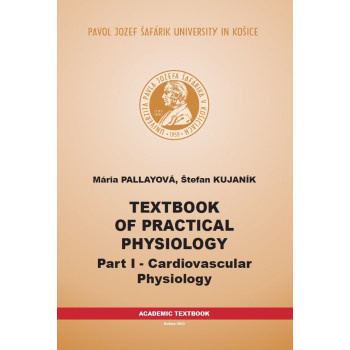
Textbook of practical physiology: part I - cardiovascular physiology

Textbook of practical physiology: part I -...

€11.50
Availability: 10 In Stock

Mária Pallayová - Štefan Kujaník

The “Textbook of Practical Physiology, Part I - Cardiovascular Physiology” by Mária Pallayová and Štefan Kujaník is a practical textbook of Human Physiology intended for English speaking medical students from general medicine and dentistry curricula.

The textbook covers basic principles in cardiovascular physiology and methods of the cardiovascular examination. Adequate knowledge of the cardiovascular physiology is important for the understanding of cardiovascular system function, as well as for the diagnosis and proper treatment of cardiovascular and other diseases. The practical tasks are constructed to facilitate knowledge acquisition and encourage students to develop practical skills, for instance the ability to follow experimental protocols, to work as part of a team, and to interpret data.

The textbook is written in English and comprises 91 pages in B5 format, grouped into twelve chapters. Each chapter is divided into six sections (Introduction, Principle, Importance, Materials, Procedure, and Protocol) to facilitate students’ understanding of the topics and assist them with preparation of the laboratory reports. The text is accompanied by explanatory figures, graphs, and tables that contribute to the learning experience.

Authors

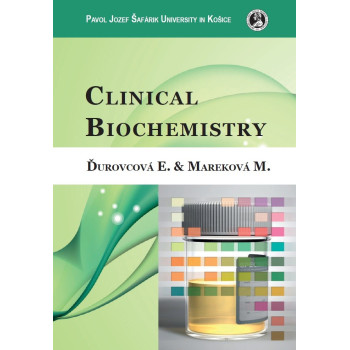
Clinical Biochemistry

Clinical Biochemistry

€24.90
Availability: 48 In Stock

 Eva Ďurovcová - Mária Mareková 

The presented textbook is intended for students of general medicine and should support their knowledge about indication and interpretation of basic biochemical tests. Clinical biochemistry continues to be one of the most rapidly advancing areas of laboratory medicine, which in line with using of modern technology more and more emphasizes the evidence-based medicine in order to improve diagnosis and monitoring of patients. Selected topics have an ambition to outline and explain the most common issues of biochemical diagnosis of in internal medicine. Individual chapters are devoted to disorders of water, electrolyte and acid-base balance, kidney and liver disease, diabetes mellitus, and biomarkers used in the diagnosis of cardiac necrosis and heart failure. Given the limited range, the textbook merely summarizes the basic knowledge that students have obtained during the study of other subjects, such as medical biochemistry, pathophysiology and internal medicine, and emphasis is given to laboratory diagnosis in accordance with the newer guidelines of professional societies. We hope that the textbook will be helpful in the study of clinical subjects and encourage students' interest in laboratory medicine.

Authors

Basic Principles of Cardiac Surgery

Basic Principles of Cardiac Surgery

€13.16
Availability: 29 In Stock

František Sabola kol.

Although we are not really sure if “Love is coming from the Heart” and nor we know where “the Residence of Soul” is, we are still overwhelmed by its unprecedented effort to keep us alive. Our lives are nowadays fulfilled with enormous chances to satisfy our needs and wishes. Hand in hand is changing our way of life, the intake of calories is growing and the amount of physical activity decreasing. We live longer and maybe happier but our hearts
and vessels are like mirrors showing us how we live. Diseases of the Heart and vessels have become the number one cause of death in highly developed countries including our homeland.
Prevention of cardiovascular diseases has become and an important social and health care system issue. The knowledge requirement of basic principles of cardiology and heart surgery is increasing. Without an understanding of basic principles a good clinical practice is hardly possible.
Together with my Colleagues of Heart surgery department of VÚSCH and LF UPJŠ we prepared this short overview of basic knowledge about surgery of the human heart. We hope that reading it will be more an adventure than a painful journey. If you find some answers to your unanswered questions our effort was not a waste of time.

Authors

This website uses cookies to ensure you get the best experience on our website