Slovenčina


E-book
Alexander Bröstl - Marta Breichová Lapčáková (eds.)
Under the auspices of the Institute of Legal Theory of Gustav Radbruch and the Slovak Section of the International Association for Philosophy of Law and Social Philosophy (IVR), a 3D flash conference was held on May 16, 2019, at the Faculty of Law of UPJŠ in Košice. This event was primarily dedicated to the upcoming 29th World Congress of IVR in Lucerne, Switzerland. In line with the main theme of the congress, the conference focused on "Dignity, Democracy, Diversity." At the time of the conference, it was clear that the number of participants at the world congress would significantly exceed 1,000, with discussions taking place in 151 special workshops and 28 working groups.
During the congress, a round table was also announced featuring Professor Brian Tamanaha, recipient of the IVR award for best book for "Realistic Theory of Law" (Cambridge 2017), a meeting regarding the IVR Encyclopedia, a panel on academic freedom issues, and a gathering of chairs from national sections of IVR.

Data sheet
E-book
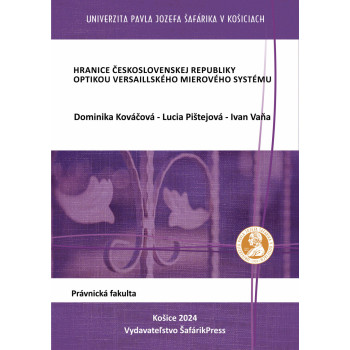
Dominika Kováčová- Lucia Pištejová- Ivan Vaňa
The present monograph deals with the post-war settlement of relations and peace negotiations related to the settlement of the borders of the newly established Czechoslovak Republic. The work discusses in detail the negotiation processes related to the preparation and signing of the Versailles and Saint-Germain Peace Treaties. Similarly, it then discusses in detail the peripeties related to the drafting of the Treaty of Trianon dealing with the border with Hungary and its subsequent delineation in the field. Last but not least, the thesis captures the settling of Czechoslovakia's international relations with Poland and their common border, with a particular focus on the arbitration settlement on the territory of Orava and Spiš.
Download e-book for free (pdf)
E-book
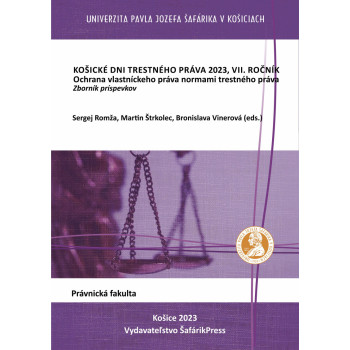
Sergej Romža - Martin Štrkolec - Bronislava Vinerová
Proceedings of Scientific Papers from the Nationwide Interdisciplinary Scientific Conference with International Participation held on June 21–22, 2023, organized by the Department of Criminal Law, Faculty of Law, Pavol Jozef Šafárik University in Košice.
Download e-book for free (pdf)
E-book
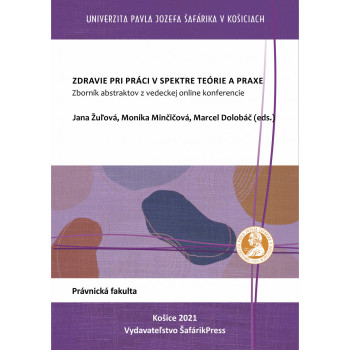
Jana Žuľová - Monika Minčičová - Marcel Dolobáč (eds.)
The legal regulation of occupational health and the process of assessing the health capacity is one of the manifestations of fulfilling the protective function of labour law.
Due to the importance of pursuing the interest in protecting the life and health of the individual during his working life, as well as the consequences of damage to the employee's health for further work and continuance of employment relationship, research in this area finds its irreplaceable place in legal science. Its topicality is also highlighted by the emerging risks of work and the working environment. Technological progress associated with a change in the way of performing work, as well as the pandemic situation, have opened a number of new challenges for labour law that require attention.
The presented proceedings of abstracts responds to the outlined facts. It is a group of initial motives and conclusions of lectures presented at the scientific online conference "Health at Work in the Spectrum of Theory and Practice" organized by the Department of Labour Law and Social Security Law of the Faculty of Law, P. J. Šafárik University in Košice on16th April 2021. Authors point to a variety of problematic areas that are not only a reflection of academic considerations, but also of those legal issues that need to be addressed in ordinary legal practice.
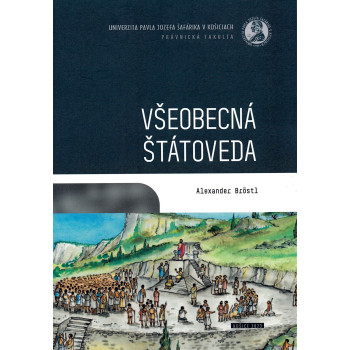
Učebnica Všeobecnej štátovedy predstavuje tradičný obsah predmetu, ako sa rozvinul v európskej kontinentálnej podobe (altematívou štátovedy je dnes na viacerých univerzitách, aj mimo právnických fakúlt, politická veda). Medzi dvanástimi kapitolami sa okrem viac-menej stabilne prítomných (1. Jednotlivca spoločnosť; 2. Teórie o príčinách vzniku štátu a o účele štátu; 3. Znaky (prvky)štátu; 8. Politické strany a štát) nachádzajú aj kapitoly, ktoré spravidla nie sú, alebo doteraz neboli predmetom štandardného záujmu (5. Politický spor, zmena ústavy, revolúcia, právo na odpor; 6. Rozpadnuté a stroskotané štáty; 7. Štát a cirkev).Niektoré kapitoly predstavujú návrat k pôvodným štátovedným klasifikáciám (9. Funkcie štátu). V rámci prezentácie historických a aktuálnych otázok týkajúcich sa Formy štátu (najrozsiahlejšia 1O. kapitola)ide o pokus objasnit' nové aspekty problematiky(napríklad, podkapitoly ako Parlamentná opozícia, Ústavné súdnictvo). Záverečná časť učebnice sa venuje Modernému ústavnému štátu: právnemu štátu(12.kapitola)a možno ju považovat' za príspevok k analýze princípov právneho štátu a jeho viacerých teórií. Úmyslom autora bolo tiež prispieť k autentickému výkladu názorov niektorých myslitel'ov predošlých období, návratom k pôvodným textom ich diel. Všeobecná štátoveda, adresovaná predovšetkým študentom, má za ciel' tvoriť úvod do právnického štúdia ako jeho osvedčená základňa, zdroj i východisko.