Slovenčina


E-book
Eva Ďurovcová - Mária Mareková
After 7 years, we finally reworked the textbook on the subject of clinical biochemistry at UPJŠ FM in Košice. We have innovated information in accordance with recommendations of professional medical societies and added new chapters. As the scope of the subject is limited, the textbook does not cover all issues of biochemical diagnostics. It focuses on disorders of water-ion and acid-base balance disorders, and basic laboratory diagnostics of diseases of selected organs.
The textbook of clinical biochemistry has the ambition to become a practical aid for senior medical students and beginning doctors in the study of laboratory medicine. It should make it easier for them to orientate themselves in routinely used clinical-biochemical examinations and could form a springboard for a more detailed studying of laboratory methods and their use in diagnostic and monitoring algorithms.
Like any medical discipline, clinical biochemistry is evolving rapidly and gradually integrating with other areas of laboratory medicine. New diagnostic methods penetrate deeper into the essence of the biochemical mechanisms of the human body, and "omic" methods are gaining ground. It is almost sure that in a few years, laboratory examination looks quite different from today. If this publication quite hypothetically reaches its next edition, many chapters will need to updated, and new chapters written following the up-to-date status.
Authors thanks to their colleagues and reviewers for their professional comments and constructive criticism of the text - prof. Jaroslav Racek, MD, DrSc. from FM UK in Pilsen.
Authors thanks very kindly too prof. MUDr. Dušan Dobrota, CSc. (JFM UK Martin) and doc. MVDr. Zuzana Kostecká, PhD. (UVMP, Košice), who read and wrote review of this textbook.

Data sheet
E-book
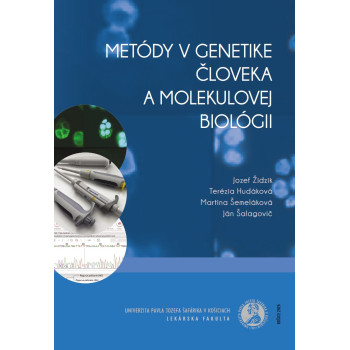
Jozef Židzik - Terézia Hudáková - Martina Šemeláková - Ján Šalagovič
Methods in human genetics and molecular biology encompass various experimental, diagnostic and analytical techniques used to investigate the structure, function, expression, and regulation of genes, as well as general molecular processes in human cells. The university textbook Methods in Human Genetics and Molecular Biology provides a comprehensive overview of classical and modern experimental and analytical procedures. In fifteen chapters, it addresses methods such as PCR, RFLP, FISH, Western blot, DNA sequencing, DNA microarrays, molecular cloning, cytogenetic analysis, and forensic genetic analysis. The book is primarily intended as study material for the course of the same name taught in the 2nd year of study at the UPJŠ Faculty of Medicine, but it can also be used by all university students in the fields of biology, biotechnology, and related disciplines.
E-book
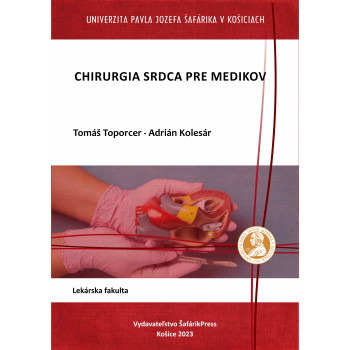
Tomáš Toporcer - Adrián Kolesár
The textbook "Heart surgery for medics" was created in response to repeated requests from students of the Faculty of Medicine P.J.Šafárik University, for the surgery state exam study material. In terms of content, the text corresponds to the required knowledges in cardiac surgery, needed to pass the state exam in surgery. Orientation in the issue of cardiac surgery is not only necessary for students whose specialization will be closely related to the given field. Basic knowledge of cardiac surgery is necessary for every medical faculty graduate. Knowing the treatment options, but also the possible complications of individual cardiac surgical procedures, is necessary for most medical specialties. Only by mastering the basics of each medical field can the patient be properly, adequately and modernly managed.
Eva Mechírová - Iveta Domoráková
The content of this "Practical lessons" represents a record of the appearance, under the light microscope of the tissues, organs and systems of the human body. In addition, it provides visual guidelines during the practical phase of a histology course. It is hoped that this book will be especially useful to students to understand fully the microscopic structure of human tissues and organs.
Authors
E-publication
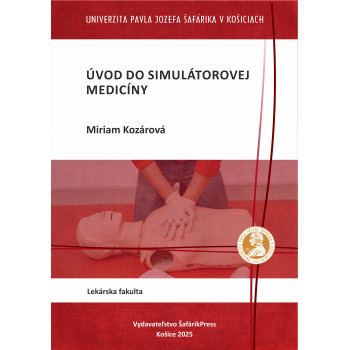
Simulation-based medical education has become an integral part of medical education in the 21st century. It represents a modern and effective way to enable medical, nursing, emergency medicine, and other healthcare team members to safely develop clinical skills, decision-making abilities, and teamwork. Simulation-based medical education (SBME) is primarily about opportunities to try out and experience medical/nursing/rescue procedures in a safe environment without any risk to real patients.