Slovenčina


E-book
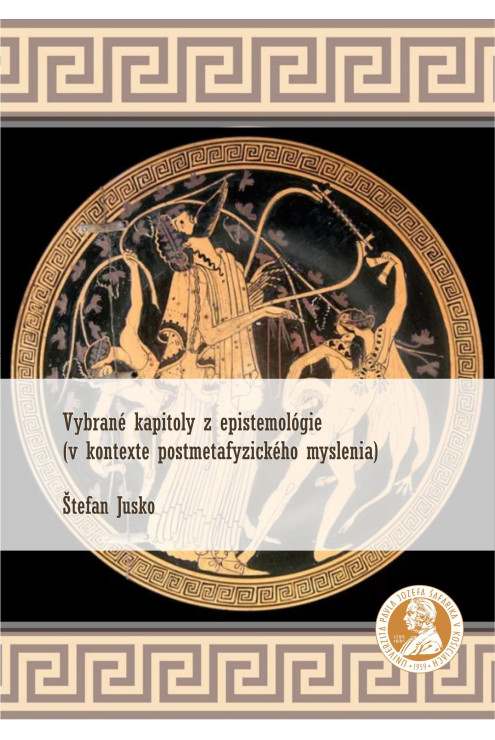
Selected Chapters in Epistemology" is a work resulting from the author's multi-year research and also represents a fulfillment of the requirements from pedagogical practice in this subject. The chapters, presented in this synthesized form, have not been published before, and I am convinced that precisely in this form they can gain higher value and greater real impact on our philosophy students.
The individual chapters focus on the problem of knowledge today, primarily on the problem of criticizing metaphysics and questions related to creating post-metaphysical thinking. It is no coincidence that Friedrich Nietzsche is a common denominator for the presented texts; he is a philosopher who has fundamentally influenced and continues to influence current philosophical discussions and intellectual movements. The chapters are written to lead our students or other readers toward reflection, i.e., critical thinking, personal growth, and professional independence.
To what extent I have succeeded in fulfilling my intentions and goals remains for the reader to decide.
Autor

Data sheet
E-book
Ivica Hajdučeková - Iveta Bónová
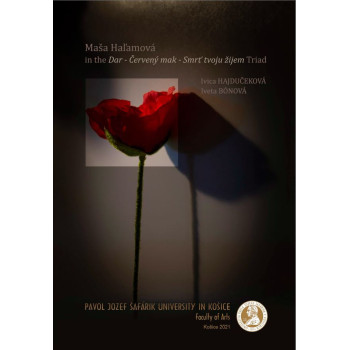
The monograph Maša Haľamová in the triad Dar – červený mak – Smrť tvoju žijem was created as part of the project APVV-19-0244 (Methodological Approaches in Literary Research with an Impact on the Media Environment) in collaboration between Ivica Hajdučeková and Iveta Bónová.
In two parts – Personal History and (Re)interpretation of Maša Haľamová's Poetry, and Phonetic-Rhythmic Embodiment of Maša Haľamová's Poetry – it presents the results of archival research (reconstruction of life events, notes on poetic inspiration, consensus in the opinions of literary critics of the 20th and 21st centuries), (re)interpretations of three poetic collections focusing on the spiritual dimension and the process of spiritualization, and an in-depth analysis of the phonetic-rhythmic qualities of verse structure.
In conclusion, the authors suggest that the Slovak poet Maša Haľamová can be considered a representative of spiritual poetry, which in the Slovak interwar literature follows a specific type of confessional (Protestant) tradition, and at the level of phonetic embodiment, her sound-rhythmic potential acts in the name of subtlety of expression.
E-journal
Juraj Schenk a kol.
The scientific journal Sociálne a politické analýzy (Social and Political Analyses) serves as an interactive electronic platform for communication and the presentation (publication) of experts and their work in the fields of basic and applied research and analyses within sociological, psychological, political, and methodological contexts. It is a medium focused on intensively supporting research activities and analyses within an interdisciplinary framework, facilitating the exchange of experiences, fostering collaboration, and revitalizing the production of scientific work in this area.
The publication section of the journal offers space for works such as:
- Original sociological, psychological, and political studies and analyses in any areas of social life
- Methodological studies
- Research reports
- Studies from qualification theses Research and analysis projects
- Reviews
E-book
Marián Gladiš - Lucia Jasinská (eds.)
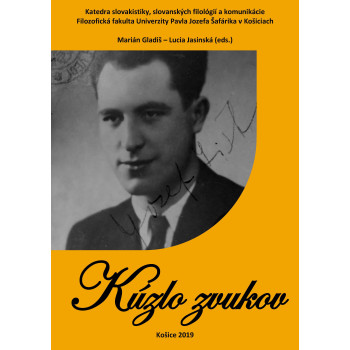
This peer-reviewed collection of papers is a publication output of the scientific colloquium named The Magic of Sounds, which was organized by the Department of Slovak Studies, Slavonic Philologies and Communication at the Faculty of Arts of the Pavol Jozef Šafárik University in Košice, and by the Košice Branch of the Slovak Linguistic Society at the Ľudovít Štúr Linguistic Institute of the Slovak Academy of Sciences in Bratislava, on the occasion of the 100th anniversary of birth of Associate Professor PhDr. Jozef Liška, PhD., the founder of the Slovak logopaedics.
Participants focused their papers on the analysis of the linguistic and speech therapy work of J. Liška, his contribution to Slovak dialectology and orthoepy, presented him as an Anglicist, and they also dealt with the audio aspect of children's speech, exact methods of disturbances and low voice quality measuring, or machine speech processing.
An interpretative paper of the documentary They Will Speak Well, a socially important piece of film work, which was made in 1958 under the supervision of J. Liška, is also included in the proceedings.
E-book
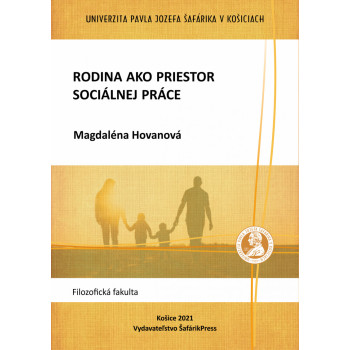
The university textbook offers a view of the family in social contexts. It deals with the basic characteristics of the family, the life cycle of the family from the choice of partner, through the arrival of children in the family to the end of the family. During its duration, the family performs various functions. A functional family is ideal for a harmonious relationship between partners and a suitable environment for raising children.
However, a number of factors enter the life of the family, which directly or indirectly affect the performance of these functions and can cause various disorders. It is here that the task of social work is to offer help to families to cope with their big and small problems. A specific feature of social work is the focus on the whole and a comprehensive assessment of the family, where it is necessary to take into account both the client's point of view and the aspect of the environment in which he lives and which constantly affects him. Therefore, the university textbook offers procedures for social work with the family, from the assessment of the life situation, through the plan of work with the family to social intervention.
The university textbook is intended for students of social work, who have the opportunity to practice complex issues within the assessment of the case through the enclosed case studies.
Download e-book for free (pdf)