Slovenčina


E-book
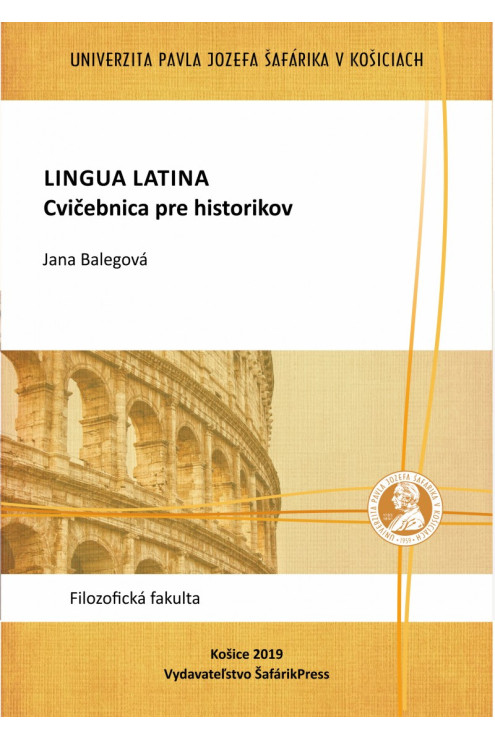
University textbook Lingua Latina – Exercise Book for Historians is a parallel study material to the textbook Lingua Latina – Cursus Communis. It is designed for practicing grammar at home. The content of the exercises corresponds to the focus of the individual lessons in the mentioned textbook, both in terms of the covered grammatical phenomena and vocabulary. For this reason, only vocabulary not covered in the textbook's lessons is included in the exercises.
The Latin-Slovak dictionary at the end of the exercise book contains all the vocabulary from both the exercise book and the textbook. The Slovak-Latin dictionary includes the vocabulary from exercises that require translation into Latin. The vocabulary in this exercise book is oriented towards the needs of history students and, given the selection of source materials, also includes non-classical lexicon or non-classical meanings of classical words (this lexicon is marked with the symbol *).
The exercise book includes a key that allows students to directly verify the correctness of their work. The textbook Lingua Latina – Exercise Book for Historians is available electronically in PDF format. As part of the teaching program, online tests available on the KKF FF UPJŠ website (https://www.upjs.sk/filozoficka-fakulta/katedra-klasickejfilologie/katedra/) also serve to practice the covered material.

Data sheet
E-book
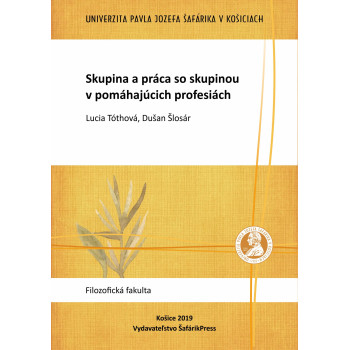
The presented monographic processing of the issues of groups, as a basic phenomenon of our social life, draws a lot of current knowledge from realized researches, their empirical results and practical work with the group, which offers a comprehensive view of the social group. Social group looks both as a natural part of human life and it is analyzed and studied, so that knowledge of the social group can be rewarded.
This has been transferred to artificially created groups to help individuals through group work. At the same time, the monograph also considers the method of social work with a group as one of the methods used in various helping professions.
E-book
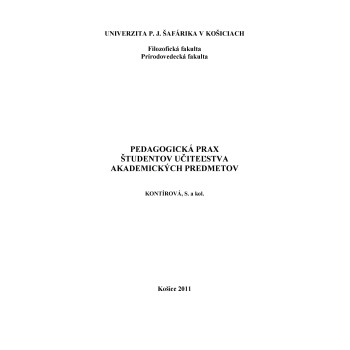
Silvia Kontírová a kol.
This revised and supplemented text aims to be a comprehensible and practical aid for students of the Master's degree in teaching academic subjects at the Faculty of Arts and the Faculty of Natural Sciences of the University of Applied Sciences in Košice taking compulsory courses in pedagogical practice.
Its general part deals with the mission, primary human factors, types and forms of pedagogical practice as one of the compulsory organizational forms of teacher studies and specifics of pedagogical practice in the conditions of UPJŠ.
The special part contains basic information and compulsory documentation of trainees on chronologically arranged types of pedagogical practice at UPJŠ. The authors would be grateful if you would point out any errors and shortcomings of the text to them via e-mail silvia.kontirova@upjs.sk.
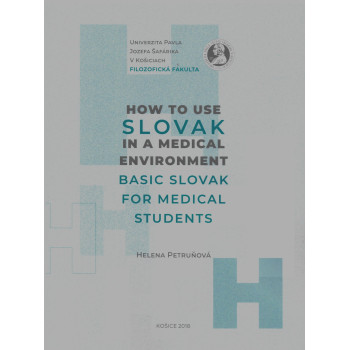
Učebnica je určená pre vyučovanie slovenského jazyka pre začiatočníkov (úroveň A1, A2 podľa SERR), zahraničných študentov lekárskej fakulty, odboru všeobecné lekárstvo a zubné lekárstvo.
Učebnica AKO POUŽÍVAŤ SLOVENČINU V LEKÁRSKOM PROSTREDí – základy slovenčiny pre študentov medicíny obsahuje 13 lekcií, ktoré sú vhodné pre samoštúdium a pre prácu s učiteľom na jazykovom seminári. Tematicky zamerané lekcie ponúkajú základy slovenskej výslovnosti, slovnej zásoby, krátke dialógy a jednoduchý výklad užitočnej gramatiky. Všetky cvičenia a aktivity umožňujú študentom osvojovať si a precvičovať bohatú lekársku slovnú zásobu a vybranú gramatiku v kontexte. Obsahujú kľúčové slová, slovné spojenia, jednoduché frázy a základné otázky, ktoré sa používajú v komunikácii lekára s pacientom. Dôraz sa kladie na funkčnosť jazyka pre získavanie údajov o zdravotnom stave pacienta, o jeho živote, rodinnom prostredí, o chorobách predkov, súrodencov a pod. Na konci učebnice sú tematicky zoradené užitočné slová a slovné spojenia z prostredia nemocnice, zoznam základných slovies a kľúč k cvičeniam.
E-book
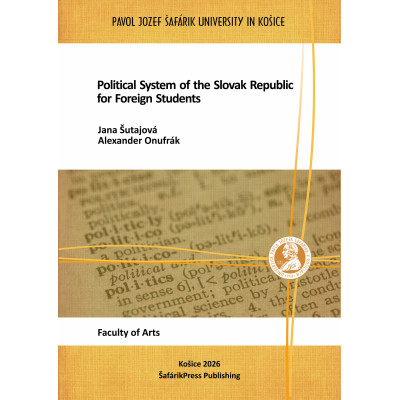
Jana Šutajová Alexander Onufrák
This university textbook, „Political System of the Slovak Republic for Foreign Students“, is designed to introduce Erasmus students and other international students to basic information regarding the historical and political development of Slovakia and the political system of the Slovak Republic. It focuses on political developments since 1918.
It introduces foreign students to pivotal historical events that influenced political developments in Slovakia (the establishment of the First Czechoslovak Republic, the Munich Agreement and the Vienna Arbitration, the Slovak State, postwar developments and the Košice Government Program, the 1946 elections, February 1948, the Prague Spring of 1968, normalization, the Velvet Revolution of 1989, the dissolution of the Czechoslovak Federal Republic, the establishment of the Slovak Republic, and its integration into the European Union and the North Atlantic Treaty Organization) and with the political system of the Slovak Republic (constitutional institutions, the party system, the electoral system).