Slovenčina



E-book
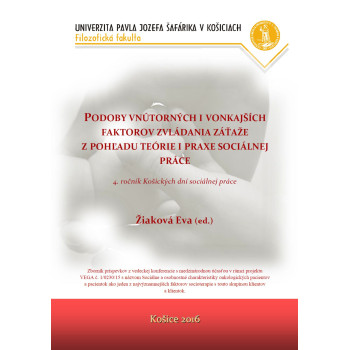
Proceedings from the Scientific Conference with International Participation held on November 27, 2015 in Košice
Stress is becoming a part of everyday life in developed societies, which negatively affects both the physical and mental state of individuals. The proceedings from the scientific conference with international participation, titled "Forms of Internal and External Factors in Coping with Stress from the Perspective of Theory and Practice in Social Work," are therefore dedicated to the issue of coping with stress from an interdisciplinary perspective.
It addresses the full spectrum of coping issues, ranging from the most internal, specifically defined factors of the C-system of coping in oncology patients, coping with burnout in helping professions, sociological contexts of oncological diseases, through the level of social support that provides individuals with space for managing stress, to the possibilities of coping with stressful situations in various areas of life.
Data sheet
E-book
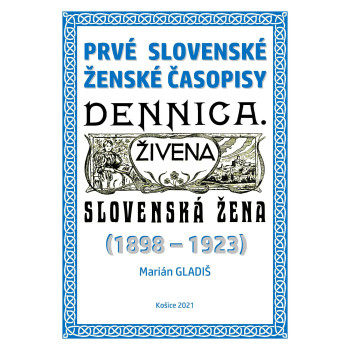
The monograph entitled The first Slovak women’s magazines: Dennica, Živena, Slovenská žena (1898–1923) provides a general view of the initial stage of the formation of women’s magazine production in Slovakia, defined by a period of 25 years at the turn of the 19th and 20th centuries between 1898 and 1923, in the context of the historical and social development, to which the Slovak journalistic milieu inevitably responded.
The publication is a result of detailed material research of Slovak historical periodicals, implemented mainly from the perspective of the mediological methods and standards of research work.
E-book
The second (supplemented and expanded) edition of the bilingual textbook Rodový aspekt v slovenskej literatúre na prelome 19. a 20. storočia (Interpretačné etudy) / Gender Perspectives in the Slovak Literature of the Late 19th and Early 20th Centuries (Interpretation Studies) offers to a wider range of recipients – students of Teaching of Academic Subjects and teachers in practice – a didactic transformation of current research issues (supported by e-literacy using online approaches and QR codes), which was developed in cooperation with the School of Applied Arts in Košice (since 2019/20 the so-called School of Art Industry) ) in the academic year 2018/2019.
Professional cooperation within the KEGA project No. 008UPJŠ-4/2017 – Science Without Barriers (Interdisciplinary Inspirations of Contemporary Literary Scholarship and Linguistics in Educational Practice at University) with teacher of Slovak Language and Literature, PaedDr. Jana Valicová, and Mgr. Renáta Novotná Markovičová of ŠUP took place in project teaching. It yielded results in two interdisciplinary outcomes:
1. Creation of the Literary Lounge in the Student Café Minerva in the premises of the UPJŠ Faculty of Arts;
2. Illustrations of the 2nd edition of the textbook Gender Aspect in the Slovak Literature at the Turn of the 19th and the 20th Centuries (2019).
E-bool
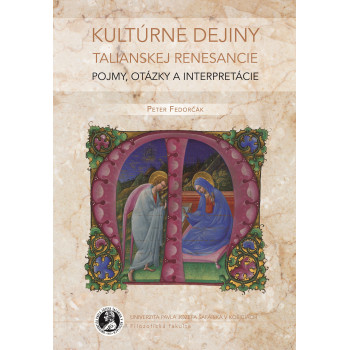
When studying the Renaissance, researchers utilize various critical and core terms and concepts which it is necessary to characterize.
However, many such points, notably the following, are problematic: The relationship between the Renaissance and the antiquity; The connection with the Middle Ages; The transformation to Mannerism and Baroque; Realism and Secularism in Renaissance art; The individualism of the Renaissance artist; The reasons for the creation of Renaissance art in Italy, its determinants and stimulators; Distinguishing between the analysis of the genesis of the Renaissance and the analysis of the creation of the period’s art generally; Regional differences in Italy and their impact on the art; Chronological limits of the Renaissance and its milestones; The terms “Medieval Ages” and “Early Modern Period”; The impact, and its extent, of the artistic influences of the Byzantine, Gothic and Romanesque arts on the Renaissance. The term “Renaissance” itself, its content and existence, are also the subject of the discussion with students, alongside learning how such terms and definitions came about and continue to evolve, how they attain their content, how this content morphs in the historical discourse, what academical pluralism and freedom of thinking look like in the discourse led by historians, what the differences are between scientists and schools of thought on the same subject and how it is possible that they are so numerous.
The students will come to recognize the leading scholars in the field, and follow their arguments and methodological approaches. They shall be invited to closely trace and scrutinize the logic which those historians use in building their argumentation. It shall be seen that the freedom to create terms, concepts and new definitions cannot stand on an ignorance of the (historical) facts, as becomes clear with expanding knowledge of those historical facts, the variability of their interpretation growing in tandem. This approach, actually used across the whole range of seminars and lectures, shall drive discussion on the topics covered, students being invited to formulate their own theses and antitheses.
E-book
Magdaléna Hovanová - Dušan Šlosár
The monograph addresses the issues surrounding functional families, dysfunctional families, and those affected by crises. It analyzes various determinants that lead to family dysfunction and identifies factors contributing to family crises and the destabilization of family relationships. Special attention is given to working with dysfunctional families, particularly through family rehabilitation, methods, forms, and procedures employed mainly by helping professionals.
Additionally, the monograph explores contemporary forms of couple cohabitation and the factors that have caused changes in this area. Families are examined from the perspective of helping professions, including psychology, sociology, adult education, health care, law, and economics. These various perspectives create a comprehensive view of the examined issues and establish a multidisciplinary space for addressing problems within the family system. A functional family is seen as the foundation of society; therefore, society must create tools to assist families that are unable to resolve issues affecting their functionality.