Slovenčina


E-book
Mikuláš Jančura - Maroš Melichárek (eds.)
The Student Scientific Conference is defined as a compulsory elective subject within the accredited study programs of the Department of History at the Faculty of Arts, UPJŠ. It was organized for the first time at the department in 2011.
The primary goal of this already traditional event is the presentation of partial results of student-authored research, primarily linked to selected factual parts or theoretical foundations of bachelor’s and master’s theses. This also explains the broad thematic spectrum of the internal content of each conference. Besides awarding credits for participation, the conference offers students a range of added values, which can be understood as its secondary objectives.
On this basis, as organizers, we considered it beneficial to qualitatively elevate the “round” anniversary edition of the Student Scientific Conference and give students the opportunity to publish their contributions. Within the submitted proceedings, 7 texts are published, of which 4 are from the bachelor’s level and 3 from the master’s level of study. The contributions cover a wider spectrum, mainly cultural-historical topics spanning from the Early Middle Ages to the second half of the 20th century, which also demonstrates the wide range of thesis topics processed at the department.
As organizers of the event, we have the ambition for publishing the proceedings to become as much a tradition as the Student Scientific Conference itself, as we consider this meaningful in relation to our work with students. Last but not least, we would like to express our gratitude to our colleague and friend Mgr. Henrich Hrehor, PhD., who has been the long-term main organizer and the “spiritual father” of the entire event since 2011. Thanks are also due to the head of the department for annual support and to the colleagues who undertook the reviewing of contributions within the submitted proceedings.

Data sheet
E-book
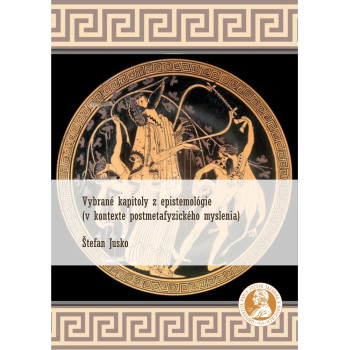
Selected Chapters in Epistemology" is a work resulting from the author's multi-year research and also represents a fulfillment of the requirements from pedagogical practice in this subject. The chapters, presented in this synthesized form, have not been published before, and I am convinced that precisely in this form they can gain higher value and greater real impact on our philosophy students.
The individual chapters focus on the problem of knowledge today, primarily on the problem of criticizing metaphysics and questions related to creating post-metaphysical thinking. It is no coincidence that Friedrich Nietzsche is a common denominator for the presented texts; he is a philosopher who has fundamentally influenced and continues to influence current philosophical discussions and intellectual movements. The chapters are written to lead our students or other readers toward reflection, i.e., critical thinking, personal growth, and professional independence.
To what extent I have succeeded in fulfilling my intentions and goals remains for the reader to decide.
Autor
E-book
Iveta Bónová - Marián Gladiš (eds.)
The Foundation of the Faculty is a major “thing” created and developed by many personalities. The collected information, opinions, and critical judgements have led me to the conclusion that there exist among us plenty of narratives on the formation of this Faculty.
What is appealing about this fact is that from each party concerned, specifically teachers of Philosophy, Psychology and Education at the UPJŠ Faculty of Science, teachers of Psychology at the UPJŠ Faculty of Public Administration in Košice, teachers of the Department of Foreign Languages at UPJŠ, teachers at Prešov University who were approached with a bid to create the conditions of and opportunities for the development of their study branches at the new UPJŠ Faculty of Arts in Košice, there is a significant clue reflected in the inception of the new Faculty of this University.
It is necessary to say that it is a justifiable reflection, because without this, it would not be possible to develop exploration and offer the students courses in the field of Humanities, in social and behavioural sciences, educational sciences, and in the field of History and Ethnology.
E-book
Magdaléna Hovanová (ed.)
The collection of works originated from the event of the eighteenth annual nationwide Student Scientific and Professional Activity (ŠVOČ) in the field of social work, which took place on May 12, 2022. It was organizationally overseen by the Department of Social Work of the Faculty of Arts at Pavol Jozef Šafárik University in Košice.
Every year, this event provides an opportunity for selected top students—future professionals in social work—to meet, as well as a chance to present the level of their knowledge and their ability to apply theoretical insights and acquired skills to future social work practice.
The contributions in this collection address topics such as the risks of modern technologies in the context of social work, social support and risk factors within families in the context of adolescent radicalization processes, the issue of cyberbullying in elementary schools, Ukrainian student migration in Slovakia, factors influencing job satisfaction among social workers, and the social support of families as clients of social work during the current pandemic situation.
E-book
In front of you is a textbook whose main aim is to introduce readers to the issues of methods, methodology, techniques, and research methodology in social work. The book is divided into four main sections, each arranged with a specific purpose. This arrangement is primarily based on the logical progression of the textbook’s content. The first part consists of chapters dealing with professional terminology, the development of social work methodology, and the classification of methods.
The second part focuses on research methods in social work, where the author devotes space to the methodology of social work research. The goal of these chapters is not to provide the reader with a comprehensive methodological minimum, but rather to orient them in the basic types of research and to demonstrate, step by step, how to create a research project. The third part presents an overview of the various forms of social work: social work with individuals, families, groups, communities, and society. Each of these chapters begins with a brief historical introduction to the topic. The final section of the textbook consists of chapters on working with aggression in social work practice and its various forms.
We believe that this textbook will be helpful to students in their studies and that its structure will appeal to readers.
Soňa Lovašová