Filter By

Categories

Categories

Year of publication:

Year of publication:

Publication language:

Publication language:

Faculty:

Faculty:

Method of publication:

Method of publication:

Active filters

  • Year of publication:: 2014
  • Year of publication:: 2015
  • Year of publication:: 2017
  • Year of publication:: 2017
  • Year of publication:: 2017
  • Faculty:: Prírodovedecká fakulta
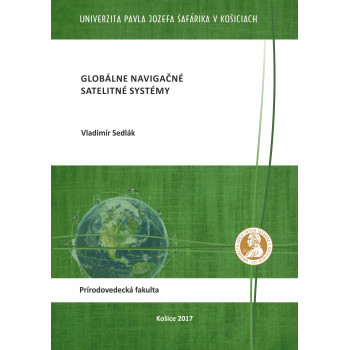
Globálne navigačné satelitné systémy

Globálne navigačné satelitné systémy

E-book

E-book

Vladimír Sedlák

In the presented university textbooks, so-called satellite-based augmentation systems (SBAS, from the English Satellite Based Augmentation Systems, in Slovak Systémy rozširujúce základné satelitné systémy) are also discussed. These systems enhance, expand, or refine the basic satellite navigation systems. They are supportive satellite systems for GNSS (Global Navigation Satellite Systems). Currently, the long-operational American GPS and Russian GLONASS systems, as well as the partially operational European Galileo system (since December 2016), have and will continue to have broad applications in various fields of human activity, both professional and personal.

The university textbook Globálne navigačné satelitné systémy (Global Navigation Satellite Systems) reflects the current progressive development in the technological and instrumental principles and components of such satellite navigation systems. It presents the state of these satellite technologies from their historical origins and development to the present. The rapid advancements, particularly in the instrumental base of satellite navigation systems, will require updates on their current state in future editions of these university textbooks.
Download the e-book for free (pdf)

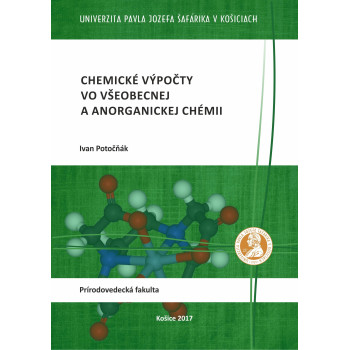
Chemické výpočty vo všeobecnej a anorganickej chémii

Chemické výpočty vo všeobecnej a anorganickej...

E-book

E-book

Ivan Potočňák

The script is a study literature for the subject Chemical Calculations, which is a mandatory course in the bachelor's degree programs in Chemistry and Chemistry – Interdisciplinary Studies, first year. The script contains 10 chapters with a total of 207 pages, guiding students through solved and unsolved examples to help them understand the subject matter.

Author

Download the e-book for free (pdf)

Doménové steny a ich dynamika

Doménové steny a ich dynamika

E-book

E-book

Rastislav Varga

The movement of domain walls in ferromagnetic materials is utilized in various magnetic devices for storing, processing, or transmitting signals and information. This mainly includes transformer cores, various sensors, memory devices (e.g., HDDs in PCs), as well as modern spintronic devices such as Racetrack memories, domain wall motion-based electronics, and so on.

This book is intended to serve as a textbook for advanced courses in the field of magnetic materials. It is primarily aimed at students interested in studying magnetic materials, as well as professionals from various fields who wish to understand the basics of domain structure and its changes. It is divided into nine chapters. The first chapter deals with a brief history of the study of domain structure in magnetic materials. The second chapter provides an introduction to the causes and manifestations of magnetic anisotropies. The third and fourth chapters are devoted to the causes of domain structure formation and domain walls. The fifth chapter discusses the structure of domain walls, their potential, and the critical field required for domain wall movement. The sixth chapter is dedicated to magnetization processes, one of which - domain wall movement - is discussed in detail in chapter 7. The eighth chapter contains a theoretical solution for domain wall movement. The final ninth chapter presents a modern method of domain wall movement induced by electric current.

The presented work assumes that the reader has at least basic knowledge in the field of magnetism. Otherwise, the author refers the reader to basic literature (e.g., [2.1 - 2.6]).

Download the e-book for free (pdf)

Tvorba úloh pre programátorské súťaže

Tvorba úloh pre programátorské súťaže

E-book

E-book

Ľubomír ŠnajderJán Guniš

The publication lists interim results of qualitative educational research focused on the development and evaluation of programming tasks being carried out by authors since 2005 in the frame of programming competition PALMA junior.

The publication consists of three chapters: Computer science competitions in Slovakia, Tasks in computer science education, Selected problems of PALMA junior competition. The first chapter provides an overview of computer science competitions for a primary and secondary schools in Slovakia. The second chapter described the issue of learning tasks - their components, focus, formulation types, and development system of tasks. The third chapter contains the assignments and commented author solutions of selected problems represented focus of PALMA junior competition – programming, algorithms and mathematics.

For each problem is mentioned analysis of pupils’ solutions aimed to ways of thinking, typical misconceptions, sets of preparatory and extended problems. The publication is addressed to computer science teacher trainers, authors of programming competitions problems, and computer science teachers.  

Download the e-book for free (pdf)

UNINFOS 2014 • Univerzitné informačné systémy (Zborník príspevkov)

UNINFOS 2014 • Univerzitné informačné systémy...

E-book

E-book

Gabriel Semanišin - Emil HutňanJana Oleničová

The proceedings contain contributions from participants of the UNIFOS 2014 conference, University Information Systems in Košice, which took place from October 27 to 29, 2014.

ICT centers are important element that provide functioning and development hardware and software infrastructure at Slovak Universities. There are more differences between them in real position, management, personal sources and financing. ICT centers provide a wide range of services to large number of university users and they implement the policy of information security recently.

Download the e-book for free (pdf)

UNINFOS 2014 • Univerzitné informačné systémy (Zborník abstraktov)

UNINFOS 2014 • Univerzitné informačné systémy...

E-book

E-book

Gabriel Semanišin - Emil Hutňan - Jana Oleničová

The proceedings contain abstracts of contributions from participants of the UNIFOS 2014 conference, University Information Systems in Košice, which took place from October 27 to 29, 2014.

ICT centers are important element that provide functioning and development hardware and software infrastructure at Slovak Universities. There are more differences between them in real position, management, personal sources and financing. ICT centers provide a wide range of services to large number of university users and they implement the policy of information security recently.

Download the e-book for free (pdf)

Základy astronómie a astrofyziky

Základy astronómie a astrofyziky

E-book

E-book

Rudolf Gális

The presented work provides basic knowledge of astronomy and astrophysics in a completely new multimedia format. The scope of the knowledge presented is mainly focused on stellar astrophysics and supplemented by cosmology beyond the title of the work.

A new approach in this work is the large proportion of visual materials, graphs, and video clips, contrasted with the brevity of the accompanying text. Such a form of presenting knowledge in this field is unprecedented in Slovakia, and therefore this work can be considered a completely innovative piece. It should be emphasized that the engaging form of the presented knowledge does not come at the expense of its content. The work contains all the necessary information that a physics student, especially one with a pedagogical focus, should master. The work can also be an invaluable aid to teachers in secondary and even primary schools, as well as professional astronomers in popularizing astronomical knowledge.

This suggests that the work covers a relatively wide range of needs at various institutions dealing with astronomy, from universities, through faculties of education and grammar schools, to observatories, planetariums, and astronomy clubs.

Download the e-book for free (pdf)

Zbierka úloh z fyziky elementárnych častíc

Zbierka úloh z fyziky elementárnych častíc

E-book

E-book

Marek Bombara

The collection of exercises summarises and supplements the exercises realised at the Pavol Jozef Šafárik in Košice within the lecture course Elementary Particle Physics. The collection is intended for the master students of the Nuclear and Subnuclear Physics subject, but it could be beneficial also for other physics subjects or even for interdisciplinary study. 

The division of chapters roughly copies the order of lectures. At the beginning, students will briefly familiarize themselves with the basics of special relativity and its practical use in particle physics.

Download the e-book for free (pdf)

Fotonika

Fotonika

E-book

E-book

Gregor Bánó

Photonics is an application-oriented discipline at the interface of optics, opto-electronics and quantum optics. It includes classical optics extended by the description of physical phenomena and optical devices that rely on quantum (photon) nature of light.
The main objective of the Photonics course is to provide a comprehensive overview of essential optical and photonic phenomena routinely applied in experimental scientific research while working with various light sources (e.g. in the field of biophotonics). The first chapters are devoted to the description of light at different levels. The logical order of subsections in this part corresponds to the structure of the textbook: B. E. A. Saleh, M. C. Teich, Fundamentals of Photonics. The following chapters contain a description of laser operation and an overview of selected optical instruments and their applications.
The body text is complemented by practical notes on the use of theoretical knowledge during daily work in the laboratory. The course of Photonics requires a basic knowledge of mathematics, electromagnetism and optics, and thus it is recommended to students who previously passed through the courses of the Bachelor's program in Physics.

Download the e-book for free (pdf)

Cell Biophysics II

Cell Biophysics II

E-book

E-book

Katarína Štrofeková

Cell Biophysics II is the one semester comprehensive course textbook for PhD students. It encompasses basic principles and mechanisms underlying cell physiology and biophysics with aims:

• General knowledge of the principles of cellular function, including membrane, cytoplasmic and nuclear roles in normal and abnormal conditions.
• In-depth understanding of the mechanisms underlying the cell functions at the molecular and subcellular level.
• Awareness of cell pathologies that lead to specific disease symptoms and phenotypes.
• The ability to apply learned principles to solve new problems (analysis & synthesis).

Download the e-book for free (pdf)

Počítačová fyzika I

Počítačová fyzika I

E-book

E-book

Milan Žukovič

The textbook Computational Physics I covers the topics taught in the course of the same name at the bachelor's level of the Physics study program, as well as in the course Application of Numerical Methods at the bachelor's level of the Applied Informatics study program.

The text builds upon the basic course in numerical methods, focusing on explaining the fundamental principles of computer-based solutions to some typical physics problems. It includes both the area of deterministic methods for solving problems modeled by ordinary and partial differential equations, as well as the area of stochastic Monte Carlo simulations. The course Computational Physics I lays the foundation for further study of more advanced computational methods taught at the master's level in the subject Computational Physics II. Nowadays, the use of computers as a tool for solving real physics problems, and for students as a tool for preparing their final bachelor's or master's theses, is almost indispensable.

This has led to the creation of numerous user-oriented software packages in various environments for solving a wide range of problems. However, without a thorough understanding of how individual computational techniques work, these programs become black boxes with many pitfalls and risks in their use. Therefore, this text emphasizes understanding both the strengths and weaknesses of individual methods and the assumptions for their successful application.

Download the e-book for free (pdf)

Študentská vedecká konferencia PF UPJŠ 2015

Študentská vedecká konferencia PF UPJŠ 2015

E-book

E-book

Vladimír Zeleňák(ed.)

The proceedings contain abstracts of contributions from participants of the Student Scientific Conference of the Faculty of Science, Pavol Jozef Šafárik University in Košice, which took place on April 22, 2015.

The Student Scientific Conference (SSC) enjoys long-term popularity among the faculty's students and teachers, and we are pleased that this was no different this year, with 128 contributions submitted to the SSC.

The contributions were organized into 19 sections, additionally complemented by an open programming competition and the final of the IHRA contest. For many students, presenting at the SSC is one of the first opportunities to gain experience in presenting their results before a professional audience. Considering the number of submitted contributions, along with the members of the expert juries from the faculty's teaching staff and the audience who came to support their classmates' presentations, the SSC is an event where a large part of the student and academic community of the faculty meets at one place and time. Many abstracts presented in this proceedings were developed as part of students' work on partial tasks that are components of research projects at the departments of the Faculty of Science, Pavol Jozef Šafárik University.

The abstracts represent, in a way, an overview of research topics at the individual workplaces of the faculty. The SSC proceedings thus serve as a useful tool that students and faculty teachers can use to present the faculty externally to partners, employers, and potential collaborators. Partners from practice have shown interest in cooperating in organizing the SSC for a long time. Since 2005, the association of IT companies has awarded a Prize for the Most Original Work and a Prize for the Work with the Best Prospects for Practical Application.

Download the e-book for free (pdf)

Návody na cvičenia z fyziológie rastlín

Návody na cvičenia z fyziológie rastlín

E-book

E-book

Miroslav Repčák - Martin Bačkor - Peter Paľove-Balang - Silvia Gajdošová

The establishment of the Plant Physiology Laboratory at the Department of Botany, Faculty of Arts, Pavol Jozef Šafárik University in Košice in 1969 was associated with the name of Ing. Štefan Kocúrik, CSc. (1923–2006), who also prepared the first "Instructions for Exercises in Plant Physiology" (Košice 1972, 1976).

Since 1980, the manual by Associate Professor RNDr. Karol Erdelský, CSc., and Ing. Fridrich Frič, DrSc., titled "Practicum and Analytical Methods in Plant Physiology" (Bratislava 1980) has been used. With the increase in the number of students, it became relevant in 1991 to publish the "Instructions for Exercises in Plant Physiology" again to improve preparation and the efficient organization of practical work. Associate Professor RNDr. A. Košturiak, CSc., contributed significantly to the expansion of the introductory part of the instructions with his valuable advice, for which the authors are grateful. For the fourth edition, some tasks were updated and modernized, taking into account the possibilities of the renovated laboratory. The selection of tasks was adapted to the current scope of exercises for individual plant physiology subjects within the bachelor's and master's study programs in biology and ecology. These subjects include: Plant Physiology, Plant Metabolism, Mineral Nutrition of Plants, Plant Growth and Development, and Plant Ecology. Some tasks are also suitable for high school experiments.

The choice of topics was influenced by the research focus of our workplace on secondary metabolism, ecophysiology, and medicinal plants. The instructions generally adhere to the SI unit system, occasionally including other commonly used units.

Download the e-book for free (pdf)

Metodika tvorby učebných úloh a didaktických testov pre chémiu

Metodika tvorby učebných úloh a didaktických...

E-book

E-book

Mária Ganajová

The current teaching of chemistry has its specific problems. On one hand, due to the shift of the focus of chemistry curriculum towards theoretical content, the difficulty of chemistry material has increased, and in connection with this, students' interest in chemistry has decreased.

The lack of student interest in chemistry is mostly supported by the opinion that it is precisely chemistry that significantly contributes to the deterioration of environmental quality. On the other hand, we live in an era where we encounter chemical products practically everywhere. It is necessary to learn the basics of chemistry as well as possible, which makes the question of increasing interest in chemistry education and improving its effectiveness very relevant. State educational programs have been introduced into Slovak schools as a foundation for the creation of school educational programs. These emphasize not only acquiring a certain amount of knowledge but also the development and enhancement of key and specific competencies of students, preparing them for lifelong learning and their application in life.

Therefore, increasing attention is being paid to one of the fundamental didactic tools for raising student activity in teaching, and thus improving the effectiveness of chemistry education – learning tasks. From both theory and practice of chemistry teaching, we know that learning tasks, questions, examples, exercises, etc., are among the important components of every teaching lesson. Learning tasks are applied in all phases of teaching – in the motivational phase, the phase of acquiring knowledge, the phase of consolidating knowledge, and the phase of checking the acquired knowledge. It is therefore clear that every teacher will sooner or later find themselves in a situation where they will have to select learning tasks from textbooks, workbooks, collections of problems and examples, or create them themselves.

This scientific monograph is intended for educational specialists and chemistry teachers, aiming to familiarize them with examples of various types and forms of learning tasks and the basics of their creation in chemistry. It can also be helpful for them in preparing certification works focused on test creation and their statistical evaluation.

Download the e-book for free (pdf)

Cognitive neuroscience of auditory and cross-modal perception - Lectures and assignments

Cognitive neuroscience of auditory and...

E-book

Norbert Kopčo - Frederick Gallun - Beáta Tomoriová - Ľuboš Hládek(eds.)

Cognitive neuroscience is a fast developing scientific field which aims at uncovering the neural basis of human perception and cognition. To achieve this goal, cognitive neuroscience uses a variety of tools and approaches ranging from non-invasive brain imaging to psychophysics and neural modeling. Mastering such tools requires skills and knowledge from multiple scientific domains, including neurophysiology, cognitive psychology, and several computational fields.

Access on request via email: kogneuro (@) gmail.com

http://pcl.upjs.sk/workshopcd 

https://sites.google.com/site/kogneuro/

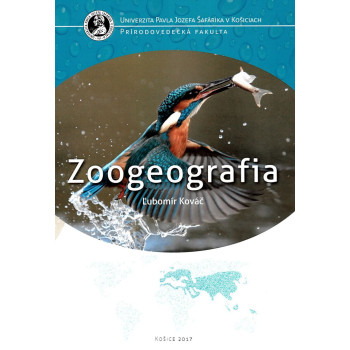
Zoogeografia

Zoogeografia

€12.50
Availability: 10 In Stock

Ľubomír Kováč

Učebný text „Zoogeografia“ objasňuje základné princípy a historický vývoj rozšírenia živočíchov na Zemi, a ďalej analyzuje faktory, ktoré ho ovplyvňujú. Vďaka moderným vedeckým metódam a technikám výskumu je zoogeografia veľmi dynamicky sa rozvíjajúcou disciplínou. Z geologických etáp je podrobnejšie spracovaná problematika paleoklimatických cyklov kvartéru, holocénu a vývoja postglaciálnej klímy, ktoré zohrali významnú úlohu pri dynamike vývoja živočíšnych areálov. Areálová analýza charakterizuje a triedi areály živočíchov a ich dynamiku v nadväznosti na speciáciu. Podrobne je spracovaná problematika zoogeografických oblastí s dôrazom na palearktickú oblasť. Časť zameraná na dynamickú zoogeografiu rieši najmä problematiku refúgií a reliktov v súvislosti s vývojom pleistocénnej paleoklímy. Text stručnou formou sumarizuje základné antropogénne faktory, ktoré v recentnej dobe drastickým spôsobom limitujú rozšírenie živočíchov v rýchlo ubúdajúcom prírodnom prostredí na Zemi. Text ďalej prehľadným spôsobom charakterizuje biogeografiu Karpát a faunu územia Slovenska. Záverečná časť prezentuje fylogeografiu ako modernú vednú disciplínu zameranú na rekonštrukciu migračných ciest v postglaciáli, ktorá je podložená analýzou molekulárnych markerov populácií živočíchov v širšom geografickom kontexte. 

Autor

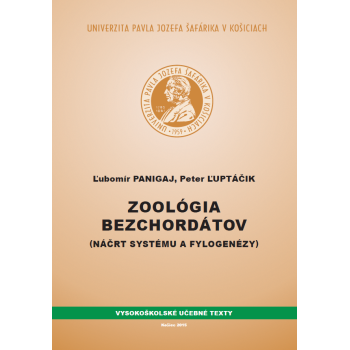
Zoológia bezchordátov

Zoológia bezchordátov

€9.12
Availability: 120 In Stock

 Ľubomír Panigaj - Peter Ľuptáčik 

(Náčrt systému a fylogenézy)

Učebný text je primárne určený pre študentov jednoodborového štúdia biológie a všeobecnej ekológie, ako aj odborom učiteľského štúdia v rôznych kombináciách s biológiou. Venuje sa v nich opisu jednotlivých skupín živočíchov, ich morfológiu a anatómiu ilustruje na obrazových materiáloch. K jednotlivým morfologickým a anatomickým štruktúram sa v texte nevyjadrujeme podrobnejšie, nakoľko text nadväzuje na predmet Porovnávacia morfológia živočíchov, kde na úrovni organológie boli tieto najvýznamnejšie štruktúry v rámci prednášok a cvičení detailne vysvetlené a opísané. Rozsah učebného textu nie je veľký, podávame v ňom základné minimum poznatkov, čo je podmienené jednak rozsahom predmetu, ktorý je len jednosemestrový, jednak tým, že ďalšie, špecializované predmety rozširujú spektrum poznatkov napr. na úrovni entomológie, hydrobiológie alebo pôdnej biológie. V zavere niektorých kapitol formulujeme niekoľko cvičných otázok, ktoré si študenti môžu na základe predchádzajúceho textu zodpovedať, s podobnými otázkami sa totiž môžu stretnúť na skúške alebo na štátniciach.

Autori

This website uses cookies to ensure you get the best experience on our website