Slovenčina


Hana Smitková a kolektív
Kniha ponúka vôbec po prvý raz na Slovensku unikátny pohľad na viaceré odborné témy v zhutnenom texte. V prehľade psychologických prístupov sú to napr. terapia zameraná na emócie, procesorientovaná terapia, biodromálny prístup a i. Prináša podklady ku konkrétnej poradenskej práci so špecifickými typmi klientely, viaceré sú spracované prvýkrát (psychologické poradenstvo v období tehotenstva, pôrodu a raného materstva; klimatická kríza ako výzva psychologického poradenstva; poradenská práca s ľuďmi, ktorí užívajú drogy a pracujúcimi v sexbiznise). Venuje sa klientele aj z hľadiska veku a ich vývinových špecifík – deťom, dospievajúcim, párovým problémom či životným stratám a smútkovému poradenstvu. Na knihe participujú výlučne autorky a autori, ktorí sa vybraným témam venujú dlhodobo z hľadiska súčasnej teórie i praxe.
Data sheet
Specific References
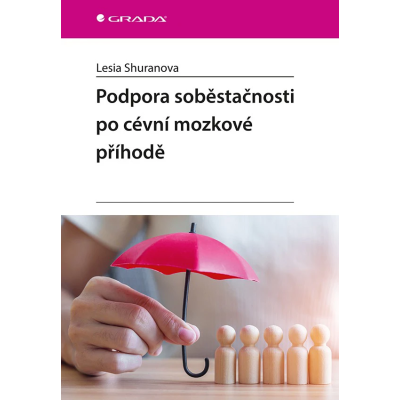
Jedinečná publikace, která srozumitelně ukazuje, jak může koordinovaná rehabilitace zásadně ovlivnit život po cévní mozkové příhodě. Autorka propojuje zkušenosti pacientů, jejich rodin a odborníků s aktuálními poznatky z praxe a nabízí ucelený pohled na to, co skutečné rozhoduje o návratu k soběstačnosti. Kniha je cenná svým komplexním záběrem, lidským jazykem a zaměřením na praxi českého zdravotnického a sociálního systému. Čtenář se dozví, jaké dopady má cévní mozková příhoda, z čeho se skládá rehabilitace a proč je důležité propojení jednotlivých profesí. Kniha vysvětluje rozdíly mezi koordinovanou, ucelenou a komunitní rehabilitací, popisuje léčebnou, pedagogickou, pracovní, sociální i psychologickou složku péče a ukazuje, co se děje při přechodu z nemocnice domů. Otevírá také témata nejčastějších bariér, slabých míst systému a možností jejich překonání. Významným prvkem jsou autentické výpovědi pacientů i odborníků – fyzioterapeutů, ergoterapeutů, lékařů, psychologů, sester, zdravotně-sociálních pracovníků i praktických lékařů. Kniha je určena fyzioterapeutům, ergoterapeutům, lékařům, sestrám, logopedům, psychologům, sociálním pracovníkům a pracovníkům domácí péče a také pacientům po cévní mozkové příhodě a jejich rodinám. Vhodná je také pro studenty zdravotnických a sociálních oborů. Autorka vychází z dlouholeté zkušenosti v rehabilitační praxi i z vlastního výzkumu. Do knihy přináší hlasy pacientů, rodin i odborníků a propojuje je s aktuálními poznatky. Píše srozumitelné, lidsky a s respektem k těm, kterých se téma dotýká.
E-book
Ladislav Lovaš - Margita Mesárošová (eds.)
Over the past two decades, psychologists have shown increased interest in the issues of self-regulation and self-control. The prepared publication is, in a sense, part of this process. Its foundation was the conference "Psychological Aspects of Self-Regulation and Its Contexts," held on October 14–15, 2010, in Košice. The event was organized by the Department of Psychology and the Department of Educational Psychology and Health Psychology at the Faculty of Arts, P. J. Šafárik University.
The publication of a collection of scientific papers with the same title fulfills the aim of presenting oral presentations and posters in an expanded form. The contributions are thematically divided into three sections: "Self-Control and Its Contexts," "Coping with Problematic Situations," and "Personality and Risk Behavior."
The publication and the conference that served as its basis were supported by the grant agency VEGA of the Ministry of Education and the Slovak Academy of Sciences as part of projects 1/0785/09 "Personal and Situational Factors of Self-Control" and 1/0310/10 "Social-Psychological Determinants of Healthy Psychosocial Development and Realization of Developmental Potential in Gifted and Disadvantaged Children and Adolescents."
E-book
The monograph focuses on the issue of loneliness among substance-addicted people in the context of abstinence prospects and re/lapse prevention. In the monograph these phenomena, several theories were integrated and applied in the context of the ecosystem meta-framework of social work and practical contexts. The ecosystem meta-theory serves as a meta-construct with the ability to encompass the complexity of social phenomena as well as that of human beings within the structure of their living and social environment, formal and informal networks, and close intimate relationships.
In this monograph are presented research sample consisted of 235 respondents – hospitalised addicts undergoing urgent treatment, abstaining A-club members as well as members of psychotherapy and self-help groups. The research showed that abstainers were statistically less lonely than the hospitalised respondents. Quantitative data of research are complemented by qualitative data collected in four case studies; two of them focused on two long-term abstainers from alcohol and drugs, while the other two case studies dealt with two respondents in post-hoc treatment undergoing the resocialization process. The research also showed that respondents who broke abstinence felt lonelier than their successfully abstaining counterparts.
The results were supported also by the fact that a statistically significant inversely proportional relationship was identified between the duration of abstinence and loneliness rate. Gender differences were found between the hospitalised addicts in all loneliness dimensions. Naturally, the combined research was limited in certain aspects, mainly in terms of the size and proportional distribution of the research sample and its subgroups, test battery extent, and general nature of the population studied. Triangulation among quantitative and qualitative with the theoretical starting points confirmed the existence of a relationship among loneliness, addiction, and prospect of abstinence.
E-book
Miroslava Köverová - Simona Ďurbisová (eds.)
Proceedings present abstracts of contributions registered for the scientific conference Work and Organizational Psychology 2023. Conference date and venue: 8-9 June 2023, Department of Psychology, Faculty od Arts, Pavol Jozef Šafárik University in Košice.