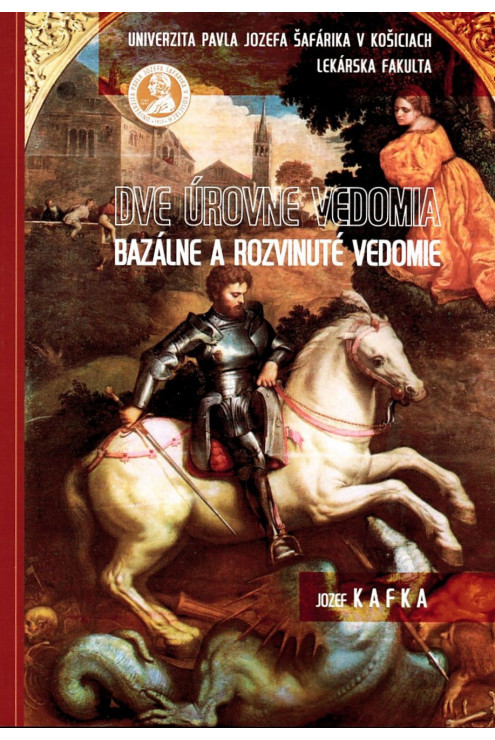
Dve úrovne vedomia: bazálne a rozvinuté vedomie

€19.10
Tax included

Jozef Kafka

Význam vedomia pre každého človeka ale aj pre pozná­vanie je taký rozhodujúci, že by bolo nesprávne hovoriť o ňom iba pri psychických procesoch, lebo je jadrom ľudskej individuality a práve vedomím sa človek odlišuje od ostat­ných živých tvorov.

Je potešujúce, že nová oblasť poznávania označovaná ako veda o mysli začína sa vedomím zaoberať podrobnejšie a vylučuje tvrdenia, že vedomie nejestvuje hoci zatiaľ hovorí podľa mojej mienky iba o bazálnom vedomí a jej inter­pretácie prekračujú zistené fakty.

V svojej odbornej činnosti a aj v učebniciach som rozlišoval dve cesty poznávania vedomia a  iba postupne som si uvedomil, že mám pred sebou dva úrovne vedomia. V tejto práci  rozlišujem tieto dve úrovne:

  • bazálne vedomie,
  • rozvinuté vedomie.

Ak bazálne vedomie vyjadruje bdenie a spánok, tiež po­zornosť a gnostické rozpoznávanie, teda  idiognózia a somatognózia, rozvinuté vedomie predpokladá reč a vytvára také prejavy, ktoré označujeme ako duševné, teda identita, sebareali­záciu, čo vyjadruje schopnosť uvedomovania si seba, okolia, spoločnosti ale aj všetkého čo sme schopní poznať.

Také chápanie je blízke výkladu fyziológa Pavlova o dvoch signálnych sústavách a chápaniu Poppera o treťom sve­te ale aj ďalšie náhľady, nikto však neurobil určitejšie závery a nedošiel k náhľadu, že naše vedomie má dvojvrstevnú podobu, dve úrovne.

Napriek rozsiahlej a takmer neprehľadnej literatúre vieme o vedomí málo, okrem toho, že je to schopnosť uvedomo­vania, teda schopnosť uvedomiť si, že jestvujem, že som, že jest­vujú aj iní ľudia, že jestvuje niečo čo označujeme ako svet ako nepredstaviteľný vesmír. Uvedomujem si, že som individua­litou jedinečnou, ale limitovanou narodením a smrťou a že mám aj zmysel svojho bytia. Toto uvedomovanie, akokoľvek spo­chybňované je pre človeka prítomné v jeho poznávaní, hoci nemáme zmysly, ktorými by sme vedeli lokalizovať jeho prí­tomnosť v mozgu, ale svojou charakteristikou s dynamikou a integráciou má však duševný charakter, odlišný od    ostatných preja­vov mozgovej činnosti.

Práca sa pokúša v deviatich kapitolách osvetliť, čo sa chápe pojmom bazálne a rozvinuté vedomie    a možno ju rozdeliť do troch okruhov:

V prvých šiestich kapitolách diela hovorí o vedomí ako o doméne bytia človeka, podáva sa preto výklad vedomia a jeho rozlíšenie, potom sa hovorí o kolobehu života a rozvoji ve­domia, kladie sa otázka vedomia u stavovcov, potom náhľady filozofické a metodológia skúmania vedomia. Nasledujú ďalšie kapitoly, ktoré analyzujú podrobnejšie dve formy, úrovne vedomia, sú to kapitoly 7-9, začínajú ana­lýzou individuality človeka, lebo to je báza vedomia aj je­ho foriem, ďalej kapitoly o bazálnom vedomí a rozvinu­tom vedomí, čo považujem za jadro predkladanej práce. Napokon sa opisujú niektoré poruchy vedomia, ktoré dokladajú realitu vedomia v podobe  jej porúch ale aj možnosti rozlí­šenia dvoch úrovní, ktoré sa dajú zistiť pri starostlivom štúdiu a pri práci s chorými.

Quantity
Last items in stock

978-80-8152-481-3

Data sheet

Method of publication:
Printed publication
Author:
Jozef Kafka
Document type:
Monograph
Number of pages:
136
Year of publication:
2017
Edition:
1st edition
Publication language:
Slovak
License:
Copyright

Specific References

MPN
301538

16 other products in the same category:

General dermatovenerology

€12.00
Availability: 200 In Stock

Janette Baloghová

Všeobecná dermatovenerológia je nosnou časťou dermatovenerológie. Morfológia, popis a charakteristika jednotlivých eflorescencií sú kľúčové v diagnostike a diferenciácii kožných ochorení spolu s dobre odobratou anamnézou. Snahou bolo vytvoriť vysokoškolský učebný text, ktorý tvorí praktický návod ako vyšetrovať pacienta s kožným ochorením. Cieľom jednotlivých kapitol je dokonale si osvojiť dermatologickú terminológiu, fyzikálnym vyšetrením vnímať špeciálne kožné znaky a zmeny, vedieť sa orientovať v algoritme pomocných vyšetrovacích metód a testov a pochopiť rozdielne vlastnosti a charakteristiku kože vzhľadom na vek pacienta, vznik, priebeh a trvanie kožných prejavov. Posledná kapitola predstavuje praktickú topografiu kožných ochorení v tabuľkách. Dermatovenerológia patrí k interdisciplinárnym odborom, preto všeobecná dermatológia bude určite dobrým sprievodcom pri diagnostike kožných ochorení nielen študentov medicíny, ale aj lekárov prvého kontaktu a styčných odborov.

Medical Biochemistry - Seminars

€28.00
Availability: 50 In Stock

Mária Mareková  et al.

Predmet Lekárska biochémia plní v medicínskom štúdiu nezastupiteľnú úlohu, naučiť študentov vnímať prirodzené, fyziologické, ako aj chorobné procesy v organizme ako deje odohrávajúce sa na molekulovej úrovni. Na rozlíšenie patologických pochodov od normálnych je potrebné zvládnuť a pochopiť zmysel obrovského množstva biochemických reakcií prebiehajúcich v bunke (bunkový metabolizmus). Osvojenie si týchto faktov je hlavným cieľom predmetu Lekárska biochémia, ktorého zvládnutie je dobrým základom pre štúdium patobiochémie, fyziológie a klinickej biochémie, ako aj mnohých ďalších odborných predmetov medicínskeho štúdia. Pre lepšie zvládnutie a pochopenie biochemických procesov sme pre študentov pripravili vysokoškolskú učebnicu „Lekárska biochémia – Semináre“, ktorá poskytuje študentom okrem teoretických úvodov aj prehľadné schémy procesov a mnoho otázok, vypracovanie ktorých by malo študentom uľahčiť prípravu na skúšku.

ATLAS OF FORENSIC MEDICINE: Autopsy findings in...

E-book

E-publikácia

Dorota Sopková

Forensic Medicine is a medical discipline that is concerned with determination of the cause of death in cases violent and non-violent deaths by performing an autopsy. It is based on morphological findings, which characterize the effects of various forms of violence, as well as pathological changes in various diseases. The presented textbook provides comprehensive and complete overview of the fundamental tasks and theoretical knowledge of the field of forensic medicine. Its aim is to provide a theoretical basis in the form of images of morphological autopsy findings for the study of the compulsory subject Forensic Medicine and Medical Law in the study programs General Medicine and Dentistry. The author emphasizes the necessity to understand the fundamentals of forensic medicine in every medical field and a multidisciplinary approach in clarifying medico-legal issues.

Download the e-book for free (pdf)

Základy histológie II. Učebnica a atlas...

E-book

E-book

Iveta Domoráková - Štefan Tóth - Zuzana Fagová - Eva Mechírová - Alexandra Kunová - Kristína Čurgali - Viera Eliášová - Monika Holodová - Marianna Danková

In our new electronic textbook, FUNDAMENTALS OF HISTOLOGY II – Textbook and Atlas of Microscopic Anatomy of Organs, we present students and the professional public with essential information about the microscopic structure of organs, accompanied by extensive visual documentation of organ structures and clear legends for the microphotographs.

All histological specimens come from the archive of the Institute of Histology and Embryology, are used in practical exercises, and are also included in teaching presentations. The electronic textbook is intended for undergraduate and postgraduate students of general medicine and dentistry at medical faculties, as well as for students of veterinary medicine and pharmacy, and biology students at faculties of natural sciences.

The textbook is designed so that students can find clear explanations of most medical terms and also reinforce their knowledge of professional terminology in Latin. An advantage of the electronic textbook is the ability to enlarge microscopic photographs, allowing detailed observation of structures without any qualitative loss of the viewed image. The microphotographs used in the atlas were taken with the following equipment: Zeiss Promicra and Olympus BX50 with a Canon EOS 2000D digital camera and QP Industrial 3.2 software.

Download e-book for free (pdf)

Komunikácia v zdravotníckej praxi

E-book

E-book

Renáta SuchanováLucia Dimunová

The following textbook deals with issues related to communication in medical practice which significantly affects the survival and behaviour of a patient. Communication skills and the attitude of healthcare professionals exercised towards a patient have significant impact on patient’s ability to handle treatment and his or hers co-operation during the process.

This publication is intended to serve as a guide applicable towards deeper knowledge, better comprehension and overall understanding of the mental state of an ill person, his or her needs, stances, behaviour patterns, but also his or her management of the illness. Attention is also paid to the active building of a relationship between the healthcare professional and the patient, with emphasis on respect, truthfulness, and mutual understanding in communication. Particularly accentuated are issues related to specific effective communication skills, methods, and techniques serviceable during interactions with a patient; application of empathy and proactive approach are highlighted.

Download e-book for free (pdf)

Pathology Part 2 Practical lessons for students...

€15.00
Availability: 100 In Stock

Alžbeta Blichárová - Ľudmila VerbóováZuzana BenetinováVladimír Tancoš  - Patrícia Kollárová  - Adam Nedoroščík - Erika Štammová  - Pavel Kočan

“Pathology Part 2 (summer semester) - Practical lessons for students of general medicine” represents the second half of the university textbook designed for the pregradual study of pathology. The textbook complements the lectures of pathology and serves as a source of information for students of general medicine, that are preparing for the practical credit, as well as the final oral examination.

In this part of the “Pathology” series, seventy selected histopathological slides are presented. Each selected slide is provided with general information in relation to etiology and pathogenesis of the disease, as well as with corresponding morphological features, including the gross appearance and the most important histopathological characteristics. The textbook summarizes the basic concepts of systemic (organ) pathology (pathology of the lungs, hematopoietic, gastrointestinal, urogenital system, breast, endocrine, musculoskeletal, nervous system, skin childhood and infancy), that is logical continuation and completion of general pathology in the first semester.

Keywords: systemic pathology – histopathological slides – general medicine – gross appearance – microscopic image

Lekárska biológia a genetika

€24.00
Availability: 50 In Stock

Eva Slabá - Jozef Židzik a kolektív

Vysokoškolská učebnica „Lekárska biológia a genetika“ poskytuje v zrozumiteľnej podobe teoretické základy bunkovej biológie, molekulovej biológie a genetiky. Obsahuje najnovšie poznatky z relevantných odborov doplnené názornými obrázkami, tabuľkami a grafmi. Prehľadne členené kapitoly zoznámia študentov s problematikou bunkovej biológie, procesov molekulovej biológie a zákonitosťami genetiky. Vysokoškolská učebnica je určená predovšetkým pre slovenských študentov I. ročníka lekárskych fakúlt. Jej obsah je podkladom pre úspešné zvládnutie obsahovej náplne predmetu biológia. Učebnica je vhodná aj ako hlavný zdroj informácií pre študentov prírodovedeckých fakúlt. Okrem základných údajov obsahujú niektoré kapitoly aj doplňujúce informácie pre lepšie pochopenie jednotlivých tematických okruhov. Tieto podrobnejšie údaje sú odlíšené veľkosťou písma a nie sú nevyhnutné pre zvládnutie skúšky z biológie. Príslušné informácie však môžu využiť i študenti vyšších ročníkov lekárskych fakúlt či študenti postgraduálneho štúdia.

Etické aspekty komunikácie v medicíne

E-book

E-kniha

Silvia Farkašová Iannaccone a kol.

The history of ethics represents the search for a fundamental principle that would enable a person to distinguish between moral and immoral, good and evil, or right and wrong. The main issues are the motives, methods, and consequences of human actions.

The integrity of the medical profession emphasizes lifelong study and practice according to professional competence, and, last but not least, adherence to ethical principles and standards of medical ethics. Medical ethics and the related communication in the process of providing healthcare are becoming increasingly relevant topics. Communication between doctor and patient itself constitutes a very important part of the diagnostic process and treatment; it significantly contributes to the creation of a mutual relationship and, to a considerable extent, ensures patient cooperation.

The development of various information and network technologies allows for rapid communication even in medicine; however, a kind word and real contact with the patient, with an appropriate choice of verbal and nonverbal communication tools in personal contact, cannot be replaced by modern technology. The present era places demands on certain communication skills of the physician. Another ethical and legal issue is informed consent, which brings the patient’s active participation in the process of providing healthcare.

The presented publication provides basic information about medical ethics, communication in medicine in general, and communication skills in medical practice. Further chapters are devoted to the issue of informed consent, ethics, and the specifics of communication with selected groups of patients. We believe that this publication will clarify for the reader the basic ethical pillars and will be helpful for basic orientation in the issues of medical communication.

Download the e-book for free (pdf)

Elementary organic molecules in biochemistry

€22.00
Availability: 45 In Stock

Vladimíra Tomečková

Nature, as well as the human body, contains an abundant quantity of organic molecules. This textbook describes selected oxygen, sulfur, nitrogen derivatives of hydrocarbons, heterocyclic compounds of their reactions, which are important in the human body or are found in pharmaceutical active substances, poisons, foodstuffs and heat-treated food. The last part of the textbook describes the isomerism of organic compounds, which enables dynamic changes in the structure of molecules that have different properties. Nature is filled with different plants and animals and is the first laboratory to produce bioactive organic natural compounds. These compounds are compatible with human cells and are applicable as therapeutic medicine. There is an effort to reproduce natural molecules in chemical laboratories, but they cannot be as perfect as the natural ones. Synthetic molecules can serve as a model for multiple studies, but there still does not exist a magic panacea pill or a perfect copy of nature, for the treatment of various diseases. Knowledge about the regenerative and toxic effect of medicinal substances in dependence on their structure (type and number of substituents) is very important for the understanding of their role in modulation of health and disease in dependence on their concentration. Compounds can be used daily only in recommended doses (higher doses can be toxic), but still will not replace a healthy diet. People need a varied diet to be healthy, in which are all necessary nutrients, what Hippocrates demonstrated long ago “Let food be the medicine, and let medicine be the food.” This book is written for students who select bioorganic chemistry subject during the study of general medicine or dentistry as well as for motivated students who would like to practice their knowledge and wish to improve in this subject and for students who would like to learn simplified basic organic reactions with their future application in biochemistry. Learn the simple models mainly through creative simple instruction by using different colours, by repetition, practice by drawing of formulas by hand (at least three times) and memorization of common names of compounds and their reactions which have application in biochemistry. Thus, establishing simple educational methods how to distinguish organic molecules according to the colours of a functional group can promote universal learning for all students who thought that chemistry is a difficult subject, but hopefully they change their opinion after study of this book.

Keywords: organic molecules, oxygen, sulfur, nitrogen derivatives of hydrocarbons, heterocyclic compounds, chemical reactions, isomerism of organic compounds

Vybrané kapitoly z infektológie

E-book

E-book

Ivana Hockicková-Ondrej Zahornacký

The textbook „Selected chapters in Infectology“ is a comprehensive study material about selected infectious diseases for students of medicine as well as other healthcare professions. It is primarily intended for students of general and dental medicine. It is the first textbook of its kind, aiming to provide students with comprehensive information about different types of infectious diseases, including their causes, typical symptoms, diagnostics, treatment and prevention. It is divided into a total of 18 chapters. The textbook is written in accordance with the latest knowledge about infectious diseases and serves as the foundation for success in the Infectology subject.

Download e-book for free (pdf)

UVP – MediPark – cesta k inováciám vo výskume,...

E-book

E-book

Pavol JarčuškaDaniel PellaJán Rosocha (eds.)

Proceedings of lectures from thematic conferences organized by UVP MediPark

UVP Medipark – the path to innovation in research, diagnostics, and treatment – was the title of the conference held on Tuesday, May 29, 2018, at the premises of the Faculty of Medicine, Pavol Jozef Šafárik University in Košice. The patronage of the event was taken over by the rector of UPJŠ, Prof. RNDr. Pavol Sovák, CSc. The conference program was divided into two main areas – Innovative scientific technologies, clinical research, and the path to the development of new drugs, and UVP Medipark – main research areas.

Download the e-book for free (pdf)

Praktický sprievodca k hypolipemickej terapii

E-book

E-book

Štefan Tóth

Dyslipidemia is one of the main risk factors for the development of cardiovascular diseases. In recent years, extensive research has been conducted, leading to changes in therapeutic recommendations for dyslipidemia. These scripts aim to provide readers in the introductory chapters with information on the basic management of patients with dyslipidemia, procedures, target levels, and available medications and their combinations for achieving target levels, focusing on the practical aspect of dyslipidemia treatment. In the special section of the script, an overview is provided of the basic characteristics, studies of individual available hypolipemics, as well as hypolipemics that are not yet on our market or are still in the stage of clinical trials

Download the e-book for free  (pdf)

Praktické cvičenia z lekárskej biológie

E-book

E-publication

Eva Slabá-Helena Mičková- Terézia Hudáková-Janka Vašková

Teaching texts „Praktické cvičenia z lekárskej biológie“ provide the theoretical foundations of microscopy, various microscopic techniques and preparation of microscopic slides in an understandable form. The chapters of the teaching texts contain model questions and tasks from cytology, molecular biology and genetics enabling students to acquire new knowledge from individual thematic areas and provide instructions for the implementation of tasks during laboratory lessons in medical biology. Teaching texts are primarily intended for the practical lessons in the subjects Biológia 1 and Biológia 2 for Slovak students of the first year of General Medicine and the subjects Lekárska biológia and Genetika a regeneratívna medicína for Slovak students of the first and second year of Dental Medicine at P. J. Šafárik University in Košice – Faculty of Medicine.

Download the e-book for free (pdf)

This website uses cookies to ensure you get the best experience on our website