Slovenčina


Obdobie staršej dospelosti je aj pre psychológiu príležitosť urobiť syntézu svojej prírodovednej tradície a filozofickej tradície. Psychológia sa takto môže lepšie napojiť na mentálnu prácu ľudí žijúcich toto vekové obdobie staršej dospelosti usilujúcich v rozličnej miere o komplexicitu vo svojom živote. Psychológia môže pomôcť tomuto úsiliu, pretože celistvosť človeka je aj programom jej rozvoja. Publikácia rozpoznáva seniora nie len ako objekt, ale aj ako subjekt usilujúci o svoju podmetovosť na jeho celoživotnej ceste. Priatie veku hľadá svoje optimálne vyjadrenie a je možné najmä v súvsťažností psychologického a spirituálneho vývinu človeka. Psychológia staršieho človeka objavuje starobu nie ako totalitu vyraďujúcu človeka z cyklu života, ale ako obdobie výberu pre život dôležitých domén spojených s preladením do vnútra, ktoré doceňuje pokoj. V tejto optike sa selektujú veci a javy tak aby nerušili, ale harmonizovali. To nie je odmietnutie vonkajšieho, ale rozlíšenie kedy dáva zmysel. Staroba preveruje aj spoločnosť , verejnosť, ktorá by mala odrážať úroveň procesov starostlivosti o duševno. Aby svet urobilo užitočným pre človeka, ale je aj dôvodom ako to vyjadril Patočka samotnej starostlivosti o toto duševno. Pozícia starého človeka v spoločnosti je obrazom toho akú váhu spoločnosť prikladá duševnému životu ľudí. Publikácia prináša poznatky psychologickej povahy o tomto vekovom období a v špeciálnej časti informácie okolo pomáhania a poradenstva.
Autor

Data sheet
Specific References
E-book
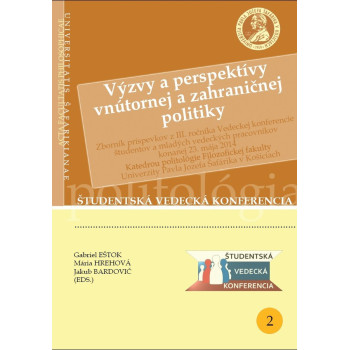
Gabriel Eštok- Mária Hrehová- Jakub Bardovič (eds.)
Proceedings of the 3rd Annual Scientific Conference of Students and Young Researchers held on May 23, 2014, by the Department of Political Science, Faculty of Arts, Pavol Jozef Šafárik University in Košice
On May 23, 2014, the Department of Political Science at the Faculty of Arts, Pavol Jozef Šafárik University in Košice hosted a conference entitled “Challenges and Perspectives of Domestic and Foreign Policy.” This was the third conference for students and young researchers organized by the Department of Political Science in cooperation with the civic association Res Publica. The event featured numerous young people interested in contemporary political issues, each presenting on a topic related to domestic or foreign policy. It can be stated that these presentations were of a high professional standard and stimulated discussion on the topics and problems raised.
The publication you are holding is a collection of scholarly works by students and young experts who focused on a variety of subjects. Some authors addressed issues of foreign policy, particularly the analysis of selected countries’ policies (Slovak Republic, USA), examined the Iranian nuclear program, or explored the possibilities of federalizing Ukraine as a solution to the emerging situation. Another contribution offered a perspective on foreign policy from the viewpoint of Slovak emigrants in Australia. Despite the wide range of topics addressed in the individual contributions, a common denominator can be found: the effort to highlight a particular problem or propose its solution, thereby contributing to the fulfillment of the ideal of democracy, the improvement of policy-making and functioning, and, above all, making the world a better place for all of us.
Editors
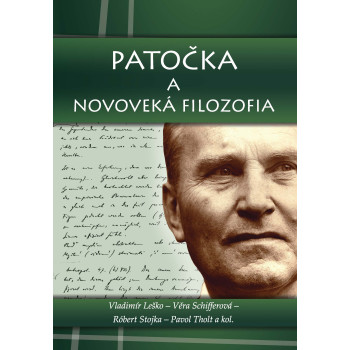
Vladimír Leško - Věra Schifferová - Róbert Stojka - Pavol Tholt a kol.
Filozofické dedičstvo Jana Patočku ponúka vo svojom celku významné reflektovanie novovekého filozofického myslenia. V našich doterajších domácich historicko-filozofických skúmaniach sa však doposiaľ tejto skutočnosti venovala len veľmi malá pozornosť. Z uvedeného dôvodu je preto prirodzené, že sa chceme po prvýkrát pokúsiť o celostnejšie zachytenie Patočkovho chápania novovekej filozofie. Kolektívna monografia Patočka a grécka filozofia, ktorú sme spracovali ako prvý výstup riešenia projektu APVV, dostáva tak svoje pokračovanie v druhej monografii Patočka a novoveká filozofia. Zavŕšenie nášho úsilia bude potom predstavovať kolektívna monografia Patočka a filozofia 20. storočia.
V predkladanej práci nám ide o predstavenie rozhodujúceho odkazu novovekej filozofie v Patočkovom filozofickom diele. Význam jeho filozofickej výpovede k tomuto dejinno-filozofickému útvaru je prekvapujúco stále živým, aktuálnym filozofickým dedičstvom, bez pochopenia ktorého sa dá len veľmi ťažko komplexne uchopiť hodnota Patočkovho filozofického odkazu. Tomuto poznaniu sme podriadili ako výber, tak aj obsahové naplnenie jednotlivých kapitol našej novej práce.
E-book
On June 8 and 9, 2023, the 22nd edition of the Psychology of Work and Organization conference took place at the Faculty of Arts of the University of Pavel Jozef Šafárik in Košice. The conference program was divided into six blocks and one poster section and supplemented by three invited lectures.
This collection contains selected contributions from this conference, with contributions in English first, then in Slovak. The variety of contributions reflects the variety of topics in the field of work and organizational psychology, with the most represented topics being the quality of life and work load, aspects of the work of a school psychologist, factors affecting the achievement of work goals in emerging adulthood, and the presentation of new measures with possible application in the work environment.
Download e-book for free (pdf)
E-journal
Renáta Orosová (výkonný redaktor)
The scientific-professional journal Edukácia focuses on issues of education and upbringing in the fields of primary, secondary, and higher education.
It emphasizes the current state and perspectives of educational practice, contemporary aspects of pre-service teacher training, social pedagogy, special pedagogy, as well as pedagogical and psychological aspects of upbringing in basic educational institutions from the perspective of the broader educational community.
It is intended for researchers, young university lecturers, doctoral students, and professional and pedagogical staff, with the aim of presenting trends in education and stimulating discussion on current issues in the presented areas of upbringing and education.