Filter By

Year of publication:

Year of publication:

Publication language:

Publication language:

Faculty:

Faculty:

Method of publication:

Method of publication:

Active filters

  • Year of publication:: 2011
  • Year of publication:: 2015
  • Year of publication:: 2016
  • Year of publication:: 2017
  • Year of publication:: 2021
  • Year of publication:: 2021
  • Year of publication:: 2021
Úvod do otvoreného prístupu

Úvod do otvoreného prístupu

E-book

E-book

Jitka Dobbersteinová - Silvia Horáková - Simona Hudecová & Zuzana Stožická

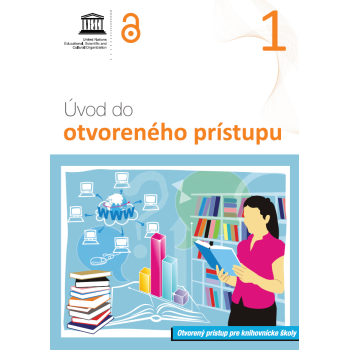
The textbook for Module 1 of the course "Introduction to Open Access." Upon completing this module, it is expected that you will be able to understand scholarly communication and open access, advocate for various forms of open access and distinguish between them, master the issues of rights management including copyright law, copyleft as a special use of copyright, and related intellectual property rights, and explain the significance of open access in the context of scholarly communication.

Download the e-book for free

LEARNING HOW TO LEARN (Workbook)

LEARNING HOW TO LEARN (Workbook)

E-book

Zuzana Kožárová • Adriana Boleková

This workbook has been composed from the book by Assoc. prof. Adriana Boleková, MD, PhD. et al. How to study and not forget - the principles of brain-compatible learning. It will help students to identify their bad learning habits, while offering the opportunity to work actively to change their learning style, through various practical tips and exercises.

The workbook is divided into four parts:

  • • Means to enhance memory and learning,
  • • Motivation and time management,
  • • Learning styles
  • • Effective learning techniques

We hope this workbook will help students find out which activities prevent you from achieving better study results and then you will be able to replace them with effective ones.

Download the e-book for free (pdf)

NAUČ SA UČIŤ (Pracovný zošit)

NAUČ SA UČIŤ (Pracovný zošit)

E-book

E-book

Zuzana KožárováAdriana Boleková

This workbook has been composed from the book by Assoc. prof. Adriana Boleková, MD, PhD. et al. How to study and not forget - the principles of brain-compatible learning. It will help students to identify their bad learning habits, while offering the opportunity to work actively to change their learning style, through various practical tips and exercises.

The workbook is divided into four parts:

  • • Means to enhance memory and learning,
  • • Motivation and time management,
  • • Learning styles
  • • Effective learning techniques

We hope this workbook will help students find out which activities prevent you from achieving better study results and then you will be able to replace them with effective ones.

Download the e-book for free (pdf)

Edukácia, roč. 2, č. 1/2017

Edukácia, roč. 2, č. 1/2017

E-book

E-journal

Renáta Orosová (výkonný redaktor)

Website >>>

The scientific-professional journal Edukácia focuses on issues of education and upbringing in the fields of primary, secondary, and higher education.

It emphasizes the current state and perspectives of educational practice, contemporary aspects of pre-service teacher training, social pedagogy, special pedagogy, as well as pedagogical and psychological aspects of upbringing in basic educational institutions from the perspective of the broader educational community.

It is intended for researchers, young university lecturers, doctoral students, and professional and pedagogical staff, with the aim of presenting trends in education and stimulating discussion on current issues in the presented areas of upbringing and education.

Download the e-journal for free (pdf)

Pedagogická prax študentov učiteľstva akademických predmetov (2.vyd.)

Pedagogická prax študentov učiteľstva...

E-book

E-book

Silvia Kontírová a kol.

This revised and supplemented text aims to be a comprehensible and practical aid for students of the Master's degree in teaching academic subjects at the Faculty of Arts and the Faculty of Natural Sciences of the University of Applied Sciences in Košice taking compulsory courses in pedagogical practice.

Its general part deals with the mission, primary human factors, types and forms of pedagogical practice as one of the compulsory organizational forms of teacher studies and specifics of pedagogical practice in the conditions of UPJŠ.

The special part contains basic information and compulsory documentation of trainees on chronologically arranged types of pedagogical practice at UPJŠ. The authors would be grateful if you would point out any errors and shortcomings of the text to them via e-mail silvia.kontirova@upjs.sk.

Download the e-book for free (pdf)

Metodika tvorby učebných úloh a didaktických testov pre chémiu

Metodika tvorby učebných úloh a didaktických...

E-book

E-book

Mária Ganajová

The current teaching of chemistry has its specific problems. On one hand, due to the shift of the focus of chemistry curriculum towards theoretical content, the difficulty of chemistry material has increased, and in connection with this, students' interest in chemistry has decreased.

The lack of student interest in chemistry is mostly supported by the opinion that it is precisely chemistry that significantly contributes to the deterioration of environmental quality. On the other hand, we live in an era where we encounter chemical products practically everywhere. It is necessary to learn the basics of chemistry as well as possible, which makes the question of increasing interest in chemistry education and improving its effectiveness very relevant. State educational programs have been introduced into Slovak schools as a foundation for the creation of school educational programs. These emphasize not only acquiring a certain amount of knowledge but also the development and enhancement of key and specific competencies of students, preparing them for lifelong learning and their application in life.

Therefore, increasing attention is being paid to one of the fundamental didactic tools for raising student activity in teaching, and thus improving the effectiveness of chemistry education – learning tasks. From both theory and practice of chemistry teaching, we know that learning tasks, questions, examples, exercises, etc., are among the important components of every teaching lesson. Learning tasks are applied in all phases of teaching – in the motivational phase, the phase of acquiring knowledge, the phase of consolidating knowledge, and the phase of checking the acquired knowledge. It is therefore clear that every teacher will sooner or later find themselves in a situation where they will have to select learning tasks from textbooks, workbooks, collections of problems and examples, or create them themselves.

This scientific monograph is intended for educational specialists and chemistry teachers, aiming to familiarize them with examples of various types and forms of learning tasks and the basics of their creation in chemistry. It can also be helpful for them in preparing certification works focused on test creation and their statistical evaluation.

Download the e-book for free (pdf)

Reflexia pedagogických možností vých. systémov vybraných detských a mládež. organizácií  v edukačnom priestore SR

Reflexia pedagogických možností vých. systémov...

E-book

E-book

Ján Juščák - Milan Darák

The aim of the monograph was to analyze the pedagogical possibilities of educational systems within children's and youth organizations, with an emphasis on those targeting the age group of children up to 15 years.

The starting point was an analysis of the current state of theory and practice in children's and youth organizations, with the intention of describing prevailing trends in their development and activities. This publication closely follows the previous monograph (Juščák, J. – Darák, M.: 2015), in which we processed, according to a unified methodology and using generally accepted pedagogical terminology, the collected available materials on the educational systems of selected (most representative) children's and youth organizations in Slovakia. Through a subsequent comparison of the obtained empirical data on educational systems, we aimed to identify their similar (identical) as well as specific (distinct) elements as a basis for establishing categorization criteria for their classification.

The culmination of our efforts was an attempt to characterize a children's organization as an educational institution, describing its characteristic features, functions, aims, content, principles, and educational methodology.

Download the e-book for free (pdf)

Reflexia pedagogických možností vých. systémov vybraných detských a mládež. organizácií  v edukačnom priestore SR

Reflexia pedagogických možností vých. systémov...

E-book

E-book

Ján Juščák - Milan Darák

 The aim of the monograph was to analyze and address the issue of educational systems within children's and youth organizations, with an emphasis on those focused on the age category of children up to 15 years.

The starting point was an analysis of the current state of the educational environment in terms of the systemic nature of education and the basic categories of the educational system. The collected available materials on the educational systems of selected (most representative) children's and youth organizations in the Slovak Republic were subsequently processed according to a unified methodology and using generally accepted pedagogical terminology.

Download the e-book for free (pdf)

Školský systém na Slovensku v medzivojnovej Československej republike (1918 - 1938)

Školský systém na Slovensku v medzivojnovej...

E-book

E-book

Soňa Gabzdilová

The educational system (schooling) is one of the most effective tools for shaping the young generation in any advanced society. Schools not only create the knowledge base necessary for fulfilling the demands of the economy and the social sphere, but they also shape the national and ideological identity of each member of society. The school plays a decisive role in forming positive values, but it can also become a breeding ground for xenophobia and racist attitudes. The school has an irreplaceable role in creating national consciousness, identification with one's own nation, its history, the heroic deeds of ancestors, and the meaning of its existence.

After the dissolution of Austria-Hungary, there were fundamental geopolitical changes in Central Europe. One of these was the creation of Czechoslovakia, a state founded on radically different principles than pre-war Hungary. The founders of the Czechoslovak Republic (CSR), the personalities who decisively determined the character of the political system in the newly established republic, did not belong to the privileged classes of the previous regime. Unlike Hungary, where political power was controlled almost without exception by the nobility, the elite in Czechoslovakia consisted of men who were radical critics of Austria-Hungary.

A fitting example was the most influential figure of interwar Czechoslovakia, President Tomáš Garrigue Masaryk. Despite his origins, Masaryk was perceived by both Czechs and Slovaks as the founder of the state, a legendary figure whose political and social influence far exceeded the powers of the presidential office.

Download the e-book for free (pdf)

Začínajúci učiteľ a školská legislatíva I.

Začínajúci učiteľ a školská legislatíva I.

E-book

E-book

Zuzana Boberová

The aim of this university textbook is primarily to provide a comprehensive and systematic overview of the basic legislative documents related to pedagogical activities and the educational work of teachers in school practice. The textbook is primarily intended for students of academic teacher training programs, as well as recent graduates of teacher education who are beginning their teaching careers.

This publication is unique in that it does not focus on specific legislative documents and their descriptions, but rather presents the meaning and wording of various legislative documents in the context of key concepts of educational activities and typical school situations. The publication does not include the full text of cited paragraphs from laws, decrees, and ministerial guidelines, but only excerpts that are relevant to the focus and needs of the textbook.

In this way, we aim to help teacher training students and beginning teachers orient themselves regarding their rights and responsibilities as defined and delineated by school legislation, and especially to help them understand the basic legislative requirements placed on every teacher in school practice. This includes participation in the preparation of the school educational program, understanding the professional development of teachers, student assessment, approaches to students with special needs, as well as handling common school situations such as disciplinary measures, school accidents, ski training, or school events.

Given the scope of these areas, we have divided the topics into two publications according to their thematic focus.

Download the e-book for free (pdf)

Pregraduálna príprava učiteľov (Organizácia pedagogickej praxe na UPJŠ)

Pregraduálna príprava učiteľov (Organizácia...

E-book

E-book

Renáta Orosová - Zuzana Boberová

The university textbook "Pregraduate Teacher Preparation – Organization of Pedagogical Practice at UPJŠ" reflects the changes that have occurred in the pregraduate preparation of students of academic subject teaching in connection with the comprehensive accreditation in 2015. It is intended for students of the second level of university studies in the study programs of Academic Subject Teaching at the Faculty of Arts and the Faculty of Science at UPJŠ in Košice. The aim of the university textbook is to provide theoretical foundations and methodological guidelines for the organization of all types of pedagogical practice carried out under the conditions of UPJŠ.

Preparation for the teaching profession has both theoretical and practical components. While theoretical academic preparation focuses on acquiring and developing knowledge, skills, and competencies in pedagogy, psychology, and the scientific disciplines of the teaching subjects, practical professional preparation is oriented towards preparing for the actual performance of the profession, i.e., the didactic aspect of the teaching process. A significant part of the practical preparation for the teaching profession is realized within the subject of pedagogical practice, which at UPJŠ takes four forms/levels – Observational pedagogical-psychological practice, Ongoing teaching practice, Continuous teaching practice I, and Continuous teaching practice II.

Download the e-book for free (pdf)

Výchova a vzdelávanie 2016: Pedagóg a jeho perspektívy v kontexte súčasnej edukačnej praxe

Výchova a vzdelávanie 2016: Pedagóg a jeho...

E-book

E-book

Renáta Orosová - Zuzana Boberová - Emília Marcinová (eds.)

Proceedings of Abstracts from the International Scientific Conference, 12–13 September 2016

The international scientific conference is focused on issues of education and upbringing within primary, secondary, and higher education, as well as school institutions, from the perspective of the educator. Emphasis is placed on the current state and prospects of educators in educational practice, pedagogical and sociological aspects of upbringing in fundamental educational and upbringing institutions, as well as current aspects of pre-service teacher training.

The conference is intended for researchers, young university teachers, doctoral students, as well as professional and pedagogical staff, with the aim of presenting the educator-teacher, social pedagogue, and special pedagogue-from a contemporary perspective, highlighting their essential cooperation in relation to education, and stimulating discussion on current issues in the presented areas of upbringing and education within the context of the present situation in the school system.

Download the e-book for free (pdf)

This website uses cookies to ensure you get the best experience on our website