Filter By

Year of publication:

Year of publication:

Publication language:

Publication language:

Faculty:

Faculty:

Active filters

  • Year of publication:: 2014
  • Year of publication:: 2015
  • Year of publication:: 2022
  • Year of publication:: 2022
  • Year of publication:: 2022
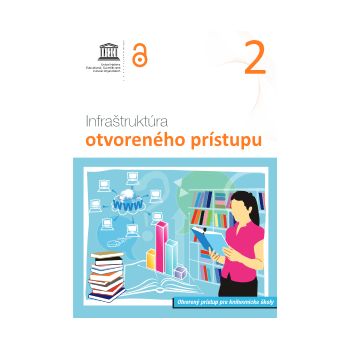
Infraštruktúra otvoreného prístupu

Infraštruktúra otvoreného prístupu

E-book

E-book

Ľubica Jamborová et al.

Textbook from Module 2 "Open Access Infrastructure." This module deals with open access resources across all types, their characteristics, nature, features, planning, execution, selection of appropriate technical standards, establishment of basic procedures, and sustainability practices.

All stakeholders are addressed, including institutions, sponsors, users, and future content creators. Emphasis is placed on e-journals and e-repositories, as well as new trends in open access.

Download the e-book for free

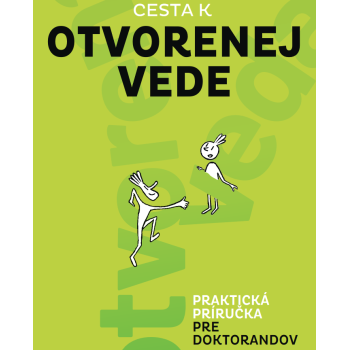
Cesta k otvorenej vede

Cesta k otvorenej vede

E-book

E-book

Johann Berti et al.

The manual is part of the collection Path to Open Science by the French Ministry of Higher Education and Research. It is designed to guide postgraduate students at every step of their research, from planning the scientific approach to publishing the research results.

It provides a set of tools and best practices that can be directly implemented in research across any discipline.

We hope this manual will motivate doctoral students and equip them with the tools to realize their ambitions in open science through sharing findings and data with the broadest possible audience.

Download the e-book for free

A guide to the didactics of biology

A guide to the didactics of biology

E-book

E-book

Katarína Kimáková

The textbook is intended for university students who are preparing for the profession of biology teacher. The structure of the book is similar to an encyclopedia, with one page devoted to each content item, but the topics of the chapters and subchapters follow each other.

The explanatory text on the page illustrates the diagram and there are notes and links to other sources of information. For better orientation, the content of the textbook is divided into 8 sections, which cover several chapters. It follows the general didactics, which it connects with the teaching of biological content. The book provides a basic orientation in the approaches to learning this subject, and also explains the relationship between biology as a science and the didactics of biology. It deals with teaching standards and curricula, advises on how to master biological concepts and understanding, how to communicate with students in biology classes, when and why are effective visual and practical methods. It acquaints the reader with the issue of setting goals for biological education in the cognitive, psychomotor and affective areas in relation to formative and summative assessment.

Hopeful as well as experienced teachers will find in this publication not only a look into the history of teaching biology, but also a look into the future. Current trends in biology teaching, the connection of teaching with digital technologies, the virtual learning environment and interactive simulations and models belong to science lessons today.

Download the e-book for free (pdf)

Pohyb ku kognitívnym adaptačným štúdiám. Adaptácia ako hra

Pohyb ku kognitívnym adaptačným štúdiám....

E-book

E-book

Peter Getlík

The main goal of the monograph "Moving Towards Cognitive Adaptation Studies: Adaptation as Play" was to orient current research in adaptation studies towards the empirically responsible cognitive branch of non-radical constructivism.

This intention results from the rapid progressive differentiation of adaptation studies research, which has mainly manifested itself in this area in the last two decades. With the model of adaptation as play in a cognitive-scientific perspective, author provides the possibility of predicting the nature (also in a broader sense) of the experience of adaptation. Since the form of this experience significantly shapes the products of the adaptation process into their final form, the model of adaptation as play can be applied even in the interpretation of individual adaptations. In the monograph, the author synthesized the model of adaptation as play based on the knowledge of various disciplines. In the field of cognitive sciences, he saw help from the starting points of philosophy, linguistics, informatics, psychology, anthropology, biology and neuroscience – especially affective neuroscience, which also deals with the emotional dimension of the play.

In the intersection with the essential interdisciplinary components of adaptation research, he also used the knowledge of classical and cognitive variations of literary science, film science (also theatrology) and media studies to a large extent. Consistent with other similar results of cognitive sciences, it turns out that even seemingly serious adaptations, like in many aspects of our culture, have a ludic base.

Download the e-book for free  (pdf)

Ako nájsť zmysel života v sociálnej práci s rizikovými skupinami (2. ročník Košických dní sociálnej práce)

Ako nájsť zmysel života v sociálnej práci s...

E-book

E-book

Eva Žiaková (ed.)

Proceedings of the Scientific Conference with International Participation within the VEGA Project No. 1/0282/12 Interdisciplinary Analysis of the Meaning of Life and Its Components in Socially Significant Groups of Adolescents in Terms of Its Formation and Possible Intervention.

The introductory word is a very good opportunity for us to jointly evaluate what we have managed to achieve in addressing our common scientific research task focused on the study of the meaning of life in socially at-risk groups of adolescents. First and foremost, we asked ourselves what we have discovered about the meaning of life so far, that is, what we know about it.

The second question we asked was: what surprised us about the results we have obtained so far. The third question was about what we want to do to resolve the discrepancy between what we have discovered and what we want to achieve.

The final question in evaluating the solution of the scientific research task was: what do we (not) know about the meaning of life of adolescents and want to know in the future, or what should we focus on to develop the most effective logotherapeutic and sociotherapeutic methods for social workers working with socially at-risk groups of adolescents.

Download the e-book for free (pdf)

Výchova a vzdelávanie 2014: Kontexty vzdelávania a výchovy v súčasnej perspektíve

Výchova a vzdelávanie 2014: Kontexty...

E-book

E-book

Ján Juščák - Renáta OrosováZuzana Nováková


Proceedings of the International Scientific Conference February 5 -február 2014 6, 2014

Conference proceedings of abstracts is one of the outputs of the international scientific conference entitled Education 2014: Contexts of education in the current perspective held 5 to 6 Feb 2014 at University of Pavol Jozef Šafárika in Kosice. This conference focused on the issues of education and emphasizes the current state and prospects of educational practice, topical aspects of undergraduate teacher training, health psychology in educational practice, as well as pedagogical and psychological aspects of education in primary educational institutions in view of the broad educational community. It was aimed for scientists, young university teachers, PhD students as well as experts and teachers, to present trends in education and to stimulate discussion on topical issues presented in the field of education.


Download the e-book for free (pdf)

Metodika tvorby učebných úloh a didaktických testov pre chémiu

Metodika tvorby učebných úloh a didaktických...

E-book

E-book

Mária Ganajová

The current teaching of chemistry has its specific problems. On one hand, due to the shift of the focus of chemistry curriculum towards theoretical content, the difficulty of chemistry material has increased, and in connection with this, students' interest in chemistry has decreased.

The lack of student interest in chemistry is mostly supported by the opinion that it is precisely chemistry that significantly contributes to the deterioration of environmental quality. On the other hand, we live in an era where we encounter chemical products practically everywhere. It is necessary to learn the basics of chemistry as well as possible, which makes the question of increasing interest in chemistry education and improving its effectiveness very relevant. State educational programs have been introduced into Slovak schools as a foundation for the creation of school educational programs. These emphasize not only acquiring a certain amount of knowledge but also the development and enhancement of key and specific competencies of students, preparing them for lifelong learning and their application in life.

Therefore, increasing attention is being paid to one of the fundamental didactic tools for raising student activity in teaching, and thus improving the effectiveness of chemistry education – learning tasks. From both theory and practice of chemistry teaching, we know that learning tasks, questions, examples, exercises, etc., are among the important components of every teaching lesson. Learning tasks are applied in all phases of teaching – in the motivational phase, the phase of acquiring knowledge, the phase of consolidating knowledge, and the phase of checking the acquired knowledge. It is therefore clear that every teacher will sooner or later find themselves in a situation where they will have to select learning tasks from textbooks, workbooks, collections of problems and examples, or create them themselves.

This scientific monograph is intended for educational specialists and chemistry teachers, aiming to familiarize them with examples of various types and forms of learning tasks and the basics of their creation in chemistry. It can also be helpful for them in preparing certification works focused on test creation and their statistical evaluation.

Download the e-book for free (pdf)

Reflexia pedagogických možností vých. systémov vybraných detských a mládež. organizácií  v edukačnom priestore SR

Reflexia pedagogických možností vých. systémov...

E-book

E-book

Ján Juščák - Milan Darák

The aim of the monograph was to analyze the pedagogical possibilities of educational systems within children's and youth organizations, with an emphasis on those targeting the age group of children up to 15 years.

The starting point was an analysis of the current state of theory and practice in children's and youth organizations, with the intention of describing prevailing trends in their development and activities. This publication closely follows the previous monograph (Juščák, J. – Darák, M.: 2015), in which we processed, according to a unified methodology and using generally accepted pedagogical terminology, the collected available materials on the educational systems of selected (most representative) children's and youth organizations in Slovakia. Through a subsequent comparison of the obtained empirical data on educational systems, we aimed to identify their similar (identical) as well as specific (distinct) elements as a basis for establishing categorization criteria for their classification.

The culmination of our efforts was an attempt to characterize a children's organization as an educational institution, describing its characteristic features, functions, aims, content, principles, and educational methodology.

Download the e-book for free (pdf)

Reflexia pedagogických možností vých. systémov vybraných detských a mládež. organizácií  v edukačnom priestore SR

Reflexia pedagogických možností vých. systémov...

E-book

E-book

Ján Juščák - Milan Darák

 The aim of the monograph was to analyze and address the issue of educational systems within children's and youth organizations, with an emphasis on those focused on the age category of children up to 15 years.

The starting point was an analysis of the current state of the educational environment in terms of the systemic nature of education and the basic categories of the educational system. The collected available materials on the educational systems of selected (most representative) children's and youth organizations in the Slovak Republic were subsequently processed according to a unified methodology and using generally accepted pedagogical terminology.

Download the e-book for free (pdf)

Školský systém na Slovensku v medzivojnovej Československej republike (1918 - 1938)

Školský systém na Slovensku v medzivojnovej...

E-book

E-book

Soňa Gabzdilová

The educational system (schooling) is one of the most effective tools for shaping the young generation in any advanced society. Schools not only create the knowledge base necessary for fulfilling the demands of the economy and the social sphere, but they also shape the national and ideological identity of each member of society. The school plays a decisive role in forming positive values, but it can also become a breeding ground for xenophobia and racist attitudes. The school has an irreplaceable role in creating national consciousness, identification with one's own nation, its history, the heroic deeds of ancestors, and the meaning of its existence.

After the dissolution of Austria-Hungary, there were fundamental geopolitical changes in Central Europe. One of these was the creation of Czechoslovakia, a state founded on radically different principles than pre-war Hungary. The founders of the Czechoslovak Republic (CSR), the personalities who decisively determined the character of the political system in the newly established republic, did not belong to the privileged classes of the previous regime. Unlike Hungary, where political power was controlled almost without exception by the nobility, the elite in Czechoslovakia consisted of men who were radical critics of Austria-Hungary.

A fitting example was the most influential figure of interwar Czechoslovakia, President Tomáš Garrigue Masaryk. Despite his origins, Masaryk was perceived by both Czechs and Slovaks as the founder of the state, a legendary figure whose political and social influence far exceeded the powers of the presidential office.

Download the e-book for free (pdf)

This website uses cookies to ensure you get the best experience on our website