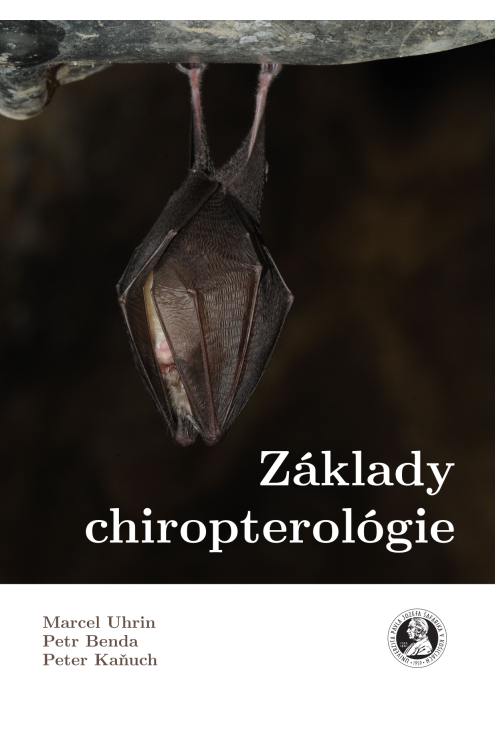
Marcel Uhrin - Petr Benda - Peter Kaňuch
Bats represent a unique group of mammals, characterised by different life strategies. They are the only mammals capable of active flight, which, combined with their almost exclusively nocturnal activity, has led to the evolution of specific adaptations. One of the most striking is echolocation, which enables them to orientate themselves perfectly in their surroundings in the dark. Bats are mainly native to the tropics, but have also colonised areas outside the tropics, which, has led to a complex phenological cycle with active phases and interruptions during hibernation, especially in temperate zones. In this diverse and species-rich group (almost 1,500 known species), there is a wide range of social organisation as well as feeding and roosting strategies. The textbook "Fundamentals of Chiropterology" brings the current state of knowledge about these extraordinary animals in eleven chapters and two appendices for the first time in the Slovak language.
Data sheet
Specific References
E-book
Stela Csachová - Ján Kaňuk - Alena Gessert - Ladislav Novotný - Štefan Gábor - Jozef Šupinský
This book addressed the inquiry-based learning and teaching with the support of geospatial technologies. Today, geospatial technologies are influencing geography teaching learning, particularly in secondary education. Theoretical framework gives the reader the insight to inquiry-based learning, with special focus on inquiry in geography. The one-by-one step of inquiry is analysed in detail. The major part of the book presents the eleven models of geography lessons, representing the subject content of physical, human and regional geographies, various levels of inquiry and use of different geospatial technologies. The readers are acquainted with the use of geographic information system (particularly Google Earth and ArcGIS online), web portals, webGIS, open data, mobile applications and new forms of 3D cartographic visualisation (virtual reality, 3D print, dynamic 3D map) in teaching geography. The lesson models were tested with the students to be geography teachers in school year 2021/2022. This books serves as resource mainly for undergraduate teacher students and in-service geography teachers.
Download e-book for free (pdf)
E-book
The university handbook Elementals of Population Geography and Demography - Part I, as an introduction to population studies, is primary study material for students of the geography study program, as well as for students of the Information Systems in Public Administration study program at the Pavel Jozef Šafárik University in Košice, but also for the wider public interested in about population phenomena and their spatiality. Among other things, the handbook offers the latest population reports in the world and its regions.
The aim of the handbook is to introduce young geographers to the basics of population research, which includes the most frequently used tools and methods in geographic analysis. The first part of the handbook contains an introduction to the scientific disciplines of population geography and demography with an overview of basic sources of demographic data.
The next part discusses the issue of anthropogenesis, i.e. the development of humans from our ancestors and the spatial spread of humans across our Earth. Part of this part is the recent development of the world population and changes in the size and distribution of the global population over time. The last part analyses how the population is distributed in the world and in relation to the geographical components of the space.
E-book
Working with this study text requires adequate knowledge of physical chemistry, physics, and biology, as navigating the presented material becomes challenging without this foundation. A solid grasp of mathematics is essential and aids in understanding colloidal chemistry problems. The textbook, structured into individual chapters, first addresses optical and molecular-kinetic properties after classifying and characterizing disperse systems.
This university-level textbook is primarily intended for students in chemical and ecological disciplines at the Faculty of Science, Pavol Jozef Šafárik University in Košice. It does not aim to exhaustively cover every detail of the subject, as comprehensive treatments are already available in specialized monographs on colloid and macromolecular chemistry, as well as in foundational physical chemistry textbooks.
E-book
This textbook is intended for master's degree students and is a follow-up to the Computational Physics I course studied at the bachelor's level. The content of the textbook Computational Physics II focuses on stochastic methods of solving physical problems, mainly on Monte Carlo (MC) simulation of many-particle systems.
The focus on this computationally intensive approach is motivated by the gradual increase in the computing capacities of ordinary computers as well as the introduction of high-performance computing clusters. This has led to significant progress in the development of new simulation techniques, thanks to which MC simulations have found application in various areas of research and application practice. Considering the main research focus of the department, this text is particularly devoted to the presentation of basic and more advanced MC simulation techniques applied to a simple Ising spin model in order to investigate its magnetic, thermodynamic and critical properties.
The next part is devoted to MC simulations of random processes. It focuses on the simplest but also the most basic random walk process and demonstrates its applications in financial analysis and the solution of a quantum system described by the time-dependent Schrödinger equation. The last part is dedicated to the basics of molecular dynamics, applied to simulating the classical movement of atoms in a given force field. By mastering the problems addressed in this course, students will obtain a potential tool for working out of their diploma theses, or a methodology useful for their further scientific and research practice in the field of investigating of complex systems.
The lectured topic is subsequently exercised in the form of preparing projects implemented in the freely distributable software Octave, which is easy on the user's programming skills and which students have the opportunity to familiarize themselves with in the previous study.
Download e-book for free (pdf)
E-book
This is a supporting text for the undergraduate students interested in quan- tum theory of magnetism. The text represents an introduction to various theoretical approaches used in this eld. It is an open material, in the sense that it will be supported by appropriate problems to be solved by student at seminars and also as a homework.
The text consists of four chapters that form closed themes of the in- troductory quantum theory of magnetism. In the rst part we explain the quantum origin of the magnetism illustrating the appearance of the ex- change interaction for the case of hydrogen molecule. The second chapter is devoted to the application of the Bogolyubov inequality to the Heisenberg model and it represents the part which is usually missing in the textbooks of magnetism. The third chapter deals with the standard spin wave-theory including the Bloch and Holstein-Primakoff a approach. Finally, we discuss the application of the Jordan-Wigner transformation to one-dimensional spin-1/2 XY model.
The primary ambition of this supportive text is to explain diverse math- ematical methods and their applications in the quantum theory of mag- netism. The text is written in the form which should be sufficient to de- velop the skills of the students up to the very high level. In fact, it is expected that students following this course will able to make their own original applications of the methods presented in this book.
E-book
Dušan Barabas - Alena Labunová
These study materials aim to provide basic information about biogeographical issues from a geographical perspective, i.e., a perspective focused primarily on the aspect of spatial differentiation of the biosphere. The basis for the division of the biosphere is its historical development, during which individual taxa and communities were formed.
The historical development of the biosphere did not occur under stable, constant conditions, but rather in ever-changing conditions caused by the position of our planet within the solar system, the position of the Earth's axis relative to the ecliptic, and also the position of the solar system within the galaxy. All changes in the Earth's position, together with the movement of continents (drift) and climate changes, created the prerequisites for the spatial expansion of the biosphere. The historical development of the biosphere, various perspectives, the hierarchical level of differentiation, and the causes of differentiation are incorporated in this study material, whose aim is to outline the basic principles of this division.
The goal is also to highlight certain differences in the understanding of terminology, as well as to point out some fundamental relationships operating within the landscape system in the broadest sense of the word. The section devoted to the ecological principles of the functioning and formation of the landscape system, according to MIČIAN and ZATKALÍK (1984), outlines the issues of understanding the terms ecosystem and geosystem. For this reason, the presented text includes chapters that attempt to explain the understanding and approach to some basic concepts.
These study materials are intended for students of single-subject, interdisciplinary, and supplementary studies as basic teaching material. By expanding the knowledge from this study material with further information, which is elaborated in more detail in the literature listed in the bibliography of this text, graduates will gain a comprehensive view of biogeographical issues.
Authors
E-book
Juraj Ševc - Anna Alexovič Matiašová
Among students of single-discipline and interdisciplinary biology studies at faculties with a natural science focus, there often arises a problem in defining the scope of the curriculum when studying the subject of Human Anatomy. The presented study material aims to help students of non-medical scientific fields navigate the extensive anatomical terminology and to limit the amount of required anatomical terms to an optimum, so that alongside mastering Latin nomenclature, students still have sufficient capacity to memorize additional knowledge in the areas of systemic, comparative, developmental, and functional anatomy.
Emphasis on organizing individual anatomical terms into logical units simultaneously supports a hierarchical view of the architecture of the human body. Despite its seemingly self-serving nature, anatomical terminology thus becomes the framework upon which students build knowledge from more or less related scientific disciplines studying the human body and the processes occurring within it throughout their further studies. At the same time, alongside this ambition that goes beyond the scope of the anatomy discipline, the Anatomical Terms follow a long tradition of anatomical handbooks while respecting the valid Latin and Slovak anatomical nomenclature.
This script represents a practical supplement to university textbooks of Anatomy or Neuroanatomy and especially to anatomical atlases, but it certainly does not aim to replace them. Here you will find all the necessary terms gathered in one place, which you can always have at hand on your phone, e-reader, or laptop. The emphasis on organizing individual anatomical terms into logical units supports a hierarchical view of the architecture of the human body, and the inclusion of a brief introduction to each system is intended to encourage you to seek further, more detailed information about the structure and function of the given organ system.
E-book
Selected tasks and problems from biochemistry – metabolism follow biochemistry lectures on metabolism and individual metabolic pathways for students of the second and third year of the bachelor’s degree in the fields of chemistry, biology and their combinations with other fields. Scripts provide an opportunity to better understand the lectured subject matter of metabolism through the solution of tasks and problems as serve as a basis for one-hour exercises. The scripts are divided thematically into eleven chapters, and each chapter contains 10 tasks and 7 problems. At the beginning of the chapters there is a short description and explanation of the given metabolic pathway. However, when solving the tasks, the student must focus mainly on the curriculum that was presented on the given topic in the lecture. Subsequently, at the end of chapter, answers to problems are also presented. These scripts are intentionally accessible only in electronic form. The reason is the effort to continuously update and modernize individual tasks.
Download e-book for free (pdf)
E-publication
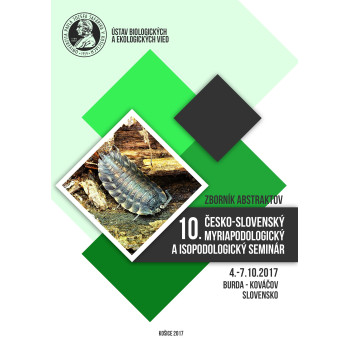
The Book of Abstracts of The 9th International Conference on Novel Materials Fundamentals and Applications, NFA 2025, contains 46 contributions from the participants of this conference. This congress is primarily focused on novel materials, ranging from theory to practical applications, with the aim of demonstrating how fundamental discoveries can lead to innovative implementations. All contributions are inspiring and professionally prepared.
Peter Fedoročko a kol.
Vysokoškolský učebný text Prírodovedeckej fakulty UPJŠ.
E-book
Flow cytometry is a diagnostic and research technique that enables rapid analysis of cells, nuclei and organelles of plants and other organisms. In plant biology, it is most often used for DNA content analysis in a wide range of applications. It is the method of first choice and its importance is even increasing compared to competing technologies. It is unrivaled in speed, accuracy, repeatability and low cost. Flow cytometry has become a standard tool in laboratories focused on biological-ecological plant research.
This textbook provides information on the historical development of flow cytometry and its establishment in the analysis of the plant genome. It describes the procedure of sample analysis to determine the nuclear DNA content and presents the basic applications, such as determination of genome size, ploidy level and reproduction modes of plants and determination of endopolyploidy level in plant tissues. These college textbooks are intended for students, teachers and anyone interested in the use of flow cytometry in scientific work with plant cells.
Download e-book for free (pdf)
E-book
Zuzana Orságová Králová (ed.)
The scientific book of abstracts is a summary of the contributions of teachers, scientists and other conference participants, which contain the original results of their scientific and research activities. Their work will be the subject of the next domestic conference "New trends in chemistry, research and education 2019". The conference is a space for dialogue between scientific academics on the one hand and professional staff and students on the other.
The contributions published in this volume can be divided according to content into the field of analytical, inorganic, physical, organic chemistry, biochemistry and didactics of chemistry. All contributions are interesting and can be used in further creative scientific and research work, in the process of education and in practical work.
E-book
Michal Hnatič - Tomáš Lučivjanský
This textbook is primarily intended for first-year master's degree students at Pavol Jozef Šafárik University in Košice, especially those in the nuclear physics, subnuclear physics, and theoretical physics programs. For many years, these lectures were taught by one of the authors at this university, and naturally, over time, there arose an effort to provide these lectures to students in printed form.
In this textbook, we will focus mainly on classical field theory, its quantization based on the operator approach, and the introduction of interactions. Descriptions based on functional integration, Feynman diagram techniques, and more advanced parts will be covered in a subsequent volume of the textbook. In this context, we want to emphasize that in many modern quantum field theory textbooks, the operator approach is used to a lesser extent and is replaced by the approach using (functional) path integrals.
This is probably due to time considerations, as the functional approach leads much faster to practical calculations. On the other hand, we believe that the operator approach is better from a pedagogical point of view. It is much closer to the traditional quantum mechanics course, which is often based on the Schrödinger or Heisenberg formalism. Therefore, students can much more easily follow the flow of ideas that led to the construction of quantum field theory and its fundamental concepts.
Download e-book for free (pdf)
E-book
This electronic material focuses on the subject of secondary metabolism and its products - secondary metabolites. The material gives an overview of the basic building blocks and construction mechanisms through which molecules can be synthesized in living organisms (plants). The processes of formation of the mentioned metabolites are explained using the basic mechanisms of organic reactions. Several of the secondary metabolites presented have a remarkable biological profile and are used as therapeutics or serve as lead compounds for the development of novel pharmacological agents. This electronic document is primarily intended for students of the Master's degree programme in Organic Chemistry as supporting material for the profile subject Chemistry of Natural Products.
Download e-book for free (pdf)
E-book
In the presented university textbooks, so-called satellite-based augmentation systems (SBAS, from the English Satellite Based Augmentation Systems, in Slovak Systémy rozširujúce základné satelitné systémy) are also discussed. These systems enhance, expand, or refine the basic satellite navigation systems. They are supportive satellite systems for GNSS (Global Navigation Satellite Systems). Currently, the long-operational American GPS and Russian GLONASS systems, as well as the partially operational European Galileo system (since December 2016), have and will continue to have broad applications in various fields of human activity, both professional and personal.
The university textbook Globálne navigačné satelitné systémy (Global Navigation Satellite Systems) reflects the current progressive development in the technological and instrumental principles and components of such satellite navigation systems. It presents the state of these satellite technologies from their historical origins and development to the present. The rapid advancements, particularly in the instrumental base of satellite navigation systems, will require updates on their current state in future editions of these university textbooks.
This website uses cookies to ensure you get the best experience on our website