Slovenčina


Marek Stupák et al.
Medical Chemistry presents an overview of the most important topics of general, organic and bioinorganic chemistry for students of General and Dental Medicine study programs. Its aim is to provide a theoretical basis for the study of the subject Medical Chemistry and for understanding processes and chemical reactions which are taking place in the human body.
Each topic directly links chemical principles to the processes in living organisms and thus can help the students to clearly see the application of the presented information. Therefore, it also provides a good starting point for further study of Medical Biochemistry, for which the knowledge of these principles is necessary.
Download e-book for free (pdf)

Data sheet
E-book
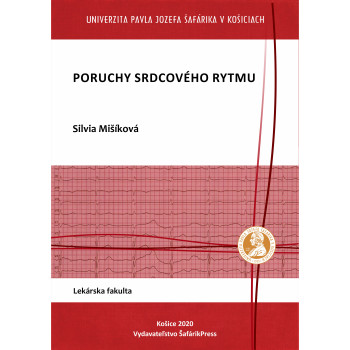
This learning text deals with heart rhythm disorders. The book is intended for medical students. There are in a simple way characterized bradycardic and tachycardic heart rhythm disorders. The script explains mechanism of arrhythmias, symptoms, diagnostics, and differential diagnostics and treatment. The greatest emphasis is focused on detection of the arrhythmias based on the surface ECG. All arrhythmias are explained by clinical ECG.
In conclusion, there is ECG quiz which consists of 27 clinical ECG records.
Alžbeta Blichárová a kolektív
“Pathology Part 1 (winter semester) - Practical lessons for students of general medicine” represents the first half of the university textbook designed for the pregradual study of pathology. The textbook complements the lectures of pathology and serves as a source of information for students of general medicine, that are preparing for the practical as well as the final oral examination.
In this part of the “Pathology” series, seventy selected histopathological slides are presented. Each selected slide is provided with general information in relation to etiology and pathogenesis of the disease, as well as with corresponding morphological features, including the gross appearance and the most important histopathological characteristics. The textbook summarizes the basic concepts of general pathology that are necessary to master the broad field of systemic pathology in the second semester.
Keywords: general pathology – histopathological slides – general medicine – gross appearance – microscopic image
E-book
Zuzana Dankulincová - Daniela Husárová - Andrea Madarasová Gecková - Jaroslava Kopčáková
The publication entitled Health Psychology serves as background and teaching material. The text is structured to bring theoretical knowledge about the topic, current research findings in the field, and practical tips.
It provides comprehensive information on key areas of the field of health psychology and is designed for students to acquire and deepen their knowledge that could be implemented in their everyday practice.
Download e-book for free (pdf)
The presented material provides a complex view on rehabilitation of patients in neurology. It is a second completely elaborated and extended edition of the original textbook –Neurology overview for physiotherapists. It contains data on etiology of neurological diseases, pathophysiology, examination in physiotherapy and the possibilities of a conservative treatment. From special treatment methods the faciooral therapy, acral coactivation therapy are described in greater details and the possibilities of diagnosis and training of cognitive functions. In annexes standardized questionnaire methods are described, which can be used in degree (final) works. A part of the publication is the Chapter on vertebrogenic syndromes which are frequently observed in neurological disorders.
Author