Active filters

  • Year of publication:: 2012
  • Year of publication:: 2024
  • Year of publication:: 2025
  • Year of publication:: 2025
  • Year of publication:: 2025
  • Year of publication:: 2026
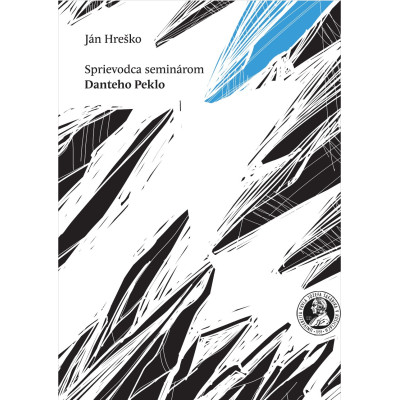
Sprievodca seminárom Danteho Peklo

Sprievodca seminárom Danteho Peklo

E-book

E-book

Ján Hreško

This teaching guide is intended for teachers and instructors who are introducing new readers to Dante’s Divine Comedy, in particular the first cantica, Inferno, offering support and a grounding in the cultural background of one of the most important works of European medieval literature. Rather than forming yet another academic contribution to the study of Dante and his work, the guide focuses on using a guided seminar reading method within study groups and fostering meaningful discussions about the central themes and issues of the Inferno. Under the guidance of a teacher, students are encouraged to engage actively with the motifs and moral universe of this classic literary work – a primary source that cannot be replaced by any retelling. The proposed interpretations draw on established scholarly commentaries to deepen the readers’ understanding of the text, and each lesson is accompanied by a selected bibliography. The guide includes thematic introductions presenting Dante Alighieri as both author and protagonist within the Divine Comedy. It also offers carefully selected questions designed to foster textual comprehension and stimulate discussion during seminar readings of selected cantos of the Inferno. In addition, the publication includes special lessons on associated literary and artistic works. The guide features a wealth of original illustrations and an extensive range of visual materials. The course thus builds upon the traditional practice of seminar-based readings of works by the great authors, an approach which continues to form part of the curriculum at many liberal arts colleges, by integrating innovative techniques into this established educational method.
Download the e-book for free (pdf)

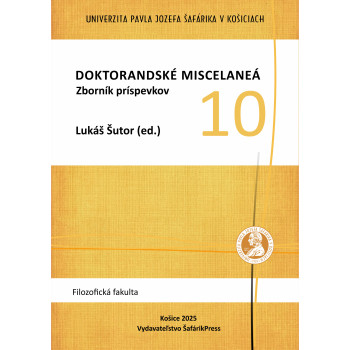
Doktorandské miscelaneá 10

Doktorandské miscelaneá 10 (2025)

E-book

E-book

Lukáš Šutor (ed.)

Okrúhle číslo Doktorandských miscelaneí nás vyzýva na krátke bilancovanie. V desiatich zväzkoch zborníka sme uverejnili spolu 116 príspevkov zo siedmich doktorandských študijných odborov. V každom čísle boli zastúpené štúdie z literárnej vedy (v prvých šiestich zväzkoch bol pre interdisciplinárne filologické štúdie používaný názov literárna veda/slovakistika). Z ostatných odborov boli najčastejšie uverejňované texty z filozofie a sociálnej práce, pričom štúdie z filozofie chýbali iba v posledných dvoch zväzkoch a štúdie zo sociálnej práce v prvých dvoch a v siedmom zväzku.

V zborníku sa snažíme udržiavať prvotnú myšlienku, ktorou bolo kultivovať domáci výskumný priestor najmladšej generácie bádateľov v interdisciplinárnom dialógu, čo si vyžaduje dosahovanie medzinárodných štandardov kvality, no na druhej strane aj zachovanie identity zborníka ako jedinečnej domácej publikačnej platformy.

Download the e-book for free (pdf.)

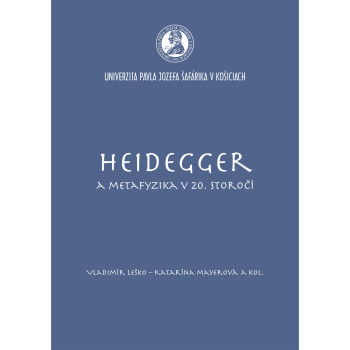
Heidegger a metafyzika v 20. storočí

Heidegger a metafyzika v 20. storočí

E-book

E-book

Vladimír Leško, Katarína Mayerová a kol.

Kolektívna monografia Heidegger a metafyzika v 20. storočí je zavŕšením bádateľského úsilia Katedry filozofie a dejín filozofie Filozofickej fakulty UPJŠ v Košiciach v riešení grantového projektu APVV-14-0706. Monografia predstavuje pokus o vyrovnanie sa s uchopením problému Heidegger a metafyzika v kritickej konfrontácii s jeho najvýznamnejšími filozofickými súčasníkmi v chápaní a riešení daného problému. V prvom rade ide o snahu vyrovnať sa s otázkou metafyziky ako filozofického problému vo vlastnej Heideggerovej tvorbe tak, aby čitateľ mal možnosť najprv sa zoznámiť s jeho vlastným riešením tejto otázky v priereze celej jeho tvorby. To skúmajú prvé tri kapitoly našej práce, ktorých autormi sú Vladimír Leško a Richard Capobianco.

Download the e-book for free (pdf) 

Heidegger, metafyzika a Gréci

Heidegger, metafyzika a Gréci

E-book

E-book

Vladimír Leško, Róbert Stojka a kol.

Kolektívna monografia Leško, V. – Róbert Stojka a kol.: Heidegger, metafyzika a Gréci (Košice: UPJŠ 2016, 695 s.) je prvým historicko-filozofickým pokusom na Slovensku, ale aj v širších zahraničných kontextoch, vysporiadať sa s takto zvolenou ústrednou témou Heideggerovho diela. Práca je členená do troch základných časti. V prvej, ktorá je nazvaná od Augustína k Aristotelovi, autori jednotlivých kapitol skúmajú genézu Heideggerovho vzťahu ku gréckej filozofii a skúmanie hlavnej Heideggerovej otázky – otázky bytia - od jeho prvých prednáškových kurzov k Aristotelovej filozofii z rokov 1921/1922 až do roku 1929, keď mu vychádza práca k Aristotelovej Metafyzike. Naše skúmanie jednoznačne potvrdzuje skutočnosť, že v týchto Heideggerových raných textov (prednáškových cyklov) sa postupne rodia všetky dôležité filozofické pozície, ktoré mali svoje zavŕšenie v práci Bytie a čas.

Download the e-book for free (pdf)

Leibniz a Heidegger – veta o (dostatočnom) dôvode

Leibniz a Heidegger – veta o (dostatočnom) dôvode

E-book

E-book

Martin Škára

Philosophy is interwoven throughout its history with several principles that bring light and order to this kind of thinking, whether it is a systematic or a non-systematic form of philosophizing.

Each of the principles represents in its own way the origin (ἀρχή) of all deductive reasoning, but not all philosophical statements and conceptions are obliged to proceed in the same way, for not all philosophical statements and conceptions are calculus. Actually, such a form of rationalist philosophizing is really a minority in the history of philosophy. But in spite of its minority presence, it will always attract attention to some extent, whether by becoming a pillar of thought itself and finding a permanent place in its foundations, or by becoming an indispensable mainstay of philosophical reasoning. In fact, there are not many principles in the history of philosophical thought.

The state of affairs is primarily due to the heterogeneous and in many cases irrationalist nature of philosophical thinking.

Download the e-book for free (pdf)

This website uses cookies to ensure you get the best experience on our website