Slovenčina


Richard Jedlička - Jaroslav Koťa - Jan Slavík
Publikace se zabývá řadou důležitých témat, jako je například:
• charakteristika pedagogické psychologie, její historický vývoj a interdisciplinární vztahy
Kniha je určena především studentům pedagogických oborů, množství nových podnětů v ní však najdou také stávající učitelé, vychovatelé, trenéři, mistři odborné výuky, sociální pedagogové a psychologové působící na děti a mládež.

Data sheet
Specific References
E-book
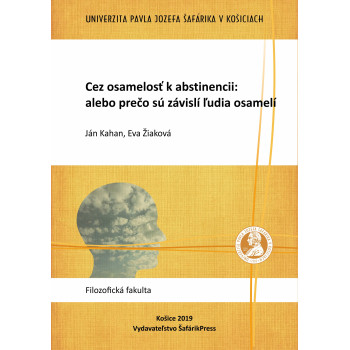
The monograph focuses on the issue of loneliness among substance-addicted people in the context of abstinence prospects and re/lapse prevention. In the monograph these phenomena, several theories were integrated and applied in the context of the ecosystem meta-framework of social work and practical contexts. The ecosystem meta-theory serves as a meta-construct with the ability to encompass the complexity of social phenomena as well as that of human beings within the structure of their living and social environment, formal and informal networks, and close intimate relationships.
In this monograph are presented research sample consisted of 235 respondents – hospitalised addicts undergoing urgent treatment, abstaining A-club members as well as members of psychotherapy and self-help groups. The research showed that abstainers were statistically less lonely than the hospitalised respondents. Quantitative data of research are complemented by qualitative data collected in four case studies; two of them focused on two long-term abstainers from alcohol and drugs, while the other two case studies dealt with two respondents in post-hoc treatment undergoing the resocialization process. The research also showed that respondents who broke abstinence felt lonelier than their successfully abstaining counterparts.
The results were supported also by the fact that a statistically significant inversely proportional relationship was identified between the duration of abstinence and loneliness rate. Gender differences were found between the hospitalised addicts in all loneliness dimensions. Naturally, the combined research was limited in certain aspects, mainly in terms of the size and proportional distribution of the research sample and its subgroups, test battery extent, and general nature of the population studied. Triangulation among quantitative and qualitative with the theoretical starting points confirmed the existence of a relationship among loneliness, addiction, and prospect of abstinence.
E-book
Magdaléna Halachová - Denisa Rovenská
The monograph theoretically analyzes the virtual environment and its aspects, offers insight into the identity of the child in the virtual environment, the necessity of social support and the diversity of social relationships in the real world and virtual reality.
Furthermore, it contains the fundamental training program designed to minimize the risks of the virtual reality, because adolescents are often exposed to risks uncontrollably. For that reason it focuses on adolescent and empowering optimal self-image, as well as creating and maintaining real social networks.
The set of experiential-educational activities is conceptually divided into two main areas. The first one is content-focused on the adolescent, his/her psychological capability including opinions, attitudes, emotions, competences, and self-reflection.
The second one focuses on interpersonal real and virtual relationships, the recognition of the advantages and disadvantages of internet communication and face-to-face interaction, and last but not least for more optimal use of the Internet and preference for real social interaction.
Authors
E-book
The burnout syndrome in the simplest sense is a state of total physical and psychological exhaustion. Its cyclical course may be misleading, often underestimated and neglected on the part of a burned-out individual, as well as by its surroundings. The neglection of warning signals strengthens the field of its occurrence and impact.
Monography is one of the methods with which we strive to draw attention to the problem of burnout syndrome in the performance of a helping profession. Based on this, we have focused on determining the frequency of occurrence of burnout syndrome in assisting professions based on predetermined risk factors (specific profesion, length of practice, motivators) in order to verify, confirm or refute predefined factors. The subject of this research was also to examine the correlation between the aforementioned factors, the quality of professional life and the strategies for managing stress and stress situations.
The monography is intended for helping profesions e.g. social workers, nurses, doctors etc. We also believe that, this monography will be also benefit for a wider range of helping professions, as well for all those involved in the his problematics.
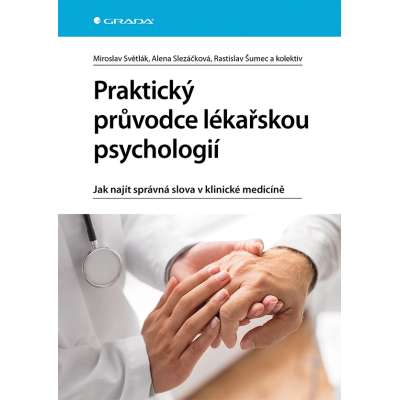
Miroslav Světlák a kolektív
Jak komunikovat s pacientem v časovém tlaku, emocích i náročných situacích? Tato kniha přináší praktické, okamžitě využitelné postupy pro každodenní klinickou praxi. Kolektiv odborníků z medicíny a psychologie přehledně shrnuje klíčové komunikační dovednosti – od vedení rozhovoru a edukace pacienta přes podporu spolupráce až po sdělování závažných zpráv či komunikaci v krizových situacích. Publikace je navržena tak, aby ji bylo možné používat podle aktuální potřeby – stačí nalistovat konkrétní kapitolu. Každá z nich nabízí stručné vysvětlení, oporu v empirii, modelové rozhovory i konkrétní doporučení do praxe. Praktický průvodce, který pomáhá najít správná slova ve chvílích, kdy na nich záleží nejvíce.