 English
 Slovenčina


History (e-books)
There are 10 products.
Active filters
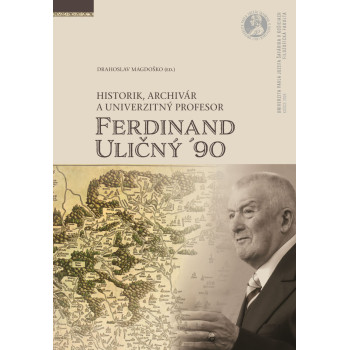
Historik, archivár a univerzitný profesor...
E-book
E-book
Drahoslav Magdoško (ed.)
Hlavný zámer zborníka, ktorý držíte v rukách, predstavuje práve vzdanie pocty historikovi, ktorý svojim úctyhodným vedeckým dielom výrazne prispel k utváraniu slovenskej historiografie, predovšetkým medievalistiky. Zároveň sa tu vyslovuje uznanie za rozsiahlu a v nemalej miere priekopnícku prácu archivára, ktorý pomáhal rozvíjať moderné archívnictvo na východe Slovenska. A v neposlednom rade ide o formu poďakovania za prácu vysokoškolského pedagóga, ktorého predmety absolvovali stovky študentov, a ktorý si svojim podnetným prístupom získal ich srdcia. Na všetkých týchto troch rovinách má cenné zásluhy prof. PhDr. Ferdinand Uličný, DrSc. (*18. 8. 1933, Ploštín), ktorý v lete roku 2023 oslávil životné jubileum 90. rokov.
Študentská vedecká konferencia XII.
E-book
E-book
Mikuláš Jančura - Maroš Melichárek
The Textbook is based on the output of the twelveth year of the student scientific conference held in December 2023. The student scientific conference is a study subject included in the study plans of the Department of History, Faculty of Arts, UPJŠ, implemented since 2011 and aims to offer space for Bc. and Mgr. degree students to present fragments of their primary research as part of the creation of their bachelor and master thesis. The aim of the presented Textbook is not only to publish these thematically broad-spectrum texts, but also to target the effort for above-standard pedagogical activities and the added value of university studies towards students in the form of publication output.This year's anthology contains 6 texts with a chronological framing from the Middle Ages to the history of the 20th century.
Moc v dejinách ľudskej spoločnosti. Stretnutie...
E-book
E-book
Simona Bilecová-Monika Tresová
Proceedings of the 13th Scientific Conference of Young Historians, organized by the Department of History of the Faculty of Arts of the University of Pavol Jozef Šafárik in Košice in cooperation with the State Archives in Košice and the Slovak Historical Society at the Slovak Academy of Sciences on 24 October 2023 The central theme of the conference proceedings of the scientific conference of doctoral students is the issue of power as an instance that is an inherent part of human existence and has been present in society de facto since its beginning. Since power and the desire for power are present even today, perhaps more than at any other time in the history of human society, the proceedings provide adequate answers to the questions: where is power born and from what does it originate? How do social science disciplines view those social groups that do not hold power? The publication consists of eight contributions by authors working at Slovak and Czech universities. The volume opens with a paper by Dávid Nykodým on power in the city of silver in the era of Jiří of Poděbrady. The administration of estates in the hands of widows in the 17th century (on the example of Judith Balassa) was discussed by Sabina Danková. The issue of the role of the university grand master in the monopolization of education during the First Empire 1808-1815 in France was examined by Michael Dudzik. The period between the two world wars on the territory of Czechoslovakia was mapped in their contributions by two authors: Simona Bilecová, who characterized the emergence and creation of the political elite on the example of the Rožňava region, and Dominik Šípoš, who evaluated the power of the party as an ideological problem of the Czechoslovak National Democracy. This line was continued by Patrik Beňuš, who analysed in detail the crisis in railway transport in the southern territory of Slovakia after 1938. Monika Tresová dealt with the activities of Catholic associations in Košice and their disappearance under the pressure of the communist power after 1948. Miriama Balvirčáková dealt with the power and its legitimacy, judicial rehabilitation of the victims of the communist regime in Eastern Slovakia in 1968-1971.
Download e-book for free (pdf)
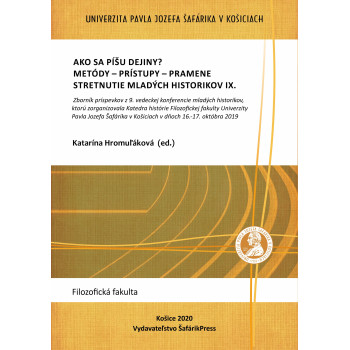
Ako sa píšu dejiny? Metódy – prístupy – pramene...
E-book
E-book
Katarína Hromuľáková (ed.)
Proceedings of the Scientific Conference. Košice, October 16-17, 2019
The proceedings titled "Ako sa píšu dejiny? Metódy – prístupy – pramene" present the contributions from the conference "Meeting of Young Historians IX," annually organized by the Department of History, Faculty of Arts, UPJŠ.
In the individual contributions, which span from the Middle Ages to the most recent history, the authors propose various theoretical and methodological research approaches to history, which currently represent fundamental prerequisites for historical research.
The ambition of the authors, as the next generation of historians, is not only to open up current questions of theoretical reflection in historiography but also to offer concrete examples supported by their own research.
Mgr. Katarína Hromuľáková
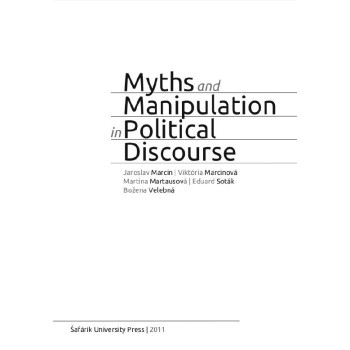
Myths and Manipulation in Political Discourse
E-book
E-book
Jaroslav Marcin - Viktória Marcinová a kol.
This little book started out in a way that probably many other scholarly publications do: When the five of us met as doctoral students and instructors in the Department of British and American Studies, we soon realized that our research overlapped on a number of points. Most prominent among those was our interest in political or politicallymotivated discourse and the study of myths and manipulation that it employed.
In the end, we decided to pool the results of our research together in order to create a more complex picture, providing a variety of perspectives and voices. In our endeavor, we were greatly aided by the financial support we received from a grant offered by the Šafárik University. The outcome of these efforts is the five chapters of this brief, but hopefully informative and insightful monograph.
In Chapter 1, Viktória Marcinová deals with the impact of totalitarian ideology on the translation of so-called “capitalist” drama during the first stage of normalization in Slovakia (1948-1968). In Chapter 2, the focus shifts to political discourse and manipulation in a democracy, as Jaroslav Marcin takes a closer look at the wartime rhetoric of American presidents. USA remains the focus also in Chapter 3, but this time the question, addressed by Martina Martausová, will be one of the myth of the American Dream and its presentation in post-9/11 United States. A similar idea, though in a different geographical-cultural context, is dealt with in Chapter 4, where Božena Velebná identifies myths of Scottish identity as portrayed in historic films. Finally, in Chapter 5, Eduard Soták will take a look at the role of the mass media within the topic of politically-motivated discourse and spread of political ideology.
Transformation of Central European Cities in...
E-book
E-book
Henrich Hrehor - Martin Pekár (eds.)
(Košice, Kraków, Miskolc, Opava) : From the Middle Ages to the End of the 18th Century.
Proceedings of the International Scientific Conference, Košice, June 28–29, 2012
Vybrané kapitoly z dejín Grécka a Ríma
E-book
E-book
The history of ancient Greece and Rome represents the culmination of achievements made by ancient civilizations in political, economic, and social spheres, as well as in understanding humanity and the world, and in art. The Greeks were the first in human history to establish a system where a certain part of society—full-fledged citizens—had the opportunity to freely participate in political decisions. They could vote, be elected to offices within the political system, and discuss issues affecting community life.
A high level of education and the pursuit of rational explanations for natural phenomena enabled the Greeks to reach a level of knowledge that European nations only achieved in the modern era. Greek accomplishments in sculpture, architecture, and literature remain an inspiration to this day.
Despite a gap of more than two millennia, their thinking and actions are relatable; their victories and defeats resonate with us, offering lessons even today.
Stretnutie mladých historikov II. Priesečníky...
E-book
E-book
Bernadeta Fabová - MikulአJančura (eds.)
Collection of Studies from the 2nd Scientific Conference of Young Historians (Doctoral Students and Researchers), organized by the Department of History of the Faculty of Arts at Pavol Jozef Šafárik University in Košice, in cooperation with the Faculty of Arts at Masaryk University in Brno, the Faculty of Arts and Sciences at Silesian University in Opava, and the Faculty of Arts at the University of Miskolc, held on October 29-30, 2012 in Košice.
The collection is the output of the second annual scientific conference of young historians (doctoral students and researchers), organized at Pavol Jozef Šafárik University in Košice. The central theme of the event was the focus on intersections of shared history. The ten studies map various intersections of the history of the V4 countries, as well as the broader Central European region, in the time span from the 13th to the 20th century. The individual studies cover a wide range of areas from the medieval road network, military and urban history, through economy, education, issues of national identity, the relationship between the state and the church, to demographic questions.
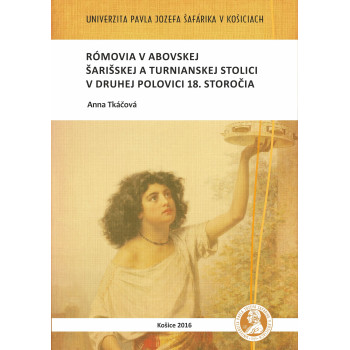
Rómovia v Abovskej, Šarišskej a Turnianskej...
E-book
E-book
The main topic of this publication is the Roma, their status, and life in Hungary, specifically in the Abov, Šariš, and Turnia counties in the second half of the 18th century, particularly according to the censuses conducted during the reign of Maria Theresa and Joseph II.
The work is divided into six chapters and fourteen subchapters. It contains three images, twenty-eight tables, and twenty-nine graphs. The introductory chapter deals with the state of research on the subject (i.e., the Roma in the second half of the 18th century) from 18th-century authors to contemporary authors who have dealt with or are still dealing with it.
In the first chapter, the author briefly mentions the Indian origin of the Roma, the social affiliation of the Roma ancestors, their departure from India, their migration until their arrival in Hungary, as well as the names given to the Roma by the surrounding world. It also mentions the first reports on the Roma in Hungary and in the territory of today's eastern Slovakia, as well as their status in Hungary until the first half of the 18th century.
In the second chapter, the author touches on the life of the Roma in the Abov, Šariš, and Turnia counties in the light of archival materials from the second half of the 18th century and presents the administrative division of these counties during this period.
The third chapter discusses the royal decrees of the Enlightenment rulers Maria Theresa and Joseph II concerning the Roma and briefly describes the political situation and the resolution of socio-economic issues in Hungary in the second half of the 18th century.
The fourth chapter is devoted in detail to the censuses of the Roma in the Abov, Šariš, and Turnia counties during the reign of Maria Theresa and Joseph II, their objectives, characteristics, contributions, as well as their shortcomings, and presents the methodology of numerical and graphical processing of these censuses.
The fifth chapter contains a comprehensive graphical comparison and evaluation of the Roma censuses from all three counties. The overall findings about the life of the Roma in the Abov, Šariš, and Turnia counties are presented in the sixth, concluding chapter.
The main finding of this research is that the regulation of the Roma was carried out with only minimally successful (from the rulers' perspective) results, as the affected Roma families continued to roam both during and after the regulation. They practiced so-called "hidden roaming."