 English
 Slovenčina


Katalóg
Subcategories
There are 15 products.
Active filters
- Categories: Law
- Categories: Medicine
- Year of publication:: 2003
- Year of publication:: 2013
- Year of publication:: 2013
- Year of publication:: 2013
- Year of publication:: 2013
- Year of publication:: 2024
- Year of publication:: 2024
- Year of publication:: 2024
- Year of publication:: 2024
- Publication language:: English
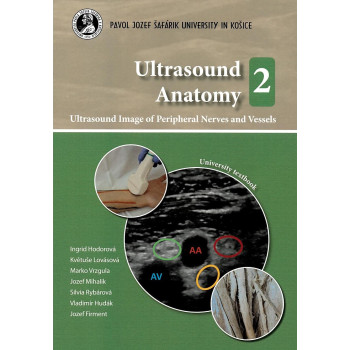
Ultrasound Anatomy 2
€25.00
Availability:
99 In Stock
Ingrid Hodorová - Květuše Lovásová
The publication is a continuation of the already published university textbook"Ultrasound Anatomy 1" and fills the gap in the medical literary market concerning the ultrasound view of peripheral nerves and vessels of the limbs, and neck as well.
Physical Examination in Internal Medicine
€25.40
Availability:
2 In Stock
Ladislav Chrobák - Thomas Gral - Jiří Kvasnička and coworkers
Publikace je anglickou verzí nejúspěšnější učebnice propedeutiky pro zahraniční ale i naše studenty. Česká i anglická verze knihy je studenty hodnocena jako didakticky nejlepší ze současně dostupných učebnic pro základní klinické obory. Studenti se systematicky seznamují naprosto srozumitelným a názorným způsobem s fyzikálním vyšetřením a interpretací získaných nálezů. Publikace provází medika jak po dobu studia, ale plně ji využije i ve své budoucí lékařské praxi. Knihu ocení i mnozí pedagogové.
FORENSIC MEDICINE - Textbook for Medical Students
E-book
E-book
Dorota Sopková - Silvia Farkašová Iannaccone
Forensic medicine is a medical discipline that is concerned with the determination of the cause of death in cases of violent and non-violent deaths, as well as the assessment of the effects of violence on the human body, including in cases of living persons. The presented textbook provides a consolidated and comprehensive review of the basic tasks and theoretical knowledge of the field of forensic medicine. Its goal is to provide a theoretical basis for the study of the compulsory subject Forensic Medicine and Medical Law in the study programs General Medicine and Dental Medicine, which has been absent until now. The authors emphasize the need to know the basics of forensic medicine in every medical field and a multidisciplinary approach to solving medico-legal questions.
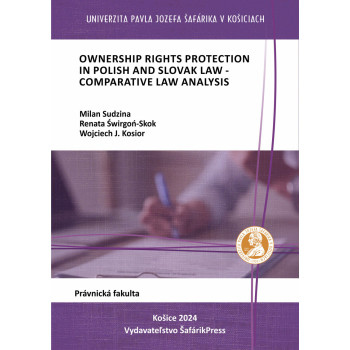
Ownership rights protection in Polish and...
E-book
E-book
Milan Sudzina, Renata Świrgoń-Skok, Wojciech J. Kosior
Given the importance of the ownership right, the aim of this monograph is to provide an analysis, a clear systematic interpretation and an evaluation of the above issue, not only from the theoretical point of view, but also from the point of view of legal practice. The protection of ownership relations is ensured in various ways. It is judicial protection, protection provided by local self-government authorities, self-help, public registration of real property and other instruments of administrative and criminal law. In connection with the transformation of legislation in Slovakia and Poland after the fall of the socialist regime, there have been many changes in the legislation of both countries concerning the protection of ownership rights. A number of private law institutions related to the ownership of real property, the use of which was impossible or limited during the socialist period, have been restored. Legislation has also been adopted to alleviate the consequences of certain property and other injustices caused by the deprivation of ownership of real property during the socialist period. The adoption of restitution legislation was the basis for restoring the ownership rights of the original owners, who were allowed to get back their real property that had been used by socialist organisations. After the end of the socialist regime, the various forms of ownership, which until then had favoured the state ownership, were abolished. Changes were made to ensure that the ownership rights of all owners had the same content and enjoyed the same legal protection. The monograph is structured in such a way as to enable a comparison of individual institutions of rights in rem under Polish and Slovak law. The monograph also analyses the relevant decision-making practice of the supreme judicial authorities. The scientific methods applied enabled the authors not only to analyse and evaluate the historical context and the current legal regulation of ownership rights in Poland and Slovakia, but also to point out possible gaps and shortcomings and to elaborate de lege ferenda proposals that can be used in future legislative activity.
Download e-book for free (pdf)
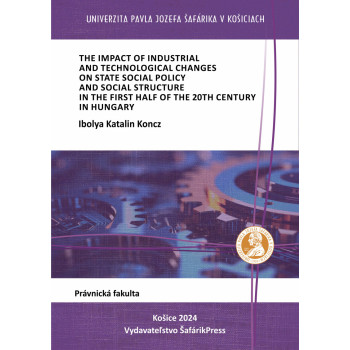
The Impact of industrial and technological...
E-book
E-book
The exploration of the interplay between innovation and society elucidates fundamental connections between human advancement and societal transformation. Technological development and its dissemination profoundly influence both the economy and social structures, often restructuring them while presenting new challenges and opportunities. This monograph delves into the theme of "Innovation and Society", focusing specifically on how technological advancements impact various facets of society ‒ from the realm of work to social policies and the evolution of gender roles. These areas are approached through a novel lens, examining them from the perspective of legislative reforms enacted and endorsed by the state. The monograph examines the characteristics and legal framework of 20th-century Hungarian society using diverse laws, regulations, and statistical data. Through analyses and documented evidence, it offers a comprehensive understanding of societal structure and operations, encompassing aspects such as the labor market, female employment, the status of industry and commerce, and shifts in legal frameworks. Detailed statistical insights into population dynamics, labor market trends, and economic sectors further deepen our comprehension of social processes. The documents scrutinize the employment distribution and conditions across different sectors, including food processing and milling, while also providing specific details on the roles, distribution, and wages of women in the workforce, with particular emphasis on occupations where women are prominently engaged. The analysis of legislative provisions delineates the historical backdrop and measures enacted for fostering social and economic transformations, covering issues such as patent legislation, guardianship laws, and family law. This compilation offers an exhaustive overview of 20th-century Hungarian society and its legal underpinnings, enriching scholarly inquiries into historical and sociological dimensions within this domain.
Download e-book for free (pdf)
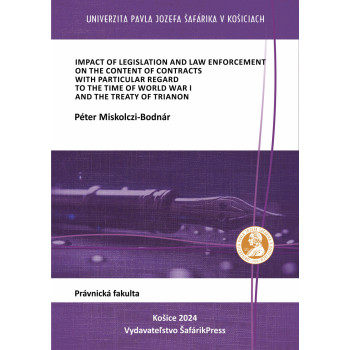
Impact of legislation and law enforcement on...
E-book
E-book
This monograph examines when the state has the right to intervene in the legal relationship between contracting parties, and if it is possible, when it can act as a legislator and/or a law applier and what the nature of the intervention may be. In this study, the limits related to the rights and obligations of the parties are scrutinized. The monograph delineates the theoretical frameworks of state intervention. The author distinguishes the forms of intervention concerning future contracts and those already concluded. The study lists the circumstances grounding the mandatory norms concerning future contracts with the presentation of Roman law. In the context of state influence on the content of contracts already concluded, judicial decisions play a stronger role than legislation and government measures also appear. The monograph presents the legislative measures affecting the contracts already concluded and the reasons thereof in a differentiated way, divided into different periods. In the author's view, World War I and especially the subsequent Treaty of Trianon brought a significant change in the assessment of state intervention, and therefore, he devotes special attention to the examination of this period. The monograph provides an outline of overview of the international tendencies of the period from the peace treaty to the present day. The study presents the era of Hungarian legislation being prone to make mandatory rules and delineates the relevant provisions of the applicable Hungarian law. At the end of the monograph the reader can find the author’s evaluative comments. While acknowledging the positive aspects of state involvement, attention should also be paid to the dangers of excessive state intervention in Eastern Europe.
Download e-book for free (pdf)
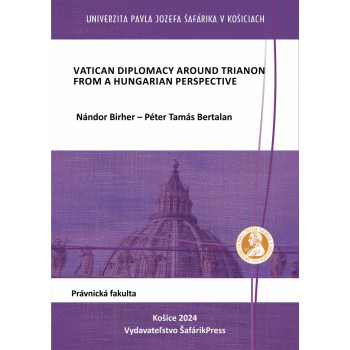
Vatican diplomacy around Trianon from a...
E-book
E-book
Nándor Birher-Péter Tamás Bertalan
The document, titled "Vatican Diplomacy Around Trianon from a Hungarian Perspective," is a scholarly work that examines the geopolitical and ecclesiastical changes in East-Central Europe after the Treaty of Trianon in 1920, with a focus on the role of the Vatican. The book explores the interactions between the Vatican and the reshaped geopolitical landscape, emphasizing the influence of religious and ecclesiastical issues on international relations. The monograph posits that Central Europe is not merely a geographic or economic concept but a "spiritual kingdom" with a shared destiny shaped by interdependence and cultural achievements, despite its history of conflicts. Central Europe's rich intellectual and cultural heritage, deeply influenced by religious convictions and Vatican diplomacy, continues to impact the region's identity and unity. The book suggests that the lessons from the early 20th century, including the Trianon Peace Treaty and subsequent geopolitical shifts, are still relevant in understanding the contemporary political and cultural dynamics of Central Europe. The authors encourage readers to reflect on the past and consider how historical events and decisions have shaped present-day Central Europe. The book aims to provide insights into the region's complex history and its ongoing struggle to find its place in the broader European and global context.
Download e-book for free (pdf)
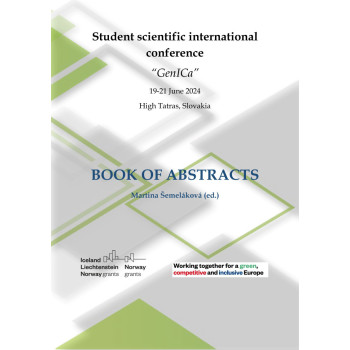
Student scientific international conference...
E-book
E-book
Martina Šemeláková (ed.)
Proceedings contain abstracts from participants of the scientific conference with international participation under the name: Student scientific international conference GenICa”, supported by the project "Bilateral relations and common knowledge between Slovakia and Iceland research at Universities on the topic "Genomic instability and cancer "GenICa", funded under the EEA and Norwegian 2014-2021 Financial Mechanism Programme (FBR02, bilateral initiatives under the Fund for Bilateral Relations at national level co-financed by EEA and Norwegian Financial Mechanism 2014-2021) which took place on 19 - 21 June 2024 in the premises of Hotel Sorea Trigan, Štrbské Pleso, Slovakia.
Download e-book for free (pdf)
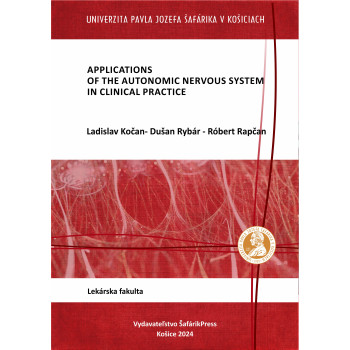
Applications of the Autonomic Nervous System in...
E-book
E-book
Ladislav Kočan - Dušan Rybár - Róbert Rapčan
The autonomic nervous system is a vital component of the peripheral nervous system, responsible for maintaining homeostasis and regulating internal processes within the body. Unlike the voluntary control exerted by the central nervous system, the autonomic nervous system operates involuntarily, innervating smooth organs, vessels, skin glands, and even exerting some influence over skeletal muscles in connection with vegetative functions such as breathing, digestion, and the urinary and gonadal systems. Its impact extends crucially to the cardiac muscles of the heart and plays a significant role in endocrine and metabolic functions, thermoregulation, as well as emotional and behavioral responses, including adaptive reactions to stressors.
The aim of this publication is to provide a comprehensive and objective exploration of the anatomical and physiological intricacies of the autonomic nervous system, offering insights into its clinical applications. Within these pages, we meticulously delineate various interventional therapeutic procedures tailored to specific diagnoses related to the autonomic nervous system, aligning each intervention with the anatomical framework of the autonomic system. The efficacy of these procedures is evaluated based on the level of evidence, as per the current recommendations of Evidence-Based Medicine.
This publication is primarily crafted for fifth and sixth-year medical students and medical professionals specializing in anesthesiology, intensive care, and pain medicine. It serves as a valuable resource for gaining a deeper understanding of autonomic nervous system function and its clinical implications, facilitating informed decision-making in clinical practice.
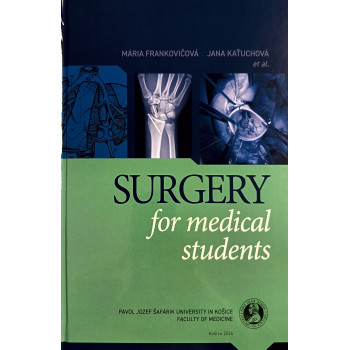
Surgery for medical students
€45.00
Availability:
97 In Stock
Mária Frankovičová - Jana Kaťuchová
Dear readers and students,
The book “Surgery for Medical Students“ is a textbook intended to be used by those studying at medical faculties and in other healthcare fields. In this textbook, the authors, encompassing all surgical specialties, have tried to provide the reader with a holistic context of the study material intended to be used in preparation for the state exam from surgery. I thank all the co-authors for their willingness and cooperation. To the students I hope you have a pleasant time reading and studying the book.
Prof. MUDr. Mária Frankovičová, PhD
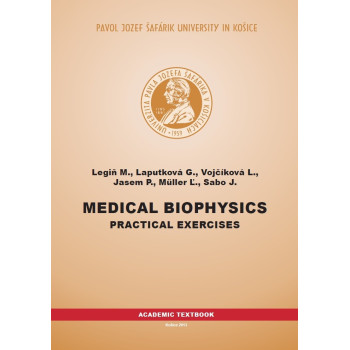
Medical Biophysics: Practical Exercises
€11.23
Availability:
19 In Stock
Michal Legiňa kol.
Progress in biology and medicine has always been significantly related to advances in physics. Not only has physics supplied instruments and methods of measurement that have led to many discoveries in physiology and medicine, but methods of physical research have changed many of the older approaches to the biologic sciences. Such circumstances have even led to development of a new scientific field: biophysics, which uses to a great extent physical instrumentation procedures applied to an experimental system. Because any instrument is an additional factor in any experimental system, it may affect the data. To interpret physical data on biological material correctly then, it is necessary to consider the characteristics of instrument response.
A practical course enables a student to acquire some skills, experience and methodological knowledge for performance of experiments and evaluation of measured data. Due to the fast development of instrumentation technology, it is not possible to teach every operation and procedure upon instruments we may use in a future. Besides the basic physical principles, the aim of a practical course is to point out some general rules and skills for instrument operation and for the interpretation of the measured values derived from such operation.
There are two kinds of lessons in practical courses. The first one focuses on laboratory measurements of some important physical quantities and the evaluation of the measured data. These measured quantities are components of the subject “medical biophysics” or of the phenomena studied. Experience provided in managing various scales and tables, as well as in the construction of tables and graphs is substantial. Lessons also enable students to repeat and to strengthen their knowledge of secondary school physics, which is useful for understanding of many phenomena studied in medical biophysics. The second kind of lesson provides experience with some of the diagnostic and therapeutic medical instruments, which can be seen in practical medicine.
The understanding of basic physical principles of corresponding instruments is both recommended and demanded. Theoretical preparation is not only an appropriate condition for the practical managing of the whole lesson, but also helps to avoid injury. This textbook, therefore, intends to help students in preparing for both the practical lessons and the final exam.
Authors
Textbook of practical physiology: part I -...
€11.50
Availability:
10 In Stock
Mária Pallayová - Štefan Kujaník
The “Textbook of Practical Physiology, Part I - Cardiovascular Physiology” by Mária Pallayová and Štefan Kujaník is a practical textbook of Human Physiology intended for English speaking medical students from general medicine and dentistry curricula.
The textbook covers basic principles in cardiovascular physiology and methods of the cardiovascular examination. Adequate knowledge of the cardiovascular physiology is important for the understanding of cardiovascular system function, as well as for the diagnosis and proper treatment of cardiovascular and other diseases. The practical tasks are constructed to facilitate knowledge acquisition and encourage students to develop practical skills, for instance the ability to follow experimental protocols, to work as part of a team, and to interpret data.
The textbook is written in English and comprises 91 pages in B5 format, grouped into twelve chapters. Each chapter is divided into six sections (Introduction, Principle, Importance, Materials, Procedure, and Protocol) to facilitate students’ understanding of the topics and assist them with preparation of the laboratory reports. The text is accompanied by explanatory figures, graphs, and tables that contribute to the learning experience.
Authors

Clinical Biochemistry
€24.90
Availability:
48 In Stock
Eva Ďurovcová - Mária Mareková
The presented textbook is intended for students of general medicine and should support their knowledge about indication and interpretation of basic biochemical tests. Clinical biochemistry continues to be one of the most rapidly advancing areas of laboratory medicine, which in line with using of modern technology more and more emphasizes the evidence-based medicine in order to improve diagnosis and monitoring of patients. Selected topics have an ambition to outline and explain the most common issues of biochemical diagnosis of in internal medicine. Individual chapters are devoted to disorders of water, electrolyte and acid-base balance, kidney and liver disease, diabetes mellitus, and biomarkers used in the diagnosis of cardiac necrosis and heart failure. Given the limited range, the textbook merely summarizes the basic knowledge that students have obtained during the study of other subjects, such as medical biochemistry, pathophysiology and internal medicine, and emphasis is given to laboratory diagnosis in accordance with the newer guidelines of professional societies. We hope that the textbook will be helpful in the study of clinical subjects and encourage students' interest in laboratory medicine.
Authors