 English
 Slovenčina


Philosophy & History of Philosophy (e-books)
There are 13 products.
Active filters


Vybrané kapitoly z axiológie (v kontexte...
E-book
E-book
Selected chapters from axiology are the result of the author's multi-year research work and also a certain fulfillment of the requirements from pedagogical practice in this subject. The chapters in this synthesizing form have not been published yet, and I am convinced that precisely in this form they can acquire higher value and greater real impact on our philosophy students.
Individual chapters focus on the problem of the collapse of traditional values, often leading to nihilism and loss of meaning in human existence. It is no coincidence that Friedrich Nietzsche, a philosopher who first called for a reevaluation of all values, is a common denominator among these texts. Another key figure is F. Dostojevskij, a Russian philosophising writer who views nihilism—the problem of value destruction—differently. The goal of these texts is literally to provoke our students so that they independently and creatively address questions related to the meaning of their own existence.
As I am convinced, our time presents a great challenge for new, original ideas and axiological judgments that have always preceded cognitive ones. To what extent my intentions and goals have been fulfilled remains up to the reader to decide.
Autor
Vybrané kapitoly z epistemológie (v kontexte...
E-book
E-book
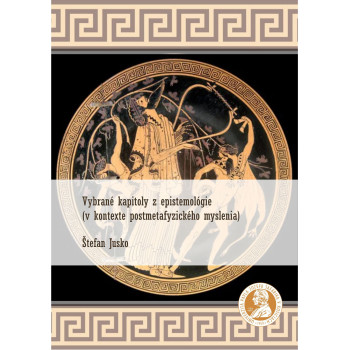
Selected Chapters in Epistemology" is a work resulting from the author's multi-year research and also represents a fulfillment of the requirements from pedagogical practice in this subject. The chapters, presented in this synthesized form, have not been published before, and I am convinced that precisely in this form they can gain higher value and greater real impact on our philosophy students.
The individual chapters focus on the problem of knowledge today, primarily on the problem of criticizing metaphysics and questions related to creating post-metaphysical thinking. It is no coincidence that Friedrich Nietzsche is a common denominator for the presented texts; he is a philosopher who has fundamentally influenced and continues to influence current philosophical discussions and intellectual movements. The chapters are written to lead our students or other readers toward reflection, i.e., critical thinking, personal growth, and professional independence.
To what extent I have succeeded in fulfilling my intentions and goals remains for the reader to decide.
Autor

Leibniz a Heidegger – veta o (dostatočnom) dôvode
E-book
E-book
Philosophy is interwoven throughout its history with several principles that bring light and order to this kind of thinking, whether it is a systematic or a non-systematic form of philosophizing.
Each of the principles represents in its own way the origin (ἀρχή) of all deductive reasoning, but not all philosophical statements and conceptions are obliged to proceed in the same way, for not all philosophical statements and conceptions are calculus. Actually, such a form of rationalist philosophizing is really a minority in the history of philosophy. But in spite of its minority presence, it will always attract attention to some extent, whether by becoming a pillar of thought itself and finding a permanent place in its foundations, or by becoming an indispensable mainstay of philosophical reasoning. In fact, there are not many principles in the history of philosophical thought.
The state of affairs is primarily due to the heterogeneous and in many cases irrationalist nature of philosophical thinking.

Patočka o vzniku matematickej prírodovedy
E-book
E-book
The work presented in the following text is an attempt to analyze Patočka's perspective on the emergence and essence of mathematical natural science in the 17th century. During this period, Patočka's attention was particularly drawn to Descartes' philosophy and Cartesianism, as well as the philosophies of Galileo, Bacon, and Leibniz.
Patočka himself devoted continuous and exceptional attention to these questions, as evidenced by several monographic works and numerous articles and studies he wrote on the subject.
Patočkova filozofia dejín
E-book
E-book
The aim of the presented monograph is primarily to introduce Patočka's concept of the philosophy of history as comprehensively as possible, although I am aware that this is by no means an easy task. This difficulty arises not only because, as already mentioned, there is currently no extensive and exhaustive work on this topic.
While there is a relatively large number of studies devoted to Patočka's concept of the philosophy of history, none of them, however, examine this concept from a comprehensive perspective as a unified whole – most focus on specific partial issues (and there are many) stemming from this concept. This fact, incidentally, serves as clear evidence to me that this is undoubtedly a highly demanding topic.

Patočka, fenomenológia a dejiny filozofie
E-book
E-book
Vladimír Leško - Milovan Ješič - Pavol Tholt
The philosophical work of the most significant Czech philosopher of the 20th century, Jan Patočka (1907–1977), stands out for its unique intellectual originality.
Even at the time of its creation, it significantly transcended the narrow boundaries of the contemporary Czechoslovak spiritual space and uniquely connected our country with the most advanced philosophical teachings of Western thought, in which Husserl's phenomenology and Heidegger's fundamental ontology played a dominant role. Certainly, it would be a great mistake to reduce the decisive position of Patočka's philosophical work merely to the reception and critical-creative elaboration of Husserl's and Heidegger's philosophy.
In this context, we cannot overlook the decisive contribution of Eugen Fink, who introduced Patočka to the intricacies of Husserl's and Heidegger's philosophy. Both thinkers then continued in a lifelong creative philosophical dialogue. However, it is also necessary to mention Patočka's intense interest in the works of Scheler, Ingarden, Landgrebe, as well as Sartre and others.

Kant, fenomenológia a analytická filozofia
E-book
E-book
Vladimír Leško - Milovan Ješič - Eugen Andreanský
The philosophical work of Immanuel Kant, the founder of German classical idealism, is one of those which, by the strength of its theoretical legacy, is permanently inspiring even in contemporary philosophical activities. This is an indisputable fact that cannot be seriously objected to. The philosophical teachings of Edmund Husserl, the founder of phenomenology, his successor Martin Heidegger, as well as several representatives of analytic philosophy, are proof of this fact. The above fact led the authors of this work to the idea of devoting a separate collective monograph to the indicated problem.

Kant v kontextoch Husserlovej a Heideggerovej...
E-book
E-book
Vladimír Leško - Zlatica Plašienková (eds.)
Philosophical Proceedings Kant in the Contexts of Husserl's and Heidegger's Philosophy is a presentation of the results of the Second International Philosophical Conference, which took place on November 5-7, 2008 at the UPJŠ in Košice.
The conference was prepared by the Department of Philosophy and History of Philosophy, Faculty of Philosophy, UPJŠ in very close cooperation with the Slovak Philosophical Association at the Slovak Academy of Sciences in Bratislava. The structure of the presented proceedings was divided into three basic parts. The first part contains the papers that were presented at the conference and constitute a crucial part of the content of our proceedings. The individual papers are arranged in the order in which they were presented at the conference. The second part of the proceedings contains the speeches from the inauguration ceremony of the award of the honorary title of Doctor honoris causa to Milan Sobotka and Teodor Münz. In the third part, a photo-documentation is published in which the ceremonial academic act of conferring the honorary degree of Doctor honoris causa is captured. Translated with DeepL.com (free version)
Heidegger a grécka filozofia
E-book
E-kniha
Vladimír Leško - Katarína Mayerová (eds.)
The main aim of the present work is to try to capture the decisive mode of Heidegger's philosophical understanding of the central problem of Greek philosophy, the problem of being, in the teachings of Anaximander, Heracleitus, Parmenides, Plato, and Aristotle. The authors of each section present their own understanding of Heidegger and his distinctive philosophical reception of Greek philosophy. In this context, it should be noted that the authors themselves sought their own point of view. With Heidegger's work in general, it is almost impossible to find the same interpretive consonance. This is also true for his reception of the Greek heritage. However, it is all the more professionally provoking for further philosophical investigations.
Gadamer a grécka filozofia
E-book
E-book
Attempting to confront Gadamer's teachings not only with the giants of Greek philosophy but also with Hegel and Heidegger is no easy task. However, Gadamer's entire historical-philosophical work is most prominently associated with these ancient thinkers and the two geniuses of German philosophical thought. Therefore, there is no avoiding it. Without this confrontation, all my efforts would be, in a certain sense, futile. Whether and how I succeed is another question. Every reader will surely form their own judgment.

Úvod do dejín stredovekej židovskej filozofie
E-book
E-book
Scholars whose works constitute medieval philosophy were active as theologians, jurists, physicians, and sometimes even poets. Among them, there is hardly anyone who could be described exclusively as a philosopher.
For theologians and (religious) jurists, the primary source of their philosophical reflection was the Bible or the Qur’an. The second source was the philosophical heritage of the preceding antiquity, in which the figure of Aristotle and his commentators dominated. The Peripatetic legacy was complemented by followers of Plato in the long line of so-called Neoplatonic philosophy (e.g., Plotinus, Iamblichus, and Proclus), which in its beginnings developed within the environment of Hellenistic schools.
It is therefore not surprising that the main philosophical problem for medieval scholars was the relationship between theology and philosophy, or faith and reason, and, consequently, the relationship between theology and metaphysics. In the context of Christian thought, this was already discussed in the 2nd century, when some Church Fathers questioned the value of secular learning for those to whom the truth had been revealed by God.
Doktorandské Miscelaneá 3
E-book
E-book
Lukáš Šutor (ed.)
Contributions in the field of psychology address current issues such as normative beliefs and attitudes regarding alcohol consumption, the characteristics of loneliness, questions of pupil personality and the perception of teachers’ interaction styles. They also consider hyperexcitability (excessive psychological excitability), research theorems on injustice, and fundamental concepts and their theoretical connections in the field of self-regulation research within the context of executive functions.
In philosophy, the authors focus on selected aspects of works belonging to major currents of world philosophy (Heidegger, Wittgenstein, Plotinus, Descartes, Patočka).
In literary studies (Slovak studies), the topics include modeling the theme of death in prose texts, the depiction of technological progress in space science fiction films, and the translation work of K. Strmeň, Návštevy (Anthology of World Lyric Poetry).
In the field of social work, the authors present contributions on current trends in preventing burnout syndrome in helping professions, the use of logotherapy in foster care, certain factors enabling the emergence, development, and spread of socially pathological phenomena (“cyberbullying”), religiosity and the value of human life, and an empirical analysis of the competencies of social workers in institutional care for people with intellectual disabilities.
The political science contribution analyzes selected institutions and documents within the European system of human rights protection, while the British and American studies paper examines the relationship between metaphor and metonymy in the interpretation of the meaning of new English compounds.