Filter By

Categories

Categories

Year of publication:

Year of publication:

Publication language:

Publication language:

Faculty:

Faculty:

UPJŠ Unit

UPJŠ Unit

Method of publication:

Method of publication:

Active filters

  • Year of publication:: 2009
  • Year of publication:: 2013
  • Year of publication:: 2013
  • Year of publication:: 2013
  • Year of publication:: 2013
  • Year of publication:: 2013
  • Year of publication:: 2016
  • Year of publication:: 2016
  • Year of publication:: 2016
  • Year of publication:: 2018
  • Year of publication:: 2018
  • Year of publication:: 2018
  • Year of publication:: 2018
  • Year of publication:: 2019
  • Year of publication:: 2019
  • Year of publication:: 2019
  • Year of publication:: 2019
  • Year of publication:: 2019
  • Year of publication:: 2025
  • Year of publication:: 2025
  • Publication language:: English
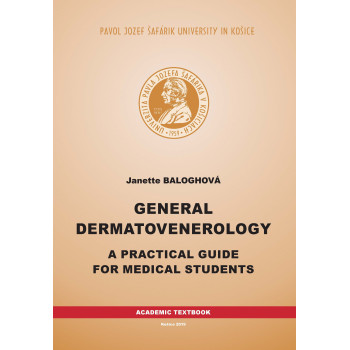
General dermatovenerology

General dermatovenerology

€12.00
Availability: 200 In Stock

Janette Baloghová

Všeobecná dermatovenerológia je nosnou časťou dermatovenerológie. Morfológia, popis a charakteristika jednotlivých eflorescencií sú kľúčové v diagnostike a diferenciácii kožných ochorení spolu s dobre odobratou anamnézou. Snahou bolo vytvoriť vysokoškolský učebný text, ktorý tvorí praktický návod ako vyšetrovať pacienta s kožným ochorením. Cieľom jednotlivých kapitol je dokonale si osvojiť dermatologickú terminológiu, fyzikálnym vyšetrením vnímať špeciálne kožné znaky a zmeny, vedieť sa orientovať v algoritme pomocných vyšetrovacích metód a testov a pochopiť rozdielne vlastnosti a charakteristiku kože vzhľadom na vek pacienta, vznik, priebeh a trvanie kožných prejavov. Posledná kapitola predstavuje praktickú topografiu kožných ochorení v tabuľkách. Dermatovenerológia patrí k interdisciplinárnym odborom, preto všeobecná dermatológia bude určite dobrým sprievodcom pri diagnostike kožných ochorení nielen študentov medicíny, ale aj lekárov prvého kontaktu a styčných odborov.

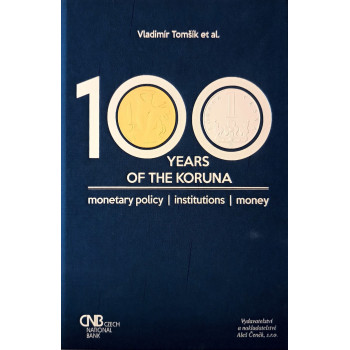
100 years of the koruna

100 years of the koruna

€30.69
Availability: 1 In Stock

Vladimír Tomšík et al.

The book was prepared to mark an important anniversary – one hundred years of our national currency. It was written by a team of Czech National Bank experts headed by CNB Vice-Governor, Professor Vladimír Tomšík. This publication charts the monetary policy history of our central bank (or, to use older terminology, the bank of issue) and describes its institutional development and the banknotes it has issued over time. It covers the period from the establishment of the independent Czechoslovak state in October 1918 and its currency in February 1919 to the present. We have therefore named the publication 100 years of the koruna. Given the twists and turns of history, however, part of the narrative relates to the joint Czechoslovak state, part to the occupied Protectorate and part to the independent Czech Republic. As a result, the original joint Czechoslovak currency was divided temporarily in 1939–1945 and then again – this time for good – in 1993. From that point on, the currencies of the two successor states went their own ways, the Czech koruna continuing to the present day and the Slovak koruna until it was replaced by the single European currency in 2009.

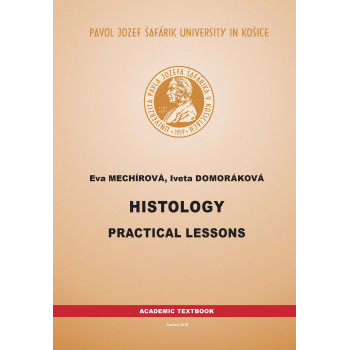
Histology (Practical lessons)

Histology (Practical lessons)

€9.26
Availability: 48 In Stock

Eva Mechírová - Iveta Domoráková

The content of this "Practical lessons" represents a record of the appearance, under the light microscope of the tissues, organs and systems of the human body. In addition, it provides visual guidelines during the practical phase of a histology course. It is hoped that this book will be especially useful to students to understand fully the microscopic structure of human tissues and organs.

Authors

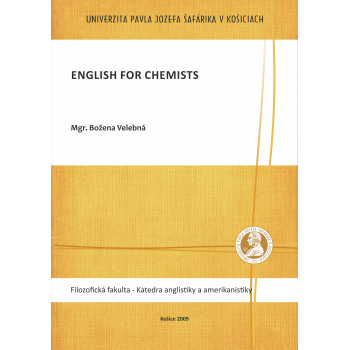
English for Chemists

English for Chemists

E-book

E-book

Božena Velebná

The following material has been created during the two years of teaching English for Chemists at the Faculty of Science of the Pavol Jozef Šafárik University and is therefore designed to meet the needs of this course. The main motivation was the lack of appropriate materials, especially as the groups generally comprise students with a very diverse level of English. This diversity therefore became the main criterion determining both the form and the content of this text.

In the ten units that provide material for a one semester course, the emphasis is put on teaching the students vocabulary and terminology, which is introduced via authentic texts, depending on the topic of each unit. Students are encouraged to learn the meaning of new words in context. Grammar is included too, with the aim of demonstrating and explaining grammatical rules by means of examples taken directly from the texts. For the more advanced students, grammatical exercises in this material can serve for revision while the beginners might need more supplementary materials.

I hope that this material, the preparation of which has been a challenging as well as enjoyable experience will be useful for future teachers and the students of this course.

Download the e-book for free (pdf)

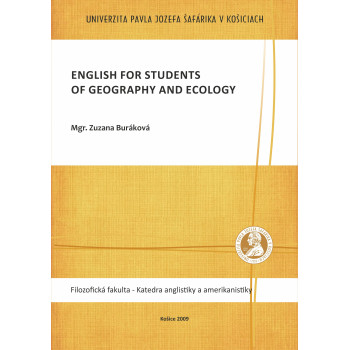
English for Students of Geography and Ecology

English for Students of Geography and Ecology

E-book

E-book

Zuzana Buráková

The English language study materials are intended for students of geography and general ecology at the Faculty of Science of Pavol Jozef Šafárik University. Their aim is to broaden communicative language competencies at an intermediate level of English proficiency, with an emphasis on the students’ field of study.

The individual chapters are based on the need for specialization within the various natural science disciplines and on preparing students to present their academic results not only at home, but also abroad. The study material contains a variety of texts, quizzes, exercises, maps, etc., which further illustrate the issues relevant to the field.

This material is intended to serve as a foundation for the future creation of even more precise materials needed for teaching specialized foreign language courses.

Download the e-book for free (pdf)

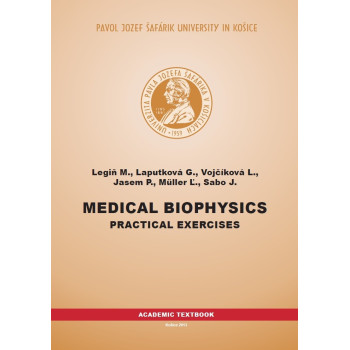
Medical Biophysics: Practical Exercises

Medical Biophysics: Practical Exercises

€11.23
Availability: 19 In Stock

Michal Legiňa kol.

Progress in biology and medicine has always been significantly related to advances in physics. Not only has physics supplied instruments and methods of measurement that have led to many discoveries in physiology and medicine, but methods of physical research have changed many of the older approaches to the biologic sciences. Such circumstances have even led to development of a new scientific field: biophysics, which uses to a great extent physical instrumentation procedures applied to an experimental system. Because any instrument is an additional factor in any experimental system, it may affect the data. To interpret physical data on biological material correctly then, it is necessary to consider the characteristics of instrument response.

A practical course enables a student to acquire some skills, experience and methodological knowledge for performance of experiments and evaluation of measured data. Due to the fast development of instrumentation technology, it is not possible to teach every operation and procedure upon instruments we may use in a future. Besides the basic physical principles, the aim of a practical course is to point out some general rules and skills for instrument operation and for the interpretation of the measured values derived from such operation.

There are two kinds of lessons in practical courses. The first one focuses on laboratory measurements of some important physical quantities and the evaluation of the measured data. These measured quantities are components of the subject “medical biophysics” or of the phenomena studied. Experience provided in managing various scales and tables, as well as in the construction of tables and graphs is substantial. Lessons also enable students to repeat and to strengthen their knowledge of secondary school physics, which is useful for understanding of many phenomena studied in medical biophysics. The second kind of lesson provides experience with some of the diagnostic and therapeutic medical instruments, which can be seen in practical medicine.

The understanding of basic physical principles of corresponding instruments is both recommended and demanded. Theoretical preparation is not only an appropriate condition for the practical managing of the whole lesson, but also helps to avoid injury. This textbook, therefore, intends to help students in preparing for both the practical lessons and the final exam.

Authors

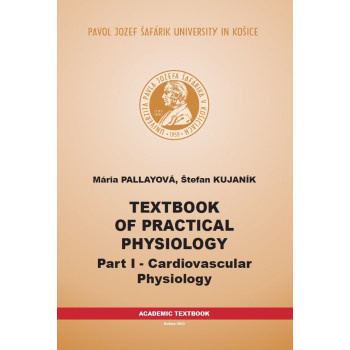
Textbook of practical physiology: part I - cardiovascular physiology

Textbook of practical physiology: part I -...

€11.50
Availability: 10 In Stock

Mária Pallayová - Štefan Kujaník

The “Textbook of Practical Physiology, Part I - Cardiovascular Physiology” by Mária Pallayová and Štefan Kujaník is a practical textbook of Human Physiology intended for English speaking medical students from general medicine and dentistry curricula.

The textbook covers basic principles in cardiovascular physiology and methods of the cardiovascular examination. Adequate knowledge of the cardiovascular physiology is important for the understanding of cardiovascular system function, as well as for the diagnosis and proper treatment of cardiovascular and other diseases. The practical tasks are constructed to facilitate knowledge acquisition and encourage students to develop practical skills, for instance the ability to follow experimental protocols, to work as part of a team, and to interpret data.

The textbook is written in English and comprises 91 pages in B5 format, grouped into twelve chapters. Each chapter is divided into six sections (Introduction, Principle, Importance, Materials, Procedure, and Protocol) to facilitate students’ understanding of the topics and assist them with preparation of the laboratory reports. The text is accompanied by explanatory figures, graphs, and tables that contribute to the learning experience.

Authors

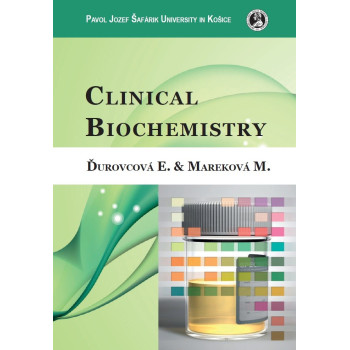
Clinical Biochemistry

Clinical Biochemistry

€24.90
Availability: 48 In Stock

 Eva Ďurovcová - Mária Mareková 

The presented textbook is intended for students of general medicine and should support their knowledge about indication and interpretation of basic biochemical tests. Clinical biochemistry continues to be one of the most rapidly advancing areas of laboratory medicine, which in line with using of modern technology more and more emphasizes the evidence-based medicine in order to improve diagnosis and monitoring of patients. Selected topics have an ambition to outline and explain the most common issues of biochemical diagnosis of in internal medicine. Individual chapters are devoted to disorders of water, electrolyte and acid-base balance, kidney and liver disease, diabetes mellitus, and biomarkers used in the diagnosis of cardiac necrosis and heart failure. Given the limited range, the textbook merely summarizes the basic knowledge that students have obtained during the study of other subjects, such as medical biochemistry, pathophysiology and internal medicine, and emphasis is given to laboratory diagnosis in accordance with the newer guidelines of professional societies. We hope that the textbook will be helpful in the study of clinical subjects and encourage students' interest in laboratory medicine.

Authors

This website uses cookies to ensure you get the best experience on our website