Filter By

Categories

Categories

Selections

Selections

Year of publication:

Year of publication:

Publication language:

Publication language:

Faculty:

Faculty:

UPJŠ Unit

UPJŠ Unit

Method of publication:

Method of publication:

Active filters

  • Categories: Science
  • Year of publication:: 2009
  • Year of publication:: 2009
  • Year of publication:: 2022
  • Year of publication:: 2022
  • Year of publication:: 2022
  • Year of publication:: 2022
  • Year of publication:: 2022
  • Year of publication:: 2023
  • Year of publication:: 2023
  • Year of publication:: 2023
  • Year of publication:: 2023
  • Year of publication:: 2023
  • Year of publication:: 2023
  • Year of publication:: 2023
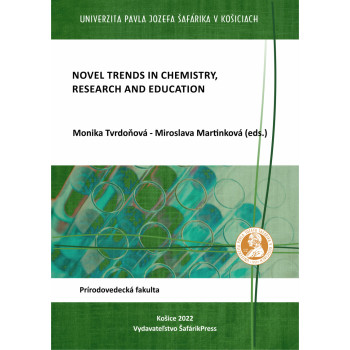
NOVEL TRENDS IN CHEMISTRY, RESEARCH AND EDUCATION at the Faculty of Science of Pavol Jozef Šafárik University in Košice 2022

NOVEL TRENDS IN CHEMISTRY, RESEARCH AND...

E-book

E-book

Monika TvrdoňováMiroslava Martinková

The scientific book of abstracts from conference „Novel Trends in Chemistry, Research and Education 2022“ is a summary of the contributions of conference participants, which contain the original results of their scientific and research activities. The contributions published in this volume can be divided according to content into the field of analytical, inorganic, organic, physical chemistry, biochemistry, didactics of chemistry and NMR spectroscopy.

Download e-book for free (pdf)

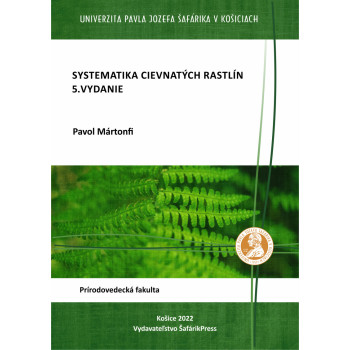
Systematika cievnatých rastlín, 5. vydanie

Systematika cievnatých rastlín, 5. vydanie

E-book

E-book

Pavol Mártonfi

The university textbook deals with the latest knowledge from the systematics of vascular plants in a clear manner. Vascular plants arose in the Silurian period in the Paleozoic, when the first primitive plants moved from water to dry land, which required evolutionary progress in the morphological and anatomical structure of these plants. During about 420 million years of the existence of vascular plants, several of their main groups have evolved: the spore vascular plants, including the lycopods (branch Lycopodiophyta) and group of ferns and related plants (branch Monilophyta), and the seed plants, including gymnosperms (branch Gymnospermae) and angiosperms ( Angiospermae), which currently dominate among plants. The textbook provides a brief but comprehensive overview of the main groups, orders and families of plants with their description, distribution, main representatives, while also addressing the useful properties of selected species. The work is complemented by an overview of the system of plants by Cronquist, Tachtadžjan, APG and an overview of the families of the Slovak flora, as well as a taxonomic index.

Download e-book for free (pdf)

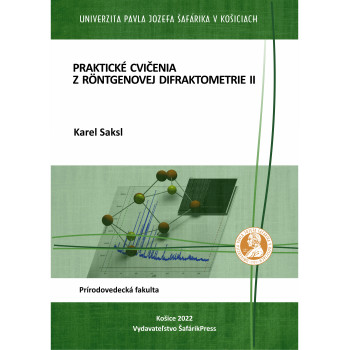
Praktické cvičenia z röntgenovej difraktometrie II

Praktické cvičenia z röntgenovej difraktometrie II

E-book

E-book

Karel Saksl

Solving crystal structures is the royal discipline of X-ray crystallography. Its primary task, with the exception of defects, is to describe the atomic structure of the motif that, by its repetition, fills the volume of the entire crystal or crystalline phase. This task is nowadays more or less routine for single-crystal X-ray diffraction, which can locate hundreds to thousands of non-hydrogen atoms in large unit cells. However, in real practice, we often have material available only in powder form instead of single crystals. Solving the atomic structure from its X-ray diffraction data is non-trivial, mainly because the three-dimensional diffraction space of a single crystal is reduced to one dimension by measuring a large number of randomly oriented microcrystals (crystallites). Therefore, the solution itself requires, in addition to proper measurement methodology, the selection of suitable tools, procedures, and strategies that, through optimization, will lead to the solution and refinement of the given crystalline phase. The current limit of this method is approximately 100 non-hydrogen atoms in the asymmetric part of the unit cell, which, however, is sufficient for most inorganic materials.

The goal of these educational texts is to provide students in the second and third levels of university studies with specific guidance on solving crystal structures from powder X-ray diffraction data. These scripts build upon my first monograph and require practical knowledge of its content. Similar to my previous monograph, I offer solved examples without a deep theoretical introduction, demonstrating procedures and strategies leading to the correct solution of crystalline phases using the freely available GSAS-II program. The examples are arranged from simpler to more complex, and the reader will find many useful pieces of information in the literature references as well as in the comments below the line. Part of these scripts are data intended for your individual practice of the described procedures. 

Karel Sakls

Download the e-book for free  (pdf)

Metódy prípravy nanoštruktúr I

Metódy prípravy nanoštruktúr I

E-book

E-book

Vladimír Komanický

The aim of this textbook is to acquaint students in physics, chemistry and material science on both undergraduate and graduate level, with the techniques used to prepare micro-electromechanical devices, nanoobjects and nanostructures using the so called top down methodologies. The is no requirement for this course to pass any prior courses. The introduction part of the text defines the forces that affect nanoobjects and the interactions between them. Reader can understand in detail why properties of nanomaterials and nanostructures are so different when comprared to their macroscopic counterparts. Text gives also an overview of thin film preparation technologies as precursors for the preparation of nanostructures. The main emphasis in Volume I is on conventional lithographic technologies for the preparation and shaping of nanostructures, methods for characterization of thin films, nanoparticles and nanomaterials. Unconventional lithographic methods will also be discussed in the prepared upcoming Volume II. Student will also get acquainted with the applications of nanostructures in research focused on nanophysics, nanocatalysis and nanoelectronics. The textbook is used as a study material for the course ÚFV / MPN / 14 - Methods of preparation and characterization of nanostructures. Part of the course is also a laboratory exercise in which the student gets acquainted with the techiques used for the preparation and characterization of thin films and top-down technologies used for the preparation of nanostructures.

Download the e-book for free (pdf)

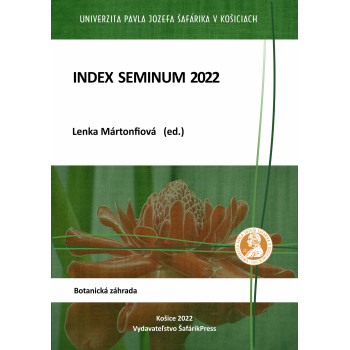
Index Seminum 2022

Index Seminum 2022

E-book

E-book

Lenka Mártonfiová (ed.)

The Index Seminum 2022 of the Botanical Garden of the Pavol Jozef Šafárik University contains a list of 246 seed samples offered for the international exchange among botanical gardens on the world. It includes seeds collected from the wild plants in natural localities of Slovakia with a detailed description of the localities with coordinates and date of collection (99 samples) and seeds of plants grown in the Botanical Garden (12 samples) and seeds from Exposition of the Tatra Mountain Nature of the State Forests of Tatra National Park, Tatranská Lomnica (58 samples) as well as 77 seed samples from Hrádocké Arboretum of the Secondary Forestry School of Jozef Dekret Matejovie in Liptovský Hrádok. The index includes a desiderata table that can be used when ordering seeds.

Download the e-book for free  (pdf)

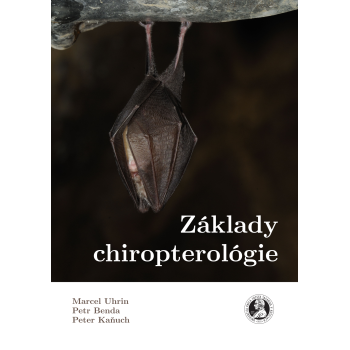
Základy chiropterológie

Základy chiropterológie

€25.00
Availability: 13 In Stock

Marcel Uhrin - Petr Benda -  Peter Kaňuch

Bats represent a unique group of mammals, characterised by different life strategies. They are the only mammals capable of active flight, which, combined with their almost exclusively nocturnal activity, has led to the evolution of specific adaptations. One of the most striking is echolocation, which enables them to orientate themselves perfectly in their surroundings in the dark. Bats are mainly native to the tropics, but have also colonised areas outside the tropics, which, has led to a complex phenological cycle with active phases and interruptions during hibernation, especially in temperate zones. In this diverse and species-rich group (almost 1,500 known species), there is a wide range of social organisation as well as feeding and roosting strategies. The textbook "Fundamentals of Chiropterology" brings the current state of knowledge about these extraordinary animals in eleven chapters and two appendices for the first time in the Slovak language.

Vybrané kapitoly z biogeografie pre geografov

Vybrané kapitoly z biogeografie pre geografov

E-book

E-book

Dušan BarabasAlena Labunová

These study materials aim to provide basic information about biogeographical issues from a geographical perspective, i.e., a perspective focused primarily on the aspect of spatial differentiation of the biosphere. The basis for the division of the biosphere is its historical development, during which individual taxa and communities were formed.

The historical development of the biosphere did not occur under stable, constant conditions, but rather in ever-changing conditions caused by the position of our planet within the solar system, the position of the Earth's axis relative to the ecliptic, and also the position of the solar system within the galaxy. All changes in the Earth's position, together with the movement of continents (drift) and climate changes, created the prerequisites for the spatial expansion of the biosphere. The historical development of the biosphere, various perspectives, the hierarchical level of differentiation, and the causes of differentiation are incorporated in this study material, whose aim is to outline the basic principles of this division.

The goal is also to highlight certain differences in the understanding of terminology, as well as to point out some fundamental relationships operating within the landscape system in the broadest sense of the word. The section devoted to the ecological principles of the functioning and formation of the landscape system, according to MIČIAN and ZATKALÍK (1984), outlines the issues of understanding the terms ecosystem and geosystem. For this reason, the presented text includes chapters that attempt to explain the understanding and approach to some basic concepts.

These study materials are intended for students of single-subject, interdisciplinary, and supplementary studies as basic teaching material. By expanding the knowledge from this study material with further information, which is elaborated in more detail in the literature listed in the bibliography of this text, graduates will gain a comprehensive view of biogeographical issues.

Authors

Download the e-book for free (pdf)

English for Chemists

English for Chemists

E-book

E-book

Božena Velebná

The following material has been created during the two years of teaching English for Chemists at the Faculty of Science of the Pavol Jozef Šafárik University and is therefore designed to meet the needs of this course. The main motivation was the lack of appropriate materials, especially as the groups generally comprise students with a very diverse level of English. This diversity therefore became the main criterion determining both the form and the content of this text.

In the ten units that provide material for a one semester course, the emphasis is put on teaching the students vocabulary and terminology, which is introduced via authentic texts, depending on the topic of each unit. Students are encouraged to learn the meaning of new words in context. Grammar is included too, with the aim of demonstrating and explaining grammatical rules by means of examples taken directly from the texts. For the more advanced students, grammatical exercises in this material can serve for revision while the beginners might need more supplementary materials.

I hope that this material, the preparation of which has been a challenging as well as enjoyable experience will be useful for future teachers and the students of this course.

Download the e-book for free (pdf)

This website uses cookies to ensure you get the best experience on our website