Active filters

  • Categories: Foreign language publications
  • Categories: Public Administration
  • Year of publication:: 2010
  • Year of publication:: 2013
  • Year of publication:: 2013
  • Year of publication:: 2013
  • Year of publication:: 2019
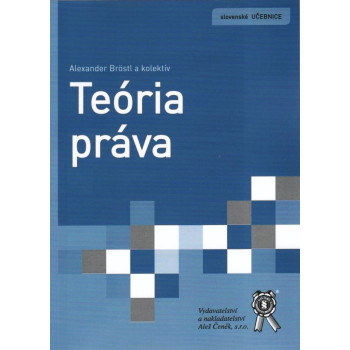
Teória práva

Teória práva

€14.47
Availability: 2 In Stock

Alexander Bröstl a kol.

Učebný text z teórie práva sa pokúša priblížiť a objasniť právo vo všetkých dôležitých javových formách predovšetkým študentom prvého ročníka právnického štúdia a má propedeutický charakter. Vychádza z historického vývoja názorov na pojem právo a zo skúmania jeho rôznych významov. Hľadá spoločné znaky a odlišnosti medzi právnymi normami a inými normami správania (morálka, spravodlivosť). Dôraz kladie na skúmanie práva ako súboru právnych pravidiel vydaných a uznaných legitímnou autoritou, záväzných pre všetky subjekty právnych vzťahov. Klasifikuje systém práva a jeho štruktúru. Od tvorby práva prechádza k prameňom práva, so zreteľom na systém práva Slovenskej republiky, ale aj Európskej únie. V nadväznosti na pramene práva predkladá analýzu právnych noriem: ich pojem, znaky, štruktúru, druhy a pôsobnosť. Právne vzťahy vo svetle ich predpokladov a prvkov chápe ako vzťahy upravované právnymi normami. S realizáciou a aplikáciou práva súvisí výklad práva, spojený s otázkami analógie v práve. Právna zodpovednosť je prezentovaná ako ústredná právna kategória vychádzajúca zo schopnosti (nevyhnutnosti) niesť následky svojho konania: predmetom pozornosti sú predovšetkým objektívna zodpovednosť a subjektívna zodpovednosť. Záverečná časť sa týka právneho štátu ako ideálneho „miesta deja“ vo vzťahu k opísaným formám práva a ich uskutočňovaniu, zaoberá sa historickým vývojom i súčasným stavom modelov Rechtsstaat – Rule of Law, ako aj princípmi ich fungovania. Učebný text má poskytnúť orientáciu v základných pojmoch a odkázať na bohaté zdroje odbornej literatúry, ktoré možno študovať paralelne.
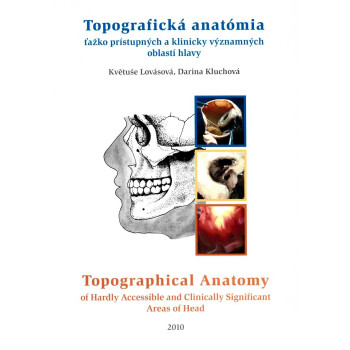
Topografická anatómia ťažko prístupných a klinicky významných oblastí hlavy

Topografická anatómia ťažko prístupných a...

€27.70
Availability: 6 In Stock

Květuše Lovásová - Darina Kluchová

The surgical practice starts with detailed knowledge of anatomy. Even if anatomy of human body has not changed over the time, perfection and precision of surgical practice require precise knowledge of anatomical structures, their location, and topographical relationships. Everyone should be aware of the occurrence of possible variations as well. 

A prospective medical doctor should not rely on knowledge gained by studying models, schemes, and pictures, but should combine two types of learning: visual and didactic. Wide array of the visual learning development, considering vision alone, and a detailed and realistic approach to difficult access to structures of the human body are important precursors that create sufficient and quality knowledge needed for clinical practice and appropriate professional development. 

This publication maps all of the clinically significant and difficult approached areas of the head that are not normally prepared for practical exercises in anatomy because of the time and difficulties with the preparation. The colorful, detailed photodocumentation enriched by schemes and followed by procedure guide provides a view of structures until now only poorly documented. We sincerely hope that this monograph will fill the gap in medical literature offered in the market at present time.

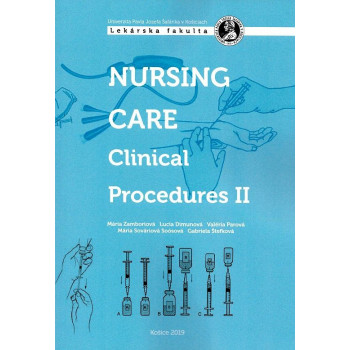
Nursing Care Clinical Procedures ll

Nursing Care Clinical Procedures ll

€16.50
Availability: 9 In Stock

Mária Zamboriová - Lucia Dimunová - Valéria Parová 

Mária Sováriová Soósová - Gabriela Štefková

Healthcare professionals are expected to provide quality, evidence-based health care with an emphasis
on patient safety. Nursing Care - Clinica/ Procedures II is a guidebook of practical procedures for
nurses and medical students and practitioners working in health care setting. This book reflects
changes in nursing, professional, and national guidelines. It should help you to achieve essential
knowledge, abilities and skills in area of vital signs monitoring, reduced mobility care, nutrition and
hydration care, medicine management, blood transfusion management, blood sampling,and care of elimination. To provide clear structure, each topic begins with brief introduction, continues with description of indications, contraindications and possible complications of procedure, necessary equipment and step-by-step procedure implementation supported by illustrations and additional information. 

Od zdravotníckych pracovníkov sa očakáva poskytovanie kvalitnej zdravotnej starostlivosti založenej na dôkazoch s dôrazom na bezpečnosť pacientov. Ošetrovateľská starostlivosť - Klinické postupy ll je príručka praktických postupov pre sestry a študentov medicíny a lekárov pracujúcich v zdravotníckom prostredí. Táto učebnica odráža zmeny v ošetrovateľských, odborných a národných smerniciach.Učebnica má za cieľ pomôcť dosiahnuť základné vedomosti, schopnosti a zručnosti v oblasti monitorovania vitálnych funkcií, starostlivosti o zníženú pohyblivosť, starostlivosti o výživu a
hydratáciu, manažment aplikácie liekov, manažment podávania transfúzie krvi, odberu krvi a
starostlivosti o elimináciu. Aby sa zabezpečila jasná štruktúra, každá téma sa začína krátkym úvodom, pokračuje opisom indikácií, kontraindikácií a možných komplikácií postupu, potrebného vybavenia a zavedenia postupu krok za krokom, podporeného ilustráciami a ďalšími informáciami. 

Medical Biophysics: Practical Exercises

Medical Biophysics: Practical Exercises

€11.23
Availability: 19 In Stock

Michal Legiňa kol.

Progress in biology and medicine has always been significantly related to advances in physics. Not only has physics supplied instruments and methods of measurement that have led to many discoveries in physiology and medicine, but methods of physical research have changed many of the older approaches to the biologic sciences. Such circumstances have even led to development of a new scientific field: biophysics, which uses to a great extent physical instrumentation procedures applied to an experimental system. Because any instrument is an additional factor in any experimental system, it may affect the data. To interpret physical data on biological material correctly then, it is necessary to consider the characteristics of instrument response.

A practical course enables a student to acquire some skills, experience and methodological knowledge for performance of experiments and evaluation of measured data. Due to the fast development of instrumentation technology, it is not possible to teach every operation and procedure upon instruments we may use in a future. Besides the basic physical principles, the aim of a practical course is to point out some general rules and skills for instrument operation and for the interpretation of the measured values derived from such operation.

There are two kinds of lessons in practical courses. The first one focuses on laboratory measurements of some important physical quantities and the evaluation of the measured data. These measured quantities are components of the subject “medical biophysics” or of the phenomena studied. Experience provided in managing various scales and tables, as well as in the construction of tables and graphs is substantial. Lessons also enable students to repeat and to strengthen their knowledge of secondary school physics, which is useful for understanding of many phenomena studied in medical biophysics. The second kind of lesson provides experience with some of the diagnostic and therapeutic medical instruments, which can be seen in practical medicine.

The understanding of basic physical principles of corresponding instruments is both recommended and demanded. Theoretical preparation is not only an appropriate condition for the practical managing of the whole lesson, but also helps to avoid injury. This textbook, therefore, intends to help students in preparing for both the practical lessons and the final exam.

Authors

This website uses cookies to ensure you get the best experience on our website