Filter By

Year of publication:

Year of publication:

Publication language:

Publication language:

Faculty:

Faculty:

Active filters

  • Year of publication:: 2017
  • Year of publication:: 2018
  • Year of publication:: 2021
  • Year of publication:: 2021
  • Year of publication:: 2023
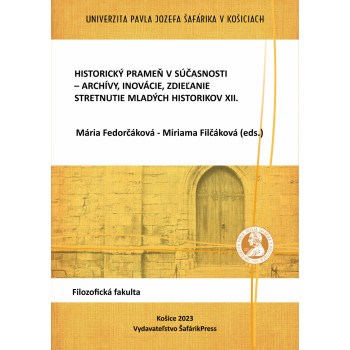
Historický prameň v súčasnosti – archívy, inovácie, zdieľanie. Stretnutie mladých historikov XII.

Historický prameň v súčasnosti – archívy,...

E-book

E-book

Mária FedorčákováMiriama Filčáková (eds.)

Proceedings of the 12th Scientific Conference of Young Historians, organized by the Department of History of the Faculty of Arts at Pavol Jozef Šafárik University in Košice in cooperation with the State Archive in Košice and the Slovak Historical Society at the Slovak Academy of Sciences on October 12, 2022

The theme of the conference proceedings is the issue of sources, their interpretation and use of current digital technologies in their research and access. The proceedings constit of 7 papers by authors working in Slovak and Czech universities.

The digitisation of seals is the subject of the paper by Barbora Borůvková. Michael Dudzik deals with the problem of building the road network in modern France and written and cartographic sources. Trends of digitization in Slovak archives and their perception by researchers are elaborated by in Miriama Fialkovičová´s study. Miriama Filčáková dealt with sources on the history of tertiary education in Košice in connection with the establishment of the UPJŠ. The possibilities of researching sources on the electrification of Slovakia are dealt with in the study by Dominik Hrtus. Ondrej Šály in his paper treated the letters of serfs in the 18th century as a source for economic history. Vavrinec Žeňuch discusses the possibilities of researching the eclesiastical history of the Uh county in the modern period.

Download e-book for free (pdf)
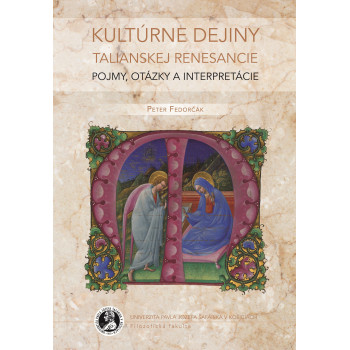
Kultúrne dejiny talianskej renesancie: Pojmy, otázky a interpretácie

Kultúrne dejiny talianskej renesancie: Pojmy,...

E-book

E-bool

Peter Fedorčák

When studying the Renaissance, researchers utilize various critical and core terms and concepts which it is necessary to characterize.

However, many such points, notably the following, are problematic: The relationship between the Renaissance and the antiquity; The connection with the Middle Ages; The transformation to Mannerism and Baroque; Realism and Secularism in Renaissance art; The individualism of the Renaissance artist; The reasons for the creation of Renaissance art in Italy, its determinants and stimulators; Distinguishing between the analysis of the genesis of the Renaissance and the analysis of the creation of the period’s art generally; Regional differences in Italy and their impact on the art; Chronological limits of the Renaissance and its milestones; The terms “Medieval Ages” and “Early Modern Period”; The impact, and its extent, of the artistic influences of the Byzantine, Gothic and Romanesque arts on the Renaissance. The term “Renaissance” itself, its content and existence, are also the subject of the discussion with students, alongside learning how such terms and definitions came about and continue to evolve, how they attain their content, how this content morphs in the historical discourse, what academical pluralism and freedom of thinking look like in the discourse led by historians, what the differences are between scientists and schools of thought on the same subject and how it is possible that they are so numerous.

The students will come to recognize the leading scholars in the field, and follow their arguments and methodological approaches. They shall be invited to closely trace and scrutinize the logic which those historians use in building their argumentation. It shall be seen that the freedom to create terms, concepts and new definitions cannot stand on an ignorance of the (historical) facts, as becomes clear with expanding knowledge of those historical facts, the variability of their interpretation growing in tandem. This approach, actually used across the whole range of seminars and lectures, shall drive discussion on the topics covered, students being invited to formulate their own theses and antitheses.

Download the e-book for free  (pdf)

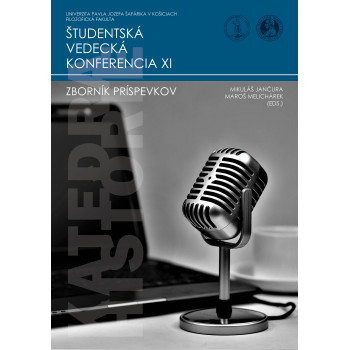
Študentská vedecká konferencia XI.

Študentská vedecká konferencia XI.

E-book

E-book

Mikuláš Jančura - Maroš Melichárek (eds.)

The textbook is derived from the outcomes of the eleventh annual student scientific conference, which took place in December 2022.

The student scientific conference is an integral component of the curriculum within the Department of History at the Faculty of Arts, UPJŠ, and has been implemented since 2011. Its primary objective is to provide a platform for Bachelor's and Master's degree students to present segments of their original research as part of their thesis development.

The purpose of this textbook extends beyond the mere publication of these diverse thematic texts. It also strives to emphasize the significance of exceptional pedagogical initiatives and the added value of university education for students, manifested through the dissemination of their scholarly output.

Download the e-book for free  (pdf)

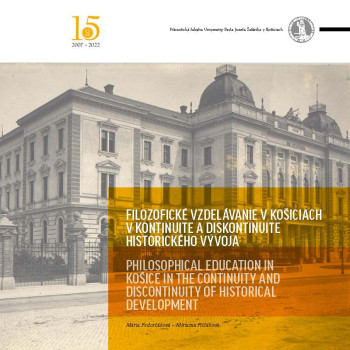
Philosophical Education in Košice in the Continuity and Discontinuity of Historical Development

Philosophical Education in Košice in the...

E-book

E-book

Mária Fedorčáková - Miriama Filčáková

Current publication is dealing with the history of philosophical education in Košice since the beginning to the foundation of the Faculty of Arts at Pavol Jozef Šafárik University in Košice in 2007. Beginnings of philosophical education in Košice are connected to the fundation of the University of Košice in 1657, which was originally founded as Jesuit university with two faculties – Faculty of Theology and Faculy of Arts.

The publication is dealing with the philosophy teaching in the Faculty of Arts and examines the philosophy teachers and students. Another interest is given to decline of philosophy teaching caused by transformation of the University into the Royal Academy and the Academy of Law at the end of the 18 and during 19 century. The second part of the publication is dealing with the history of higher education after the second world war and the foundation of the University of Pavol Jozef Šafárik in Košice.

The authoress focuses on circumstances of the foundation of the Faculty of Arts in Prešov and its history and later development after 1989, which included also division of the university in 1997. The last part of publication presents the history of the university buildings, in which the Faculty of Arts is situated.

Download the e-book for free  (pdf)

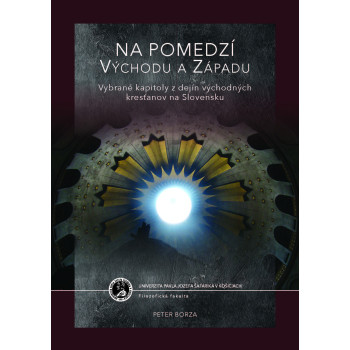
Na pomedzí Východu a Západu. Vybrané kapitoly z dejín východných kresťanov na Slovensku

Na pomedzí Východu a Západu. Vybrané kapitoly z...

E-book

E-book

Peter Borza

Eastern Christianity, represented in Slovakia by the Greek Catholic and Orthodox Churches, has influenced the development of Slovak society over the centuries. Both the common history and the coexistence of the two churches in one geographical area have brought diverse experiences that both churches keep in mind.

The university textbook, which deals with their history, contains basic materials for study and focuses on important milestones in their history. It contains general information about the origin of Eastern Christianity and presents in chronological order knowledge of the history of the churches that represent it in Slovakia from the 9th to the 21st century.

Download the e-book for free  (pdf)

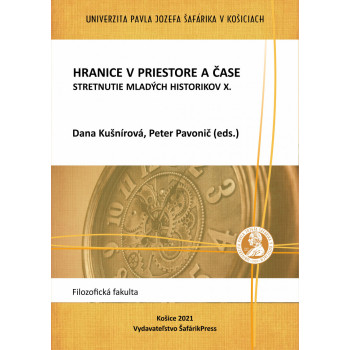
Hranice v priestore a čase. Stretnutie mladých historikov X.

Hranice v priestore a čase. Stretnutie mladých...

E-book

E-book

Dana KušnírováPeter Pavonič

Collection of Contributions from the Scientific Conference. Košice, November 18-19, 2020

The collection titled Borders in Space and Time consists of twelve contributions presented at the tenth edition of the doctoral conference Meeting of Young Historians, which is organized annually by the Department of History at the Faculty of Arts, UPJŠ in Košice. In 2020, we commemorated the centenary of the signing of the Trianon Peace Treaty, which definitively established the borders of Hungary, including those with Czechoslovakia, after World War I; therefore, the theme of the conference was chosen to be the history of borders. The individual contributions focus on the development of borders in the 20th century, borders in thought and education, and borders in earlier historical periods.

Download e-book for free (pdf)
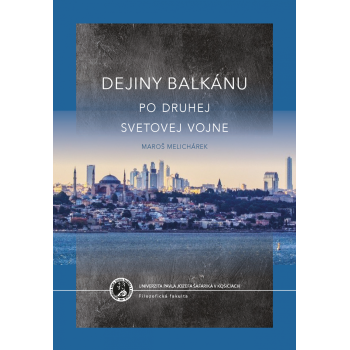
Dejiny Balkánu po druhej svetovej vojne

Dejiny Balkánu po druhej svetovej vojne

E-book

E-book

Maroš Melichárek

The history of the Balkans (not just in the 20th century) and its nations have had an irreplaceable place at the Department of History, Faculty of Arts, UPJŠ in Košice for several years. Therefore, this textbook is a logical culmination of this established trend. It represents the third publication focused on Southeastern Europe, as in 2015 a monograph titled International Relations in the 19th and 20th Centuries I (Nations of Southeastern Europe in International Politics, 1804 – 1856) was published, and in 2020 Nations of Southeastern Europe under International Politics from 1856 to 1913.

Logically then, this publication complements the literature portfolio (both thematically and chronologically) for students interested in this still turbulent region. Previous works are scientific monographs that can also be used during pedagogical processes; however, this work is directly aimed at students and their needs.

Download the e-book for free  (pdf)

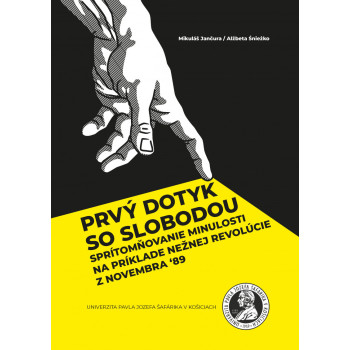
Prvý dotyk so slobodou. Sprítomňovanie minulosti na príklade Nežnej revolúcie z novembra ‘89

Prvý dotyk so slobodou. Sprítomňovanie...

E-book

E-book

Mikuláš JančuraAlžbeta Śnieżko   

In connection with the 30th anniversary of the Velvet Revolution, which was commemorated in the Czech Republic and Slovakia in 2019, an interactive exhibition titled "First Touch of Freedom" was organized under the auspices of Košice Self-Governing Region in collaboration with Ján Bocatius Public Library in Košice, Pavol Jozef Šafárik University in Košice, Nation's Memory Institute, and Slovak Radio and Television. The exhibition took place at Ján Bocatius Public Library and aimed to recall November's events from 1989 while emphasizing its cultural-social dimension and impact.

Conceptually, it focused on developing five dimensions of historical consciousness—a concept mainly developed in contemporary subject-specific didactics for history—namely identity, historicity, memory, spatial awareness, and temporal awareness.

Download the e-book for free (pdf)

Prehľad dejín biológie, lekárstva a farmácie

Prehľad dejín biológie, lekárstva a farmácie

E-book

E-book

Martin BačkorMiriam Bačkorová

The proposed text focuses on the history of studying biology, medicine, and pharmacy as scientific disciplines from prehistoric times through antiquity, the Middle Ages, and the modern era. The text chronologically organizes the most significant figures in the history of biological scientific disciplines, outlines key characteristics of major historical discoveries, and reevaluates their significance from the perspective of 21st-century science.

The educational text is chronologically divided into the most significant periods of civilization development. The last two completed centuries—the 19th and 20th—are subdivided into major life science fields due to the unprecedented growth of biological disciplines and the resulting volume of acquired information.

Since it can sometimes be challenging in science to define what constitutes the past versus the present of a particular discipline, we have excluded significant biological discoveries from the early 21st century, which are typically regarded as the “present” of biology.

Download the e-book for free (pdf)

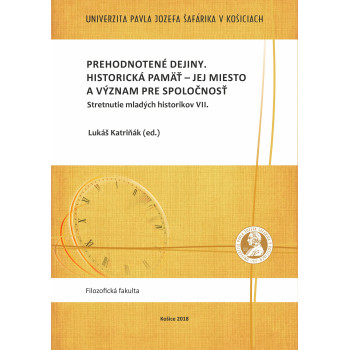
Prehodnotené dejiny. Historická pamäť – jej miesto a význam pre spoločnosť

Prehodnotené dejiny. Historická pamäť – jej...

E-book

E-book

Lukáš Katriňák (ed.)

Meeting of Young Historians VII.

Proceedings of contributions from the 7th scientific conference of young historians, organized by the Department of History at the Faculty of Arts of UPJŠ in Košice,

European Network Remembrance and Solidarity,

Centre of Social and Psychological Sciences SAS,

Historical Institute SAS,

and the Slovak Historical Society at SAS, held on October 25, 2017 in Košice.

Download the e-book for free (pdf)

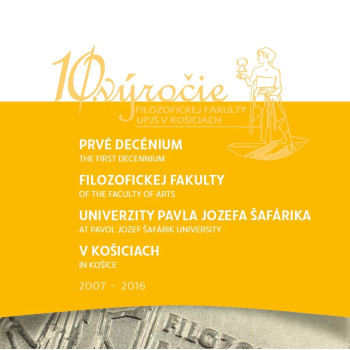
Prvé decénium Filozofickej fakulty Univerzity Pavla Jozefa Šafárika v Košiciach (2007 – 2016)

Prvé decénium Filozofickej fakulty Univerzity...

E-book

E-book

Iveta Bónová - Marián Gladiš (eds.)

The Foundation of the Faculty is a major “thing” created and developed by many personalities. The collected information, opinions, and critical judgements have led me to the conclusion that there exist among us plenty of narratives on the formation of this Faculty.

What is appealing about this fact is that from each party concerned, specifically teachers of Philosophy, Psychology and Education at the UPJŠ Faculty of Science, teachers of Psychology at the UPJŠ Faculty of Public Administration in Košice, teachers of the Department of Foreign Languages at UPJŠ, teachers at Prešov University who were approached with a bid to create the conditions of and opportunities for the development of their study branches at the new UPJŠ Faculty of Arts in Košice, there is a significant clue reflected in the inception of the new Faculty of this University.

It is necessary to say that it is a justifiable reflection, because without this, it would not be possible to develop exploration and offer the students courses in the field of Humanities, in social and behavioural sciences, educational sciences, and in the field of History and Ethnology.

Download the e-book for free (pdf)

This website uses cookies to ensure you get the best experience on our website