Filter By

Year of publication:

Year of publication:

Publication language:

Publication language:

Method of publication:

Method of publication:

Active filters

  • Year of publication:: 2008
  • Year of publication:: 2010
  • Year of publication:: 2017
  • Year of publication:: 2021
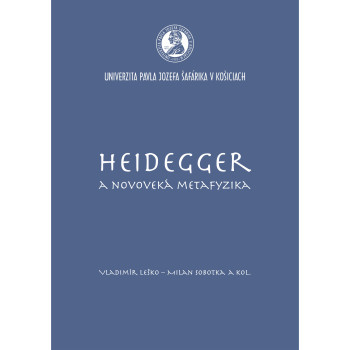
Heidegger a novoveká metafyzika

Heidegger a novoveká metafyzika

E-book

E-book

Vladimír Leško, Milan Sobotka a kol.

Filozofické dielo Martina Heideggera, ktorého hlavnou otázkou je otázka bytia, je v rozhodujúcej miere zviazané s pochopením filozo-fického reflektovania tejto otázky v gréckej a novovekej filozofii. Filozofický vývoj nemeckého mysliteľa túto dejinno-filozofickú sku-točnosť prezentuje v jedinečnej podobe od dvadsiatych rokov 20. storočia až do konca svojej tvorby. Problém Heideggerovej recepcie gréckej filozofie s jej chápaním metafyziky bol predmetom nášho skúmania v práci Heidegger, metafyzika a Gréci (Košice: UPJŠ 2016, 693 s.).

Download the e-book for free (pdf)

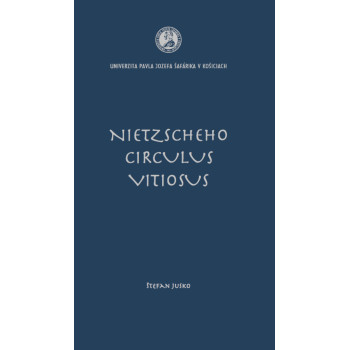
NIETZSCHEHO CIRCULUS VITIOSUS

NIETZSCHEHO CIRCULUS VITIOSUS

E-book

E-publication

Štefan Jusko

This monograph aims at following the study of P. S. Loeb in which he presented a significant turning point in the issue of the interpretation of Nietzsche's idea of the eternal return of the same. What was that reversal? Despite prominent scholars of Nietzsche's philosophy of the 20th century who rejected the idea of eternal return because of its logical incoherence, Loeb eruditely proved the temporal identity of eternal return of the same, thus verifying the logical connection of the idea concerned.

Download the e-book for free (pdf)

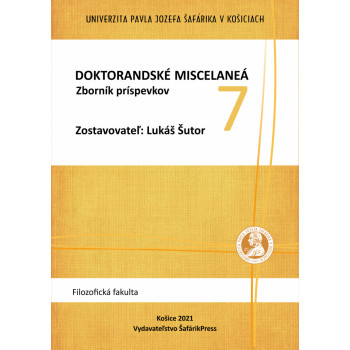
Doktorandské miscelaneá 7

Doktorandské miscelaneá 7

E-book

E-book

Lukáš Šutor

The seventh volume of Doctoral Miscellanea was created in this year's specific research and educational situation, which predetermined its character as a non-conference collection.

The previous two editions continued the tradition of domestic scientific events (initially seminars, later conferences) at the Autumn School of Doctoral Students of the Faculty of Arts at UPJŠ in Košice, thereby creating an opportunity to verify more comprehensive scientific conclusions before a diverse audience, not only of experienced educators but also of researchers from their own generation. This phase was narrowed down to communication between the supervisor/reviewer and the doctoral student during the publication's creation. However, this did not automatically mean a less intense dialogue. Many contributions underwent interesting changes and variations.

The resulting studies reflect not only the degree of development of dissertation projects but often also the interest of young scientists in specific issues that have the potential for independent research. After all, they chose our domestic collection for testing their ideas.

Download e-book for free (pdf)

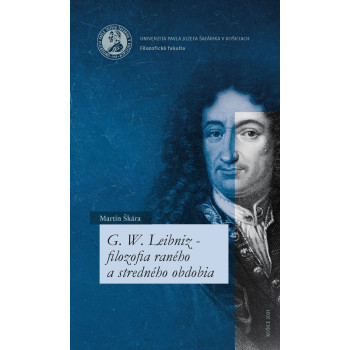
G. W. Leibniz - filozofia raného a stredného obdobia

G. W. Leibniz - filozofia raného a stredného...

E-book

E-book

Martin Škára

The presented university textbook is a reaction to two fundamental shortcomings. The first one is the absence of a similar, if not equivalent, textbook in the Slovak university environment. The second shortcoming is the mistake that Leibniz's philosophy is a system called monadology.

The presented textbook corrects this mistake and at the same time fills the gap of the absence of this kind of textbook with a Leibniz subject. For the above reasons, the presented textbook brings a new perspective on the philosophy of G. W. Leibniz, especially in the period of early philosophical beginnings with an overlap into the so-called Paris period and the De summa rerum period up to the first philosophical doctrinal formulation expressed in the Discours de métaphysique (Winter 1685-1686). The textbook is conceived as a selection of sections of source texts translated by the author of the textbook from French and partly from Latin and equipped with comments accessible to the target audience.

It is therefore the author's wish that this textbook not only serve as a form of correction for the misinterpretation of Leibniz's philosophy, but as an inspiring text that will introduce the reader to the world of Leibniz's philosophy in its undistorted light.

Download e-book for free (pdf)

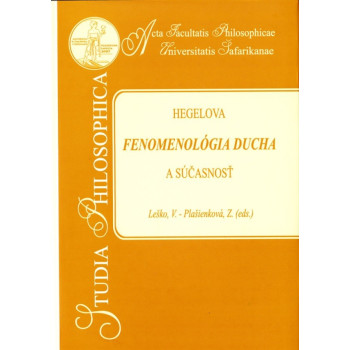
Hegelova Fenomenológia ducha a súčasnosť

Hegelova Fenomenológia ducha a súčasnosť

E-book

E-book

Vladimír Leško - Zlatica Plašienková (eds.)

In 2007, the philosophical world commemorated an extraordinary anniversary - two hundred years since the first publication of Georg Wilhelm Friedrich Hegel's brilliant work The Phenomenology of Spirit (1807). Of course, we can have different value scales of the most important philosophical works written in the history of philosophy, but the above-mentioned work of Hegel should certainly not be absent from the top places in them. Hegel's Phenomenology of Spirit decisively changed the philosophical discourse of the 19th century and greatly influenced philosophy in the 20th century. Few of the great philosophers after Hegel could afford to pass over the philosophical work of the 1807 supreme representative of German classical philosophy and not draw, either positively or critically, on his philosophical legacy.

The philosophical conference entitled Hegel's "Phenomenology of Spirit" and the Present, dedicated to Hegel's work Phenomenology of Spirit, was prepared by the Department of Philosophy and History of Philosophy of the Faculty of Arts of the Pavol Jozef Šafárik University in Košice in cooperation with the Slovak Philosophical Association at the Slovak Academy of Sciences in Bratislava on October 4, 2007 and was organized by the Slovak Philosophical Association in Košice.

Download the e-book for free (pdf)

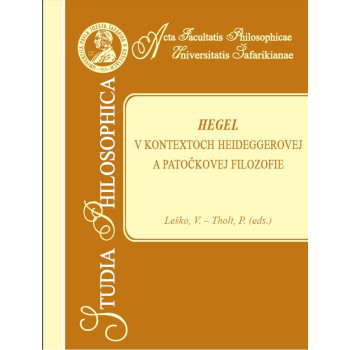
Hegel v kontextoch Heideggerovej a Patočkovej filozofie

Hegel v kontextoch Heideggerovej a Patočkovej...

E-book

E-book

Vladimír Leško - Pavol Tholt (eds.)

Proceedings of the Third International Philosophical Conference Hegel in the Contexts of Heidegger's and Patoček's Philosophy, held on 1-2 October 2009.

The Philosophical Proceedings is a presentation of the results of the work of the research teams of the research projects VEGA 1/0650/08 - Heidegger and the History of Philosophy and VEGA 1/4679/07 - Jan Patočka's Asubjective Phenomenology and the History of Philosophy solved at the Department of Philosophy and the History of Philosophy of the Faculty of Philosophy of the University of Applied Sciences in Košice.

Download the e-book for free (pdf)

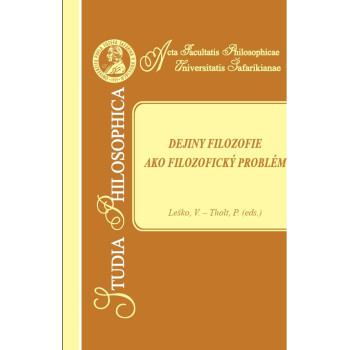
Dejiny filozofie ako filozofický problém

Dejiny filozofie ako filozofický problém

E-book

E-book

Vladimír Leško - Pavol Tholt (eds.)

Proceedings of the Fourth International Philosophical Symposium History of Philosophy as a Philosophical Problem, held on 14-15 October 2010

The Philosophical Proceedings is the final presentation of the results of the work of the research teams of the research projects VEGA 1/0650/08 - Heidegger and the History of Philosophy and VEGA 1/4679/07 - Jan Patočka's Asubjective Phenomenology and the History of Philosophy solved at the Department of Philosophy and the History of Philosophy of the Faculty of Philosophy of the University of Applied Sciences in Košice.

Download the e-book for free (pdf)

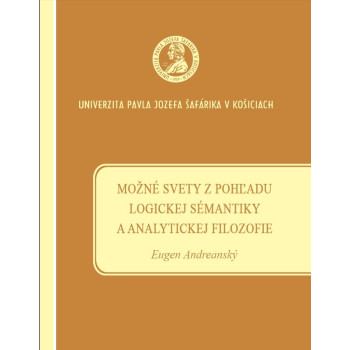
Možné svety z pohľadu logickej sémantiky a analytickej filozofie

Možné svety z pohľadu logickej sémantiky a...

E-book

E-book

Eugen Andreanský

The presented monograph aims to critically map the understanding of the concept of possible worlds.

The first chapter describes the formation of the semantics of possible worlds, along with indicating some problems it brings, which were incisively revealed primarily by W. V. O. Quine. In the next two chapters, the work focuses on more modern views on the nature of possible worlds, with the main attention given to the dichotomy between the possibilist and actualist approach to the question of modalities, alongside which it is necessary to assess other distinctions (essentialism - anti-essentialism, realism - reductionism (or ersatzism or fictionalism), naturalism - non-naturalism, etc.). Increased attention in the work is specifically devoted to the possibilism of D. Lewis and the actualist concepts of S. Kripke, A. Plantinga, R. M. Adams, N. Rescher, D. Armstrong, and J. Hintikka.

An unconventional approach to the issue of possible worlds is captured in the fourth chapter. It is primarily dedicated to the significant concept of Jaakko Hintikka, which works with the notion of epistemic possible worlds and documents the inclination towards the modification and relativization of modal discourse. The conclusion provides an evaluation of the discussion that touches on the main problems associated with considerations of possible worlds.

In the presented monograph, some representative concepts of possible worlds, or possible individuals, are clarified, and the overall process is indicated from assessing possible worlds as ideal logical constructs through their relativization by separate domains of individuals for individual worlds and further through the relationship of attainability to financial, impossible, and non-standard possible worlds.

Download the e-book for free (pdf)

This website uses cookies to ensure you get the best experience on our website