Filter By

Year of publication:

Year of publication:

Publication language:

Publication language:

Faculty:

Faculty:

UPJŠ Unit

UPJŠ Unit

Active filters

  • Year of publication:: 2017
  • Year of publication:: 2019
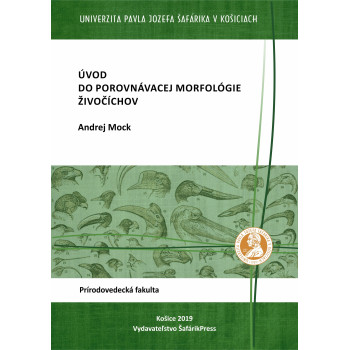
Úvod do porovnávacej morfológie živočíchov

Úvod do porovnávacej morfológie živočíchov

E-book

E-book

Andrej Mock

The structure of the animal body is extremely varied. Each species has its distinctive morphological features, which bears as a testimony to long-term development and belonging to the developmental lineage. At the same time, the body has been tested for a long time by natural conditions, resulting in unique adaptations to the environment and life strategy. Despite this admirable variety - which includes both recent and fossil animals and which we have far from mapped – a comparison of body parts brings knowledge we can generalize: the main building principles, and boundaries within which phenotypic diversity is realized.

Comparative animal morphology today uses the latest methodological material and knowledge from other disciplines, from genetics, molecular biology and experimental embryology, through progressive imaging methods (e.g. electron microscopy, computer micro-tomography) and the possibilities of subsequent software processing of image material (measurement, staining, etc.) to the view of physics, chemistry, statics and geometry on the structures (to nanostructures) of the living body. Detailed knowledge of historical and contemporary conditions on Earth is an important interpretative context in the study of animal morphology. Surprisingly, the knowledge accumulated after centuries of research is now rapidly supplemented by new knowledge, and often the traditional knowledge is subsequently reinterpreted. Finally, and no less important, in studying animal (and human) morphology, we learn surprising knowledge about ourselves.

The author of the presented textbook had the ambition in a simplified form to introduce the reader, especially the student of biological studies, into a dynamic and fascinating scientific discipline, as the current comparative animal morphology is.
Stiahnite si e-knihu zadarmo (pdf)

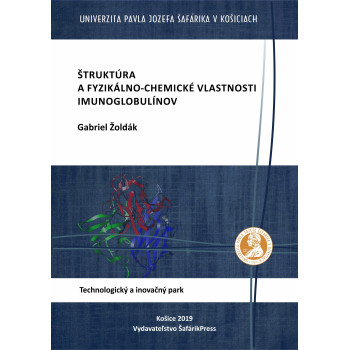
Štruktúra a fyzikálno-chemické vlastnosti imunoglobulínov

Štruktúra a fyzikálno-chemické vlastnosti...

E-book

E-book

Gabriel Žoldák

The textbook is intended as background material for university students and for education in science, biotechnology, and medicine. During the textbook conception, the emphasis was on recent trends and development in the understanding of the physicochemical properties of immunoglobulins.

The textbook is divided into ten chapters and 294 pages dealing with the following topics: Immune system and immunoglobulins, General properties of immunoglobulins, Chemical and proteolytic cleavage of immunoglobulins, Structure of immunoglobulins I, Structure of immunoglobulins II, Detection of immunoglobulins, Post-purification and purification immunoglobulin modifications, Immunoglobulin stability and aggregation, Therapeutic immunoglobulins. In addition to the summary of the established knowledge about the properties of immunoglobulins, the textbook also contains new information collected from recent scientific publications.

Download the e-book for free  (pdf)

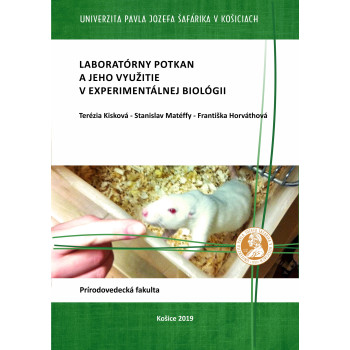
Laboratórny potkan a jeho využitie v experimentálnej biológii

Laboratórny potkan a jeho využitie v...

E-book

E-book

Terézia Kisková - Stanislav Matéffy - Františka Horváthová

The laboratory rat (Rattus norvegicus) is one of the most commonly used experimental animals. It serves as a model organism for analyzing numerous biological processes and pathological mechanisms, such as cardiovascular diseases, metabolic disorders (e.g., lipid metabolism, diabetes mellitus), neurological and neuropsychiatric conditions (e.g., stroke, epilepsy, or Alzheimer's disease), neurobehavioral research, autoimmune diseases (e.g., arthritis), cancer, and renal diseases. It offers many unique advantages for modeling human diseases, testing drugs and natural substances, and studying responses to environmental factors. The size of the laboratory rat, compared to the mouse, creates ideal conditions for physiological manipulations. Additionally, rats are used in clinical toxicology to test chemical substances (Hedrich, 2000).

Download the e-book for free (pdf)

Študentská vedecká konferencia PF UPJŠ 2019

Študentská vedecká konferencia PF UPJŠ 2019

E-book

E-book

Katarína Cechlárová (ed.)

This year, the Student Scientific Conference was held on April 24, 2019, across 17 sections in disciplines such as biology and ecology, chemistry, physics, geography, mathematics, informatics, and their didactics. Bachelor’s and master’s students presented a total of 124 contributions. The most successful participants advanced to national or traditional Czech-Slovak student scientific showcases in fields like physics, chemistry, mathematics, informatics, and mathematics didactics.

In addition to faculty students, 10 high school students participated outside the competition. They were invited based on their achievements in subject-specific Olympiads or because they were already engaged with the faculty under the guidance of dedicated teachers in laboratory work as part of their preparation for future studies. The day also featured a programming competition with 23 participants, an IHRA contest involving 16 teams of high school students and 15 teams from elementary schools, and a new Puzzle section where 72 high school students from the region competed.

The abstracts from the Student Scientific Conference demonstrate that our faculty's students not only absorb theoretical knowledge delivered in lectures but also actively engage in solving partial scientific problems that align with research objectives at the institutes of PF UPJŠ. This collection serves as both a record of scientific activity at the faculty and a dignified presentation for the broader public.

Prof. RNDr. Katarína Cechlárová, DrSc.

Vice-Dean for Education

Doc. RNDr. Gabriel Semanišin, PhD.

Dean of the Faculty

Download the e-book for free  (pdf)

Bibliography of the amphibian and reptile research in Slovakia between 1791 and 2017

Bibliography of the amphibian and reptile...

E-book

E-book

Marcel Uhrin - David Jandzik - Andrej Čerňanský - Michal Rindoš - Blanka Lehotská - Stanislav Danko - Ján Kautman - Peter Mikulíček - Peter Urban - Daniel Jablonski

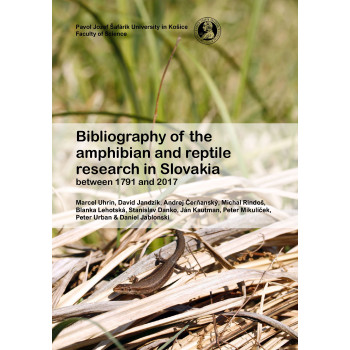
Bibliographies provide basic scientific information, illustrate quality and intensity of research in a particular topic, area, or time, and thus help build a cultural-historical perspective of society’s appreciation of knowledge and education. Here we provide a bibliography of herpetological research in the region of Slovakia between the years 1791 and 2017. We collected 2,183 references authored by 1,453 different authors and covering all species of amphibians (18) and reptiles (13) occurring in Slovakia and, in addition, amphibian and reptile taxa occurring in 94 other countries.

Most of the contributions were published in popular magazines and non-indexed journals, while only about 12% of all references represent scientific articles from journals indexed in relevant scientific databases. The extensiveness of study on amphibians and reptiles has varied among different periods within the selected time frame. However, an obvious intensification in the field of herpetology can be observed, especially during the second half of the 20th century. While there have only been few professionals specialized in herpetology, an important role in promoting the research and conservation of amphibians and reptiles in Slovakia has been played by non-governmental organizations and hobbyists. The most frequent type of herpetological data in the referenced literature comes from faunistic research, followed by conservation and general information on herpetofauna, with the majority of published articles in indexed journals coming from the fields of palaeontology, phylogeography, and population genetics.

The presented bibliography is the first step towards building a solid base for future systematic herpetological research in the country and Central Europe.

Download the e-book for free (pdf)

Antioxidanty a ich význam v prevencii chronických ochorení

Antioxidanty a ich význam v prevencii...

E-book

E-book

Tatiana Kimáková - Vladimír Pavlík

The scientific monograph focuses on the characteristics of free radicals, reactive oxygen and nitrogen species, oxidative stress, and its impact on various diseases. A significant portion is dedicated to antioxidants, their classification based on multiple criteria, the characteristics of selected antioxidants in terms of their functions, manifestations of their deficiency and excess, and the overall antioxidant capacity of the body.

A special section is devoted to enzyme-based antioxidants, natural sources of antioxidants in the form of vitamins, trace elements, flavonoids, polyphenols, and coenzyme Q10. To provide a clearer understanding of antioxidants and their influence on population health, the monograph presents results from a research project included in the program "Research Support for Enhancing the Defense Capabilities of the Czech Republic in NATO Structures."

The research was conducted between 2010 and 2012 as part of preventive rehabilitation programs for professional soldiers with a sports component. The study involved 218 professional soldiers, including 180 men and 38 women, with an average age of 33.3 years. The current health status and dietary habits of the soldiers were assessed using questionnaires.

The study described the saturation of the observed group with antioxidant vitamins and statistically evaluated the relationship between their levels and the risk indicators for the development of cardiovascular diseases. Individual analyses were performed using the Reflotron device calibrated with Reflotron Precinorm control serum. Following blood collection, all participants underwent anthropometric examinations (body weight, height, waist circumference), blood pressure measurements, heart rate monitoring, and physical fitness assessments through simple functional tests.

This scientific monograph is suitable for the scientific community, students of medical, veterinary, and natural sciences, as well as public health students at all levels of university education. It is also intended for informed members of the public.

Authors

Download the e-book for free (pdf)

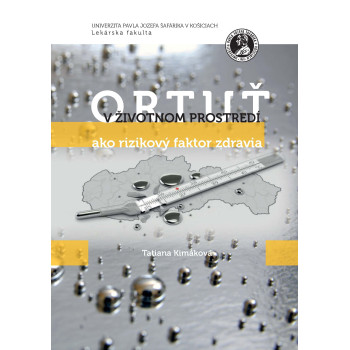
Ortuť v životnom prostredí ako rizikový faktor zdravia

Ortuť v životnom prostredí ako rizikový faktor...

E-book

E-book

Tatiana Kimáková

This scientific monograph is a comprehensive scientific work focused on the presence and effects of mercury in the environment, as well as the health risk factors associated with it.

The monograph presents a characterization of mercury in a multidisciplinary scope, discusses its use in industry and healthcare, and describes the negative impacts of mercury on the environment and public health. It also provides proposals and recommendations for at-risk groups. The monograph includes a comprehensive study of mercury concentration in samples of domestic and foreign production commodities and plant samples using the atomic absorption spectrometer AMA 254.

This scientific monograph is suitable for the scientific community, students of medical, veterinary, natural sciences, and agricultural fields, as well as public health students at all three levels of university study. It is also intended for all interested members of the informed public.

PDF preview

The publication is available for purchase through our online store.>>

Cell Biophysics II

Cell Biophysics II

E-book

E-book

Katarína Štrofeková

Cell Biophysics II is the one semester comprehensive course textbook for PhD students. It encompasses basic principles and mechanisms underlying cell physiology and biophysics with aims:

• General knowledge of the principles of cellular function, including membrane, cytoplasmic and nuclear roles in normal and abnormal conditions.
• In-depth understanding of the mechanisms underlying the cell functions at the molecular and subcellular level.
• Awareness of cell pathologies that lead to specific disease symptoms and phenotypes.
• The ability to apply learned principles to solve new problems (analysis & synthesis).

Download the e-book for free (pdf)

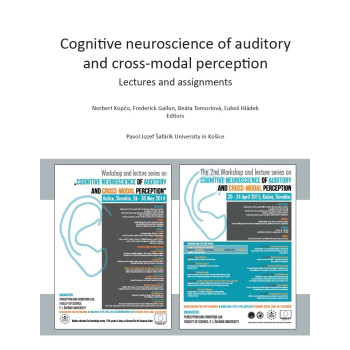
Cognitive neuroscience of auditory and cross-modal perception - Lectures and assignments

Cognitive neuroscience of auditory and...

E-book

Norbert Kopčo - Frederick Gallun - Beáta Tomoriová - Ľuboš Hládek(eds.)

Cognitive neuroscience is a fast developing scientific field which aims at uncovering the neural basis of human perception and cognition. To achieve this goal, cognitive neuroscience uses a variety of tools and approaches ranging from non-invasive brain imaging to psychophysics and neural modeling. Mastering such tools requires skills and knowledge from multiple scientific domains, including neurophysiology, cognitive psychology, and several computational fields.

Access on request via email: kogneuro (@) gmail.com

http://pcl.upjs.sk/workshopcd 

https://sites.google.com/site/kogneuro/

This website uses cookies to ensure you get the best experience on our website