Filter By

Categories

Categories

Year of publication:

Year of publication:

Publication language:

Publication language:

Faculty:

Faculty:

Method of publication:

Method of publication:

Active filters

  • Categories: Medicine
  • Publication language:: Slovak
  • Faculty:: Faculty of Arts
  • Faculty:: Prírodovedecká fakulta
Úvod do techniky potenciálu súvisiaceho s udalosťou. Druhé vydanie

Úvod do techniky potenciálu súvisiaceho s...

E-book

E-kniha

Steven J. Luck

Preklad: Július Zimmermann a Eva Kiktová

Kniha je slovenským prekladom anglickej monografie Stevena J. Lucka An Introduction to Event-Related Potential Technique (2014). Technika potenciálov, ktoré súvisia s udalosťami (ERP), je neinvazívny spôsob skúmania procesov percepcie a kognície ľudského mozgu. Subjekty – skúmané osoby, vnímajú špeciálne navrhnuté formy vizuálnych alebo rečových stimulov. Zo snímanej sústavy EEG signálov sa matematickými metódami extrahujú osobitné ERP signály, pričom sú u nich zaujímavé tri typy rozlišovacích schopností: časové rozlíšenie (latencia), amplitúdové rozlíšenie (magnitúda) a priestorové rozlíšenie (oblasť mozgu), v ktorej sa generujú ERP signály. Latencia a magnitúda signálov sú v tejto metóde unikátne parametre prezentujúce uvedené procesy, priestorové rozlíšenie je v tomto prípade menej dokonalé.

V knihe je výklad celého experimentálneho ERP výskumu: návrh a prevádzka laboratória, dizajn experimentov, akvizícia EEG signálov a korekcia šumov a artefaktov. Nasleduje detekcia ERP signálov: filtrovanie a Fourierova analýza, kvantifikácia amplitúd a latencií, osobitné metódy v časovej aj frekvenčnej doméne a podobne. Nakoniec štatistickou analýzou a interpretačnými metódami sa formulujú dosiahnuté výsledky výskumu. Pre čitateľa sú cenné aj poznatky v kapitole o tom, ako sa píšu štúdie s dobrým kreditným ohodnotením a ako sa takéto štúdie oponujú.

Kniha je cenným zdrojom pre výskumných pracovníkov, pre doktorandov a postdoktorandov, ale aj pre študentov, ktorých zaujala nesmierne zložitá a málo preskúmaná činnosť ľudského mozgu.
 Prečítajte si knihu online

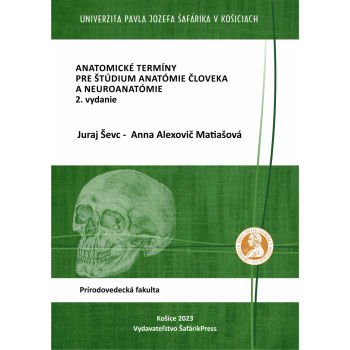
Anatomické termíny pre štúdium anatómie človeka a neuroanatómie (2. vydanie)

Anatomické termíny pre štúdium anatómie človeka...

E-book

E-book

Juraj Ševc - Anna Alexovič Matiašová

Among students of single-discipline and interdisciplinary biology studies at faculties with a natural science focus, there often arises a problem in defining the scope of the curriculum when studying the subject of Human Anatomy. The presented study material aims to help students of non-medical scientific fields navigate the extensive anatomical terminology and to limit the amount of required anatomical terms to an optimum, so that alongside mastering Latin nomenclature, students still have sufficient capacity to memorize additional knowledge in the areas of systemic, comparative, developmental, and functional anatomy.

Emphasis on organizing individual anatomical terms into logical units simultaneously supports a hierarchical view of the architecture of the human body. Despite its seemingly self-serving nature, anatomical terminology thus becomes the framework upon which students build knowledge from more or less related scientific disciplines studying the human body and the processes occurring within it throughout their further studies. At the same time, alongside this ambition that goes beyond the scope of the anatomy discipline, the Anatomical Terms follow a long tradition of anatomical handbooks while respecting the valid Latin and Slovak anatomical nomenclature.

This script represents a practical supplement to university textbooks of Anatomy or Neuroanatomy and especially to anatomical atlases, but it certainly does not aim to replace them. Here you will find all the necessary terms gathered in one place, which you can always have at hand on your phone, e-reader, or laptop. The emphasis on organizing individual anatomical terms into logical units supports a hierarchical view of the architecture of the human body, and the inclusion of a brief introduction to each system is intended to encourage you to seek further, more detailed information about the structure and function of the given organ system.

Download the e-book for free (pdf)

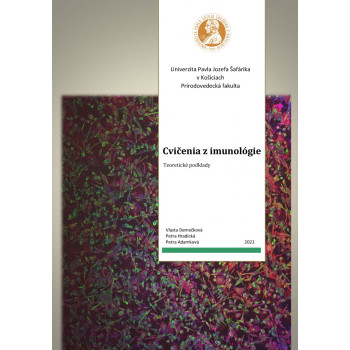
Cvičenia z imunológie

Cvičenia z imunológie

E-book

E-book

Vlasta DemečkováPetra HradickáPetra Adamková

The learning material for the course Practice in Immunology is based on several years of experience with teaching this subject, but mainly to provide students from the Biology Department at the Faculty of Natural Sciences, UPJŠ in Košice with sufficient theoretical background for practical exercises. It also serves as a scientific diary for detailed recording of all experimental data necessary for preparing laboratory protocols from individual exercises.

In studying biology, it is essential that students thoroughly understand not only the basics of each discipline but also acquire practical skills, including designing scientific experiments, selecting appropriate analytical/investigative techniques up to interpreting and presenting experimental data. The goal of this new publication is therefore to provide master's students with a practical study guide that supports and expands their knowledge about basic immunology principles.

Download e-book for free (pdf)

Bedeker onkologickej liečby

Bedeker onkologickej liečby

E-book

E-book

Lucia TóthováKatarína ŠiňanskáEva Žiaková

Here is the translation of the provided text into English: A guide to oncological treatment was created at a time when the importance of health became even more emphasized, becoming a kind of mega-value for the new modern "pandemic" human. The use of the term "pandemic" person arose, of course, in connection with the emergence of the coronavirus pandemic worldwide, but primarily because other dangerous long-term diseases that threaten contemporary humans are somehow being pushed into the background.

The severity of such diseases (including cancer) does not diminish just because attention has shifted to something more acute. It is very important to realize this and not fall under the illusion that if we overcome an acute danger, then automatically improve conditions for chronic diseases as well. We believe it's quite the opposite; prolonged stress and social negative factors constantly affecting us—among which undoubtedly includes pandemic situations—worsen not only psychological but also somatic states.

The guide to oncological treatment aims precisely at highlighting those psychological and social factors that negatively "support" cancer development in any form and can positively influence treatment and coping with illness. The guide offers opportunities for social engagement with groups of people undergoing similar oncological treatments, allowing them to share psychologically as well as professionally similar situations with those facing similar problems in treatment. The authors hope that this guidebook will reach those who will become more self-sufficient in overcoming such a formidable enemy as cancer.

Authors

Download the e-book for free (pdf)

ANATOMICKÉ TERMÍNY PRE JEDNOODBOROVÉ A MEDZIODBOROVÉ ŠTÚDIUM BIOLÓGIE

ANATOMICKÉ TERMÍNY PRE JEDNOODBOROVÉ A...

E-book

E-book

Juraj ŠevcFilip Mochnacký

Students studying biology as the single-subject or as a part of two-subject programs on various faculties of sciences are often encountered with the problem, how to limit the topics in the subject Human anatomy. This List of anatomical terms is aiming to help the non-medical students to get acquainted with the extensive anatomical nomenclature and to optimize the number of anatomical terms, which should be memorized, to preserve the sufficient capacity of the students for another knowledge of the field of systemic, comparative, developmental and functional anatomy. The emphasis on the arrangement of individual anatomical terms into the logical units supports the hierarchical view on the architecture of the human body.

Despite the common opinion, anatomical nomenclature represents a framework, which is during the further study gradually enveloped with the knowledge of more or less related disciplines concerning with the human body and its biological processes. Moreover, besides this ambition, which exceeds the area of the human anatomy, this List of anatomical terms continues the long tradition with respect to the valid Latin and Slovak anatomical terminology.

Download the e-book for free  (pdf)

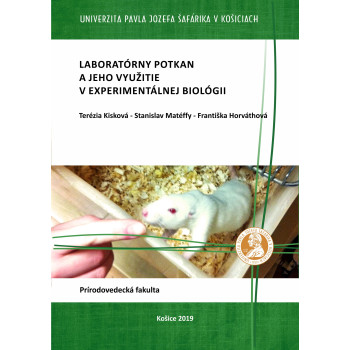
Laboratórny potkan a jeho využitie v experimentálnej biológii

Laboratórny potkan a jeho využitie v...

E-book

E-book

Terézia KiskováStanislav MatéffyFrantiška Horváthová

The laboratory rat (Rattus norvegicus) is one of the most commonly used experimental animals. It serves as a model organism for analyzing numerous biological processes and pathological mechanisms, such as cardiovascular diseases, metabolic disorders (e.g., lipid metabolism, diabetes mellitus), neurological and neuropsychiatric conditions (e.g., stroke, epilepsy, or Alzheimer's disease), neurobehavioral research, autoimmune diseases (e.g., arthritis), cancer, and renal diseases. It offers many unique advantages for modeling human diseases, testing drugs and natural substances, and studying responses to environmental factors. The size of the laboratory rat, compared to the mouse, creates ideal conditions for physiological manipulations. Additionally, rats are used in clinical toxicology to test chemical substances (Hedrich, 2000).

Download the e-book for free (pdf)

Intervenčný program starostlivosti o seba pre pomáhajúce profesie

Intervenčný program starostlivosti o seba pre...

E-book

E-book

Margita MesárošováMiroslava KöverováSoňa Lovašová

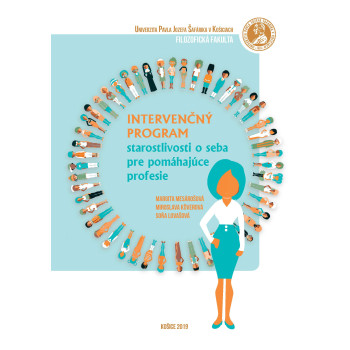
Intervention Program for Supporting Self-Care in Helping Professions: "How Do I Take Care of Myself?" The intervention program "How Do I Take Care of Myself?" was developed as part of the research project APVV14-0921, "Self-Care as a Factor in Coping with the Negative Consequences of Engaging in Helping Professions." Its uniqueness lies in being created based on specific research outputs from the program's authors and project.

In the first chapter, the authors offer insights into the preparation of the intervention program, justifying its theoretical foundations, methods, and specifics of the program participants. They also provide an overview of research on the effectiveness of various intervention programs aimed at reducing the negative consequences of helping and enhancing self-care and other positive effects of engaging in helping professions. Subsequent chapters focus on a detailed analysis and evaluation of the effectiveness of the intervention program "How Do I Take Care of Myself?" and its comparison with the effectiveness of other programs, which were differently focused, targeted at different populations of helping professionals, and had different theoretical and practical orientations and foundations. Most of these studies demonstrated positive changes only in isolated cases, due to various methodological shortcomings often related to practical application.

What differentiates the intervention program presented in this monograph is the participation of helping professionals actively practicing in the social field, unlike most intervention programs compiled and validated for students of these professions. The student population, being more accessible to researchers, allows for better methodology, including a larger number of participants, as well as experimental manipulation and group balancing. In the case of participants in the validation of the program "How Do I Take Care of Myself?", it involved practitioners who are engaged in the daily work process and completed training during their work breaks, which placed high demands on balancing their work and personal tasks. We believe that the effects we discovered during the validation of the effectiveness of the presented intervention program were not always clearly mathematically graspable but were evident from individual feedback.

We present the text of this monograph to the professional public with the aim of highlighting the benefits, limitations of the intervention program, as well as inspiring researchers and practitioners to further work in this area.

Authors

Download the e-book for free (pdf)

Dietológia a liečebná výživa I.

Dietológia a liečebná výživa I.

E-book

Lucia Dimunová et al.

Nutrition is among the fundamental needs of humans. A good nutritional status directly impacts an individual’s growth and development, health maintenance, and quality of life. This university textbook addresses nutrition in the context of dietetics and therapeutic nutrition, offering an overview of basic food components such as proteins, fats, carbohydrates, vitamins, and minerals.

It provides detailed insights into nutritional requirements across different developmental stages. In assessing nutritional status, it explores evaluation methods, including nutritional screening, anthropometric measurements, clinical assessments, and laboratory tests.

The text clarifies the structure of nutritional care systems for patients in home settings, healthcare facilities, and social institutions through a unified dietary system that defines basic and specialized diets. Alternative nutrition methods are discussed separately, with enteral and parenteral nutrition serving as alternatives during unfavorable health conditions.

The authors focus on application techniques and complications associated with these methods. The book concludes with food safety considerations and foundational principles of the European Union’s food policy. Currently, dietetics and therapeutic nutrition form a critical component of professional training for healthcare students in both undergraduate and postgraduate education, for whom this textbook is designed.

Authors’ Collective

Download the e-book for free  (pdf)

Prehľad dejín biológie, lekárstva a farmácie

Prehľad dejín biológie, lekárstva a farmácie

E-book

E-book

Martin BačkorMiriam Bačkorová

The proposed text focuses on the history of studying biology, medicine, and pharmacy as scientific disciplines from prehistoric times through antiquity, the Middle Ages, and the modern era. The text chronologically organizes the most significant figures in the history of biological scientific disciplines, outlines key characteristics of major historical discoveries, and reevaluates their significance from the perspective of 21st-century science.

The educational text is chronologically divided into the most significant periods of civilization development. The last two completed centuries—the 19th and 20th—are subdivided into major life science fields due to the unprecedented growth of biological disciplines and the resulting volume of acquired information.

Since it can sometimes be challenging in science to define what constitutes the past versus the present of a particular discipline, we have excluded significant biological discoveries from the early 21st century, which are typically regarded as the “present” of biology.

Download the e-book for free (pdf)

This website uses cookies to ensure you get the best experience on our website