Filter By

Year of publication:

Year of publication:

Publication language:

Publication language:

Faculty:

Faculty:

Active filters

  • Year of publication:: 2016
  • Year of publication:: 2017
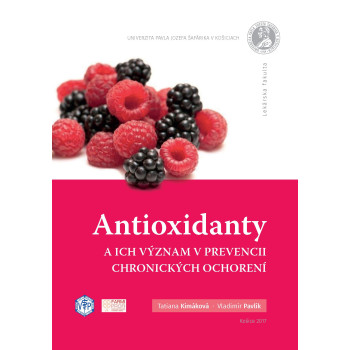
Antioxidanty a ich význam v prevencii chronických ochorení

Antioxidanty a ich význam v prevencii...

E-book

E-book

Tatiana Kimáková - Vladimír Pavlík

The scientific monograph focuses on the characteristics of free radicals, reactive oxygen and nitrogen species, oxidative stress, and its impact on various diseases. A significant portion is dedicated to antioxidants, their classification based on multiple criteria, the characteristics of selected antioxidants in terms of their functions, manifestations of their deficiency and excess, and the overall antioxidant capacity of the body.

A special section is devoted to enzyme-based antioxidants, natural sources of antioxidants in the form of vitamins, trace elements, flavonoids, polyphenols, and coenzyme Q10. To provide a clearer understanding of antioxidants and their influence on population health, the monograph presents results from a research project included in the program "Research Support for Enhancing the Defense Capabilities of the Czech Republic in NATO Structures."

The research was conducted between 2010 and 2012 as part of preventive rehabilitation programs for professional soldiers with a sports component. The study involved 218 professional soldiers, including 180 men and 38 women, with an average age of 33.3 years. The current health status and dietary habits of the soldiers were assessed using questionnaires.

The study described the saturation of the observed group with antioxidant vitamins and statistically evaluated the relationship between their levels and the risk indicators for the development of cardiovascular diseases. Individual analyses were performed using the Reflotron device calibrated with Reflotron Precinorm control serum. Following blood collection, all participants underwent anthropometric examinations (body weight, height, waist circumference), blood pressure measurements, heart rate monitoring, and physical fitness assessments through simple functional tests.

This scientific monograph is suitable for the scientific community, students of medical, veterinary, and natural sciences, as well as public health students at all levels of university education. It is also intended for informed members of the public.

Authors

Download the e-book for free (pdf)

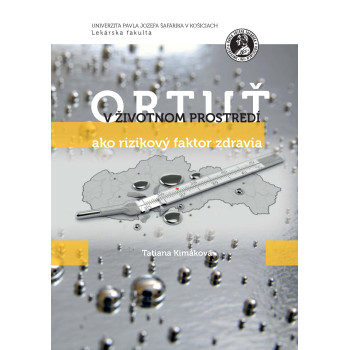
Ortuť v životnom prostredí ako rizikový faktor zdravia

Ortuť v životnom prostredí ako rizikový faktor...

E-book

E-book

Tatiana Kimáková

This scientific monograph is a comprehensive scientific work focused on the presence and effects of mercury in the environment, as well as the health risk factors associated with it.

The monograph presents a characterization of mercury in a multidisciplinary scope, discusses its use in industry and healthcare, and describes the negative impacts of mercury on the environment and public health. It also provides proposals and recommendations for at-risk groups. The monograph includes a comprehensive study of mercury concentration in samples of domestic and foreign production commodities and plant samples using the atomic absorption spectrometer AMA 254.

This scientific monograph is suitable for the scientific community, students of medical, veterinary, natural sciences, and agricultural fields, as well as public health students at all three levels of university study. It is also intended for all interested members of the informed public.

PDF preview

The publication is available for purchase through our online store.>>

Študentská vedecká konferencia PF UPJŠ 2016

Študentská vedecká konferencia PF UPJŠ 2016

E-book

E-book

Vladimír Zeleňák (ed.)

Proceedings of Abstracts of the Student Scientific Conference of the Faculty of Science, Pavol Jozef Šafárik University in Košice

A characteristic feature of education at high-quality universities — among which the Faculty of Science at Pavol Jozef Šafárik University (UPJŠ) in Košice proudly belongs — is the close connection between education and scientific research. Students gain knowledge in their field of study not only through theoretical coursework in individual disciplines, but also through active involvement in solving specific scientific tasks as part of research teams. This can occur during the development of final theses or through participation in the Student Research Assistant Program (ŠPVS), which was revitalized at the faculty in 2015.

The Student Scientific Conference (ŠVK) is one of the faculty’s traditional events, organized during the Faculty’s Science Days as part of Sciencefest. By its very nature, it fits seamlessly into the aforementioned framework of combining education with research, and it has long enjoyed great popularity and student interest. In 2016, the conference featured presentations by 125 students of the Faculty of Science at UPJŠ in Košice, across 16 thematic sections. This collection of abstracts provides an overview of the focus and goals of the student projects. We believe it will serve as inspiration for other potential participants of future conferences and will also be of interest to the broader public, offering additional insight into the faculty's activities.

Download the e-book for free (pdf)

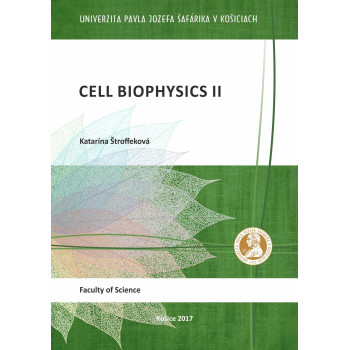
Cell Biophysics II

Cell Biophysics II

E-book

E-book

Katarína Štrofeková

Cell Biophysics II is the one semester comprehensive course textbook for PhD students. It encompasses basic principles and mechanisms underlying cell physiology and biophysics with aims:

• General knowledge of the principles of cellular function, including membrane, cytoplasmic and nuclear roles in normal and abnormal conditions.
• In-depth understanding of the mechanisms underlying the cell functions at the molecular and subcellular level.
• Awareness of cell pathologies that lead to specific disease symptoms and phenotypes.
• The ability to apply learned principles to solve new problems (analysis & synthesis).

Download the e-book for free (pdf)

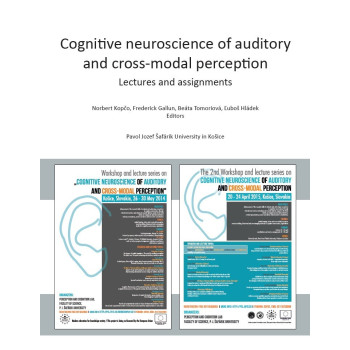
Cognitive neuroscience of auditory and cross-modal perception - Lectures and assignments

Cognitive neuroscience of auditory and...

E-book

Norbert Kopčo - Frederick Gallun - Beáta Tomoriová - Ľuboš Hládek(eds.)

Cognitive neuroscience is a fast developing scientific field which aims at uncovering the neural basis of human perception and cognition. To achieve this goal, cognitive neuroscience uses a variety of tools and approaches ranging from non-invasive brain imaging to psychophysics and neural modeling. Mastering such tools requires skills and knowledge from multiple scientific domains, including neurophysiology, cognitive psychology, and several computational fields.

Access on request via email: kogneuro (@) gmail.com

http://pcl.upjs.sk/workshopcd 

https://sites.google.com/site/kogneuro/

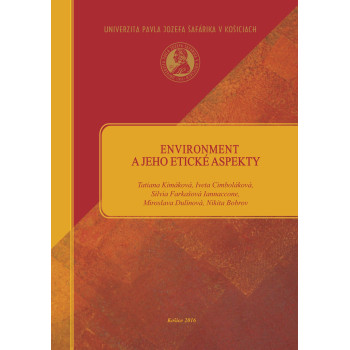
Environment a jeho etické aspekty

Environment a jeho etické aspekty

E-book

E-book

Tatiana Kimáková a kol.

Ethics, as the science of the proper realization of human potential in various areas of life, also extends into the environment. For understanding the ethical aspects in this field, a thorough knowledge of the individual components of the environment, as well as their impact not only on humans but on all living nature, is very important. Therefore, questions concerning the influence of the environment are increasingly at the forefront of interest from an ethical perspective, also in connection with existing legal norms.

The modern process of civilization is characterized by rapid development of science and technology. However, this development, while raising the standard of living on one hand, also brings negative side effects on the other. The result is the disruption of ecological, biological, and natural life conditions, especially in the areas of industrial centers. The development of individual branches of industry leads to the production of liquid, gaseous, and solid wastes, the emergence of harmful risk factors threatening various components of living nature, including humans. There may be increased bioaccumulation of hazardous chemical elements in organisms, which, through their effects, represent a potential risk also in terms of carcinogenesis and mutagenesis.

For this reason, an important role of society is to create conditions to prevent the release of emissions and to reduce their concentration to the lowest possible, socially and biologically acceptable level. The assessment of the biological effects of harmful substances is based on experimental and epidemiological studies. Knowledge of concentration and duration of exposure is crucial for applying dose-effect relationships and for determining the highest permissible concentrations of pollutants. The health of the population, as a universal value and a primary human right, represents a fundamental economic resource not only for the individual, but also for society as a whole.

Download the e-book for free (pdf)

This website uses cookies to ensure you get the best experience on our website